

Loss function overfitter Math is fun until the liquidation hits AI x Web3 x pure luck
Preditcion
Joined February 2021
- Tweets3.1K
- Following884
- Followers207
- Likes626


KillerBe retweeted
Jensen Huang spent 33 years building Nvidia into a $4 trillion company. it took one affair - and a report of a second - to end it.
on Thursday he resigned as president, CEO and board member, effective immediately. CFO Colette Kress is now interim CEO.
first came a memo to employees: "I was unfaithful to my wife." the woman, Alice Huang, is a former Megaspeed executive reportedly under suspicion by US officials - no charges have been filed. then the New York Times reported a second alleged affair - with another Nvidia executive.
in the clip below Fox Business doesn't hold back:
"it wasn't one affair with a spy. it was an affair with another employee."
"and where the heck was the board?"
Nvidia fell as much as 13% on Thursday. Huang still holds roughly 870 million shares - about $140 billion at Thursday's price.
he kept the money. he lost the company he co-founded, the CEO title and his seat on the board - in a single press release.
so be honest - was the affair worth losing Nvidia, or should a CEO's private life be none of the board's business?
KillerBe retweeted
Elon Musk paid $44 billion for Twitter. a year later he walked on stage and told the companies paying for it to go f*** themselves.
November 2023, NYT DealBook Summit. Disney, Apple, IBM and others had just pulled their ads from X after Musk agreed with an antisemitic post. hours earlier Disney CEO Bob Iger had spoken on the same stage.
Andrew Ross Sorkin asks if he wants the advertisers back. Musk:
"If somebody is going to try to blackmail me with advertising, blackmail me with money, go f*** yourself."
then he turns to the crowd: "Hey Bob. If you're in the audience."
in the clip below Sorkin pushes back - the advertisers will say Musk killed the company himself. Musk doesn't blink:
"The whole world will know that those advertisers killed the company."
"Tell it to Earth."
"The judge is the public."
X didn't die. in 2025 Musk's own AI company bought it in a deal that valued X at $33 billion. in 2026 SpaceX swallowed both.
so was that the most honest thing a CEO has ever said on stage - or the most expensive?
KillerBe retweeted
Nvidia lost $247 billion in one day. not because of chips - because of an email from Jensen Huang.
on Sunday he wrote to employees: "I was unfaithful to my wife. My actions hurt her and our children."
according to the New York Times, the woman is a former executive at Megaspeed, a Singapore company that bought Nvidia chips. US officials reportedly suspect she was gathering information for Beijing. no one has been charged.
Nvidia's board opened an independent investigation and says it has "no reason to believe" any secrets were compromised. Huang stays CEO.
in the clip below CNBC asks Dan Ives if Nvidia could replace him:
"talking about replacing Jensen, that's a comedy."
then the anchor asks what his critics are asking - the most important businessman in America, close to the White House, lobbying to sell chips to China:
"Don't you think this stinks?"
the stock fell 5.7% on Monday and kept falling on Tuesday.
so is this a private mistake by the man who built the AI boom - or the biggest security risk in corporate America?
KillerBe retweeted

A YouTuber offered $1,000 to anyone who could start his 1954 Harley, and after people kept FAILING on his brand new one, a random rider walked up and fired up both 😳🔥
“I have no idea how he was able to start that bike”
“That was our lunch money, dude” 😭
KillerBe retweeted

poker legend Phil Ivey won almost $20 million from two casinos. he never touched the cards - and both casinos kept the money through the courts.
in 2012 he and his partner noticed the pattern on the back of some cards wasn't symmetrical. she had the dealer turn the strong cards, so they could be read from the back.
in the clip below Daniel Negreanu: "The idea that you offered a game, I accepted, I beat you, and now you want to freeroll me? That's disgusting."
he also tells how Ivey flew between casinos in one night on a private jet, making money off their own promotions.
the case for the casinos: the UK Supreme Court unanimously called Ivey's play a "carefully planned and executed sting."
a US judge found no fraud, but ruled Ivey breached his contract with Borgata and had to hand back $10.1 million.
almost $20 million won. no criminal case. and none of that money in his hands.
did Ivey beat the casino at its own game - or is it cheating either way?
KillerBe retweeted

In 1976, Ronald Wayne owned 10% of Apple. He sold it back for $800.
That stake would be worth over $400 billion today.
He typed up Apple's founding contract himself, and Steve Jobs saw him as a mentor. Jobs and Steve Wozniak "didn't have two nickels to rub together." Wayne had "a house, a bank account, and a car."
If Apple went under, he was the one creditors could reach. "12 days later, I went down to the registrar's office and had my name taken off the contract."
Months later, a letter came with a $1,500 check to sign away every possible interest in Apple. "It was found money," he says in the video below. He signed.
Does he regret it? He says he would have spent 20 years "shuffling papers" at the back of the building.
So was it the worst trade in history, or the only rational one he had?
KillerBe retweeted
Ronald Wayne owned 10% of Apple. 12 days later he sold it for $800.
last month Apple closed above $5 trillion for the first time. on paper, his 10% would be worth about $500 billion.
in the clip below CBS asks if he ever doubted Apple would make it. "None." so why walk away?
he was 41. Jobs was 21. if the company failed, its debts were personal:
"Jobs and Wozniak didn't have two nickels to rub together. I had a house, a bank account, and a car, and I was reachable."
months later Apple mailed him a check for $1,500 to sign away any claim to the company. he signed.
"As far as I was concerned, it was found money."
today he is 92, lives in Nevada and relies heavily on Social Security.
would you have bet your house on two kids in a garage?
KillerBe retweeted
Elon Musk lost about $115 billion on Wednesday and Thursday. by Friday afternoon he had made $45 billion of it back.
this is the man who told CNBC exactly how much losing money bothers him.
in the clip below David Faber asks Musk whether his tweets hurt the company - Tesla owners who disagree with him, advertisers walking away from Twitter.
in the full interview Musk goes silent for about 12 seconds. then he quotes The Princess Bride:
"Offer me money. Offer me power. I don't care."
and then:
"I'll say what I want to say, and if the consequence of that is losing money, so be it."
two weeks after that interview he was worth $192 billion. this week, even after the selloff, he is back above $800 billion.
so is not caring about money the reason he has so much of it - or is he just the only one rich enough not to care?
KillerBe retweeted
Jensen Huang was ready to hand California about $8 billion. Sergey Brin put up $102 million so nobody would have to.
on Tuesday California voters rejected Prop 40 - a one-time 5% tax on every resident worth more than $1 billion.
in the clip below CBS asks Huang why he sees it differently from his peers. his answer:
"I'm not afraid of paying taxes. I'm just afraid of being poor."
he calls the $8 billion over five years "a privilege" and says nothing would give him more joy than paying even more.
his peers didn't wait for the vote. Peter Thiel, Larry Page and Brin left the state before the January 1 deadline. billionaire-backed opponents spent $316.7 million to kill the tax.
"I am the ultimate American dream," Huang says.
so who got it right - the billionaire who stayed and offered to pay, or the ones who spent millions to make sure they'd never have to?
KillerBe retweeted
in 1991 this man looked at Bernie Madoff's trades and found that half of them never happened.
17 years before the $64.8 billion collapse.
it started with one strange line in McKinsey's pension portfolio. a fund that "printed out one or two percent a month every month." up market, down market - it never lost.
he asked to see the operation. Madoff's brother Peter: "No, I won't let them in the front door."
so he pulled the trades himself. half never happened on any exchange at those prices. a quarter had more volume than the exchanges ever traded.
"this is a fraud," he told McKinsey.
"but we're making 20% a year."
his answer was simple math. your other money makes 16%. if I'm right, the 20% is fake. if I'm wrong, you lose 4 points. McKinsey was out in two months.
thousands of investors stayed. each one assumed someone else had checked.
the worst part: the man who brought him in heard every detail. he kept raising money for Madoff until the week it collapsed - with his own family's money inside.
it's 1991. your fund pays every single month and never loses. do you pull out on one man's word?
KillerBe retweeted
Yahoo made Mark Cuban a billionaire. and he immediately bet against Yahoo.
the company was worth $130 billion in 2000. in 2016 it went for $4.8 billion - less than it once paid for Cuban's startup.
his $1.4 billion in Yahoo stock couldn't be sold for 6 months. so the first thing he did was bet almost all his cash against the internet.
"i watched complete industries just skyrocket and then collapse." in the clip below he explains how he bought puts with 20-some million dollars.
the market kept going up, and all of it was gone. when he's reminded of that 20 million, he answers with one word.
for the next three years he hedged his Yahoo stock while everyone believed it would go up forever. then Yahoo fell 90%.
"when the stock collapsed, my puts were worth a fortune."
he lost $20 million so he wouldn't lose $1.4 billion.
KillerBe retweeted
$1 in Jim Simons' Medallion fund: $42,000.
$1 in the S&P 500: $40.
same years, 1988 to 2021. and when a shareholder asked Warren Buffett to hire a quant, he said no.
in the clip below Buffett passes the question to Charlie Munger, and Munger explains where the quants actually won: short-term trading, little algorithms that added predictive value. on long-term stock predictions "the record was not nearly as good."
and the edge had a ceiling:
"if they tried to do it too much, they destroyed their own advantage."
so the fund that beat everyone couldn't take more money. outside investors were pushed out, profits paid back every year.
the last word from the stage:
"we really don't trust anybody else to do it for us."
Medallion is closed to you. Berkshire is not. which one actually solved the market?
KillerBe retweeted
Don Johnson took Atlantic City casinos for $15 million. he broke no rules - because the casinos wrote the rules for him.
in the clip below the CEO of MGM calmly says what the house takes from a normal player: $200 out of every $1,000.
Johnson negotiated that same 20 percent back. part of every loss was returned to him.
then he got himself $25,000 a hand, three hands at once. $75,000 on a single deal.
then he rewrote the rules of the deal in his favor. after every concession the house edge was down to 0.253 percent - almost nothing.
then he removed that too. he brought six to eight women to the table posing as his girlfriends, so the dealer would lose focus and slip.
"the more it looks like one giant party, the better it is for my side of the table."
every mistake that went against him, he caught and claimed a free bet.
so did he beat the casino - or did it hand him the edge because it wanted his money too badly?
KillerBe retweeted
Persi Diaconis, Stanford professor and former magician:
"a casino pays to look random. seven riffle shuffles actually mix a deck. three just look like it - and leave it wide open to anyone counting."
it is not a feeling, it is a theorem. if i can guess your next card better than chance, the deck was never mixed, no matter how hard you shuffled. the lazy overhand shuffle? ten thousand passes to randomize. looks like work, moves almost nothing.
the edge was never shuffling harder. it was knowing when motion becomes real randomness and when it only looks like it. the theorem is free. the patience to shuffle seven times instead of three is the whole game.


KillerBe retweeted
Kimi K3 is the best open AI model in the world. the US just lost its frontier monopoly.
China's Moonshot took #1 on the Arena coding leaderboard - above Claude Fable 5, GPT 5.6, Grok. first open model to ever top it. their prior model was 18th. 17-place jump in one release.
behind Moonshot: a $30B valuation from Alibaba and Tencent, and a founder with a Carnegie Mellon PhD.
Kimi K3 is open-weights. the weights are public: download for free, run locally. on general intelligence - 4th, next to Claude Opus 4.8. on coding - first. no API dependency, no limits, no one else's server between you and the model.
Follow me to know more. Save the post so you don't lose it.
CHINA released KIMI K3 - an open-source AI model.
on quality it's on par with the best American models, and in places better. on per-request cost it isn't cheaper than frontier yet, but since the model is open, developers will bring the cost down within weeks.
the main risk isn't the technology, it's the strategy: China already did this with solar panels and electric cars - capture the market cheaply first, then raise prices once everyone depends on it.
takeaway: the models themselves are becoming a commodity. that's why Anthropic and OpenAI are moving their business to the application layer (Claude Code, Cowork), while cloud providers (Google, AWS) will earn money running the open models.
KillerBe retweeted

EVERYONE'S TALKING ABOUT LOOPS, BUT ALMOST NO ONE KNOWS YOU CAN RUN ONE WITH ZERO CODE.
the full version of loops is technical - code and autonomous agents. but the idea itself works in regular claude with no code: instead of taking the first answer, you make claude grade and rewrite its own work until it hits your bar.
> the cycle is simple: start → check → refine → repeat
> ask claude not just to write, but to grade the result
> set a criterion: "does the first line stop the scroll?"
> let it rewrite until it meets the bar
what sounds like an engineer-only technique is available to anyone right in the chat today. add a self-grading step to your prompt and the quality jumps immediately.
follow me to learn more about what ai can do.
This Post is from a suspended account. Learn more
KillerBe retweeted
Ramamurti Shankar - professor of physics at Yale: "no one understands quantum mechanics."
take light, dim it way down, shine it at a double slit. by morning the plate has no fringes - just separate dots. each is one photon carrying the exact same chunk of momentum. so a "wave" is really a stream of particles.
now it gets stranger: one particle, two slits - and you still get an interference pattern. a single particle knows how many slits are open. put a lightbulb next to the slits to spy on which one it went through - the pattern disappears. observation changes the outcome not metaphorically: the photon you see with hits the particle.
from this comes the uncertainty principle - no mysticism, just the geometry of waves. and the punchline: for the theory to work, the wave function has to be complex. without complex numbers, quantum mechanics stops.
KillerBe retweeted
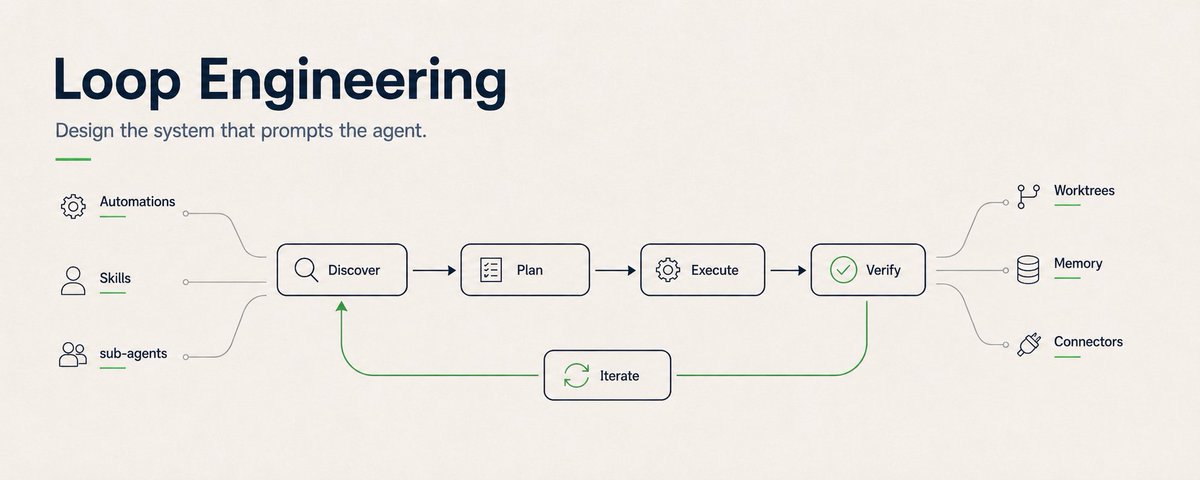
WHILE YOU WRITE PROMPTS, HIS LOOPS WORK FOR HIM 24/7.
a loop is a tiny scheduled program, but with agent intelligence built in. you give it the outcome, not the steps, and it pulls data from your crm, transcripts and email, decides what matters, and acts within guardrails.
> instead of a prompt, you set only the outcome
> the loop pulls data from your crm, transcripts and email
> it acts within guardrails so it can't go rogue
> loops launch other loops - teams of agents while you sleep
what used to take dozens of prompts now runs on its own in the background. start thinking in goals, not prompts, and your agents start working by themselves.
follow me to learn more about what ai can do.
KillerBe retweeted
CHINA released KIMI K3 - an open-source AI model.
on quality it's on par with the best American models, and in places better. on per-request cost it isn't cheaper than frontier yet, but since the model is open, developers will bring the cost down within weeks.
the main risk isn't the technology, it's the strategy: China already did this with solar panels and electric cars - capture the market cheaply first, then raise prices once everyone depends on it.
takeaway: the models themselves are becoming a commodity. that's why Anthropic and OpenAI are moving their business to the application layer (Claude Code, Cowork), while cloud providers (Google, AWS) will earn money running the open models.
KillerBe retweeted

Thanks @thezoereport for interviewing me about #intimacy and how to talk to your #partners about it. #RelationshipGoals #RelationshipAdvice #DatingAdvice #Expert #AprilMasini #Advice #Tips lnkd.in/dGMs6hr