
Christian, husband, dad, creator of Moq and other developer tools and libraries. Also known as 'kzu' (like 'kah-zu' rather than 'kzoo' :))
Joined November 2007
- Tweets14.8K
- Following926
- Followers3.4K
- Likes16.8K




Pinned Tweet
I think every company should have a #fridathon policy, to foster innovation, energize teams and improve morale cazzulino.com/fridathon. I'm realizing the term might actually stick, so I'm giving it a permalink, hehe :)

Daniel Cazzulino 🇦🇷🗽 retweeted

Ayer en Neuquén, en la Argentina Oil & Gas Expo, Javier Milei dijo una frase que vale más que muchos programas electorales: «En el largo plazo, la economía argentina va a ser todo un RIGI».
Para quien no lo sigue, el RIGI es el Régimen de Incentivo para Grandes Inversiones que aprobó el Congreso en 2024 con la Ley Bases. Al que invierte al menos 200 millones de dólares le cobra un 25% de impuesto a las ganancias en vez del 35%, le quita los aranceles para importar maquinaria, le elimina las retenciones a la exportación a partir del tercer año y, sobre todo, le garantiza por ley que durante treinta años nadie le va a cambiar las reglas.
¿El resultado? Ayer se aprobaron tres proyectos más para Vaca Muerta por más de 15.400 millones de dólares, el mayor de Pluspetrol con 12.240 millones. Con estos ya son veinticinco proyectos aprobados por 68.438 millones, y hay otros veintidós en evaluación por 140.544 millones. El mismo día el INDEC informó que en septiembre las exportaciones argentinas superaron por primera vez en la historia los 10.000 millones de dólares en un solo mes.
Los críticos hablan del «costo fiscal» del RIGI. Milei les contestó con una pregunta que resume la economía mejor que cualquier manual: ¿qué costo fiscal tiene una inversión que sin el RIGI nunca se habría hecho? El impuesto que no cobras de una fábrica que no existe no es un ahorro, es cero.
Pero lo más interesante es lo que confiesa el propio RIGI. Si para que alguien ponga su dinero en Argentina hace falta un régimen especial, es porque el régimen normal espanta. Por eso Milei tiene razón cuando dice que tarde o temprano los dos sistemas tienen que converger: que el panadero, la pyme y el emprendedor tengan lo mismo que Pluspetrol, impuestos bajos y reglas que no cambien cada vez que cambia el gobierno.
El capital no pide favores. Pide que no le cambien las reglas.
Daniel Cazzulino 🇦🇷🗽 retweeted

In 2021, the head of the UN World Food Programme said $6 billion from Elon Musk could solve world hunger.
Elon replied: publish the plan, right here, publicly, and I'll sell Tesla stock on the spot.
The plan came out. And when you read it, it wasn't a plan to solve hunger. It was one year of food for 42 million people. A twelve-month subscription. And the year after? Start over.
A few months later, Elon summed up his view: if you care about the reality of goodness rather than the perception of it, philanthropy is extremely difficult.
"Reality of goodness over perception of goodness."
That line stuck with me for weeks. Does philanthropy actually work?
Gates-style philanthropy is first and foremost institutional capture. Foundations funding NGOs, funding governments, funding programs, producing reports, producing photos. Everyone's happy, and the aid machine keeps itself alive. Sixty years and hundreds of billions later, much of Africa is still dependent on aid. Zambian economist Dambisa Moyo laid it out in Dead Aid: aid breeds dependency, feeds corruption, and short-circuits the only mechanism that has ever lifted a country out of poverty.
So what actually works?
It's been tested. In Kenya, Berkeley researchers working with GiveDirectly randomly selected villages and gave every poor household about $1,000 in cash. No program. No training. No conditions. Just cash.
The result: people bought metal roofs, livestock, started small businesses. Barely any inflation. And every dollar injected generated around $2.50 of economic activity locally, including for neighbors who received nothing.
Why? Because you didn't give them charity. You gave them capital. You primed the pump.
And that's where everything hinges: ownership. Hernando de Soto showed that the world's poor hold trillions of dollars in assets, but without recognized property titles, it's dead capital. You can't borrow against it, pass it on, or grow it. Where property rights are respected, the system starts running. Where they aren't, no amount of aid will ever be enough.
Now reread Elon's post.
"Next year, I will give one of my SpaceX shares to every kid in America. This will be the first of many."
That's not a meal. That's not a handout. That's a property title. A piece of the company building the infrastructure of a multiplanetary civilization, owned directly by millions of kids.
A kid who gets a handout depends on the state. A kid who owns a share of SpaceX owns a piece of the future. He learns what an asset is, he has a stake in the economy working, and one day he'll vote as an owner, not as a client of the state.
Gates buys perception. Musk distributes ownership.
The reality of goodness versus its perception. And it's absolutely brilliant.

Sure, with agents now you can implement anything in any language. Next minute, you run out of disk space due to the gazillion caches all over. One liner to fix them all:
> ndx cleanr --all
Before and after I just run. Gosh...
(ndx native tool runner from github.com/devlooped/ndx)

Daniel Cazzulino 🇦🇷🗽 retweeted

Cavemen Issues Dire Warning That The Wheel Is Going To Eliminate Countless Jobs
> We’ve gone from “The Terminator is coming” to “your toaster might kill you.”
🤭

Are Small Models Really a Threat?
The Anthropic Fear Factory just released a new report warning that small models may be only months away from self-replicating across cheap IoT devices like off-brand Android TV boxes and smart ovens. They say such an AI worm would be hard to shut down since there’s no central kill switch.
We’ve gone from “The Terminator is coming” to “your toaster might kill you.”
But the experiments don’t support the dramatic headlines. They ran a 26B model across 15 $55 TV boxes at 0.39 tokens per second. The end-to-end test used emulated devices with deliberately open ADB ports, so the “hacking” step was trivial. The capable model often ran on a separate server. Agents were harnessed and told to propagate. This is not proof of autonomous rogue AI worms in the wild.
Nor is the threat even novel. Worms that do this without AI already exist. Mirai in 2016 scanned for default credentials and built massive DDoS botnets. Kimwolf has infected over two million devices, mostly cheap Android TV boxes, by hitting open ADB ports.
Small models don’t currently add much that matters on these targets. The bottleneck has never been figuring out the device. It’s the huge number of devices that ship with open ports, default passwords, and no patching. Traditional worms already exploit that at scale.
A practical attacker would use the best models available offline to design a better traditional worm, then ship the lean binary. You get the intelligence benefit at design time without dragging a slow, heavy model along with every infection. Embedding a weak model in the payload is the worse option for anyone who actually wants the largest, fastest botnet.
The timing of Anthropic’s latest scare campaign is hard to ignore. The day before, Brian Armstrong posted that Coinbase fine-tuned an open-weight small model (Qwen-3.5-9B) on proprietary fraud data. It beat frontier models, including Anthropic’s own Opus 4.5, while being faster and much cheaper. In testing it cut fraudulent transactions by about 30%.
This is the emerging pattern. For narrow enterprise workloads you don’t need a general superintelligence. You need a small specialist model trained on your own data. Cheaper to run, especially as compute gets tighter, and often better on the metric that matters. That is a direct threat to the frontier-company model of selling access to ever-larger general models.
Safety advocates should be welcoming this development. If the real concern is existential risk from ever-larger frontier systems — the ones that could theoretically do sustained autonomous R&D or become hard to control — then a shift toward smaller specialized models is the safer outcome.
Small models specialized on fraud detection or support tickets are not pushing the frontier. They are not in the category of systems that could become a new species. The theoretical loss-of-control risk is created by models getting bigger and more generally capable.
Safety advocates focused on those risks should welcome companies having a cheaper alternative to constantly scaling general models. Instead we get dramatic warnings about small models at the exact moment they are starting to take real enterprise share from closed-model companies like Anthropic.

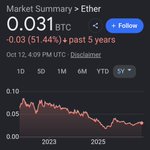
Hoy vale US$0,0000524, un 99,99% abajo de su máximo. Lindo rugpull el de $UBI eh
unavailable
@grok recalcula el % del valor máximo del contrato de ETH de UBI, que es posta. coingecko.com/en/coins/unive…
Y obvio que el aludido bloquea para que no se le pueda responder. Pero la gente puede ver la realidad igual.


Daniel Cazzulino 🇦🇷🗽 retweeted

Una genialidad de @ClaudioZucho, destrozando a los anticapitalistas.
This is interesting: you can ask @AIatMeta Muse to create an artifact (page, report, etc) and it can host and serve it for you when you share it, i.e. this shortlist of @githubuniverse sessions muse.ai/s/github-universe-20…

Daniel Cazzulino 🇦🇷🗽 retweeted

Last but not least, CodeAlta is still principally coded in C# / .NET (without counting all its dependencies that would shrink typescript further!)
This is a testimony that we can build amazing apps in C# and .NET! 🥰

Daniel Cazzulino 🇦🇷🗽 retweeted

I finished implementing a full AVIF codec this morning for ImageSharp that was started 3 years ago by a contributor and it's faster and uses less memory than the reference encoder. #dotnet #oss
C# is one hell of a language!
github.com/SixLabors/ImageSh…

"Of all tyrannies a tyranny sincerely exercised for the good of its victims may be the most oppressive. It may be better to live under robber barons than under omnipotent moral busybodies. The robber baron’s cruelty may sometimes sleep, his cupidity may at some point be satiated; but those who torment us for our own good will torment us without end for they do so with the approval of their own conscience."
🎯blog.acton.org/archives/1931…


Pride – The Engineers of Human Souls.
Pride is not the craftsman’s satisfaction in good work. That kind of pride built cathedrals.
Pride is the certainty that you know better than other people how they should live.
Pride is looking at a society and seeing a machine – with yourself as the engineer.
Pride is impatience with reality. Reality is slow, messy, full of people who want different things. So pride replaces it with a plan.
Pride "loves" humanity and despises people. Humanity never argues back.
Pride is blind in one specific way: it cannot see what it does not know. Hayek called it the fatal conceit – the belief that a few clever people can know what millions know, each about his own work, his own family, his own street.
Pride wears the mask of compassion. "For your own good" – the most dangerous words in politics. C.S. Lewis warned that the worst tyranny is the one exercised sincerely for the good of its victims – because its enforcers sleep with a clear conscience.
Pride never admits a mistake. A failed plan was sabotaged, betrayed, underfunded – never wrong. So the next plan is bigger.
And pride never lives in its own design. The architect of the housing estate lives in the old town. The reformer of the school sends his children somewhere else. The planner never pays for his plan.
Now scale it up. Plato’s ideal city abolished the family among its rulers and told the people a useful lie. The French revolutionaries redesigned even the clock – ten hours a day; it lasted barely a year and a half. Trotsky promised that under socialism the average man would rise to the level of Aristotle, Goethe or Marx; what came out was a man queuing for bread and informing on his neighbor. Le Corbusier wanted to raze the heart of Paris for identical towers; his ideas shaped the grim estates on the edge of every European city – designed for a new man, inhabited by real ones. Today the same pride works in committees, redesigning language, the family and what children must learn about themselves. Quieter than a revolution. The same certainty.
The West’s best tradition starts from the opposite place. Socrates: the wisest man knows that he does not know. Chesterton: never take down a fence until you know why it was put up. Society is not a machine. It is a living thing – grown, not built. The statesman should be a gardener, not an engineer.
A free society does not abolish pride. It converts it: be as proud as you like of what you build – your house, your company, your family – and let reality judge it. The planner is proud of what he designs for everyone else, and never has to live in it.
The cure is the oldest one: know what you don’t know. And let people live their own lives.

Daniel Cazzulino 🇦🇷🗽 retweeted

LA ESTAFA DE LAS BANDERAS NOBLES.
El socialismo tiene un mecanismo perverso que repite sistemáticamente en toda América Latina: SE APROPIA DE CAUSAS NOBLES PARA JUSTIFICAR CURROS INDEFENDIBLES.
Primero elige una causa moralmente atendible. Los discapacitados, los jubilados, la universidad pública. Después, en nombre de esa causa, exige cada vez más gasto público, crea estructuras burocráticas gigantescas y administra cajas multimillonarias sin controles ni transparencia.
¿Y qué pasa cuando alguien llega y se anima a preguntar dónde está la plata? ¿Cuando alguien pretende auditar esas cajas?
APARECE EL CHANTAJE MORAL.
No muestran los números. No rinden cuentas. No explican nada. Te acusan de estar en contra de los discapacitados, de los jubilados o de la educación.
Porque el objetivo no es discutir cómo ayudar a quienes mas lo necesitan. EL OBJETIVO ES QUE NADIE SE ATREVA A CUESTIONAR SU NEGOCIO.
Y cuando finalmente se abren las cajas, aparece lo de siempre: intermediarios, estructuras militantes, privilegios y curros financiados con el dinero de los pagadores de impuestos.
USAN A LOS POBRES COMO ESCUDO MORAL PARA DEFENDER LOS PRIVILEGIOS DE LA CASTA.
Lo vimos en la Argentina y lo vemos en cada país donde el socialismo logró echar sus garras.
Siempre el mismo mecanismo. Siempre el mismo chantaje. Siempre los mismos beneficiarios. Y siempre las mismas víctimas: los que verdaderamente necesitan ayuda y los argentinos de bien que pagan la fiesta.
NO DEFIENDEN DERECHOS. DEFIENDEN CAJAS.
QUE SE ABRAN TODAS LAS CUENTAS. QUE SE PUBLIQUE CADA CONTRATO. QUE CADA RESPONSABLE RINDA CUENTAS HASTA DEL ÚLTIMO PESO. LOS ARGENTINOS MERECEN SABER EN QUÉ SE GASTA SU DINERO.
VLLC!

Daniel Cazzulino 🇦🇷🗽 retweeted
The release notes for 1.4.0 github.com/CodeAlta/CodeAlta…
What's coming next? Canvas, Project Statistics, Welcome page...

So @AnthropicAI introduced a limited version of @GitHubCopilot rubber-duck 👌
code.claude.com/docs/en/advi…

Do you think this was a lack of communication or an explicit org policy @robmen @CloudNativeFdn? Seems misguided to me.
github.com/cncf/foundation/i…

Historic. I fully expect it to be on display next to the Starbase sign from now on.

