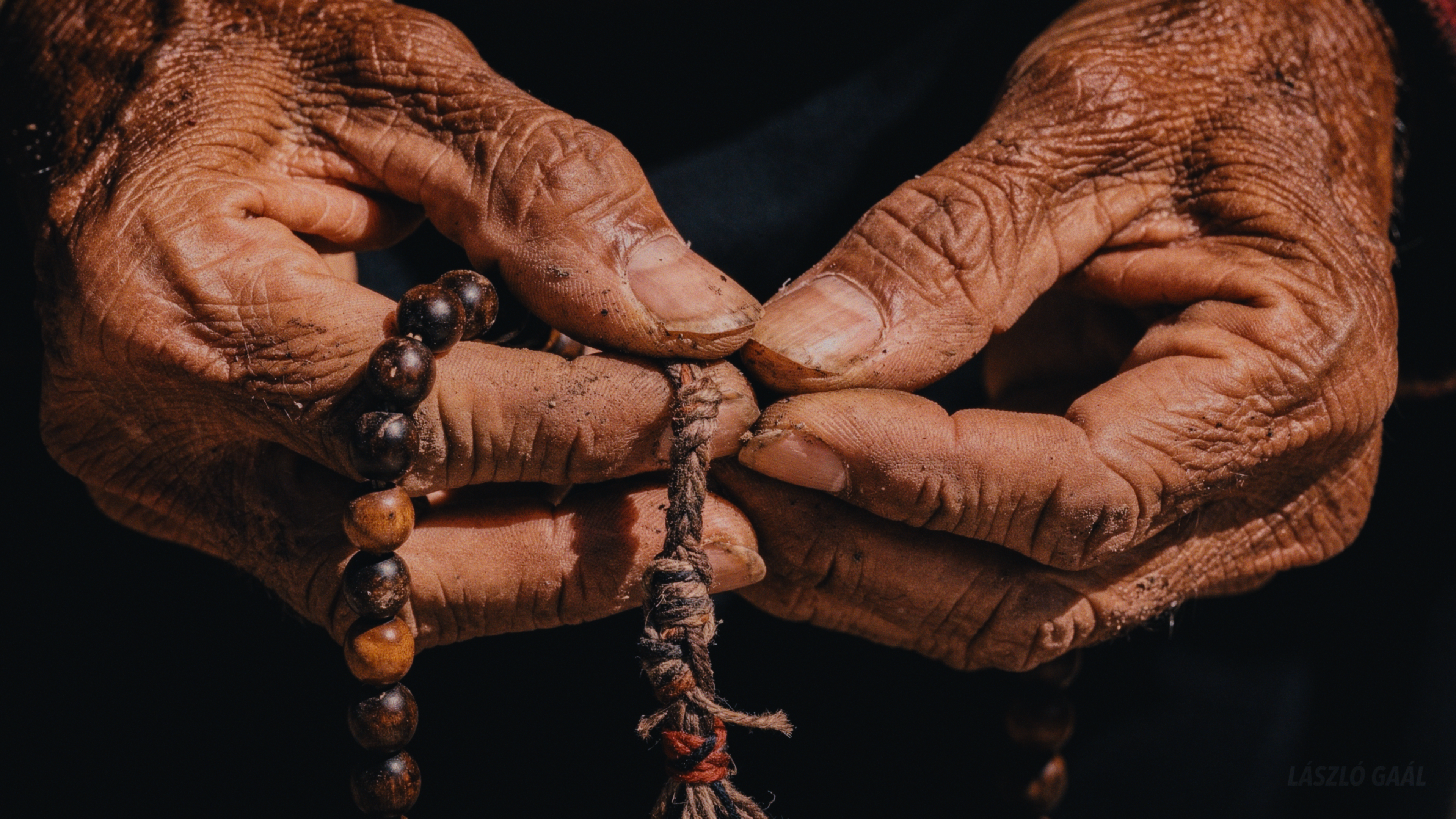


saw the pretty cool animation from @bradleytangonan last week and the original study web.cecs.pdx.edu/~fliu/proje… but wanted to create a version where you can simply remove the non-moving pixels.
Created with Astra, it analyzes the video for movement, creates a mask for objects/people that is moving and you can simply reduce the opacity of the rest.
Some people asked how the @runwayml competition video was made - especially how the tree and building movements looked so realistic. Meet Salvatore from Sicily, a director who doesn’t really take no for an answer. Hopefully this clears a few things up! (generated with Seedance 2.5 in Runway)
The @runwayml official announcement video caught me off guard in the best way - make sure to watch it all the way through to see what the creative team cooked up. Thanks for organizing such great contests; this one was worth throwing my sleep schedule off for. Grand Prize!

Manny got a bit carried away! @runwayml @c_valenzuelab
In 2024 started to put together a portable projection mapping setup to be able to carry it anywhere, even hike with it, and being able to use it for 4-5 hours continously. I was quite surprised how well it worked as at the end I was able to create projection even 40-50 meters wide. Then AI came and I didn't publish most of the videos and images but here is the first one. At the end the setup worked quite well and I figured out how to balance the capabilities of the projector with the available light, but in the future if I would continue I would love to get a very high ISO camera to be able to shoot video in complete darkness too, also to protect the laptop/camera from seawater. This was shot in Vietnam, Quang Nam Province #projectionmapping
Managed to grab 4th place on the @runwayml Big Ad Contest Volume 2! These contests are getting harder and harder as there are thousands of entries, and if you check them, most of them are amazing. It also attracks new talent: after the winners were announced someone from Japan contacted me, his entry was pretty nice and turned out to be his first video project that he edited. Can you imagine that it inspires people to make their first ever edit in their life?
Anyway back during spring I managed to win the first prize for the first competition, then for the Big Pitch Contest I didn't get into the top20, but I learnt main thing for these competitions is to challenge yourself, try something new, solve the brief but still experiment. You can't force it, just like with The Law of Reversed Effort.
Congrats for the top3 winners: Ciro Kavouras, @simonmeyer_ and Herinarivo Rakotomanana!

1000 clips rendered with Minimax H3 done by @ostrisai
Samples are of various aspect sizes, and cover a wide range of media types and themes. The videos are 768 base resolution (~0.6 MP). They were generated with minimax_h3_fl2va_pruned_int8_convrot.safetensors with 30 steps. #minimaxh3
Seedance 2.5 text to video absolutely nailed the early 2000s japanese cinema look, also all the camera movements are spot on
#DreaminaCPP @dreamina_ai #seedance #seedance25
Back for round two of the @runwayml's Big Ad Contest after winning the first edition - here's my second entry: Jaunt speaker
First about the idea: If you've ever talked to audiophiles, it always hits me how it's a completely different world - most of the conversation is about what's inside that black/beige/silver box, why it costs so much, but also why it's worth it: because the tiny things inside make such a big difference to the sound. That's where the idea came from: trying to visualize what makes that special sound, what's happening in the world locked inside, where the only light comes through the tiny circular holes of the speaker.
Technically, the biggest challenge was generating a video synced to the beats. My approach was to write the music myself first - a simple 4-8 bars using Steinberg Cubase and Spectrasonics Omnisphere - turn that into a 4-6 track demo, run it through Suno, and then sync the generated video to the music. After that, everything went back into editing: splitting the audio into layers, and whenever something extra was needed - a solo, an added layer of music - I could generate it at the exact same tempo, matching the original song.
Look-wise inside the speaker I wanted a warm, funky '70s world - rich textures, analog warmth, a sense of soul and groove baked into the machine itself. Mostly amber and golden tones, lit by warm incandescent glow, brass accents, with everything feeling organic and alive.
#RunwayBigAdContest
Back for round two of the @runwayml Big Ad Contest after winning the first edition - here's my first entry: Jaunt speaker
First about the idea: If you've ever talked to audiophiles, it always hits me how it's a completely different world - most of the conversation is about what's inside that black/beige/silver box, why it costs so much, but also why it's worth it: because the tiny things inside make such a big difference to the sound. That's where the idea came from: trying to visualize what makes that special sound, what's happening in the world locked inside, where the only light comes through the tiny circular holes of the speaker.
Technically, the biggest challenge was generating a video synced to the beats. My approach was to write the music myself first - a simple 4-8 bars using Steinberg Cubase and Spectrasonics Omnisphere - turn that into a 4-6 track demo, run it through Suno, and then sync the generated video to the music. After that, everything went back into editing: splitting the audio into layers, and whenever something extra was needed - a solo, an added layer of music - I could generate it at the exact same tempo, matching the original song.
Look and sound-wise - inside the speaker - , I wanted a retro-futuristic world: uniform styling, a tension between human emotion and mechanical control. Mostly a dark, black environment, lit by VU meters, LED lights, and neons, with everything feeling cold and machine-precise: mechanical, metronomic, almost robotic, surrounded by analog devices.
#RunwayBigAdContest
DŌKYŌ: A Three-Minute-Long Single-Take Short Film Made with AI
We can agree that Bytedance Seedance 2.0 totally changed how people create videos. Omni mode enabled faster creation of short films, solo creators making feature-length films, and you can create a 15-second commercial in one shot with a single prompt. But it also opened the door to long, continuous takes, which were not possible.
Usually the length of a generated clip is limited to 8–15 seconds. Of course some people tried to cheat around this limitation by doing last frame first frame generation and stitching, but it breaks the camera movement and the pace of the actions.
With Seedance, it was very different: instead of fighting the engine I was able to think about what I would like to see, instead of what are the limitations. I planned the framing, the camera movement, the action, and built the three-minute sequence step by step. Of course, this means if you later realize that something is wrong three or four sections earlier, you have to redo everything that follows.
Visually, I wanted to maintain a very cinematic, low contrast, grainy, soft look, siilar to an expired 8mm or 16mm film, so there was no upscaling, rather the opposite: softening the image in every possible way.
#DreaminaCPP @dreamina_ai
4K stills from my Kling test from before, full resolution images link in the comments! Original stills are Flux and Nano Banana Pro.


the film: youtube.com/watch?v=bc4xROky…
stills in full resolution: laszlogaal.com/morocco4k_I/