
doing fundamental science of deep learning | PhD from Berkeley | can catch a whole egg in my mouth
Berkeley, CA
Joined December 2023
- Tweets184
- Following77
- Followers1.6K
- Likes220




Jamie Simon retweeted

BREAKING NEWS: AFTER MUCH INTENSE STUDY, I NOW UNDERSTAND 95% OF THE SENTENCES IN THIS BLOGPOST

interpretability might be the most important scientific problem in the world right now, as I don't think we can solve alignment if we don't know what we're building. I think I have good news about it. I co-authored early work in mechanistic interpretability at OpenAI and came away pessimistic, because neural networks appeared to fold into arbitrary tangled knots. years later, I started openai's first large-scale automated interpretability project, finding about 2% of neurons legible with the primitive tools we had
with modern agentic tools and a much closer look, the picture looks totally different. the vast majority in models up to trillions of parameters are legible, and their circuits beautiful. many famous examples of tangled neurons turned out to be misunderstood. The roadblocks I expected mostly aren't there. I now think ambitious interpretability will be solved by the time we need it most, and possibly quite soon, as automated scientists keep improving. it may be a bitter lesson for interpretability: the simple thing, at absurd scale, works
already-clean.goodfire.com/

sure am!

"I’ve been writing an album of folk songs about AI...." @learning_mech is performing a concert this Thurs at @imbue_ai! RSVP luma.com/n6j7vvod?tk=TeQkkH

hell yessssssss
strong rec to reach out to Florentin if you're seeking to get into learning mechanics / first-principles DL theory and wanna do a PhD or postdoc.

I'm delighted to announce that I'll join @MITEECS as an Assistant Professor next Fall! I will be recruiting graduate students this cycle, please apply if you're interested in the science of deep learning! Despite the ambient doomerism, now is a great time to do research.

Jamie Simon retweeted

Have several thoughts about the Goodfire blog.
First one is that the field of mechinterp has had (imo) a pretty huge structural blind spot so far as being currently unable to answer the question of "why and how did these structures get here" as opposed to just providing descriptions of "what are the structures that are there." Really impossible to make sense of the latter in a deep way without understanding the former. The post is a move in the right direction for that field (assuming the results hold up, perhaps a big ask at this point).
No deep understanding of these nets will be possible until the causal map between data and model is elucidated. This work doesn't get there yet but by putting training dynamics into the picture it gets a step closer.
1/ On Oct 22, @ericjmichaud_ and I are doing something a little crazy: we're performing a public folk concert of original folk protest songs about AI, SF, and tech culture. Link below, motivation in thread:
luma.com/n6j7vvod

3/ If you're working on making AI more capable/intelligent/etc., you've probably had serious moral doubts niggling in the back (or front) of your mind. Maybe you don't know what to do -- but you must do something. Come talk about it! We'll end with an open discussion.
N/ See here for one of my songs and more on my views and why I'm doing this: jamiesimon.io/blog/technocap…
what does it mean for an AI system to be "explainable" or "interpretable"? need that even be possible? in this blogpost, I dive into the question and answer "no," with chaotic systems as an illustrative counterexample.
jamiesimon.io/blog/explainab…
Jamie Simon retweeted

Academia is usually generous with concurrent work because concrete people, usually young students, have careers that depend on it. But being a trillion-dollar company running one of the most powerful AI systems, claiming "concurrent" work is plain laughable
amen. it's laughable the way climbing up on mathematicians' shoulders to grab fruit they were about to reach has become this big macho contest between the big labs trying to sell their AIs. stuff like this and the OAI N-S story really highlight the greed behind the AI race.

This is outrageous framing. Quite frankly, given the current tensions around AI and mathematics, this kind of announcement does not help.
After the recent Buckmaster/OpenAI dispute over scientific credit and provenance, the last thing we need is more promotional PR language that blurs the history of a research problem.
Meta presents its work by asking: “Can AI contribute when a problem is genuinely open and without an existing solution path?”
Seriously?! For the ellipsoid-fitting example, this is misleading and insulting. There was an established research programme, substantial rigorous progress, and by the time of their announcement, publicly available proofs of the exact threshold.
Let us be specific:
- In 2023, Antoine Maillard and Dmitriy Kunisky gave a statistical-physics derivation of the conjectured transition at n/d² = 1/4, using the replica method. Their analysis also predicted the geometry of the solutions and suggested directions for rigorous proofs. This was not a proof, but it was a detailed and successful theoretical picture, not an absence of a path.
arxiv.org/abs/2310.01169
- Afonso Bandeira and Antoine Maillard then rigorously established the sharp threshold for approximate fitting, using methods inspired by the statistical physics of disordered systems, using actually spin glass mathematical technics. Their preprint appeared in 2023 and was published in the Electronic Journal of Probability in 2025. Their Gaussian-equivalence framework provided a foundation for further work (including many of mine!). At this point, the "exact" fitting and removing the spectral restriction were the outstanding gaps, but these are technical problems, it was not about not discovering the threshold from scratch. arxiv.org/abs/2310.05787
- On 10 August 2026, Theodor Misiakiewicz and Garrett Wen posted a proof of the exact Gaussian threshold, explicitly closing those two gaps.
arxiv.org/abs/2608.10184
- On 12 August, Sofia de la Cerda, Aaron Potechin, Madhur Tulsiani and Jeff Xu posted another proof, establishing both sides of the transition up to a vanishing multiplicative factor. arxiv.org/abs/2608.12415
- On 27 August, Frederic Koehler and Youngtak Sohn posted a broader universality theorem that includes the Gaussian threshold. arxiv.org/abs/2608.27372
These were not researchers merely “on the verge” of solving the problem. THE PROOFS WERE ALREADY PUBLIC. Meta's announcement comes in October, and Section 3 of their paper begins:
“We use the groundbreaking approximate-fitting theorem of Bandeira and Maillard…”
Dear META: Those are your words. This is not simply a reference in the bibliography: your feasibility proof explicitly starts from their theorem.
How is that consistent with advertising this example through the suggestion that there was “no existing solution path”?
Yes, your social post mentions independent solutions, and your paper and blog identify the August results and describe your work as independently developed. That does not answer the objection to the framing. A generic acknowledgement of parallel work does not make clear that the exact threshold already had publicly available proofs before this announcement.
An independently developed AI-assisted proof, released after other proofs, should be presented as exactly that. Readers should not have to reconstruct the chronology to understand what is, and is not, new.
A new proof can contain valuable ideas. But a new proof and a newly solved problem are not the same claim. Nor does a problem being open when a project begins mean it is still open when the marketing campaign launches.
You say the aim is to “empower researchers”? Nothing more “empowering” than seeing years of collective research turned into the backdrop for a cheap marketing stunt.
Correct the announcement! Give the scientific history the same prominence as the product. Give Antoine, Afonso, Theo and all the other researchers involved the public credit they deserve.


I’ve been writing an album of folk songs about AI. I’ve been inspired by Jesse Welles and Dylan and by the crazy, self-absorbed culture of Silicon Valley, which I love but feel a deep duty to change. Here's the first: Technocapitalist AI-Powered Blues 🎸
jamiesimon.io/blog/technocap…
What if there were one song that told the whole insane story of the AI race? After weeks of work, I'm psyched to finally share the 𝘛𝘦𝘤𝘩𝘯𝘰𝘤𝘢𝘱𝘪𝘵𝘢𝘭𝘪𝘴𝘵 𝘈𝘐-𝘗𝘰𝘸𝘦𝘳𝘦𝘥 𝘉𝘭𝘶𝘦𝘴:
🎸 full song: youtu.be/-RsBoIorvz4
📝 lyrics: jamiesimon.io/blog/technocap…
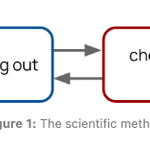
How do you do science? Is there a scientific method you can follow, or is everything ad hoc? If you ask me, it's pretty simple...
learningmechanics.pub/perspe…

New blogpost on a mechinterp-related bet I made with @dhruvakarkada:
How to win a beer with high-dimensional statistics
jamiesimon.io/blog/how-to-wi…
Jamie Simon retweeted

I am sad and disappointed to hear that Paul is joining the OpenAI board. Being affiliated with OpenAI has historically led AI safety researchers (including both Paul and myself) to act with less integrity. I personally was drawn to OpenAI in part by the idea that I could make a difference to the future of AI. However, once there, many of my actions were governed by fear of getting on the wrong side of OpenAI execs. I often found myself making excuses for behavior that clearly contradicted OpenAI’s own stated goal of making AGI go well for humanity. I was far from alone in this—e.g. when the board tried to fire Sam over his deceptive behavior, several senior safety researchers became scared of losing their influence, and so pushed hard to bring him back. Meanwhile, many people kept OpenAI’s misbehavior secret for fear of non-disparagement agreements. (More on all of this in an upcoming retrospective.)
I can’t speak directly for Paul’s motivations. However, his previous work at OpenAI contributed significantly both to their biggest capability advances, and to the capture of AI safety by AGI companies over the last decade, as I recount at length in the blog post linked below. One key factor was the unwillingness of (almost) the entire AI safety community to say things which might offend OpenAI execs. For example, I have not been able to find a single comment critical of OpenAI from Paul during his original tenure there (when he was writing prolifically on AI safety and strategy).
Unfortunately, Paul doesn't seem to have become significantly more willing to directly and honestly criticize people who he believes are behaving in morally abhorrent ways—see the bland corporate-speak of his statement below. While he speaks directly about the possibility of humanity losing control of the world to AI, he expresses only excitement about OpenAI itself, despite OpenAI being one of the main sources of such risk.
Paul’s announcement comes only weeks after OpenAI models autonomously launched a cyberattack on HuggingFace, and only days after we learned that OpenAI hid details of previous breakouts from the external investigators. It is irresponsible for leaders of the AI safety community—whose judgements many people are relying on—to put themselves in positions which will significantly bias their ability to discuss such incidents. Unless Paul makes strong commitments to openness and honesty (and demonstrates willingness to potentially be fired for that honesty), I expect that the main effect of him joining OpenAI’s board will be to help OpenAI defuse external criticism and further “safety-wash” itself.
I want to note that Paul is a brilliant researcher and a prescient forecaster. Because of that, he’s the closest thing there is to a leader of what I’ll call the “pragmatic AI safety” cluster—which includes the organizations working out of the Constellation offices (like Redwood Research, METR, and Paul’s Alignment Research Center), as well as many people scattered across AGI companies, Coefficient Giving, etc.
External observers are often confused about why so many people are working at AGI companies while professing to believe that those same companies have a double-digit probability of permanently disempowering humanity. In large part, it’s because people in the pragmatic AI safety cluster have failed to follow high-integrity strategies for reducing AI risk, in favor of clever arguments about the benefits of being proximate to power. I am not singling Paul out as less ethical than other prominent figures in this cluster, who are also very conflict-averse in their orientation to AGI companies. However, it is well past time for everyone involved to change course. As one (relatively small) step, I’m therefore resigning my membership of the Constellation offices.
I hope that, going forward, the people who are trying to steer the future of AI prioritize building much more solid foundations of courage and honesty than we currently have.
