

Teacher/Instr Coach/Curriculum Director/Consultant/Author working with others to design Tier 1 in teacher-friendly ways for learning. Learning IS the job!
Georgia
Joined September 2020
- Tweets6.7K
- Following4K
- Followers7.9K
- Likes19.8K





Pinned Tweet
So excited to announce the submission of my latest book, Designing Learning That Sticks. Even more excited to share an excerpt from the forward by Dr John Hattie!
If you read my first book, Let's Stop Teaching And Start Designing Learning, you'll find this new book combines cognitive science along with a deeper dive into designing the best learning possible for who is in the room.
Feel free to visit letsquitteaching.com for news, posts, AI tools and other updates.
Share with any teacher or school leader you know!

Hear me out...
Some kids at school have nothing at home.
I mean NOTHING.
Maybe that's why they come to school with the behaviors they do. They have nothing to lose.
What if we gave them something to care about.
Somewhere to belong, be supported, be challenged, be praised, be _________.
Give them something they would be afraid to lose.
They just might surprise us.
Adults in Schools,
It's Friday.
Make sure each of your kids hears a positive word about them from you today before leaving.
They might not hear another one until they come back on Monday.
It cost us nothing.
But to them, it could be everything.
School & district leaders,
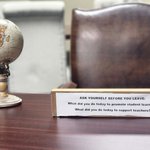
You have 2 questions to answer everyday.
If you don't have an answer for one of these today, what got in the way?

"Evaluative judgment helps teachers learn from those moments. It gives us a way to examine what happens when professional knowledge meets the learner in front of us and decide what, if anything, should change because of it."
Quoting from my draft of book I'm writing about how we as educators learn to make decisions about the learning in the room.
Pop quiz!
For each statement, label it
Teaching/Activity Occured= TAO
Possible Learning Evidence= PLE
Strong Learning Evidence= SLE
GO!
1. The teacher explained the content clearly.
2. Learners completed the assignment.
3. Learners were engaged the entire period.
4. Learners answered correctly with teacher assistance.
5. Learners can explain their thinking in their own words.
6. Learners can perform the skill independently.
7. Learners can recognize and correct an error.
8. Learners remember the learning later.
9. Learners can apply the learning in a different situation.
10. Learners copied notes from the board.
Gonna open up this can of worms on here
Hot take on education...
100% of the problems we face in schools are adult created and cultivated.
BUT ...
100% of those problems can be solved with adult creativity and commitment.
Book update: Turned in final edits to the copywriter.
Looking forward to sharing the work!
In the meantime here is an excerpt from the foreward by Dr. John Hattie

For learning to occur at the highest effectiveness & efficiency, we MUST intentionally design for it to happen.
Otherwise, we just will keep on teaching, settling for the learning we get, and wonder why we aren't seeing improvement.
Learning IS the job.
Design for it.
AI is forcing the adults at school to change.
It did us a favor.
Read more HERE 👇👇👇
letsquitteaching.com/ai-is-f…
🤖 Made with AI

A lesson plan can tell us what page we’re on, what activity comes next, and what we’re covering today.
A learning design answers a harder question:
What will learners do that gives us evidence they are actually learning?
Soooo, the kids in the room now are digital natives.
Chances are they were handed a device before they were 2 years old.
Most of that early screen exposure involved game theory learning. Like it or not, many of us experience this in our adult lives as well
With that said, here's a tool that doesn't Gameify something, but uses Game Theory to design something we're teaching.
Give it a try. It's FREE!
gemini.google.com/gem/1O2Cko…
You can find other AI tools at letsquitteaching.com

Second only to the teachers in the classroom, the next most influential adult at school is the principal.
The learning in the building rises & falls with the lead learner and the learning leader.
Principals, learning IS the job.

Feedback isn’t the number we put at the top of the paper after learning is over.
Feedback should change what happens next.
It should help learners notice where they are, understand where they’re going, and make a better next attempt.
Pointless otherwise.
Jason Kennedy | Stop Teaching & Design Learning! retweeted
When I say the answers are already in the building, I MEAN IT.
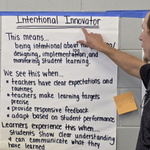
Teachers came together to define EXCELLENCE.
A JDCSS Educator is a/an...
-Relationship Builder
-Positive Learning Designer
-Intentional Innovator
-Expectation Establisher
-Data-driven Decision Maker


When I say the answers are already in the building, I MEAN IT.
Teachers came together to define EXCELLENCE.
A JDCSS Educator is a/an...
-Relationship Builder
-Positive Learning Designer
-Intentional Innovator
-Expectation Establisher
-Data-driven Decision Maker
Intention changes everything...
Why this task?
Why this scaffold?
Why this question?
Why this grouping?
Why this feedback?
If we can’t explain how a decision supports learning, we should probably reconsider the decision.
That’s designing learning.
If I had one tip for every educator, it's this:
Incorporate success criteria everyday in class
Turn learning back over to the learners
Put scaffolds in place between levels
This will change your room
Some AI tools to help can be found at letsquitteaching.com

Hearing something isn’t learning it.
Seeing something isn’t learning it.
Completing something isn’t necessarily learning it.
Learning is durable change in what we know, understand, and can do.
Exposure is an event.
Real learning should be designed to last.