

GenMedia researcher @GoogleDeepMind, AI PhD @CarnegieMellon
Mountain View, CA
Joined May 2022
- Tweets19
- Following135
- Followers120
- Likes68


Liangke Gui retweeted

This is Genie 4, our most realistic and interactive world model yet. 🌐
Explore dynamic environments in real time to see how the scene responds, sounds, and how the people in it move, react, and speak.
Liangke Gui retweeted

Google’s new Gemini 4 Argon equals GPT-6 Astra on the Artificial Analysis Intelligence Index at 60% of the Cost per Task with discounted prices. Google is now back to being one of the top three labs in intelligence achieved
Gemini 4 Argon is @GoogleDeepMind’s first proprietary model above the Flash class in over 7 months. With high reasoning (the highest available), it scores 53 on the Artificial Analysis Intelligence Index, matching GPT-6 Astra (max, 53) and 1 point ahead of GPT-6.1 Sol (max, 52), with gains driven by lower hallucinations and stronger agentic capabilities.
At its current 50% pricing discount and with cache discounts increased to 95%, Gemini 4 Argon costs $1.99 per Intelligence Index task, 60% of GPT-6 Astra (max), but 2.7x GPT-6.1 Sol (max). After the discount ends, this will rise to $3.98 (~1.2x GPT-6 Astra (max)).
Gemini 4 Argon is currently being rolled out to selected users and is not publicly available. The 50% discount is an initial promotion. Google has not yet confirmed the promotion end date
Key benchmarking results for Gemini 4 Argon with high reasoning:
➤ Google returns as one of the top three labs on intelligence: Gemini 4 Argon (high) scores 53 on the Artificial Analysis Intelligence Index, matching GPT-6 Astra (max, 53) and 1 point ahead of GPT-6.1 Sol (max, 52). This is 23 points above Google’s previous non-Flash model, Gemini 3.1 Pro Preview (30) and 12 points ahead of Gemini 3.8 Flash (high)
➤ Launch discounts of 50% make Gemini 4 Argon competitive on Cost per Task: At current discounted pricing, Gemini 4 Argon (high) costs $1.99 per Intelligence Index task, 60% of GPT-6 Astra (max, $3.26) for a comparable level of intelligence. This cost efficiency is driven by lower token prices, rather than reduced token use, with Gemini 4 Argon averaging 62k output tokens per task, compared with 27k for GPT-6 Astra (max). Google has not yet confirmed the promotion end date, but on standard pricing, Cost per Task will increase to $3.98
➤ Stronger agentic performance: Historically a weaker area for Gemini models, Gemini 4 Argon shows improvements across agentic evaluations. It ranks #1 on AutomationBench-AA at 77.5%, 6 points ahead of Claude Sonnet 5.5 (max, 71.3%). On Terminal Bench 4, Gemini 4 Argon achieves 57%, a +53 point improvement from Gemini 3.1 Pro Preview, only behind Claude Sonnet 5.5 (max, 64%), Claude Opus 5.5 (max, 60%) and GPT-6 Astra (59%). On AA-Briefcase, it reaches 1494 Elo. This is driven by a 65% rubric pass rate, the highest we have recorded, but lower Analytical Quality (1576 Elo) and Presentation Quality (1308 Elo)
➤ Lowest hallucination rate among leading models: On AA-Omniscience, Gemini 4 Argon has a 15% hallucination rate, the lowest of any model scoring 45+ on the Intelligence Index, compared with 51% for GPT-6 Astra (max) and 54% for GPT-6.1 Sol (max). This means Argon is much more likely to acknowledge when it does not know an answer rather than guess incorrectly. On accuracy, Gemini 4 Argon scores 50%, a 5 point decrease from Gemini 3.1 Pro Preview, and 13 points below GPT-6 Astra (max, 63%). With this slightly lower accuracy, its overall AA-Omniscience score of 42 remains in line with GPT-6 Astra (43) and GPT-6.1 Sol (42)
Key model details:
➤ Context Window: 1M tokens
➤ Multimodality: Text, image, video, and speech input, with text output
➤ Pricing: $4/$20 per 1M input/output tokens at standard pricing, currently discounted 50% to $2/$10. Cached input tokens receive a 95% discount ($0.10 per 1M at discounted pricing), up from 90% on Gemini 3.8 Flash
➤ Long Decode Continuation: We tested Gemini 4 Argon with Long Decode Continuation, a new Gemini API feature that pauses long responses and resumes them across follow-up calls. This lets reasoning run up to 1M output tokens without request timeouts

Liangke Gui retweeted

(1/11) Excited to share our new paper: Beyond Visual CoT: Internalized Visual Thinking for Proactive Video Reasoning 🚀
Can multimodal models learn to think visually during training, yet reason directly at inference without generating their visual thoughts? Inspired by the JEPA family of work, we jointly train MLLMs with next visual embedding prediction of future frames, achieving performance competitive with Visual CoT while reducing inference cost by more than 5×.
📄 Paper: huggingface.co/papers/2608.1…
📝 Blog (including what didn’t work and open problems): zgzxy001.github.io/blog/inte…

Liangke Gui retweeted

Gemini Omni Flash is SOTA at image to video, text to video, and video editing : )
Excited to get this to developers in the API soon!


Real-time world model with low serving cost

Real-world models are here! Stoked to share how we're bringing real-world locations to life by integrating Street View into Genie. Try it now at labs.google/fx/projectgenie and read the blog for more info:
blog.google/innovation-and-a…
3
98
Liangke Gui retweeted
Here’s how it works:
🔵 Design your world and character using text and visual prompts.
🔵 Nano Banana Pro makes an image preview that you can adjust.
🔵 Our Genie 3 world model generates the environment in real-time as you move through.
🔵 Remix existing worlds or discover new ones in the gallery.
Liangke Gui retweeted

Our new native image generation and editing is state-of-the-art, and ranked #1 in the world. And we're rolling it out for free to everyone today.
You’ve got the tools. Now go bananas. Ideas & inspiration in the 🧵below.


Liangke Gui retweeted

Glad to share Seaweed-7B, a cost-effective foundation model for video generation. Our tech report highlights the key designs that significantly improve compute efficiency and performance given limited resources, achieving comparable quality against other industry-level models. To unleash the power of the foundation model, Seaweed-7B further enables a wide range of downstream applications including image-to-video generation, human video generation, subject-consistent video generation, video-audio joint generation, long video generation and storytelling, real-time generation, super-resolution generation, camera controlled generation.
Check out our webpage and report for more details:
Webpage: seaweed.video/
Paper: seaweed.video/seaweed.pdf
It's a wonderful journey of the last year. Thanks to all teammates for their contributions, sincerely.
Liangke Gui retweeted
Check out our latest work CameraCtrl II. By carefully collecting and processing data and introducing as little inductive bias as we can, users are allowed to explore the generated world with appealing dynamics and consistency. Together with extension and distillation, CameraCtrl II can support ultra-fast interaction and long-term exploration.
Homepage: hehao13.github.io/Projects-C…
Liangke Gui retweeted

The effectiveness of Video LMMs can be enhanced from DPO training using language model reward, which leverages detailed video captions as proxies for video content, leading to cost-effective preference optimization for video LMM alignment. teapawt.org/RuohongZhang/status/17…

[p1] 🐕Direct Preference Optimization of Video Large Multimodal Models from Language Model Reward🐕
Paper link: arxiv.org/pdf/2404.01258.pdf… page: github.com/RifleZhang/LLaVA-…
How to effectively train video large multimodal Model (LMM) alignment with preference modeling?

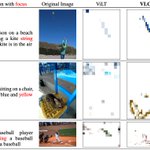
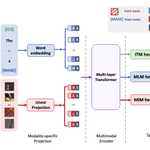
What if we don’t need supervised pretraining for vision-language models?
We find that unsupervised visual representations (e.g., MAE) are actually better initializations for language and vision.


See more in the paper here: arxiv.org/abs/2205.09256
Or grab the code and models to play around yourself: github.com/guilk/VLC
Joint work with Qiuyuan Huang, Alex Hauptmann, @ybisk, and @JianfengGao0217

3
Can multimodal transformers leverage explicit knowledge in their reasoning? What’t the role of explicit vs implicit knowledge in visual tasks like OK-VQA?
Check out our KAT (A Knowledge Augmented Transformer for vision-and-language) paper at #NAACL2022.

This provides a nice place to investigate the trade-offs of information already available in model weights vs extracted from structured sources.

1
1
Additionally, our explicit knowledge integration improves interpretability of model predictions in our analysis.
Paper: arxiv.org/abs/2112.08614
Code: github.com/guilk/KAT
(Work w/ Qiuyuan Huang, Alex Hauptmann, @ybisk and @JianfengGao0217)
1