



This is basically our whole thesis at Liquid Compute. There's plenty of demand for compute but not enough capital to fund it.
Oil, power and grain all have mature financing and hedging markets. Compute has none, so we're building them.

Compute & Cocktails 🍸
How do you finance AI infra? @stanleylee21 (@liquidcompute ) + Mark-Daniel Shelton (@general_compute ) on underwriting compute, getting past prepay and the right debt/equity mix.
📍 Dawn Club, SF · Wed, Oct 28
Request to join → luma.com/g9h2d9ai



Liquid Compute retweeted
Good post from @prashantrad . The question that matters for AI debt is who actually bears the adoption risk. Take-or-pay from a strong counterparty and the lender barely cares about adoption speed. Leave utilization or pricing exposed and it's a different credit. That's exactly what our @liquidcompute Offtaker Credit Map scores. All publications can be found here liquidcompute.com/research

There's understandably a lot of consternation about AI related debt out there.
I read a NYT interview with Peter Orszag, tied to a paper he co-wrote on the new supply side era, where he compares the scale of AI capex debt to the fiber buildout of the 1990s.
The scale of capex investment is enormous, but what is going to matter the most is the speed of adoption of AI, particularly at 'traditional' firms that are not VC or tech related. Whether real adoption happens over the next few years or the next decade, changes the return on capital completely.
For the debt financing this capex, there is another question: who actually bears the adoption risk?
If the contracts are long-term, take-or-pay and backed by strong counterparties, the pace of end-user adoption may matter much less to the lender. If the contracts leave utilization, pricing or renewals exposed to the market, that is a very different credit.
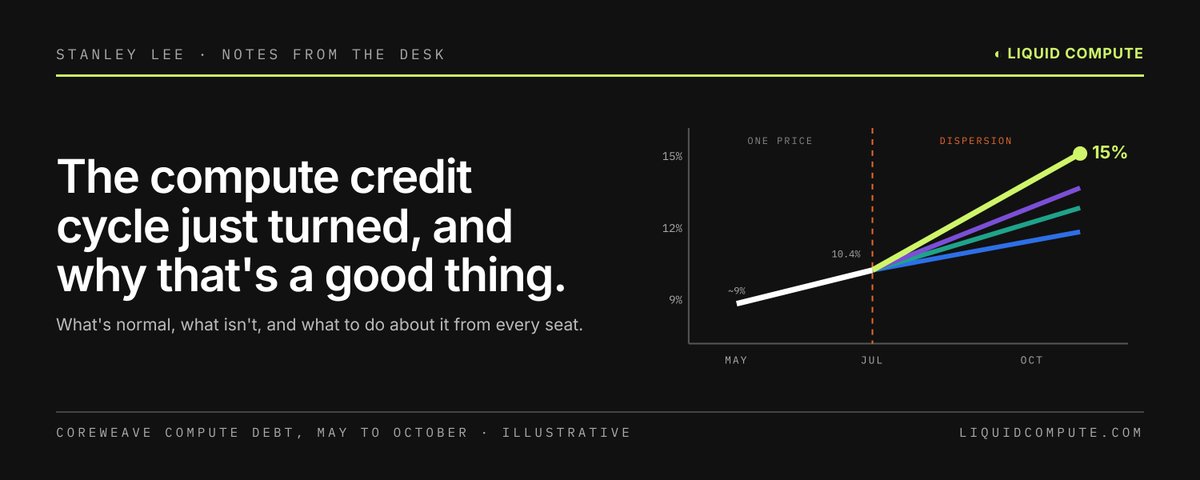
Compute pricing is showing a similar pattern. Rent it now and it's expensive, because near term demand is the one thing everyone can see clearly. Go out 6 months, a year or two years and the compute pricing curve inverts, meaningfully, because nobody has real visibility into usage, adoption or which GPUs will be standard by then. Thanks @stanleylee21 for sharing this info.
So if you're pricing any AI related financing, the pace of adoption is a key underwriting input. And just as important is determining who has contractually agreed to bear the risk if adoption takes longer than expected.
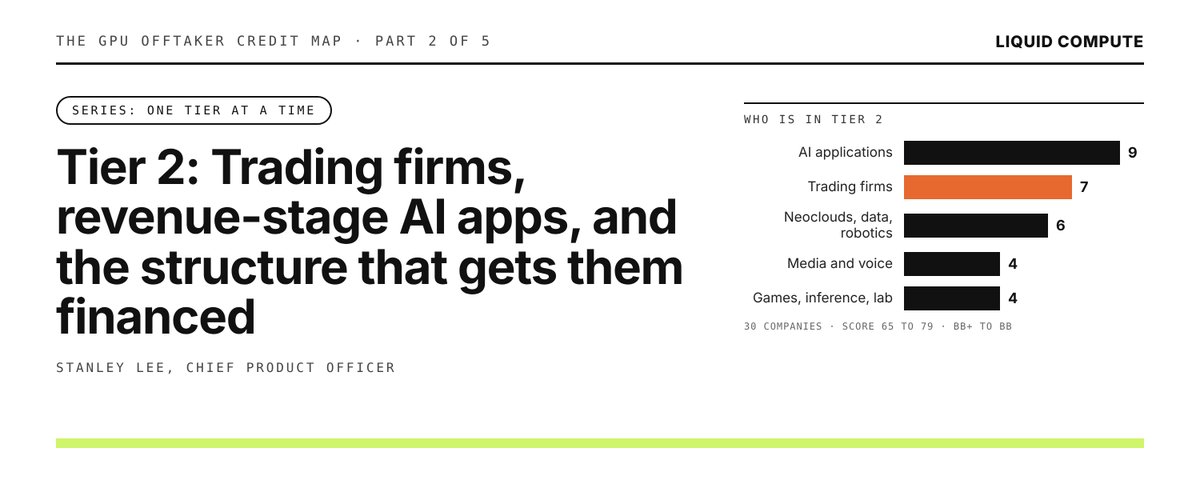
Part II of the GPU Offtaker Credit series today. You can find it along with our other research on our website: liquidcompute.com/research/t… Stay tuned as the series continues!


Liquid Compute retweeted

big and huge, financing is the one true problem in infra sourcing for majority of the market

Liquid Compute and K8 announce a $250M prepayment facility to help compute buyers fund prepayment capacity commitments.
This facility makes compute financeable the way every other commodity already is, and we are already finalizing our first deployments with a few large inference clouds.
We're proud to build this with K8 as we bring the discipline of commodity finance to compute.
Business Wire businesswire.com/news/home/2…

Reach out with a financing request!
businesswire.com/news/home/2…
We released the latest part of the GPU Offtaker Credit series today. You can find it along with our other research on our website: liquidcompute.com/research/t…
Stay tuned as the series continues!

Liquid Compute retweeted
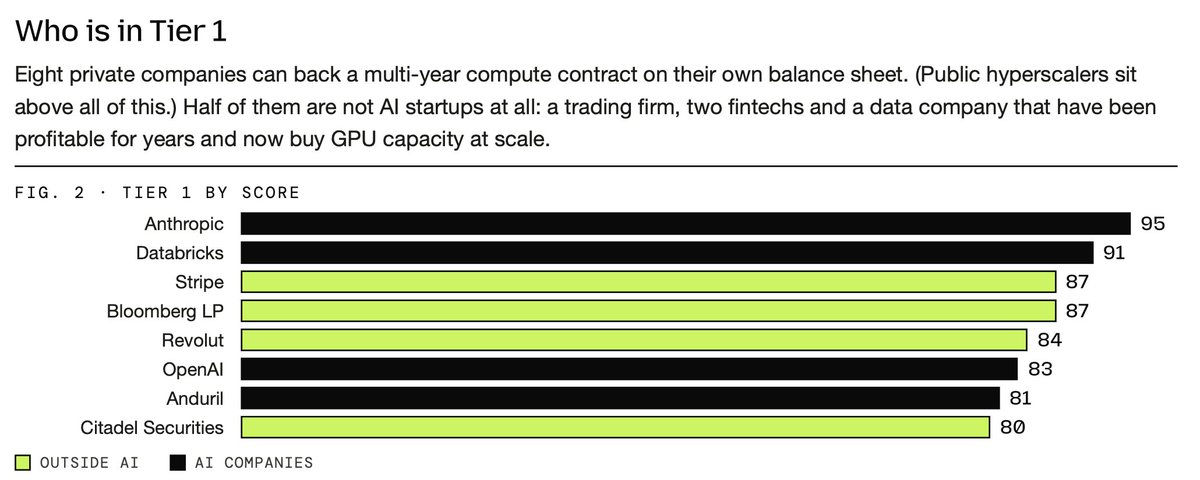
The response to our GPU Offtaker Credit Map was more than we expected. Lenders asked how to use it, operators asked who to sign, and companies asked how to move up.
So we're turning it into a multi-part series, one tier at a time: who's in each tier, the deals in market, how lenders should structure them, and how companies get financed.
Part 1 starts at the top, because Tier 1 is the benchmark every other deal is built against. Each tier gets more interesting from here, so stay tuned...
Lender or company looking for compute financing? Reach out to the team @liquidcompute
Announcing the Liquid Compute GPU Offtaker Credit Map
We assessed 200 private buyers of compute and ranked 169 on a single, transparent credit framework. Our findings cut against consensus: the strongest private offtakers are trading firms and profitable private corporates, not necessarily best-known AI labs.
We released this because the real bottleneck to access compute is capital markets. Capacity gets built when someone will finance it, and financing turns on a question nobody had a shared answer to: can this buyer keep paying for the full term?
The framework is published in full, and we intend it to become the stepping stone for providing greater transparency about counterparty credit. If you buy, build or finance compute, we want to hear from you. If you are on the list and think we have you wrong, please reach out. We welcome all comments and direct feedback on the methodology.

Read the full report here: liquidcompute.com/research/g…

H200 rental rates have climbed back to where they stood at launch, even as Blackwell-generation B200s and B300s come online at scale.
This is a clear signal that demand for compute is outpacing supply across every generation, and that prior-generation hardware is holding its value far better than most depreciation models assumed.
For anyone buying, selling, or financing GPUs, it's a reminder that compute pricing is less about the chip on the spec sheet and more about who has capacity available when it's needed.
lnkd.in/dh5QM2Wx