







Pinned Tweet
Why am I doing this..
I've spent years building my career, moving between companies, taking on bigger roles, more responsibilities, and working toward a better salary. On paper, that's what success is supposed to look like.
But somewhere along the way, I started questioning whether that was really the life I wanted.
You can earn a good salary, save diligently, invest consistently, and still realize that financial security and financial freedom are two very different things.
A paycheck can provide a comfortable life, but it doesn't necessarily buy back your time. And no matter how much you earn, you're still operating within a system where someone else ultimately decides what your time is worth.
I've also learned that corporate life isn't always what it's made out out to be. Politics, competing priorities, organizational dysfunction, and environments that drain more energy than they create value can make you wonder and question why you are working so hard in the first place. I don't want to spend my entire life climbing a corporate ladder only to discover that I've built a career but never built anything that truly belongs to me.
That's a big part of why I am here.
I've always enjoyed researching businesses, digging through financial statements, questioning conventional wisdom, and looking for opportunities that other people might overlook. I enjoy the process of figuring out what a business is actually worth, understanding what could go wrong, and determining whether the price offers a compelling opportunity.
Sometimes, the most interesting opportunities aren't the companies everyone is talking about. They are the business trading their book value / intrinsic value, the overlooked ones with strong cash flows and good earnings, or the situations where the market's expectations don't match the underlying economics.
I want to get better at finding those opportunities. I want to build the discipline to distinguish a genuinely good investment from something that merely looks cheap.
This account is my attempt to turn that interest into something more meaningful.
I don’t expect to build a business overnight, and I don’t assume that having a few good investment ideas makes me an exceptional investor. There is still a tremendous amount to learn. I want to document my research, challenge my own assumptions, study both successful and unsuccessful investments, and develop a philosophy grounded in facts rather than narratives.
I also want to build an independent source of income over time. Not because I expect an easy path to wealth, but because I want more control over my future. My ambition is to eventually manage my own capital, make investment decisions on my own terms, and build something that isn’t dependent on a corporate title, a manager, or the next promotion.
Financial independence, to me, isn’t just about reaching a certain net worth. It’s about having the ability to decide how I spend my time, what work I pursue, and what I want my life to look like.
I know that requires more than saving a portion of my salary and buying stocks. It requires judgment, patience, discipline, and the ability to create value for other people.
That’s why I’m building in public.
I’ll share the businesses I research, the opportunities I find, the risks that concern me, the valuations I disagree with, and the mistakes I make along the way. I want to learn from people who think differently, engage with investors who challenge my assumptions, and become a better capital allocator through the process.
I have no interest in pretending to have all the answers. I’d rather show my reasoning, explain my assumptions, and be willing to change my mind when the evidence changes.
Maybe Long River eventually becomes a research business, an investment partnership, or simply the foundation that allows me to manage my own money full-time.
I don’t know exactly what the final destination will look like.
But I know what I’m working toward: the freedom to think independently, invest patiently, build something of my own, and live life on my own terms.
That’s why I’m here. And this is just the beginning.
My take on $NFLX: Great business. But is the stock cheap enough?
I’ve been looking at Netflix’s Q3 earnings, and my conclusion is that the business is impressive, but I’m not convinced the valuation offers enough margin of safety. It’s not a bad price to start a position. It’s not a price I’d make a large position at.
Here’s why.
The good news is obvious.
Revenue grew ~12% YoY. Operating income grew ~37%. Operating margins expanded from 28.2% to 34.6%.
Nine-month FCF reached ~$9.5B, up ~25% YoY.
Netflix has real competitive advantages. Global distribution. Strong pricing power. Valuable content. A growing international audience.
Its ability to turn a global content library into recurring revenue is genuinely impressive.
But I care about more than revenue growth and EPS.
I care about returns on capital.
How much incremental profit can Netflix generate for every dollar reinvested in the business? Can those returns remain high as competition intensifies and content costs rise?
ROE is useful, but it doesn’t tell the whole story. Share repurchases and financial leverage can boost ROE without necessarily improving the underlying economics.
I’d rather examine ROIC, incremental returns on content investment, and sustainable FCF generation.
That’s where I become more cautious.
Revenue growth is slowing. Advertising revenue is developing more slowly than management expected. And viewer engagement remains something I’d watch closely.
Netflix generated impressive earnings growth this quarter, but I don’t want to extrapolate a single quarter’s margin expansion indefinitely.
Then there’s valuation.
At roughly $257B in market capitalization, Netflix isn’t obviously expensive on earnings alone. But if normalized annual FCF is around $11B, we’re still paying more than 22x FCF.
That’s a starting FCF yield of roughly 4.4%.
For that price to deliver attractive long-term returns, Netflix needs to keep compounding cash flow while maintaining strong margins and avoiding multiple compression.
It can happen. But I don’t want to pay upfront for every optimistic assumption.
My approach is simple.
I’d rather buy a great business at a price that allows me to be wrong about a few things than pay a premium that requires everything to go right.
I’m watching normalized FCF, ROIC, incremental content returns, advertising monetization, and the share price.
Netflix is a business I’d be happy to own at the right valuation.
But a great business and a great investment aren’t the same thing.
Quality gets my attention. Returns on capital earn my respect. Price determines whether I buy.
Maybe I’ll sell some puts at $60. Still debating.
$RKT: A bet on lower mortgage rates—or a misunderstood mortgage platform?
Rocket Companies is an interesting business because the impact of interest rates is more complicated than it first appears.
If mortgage rates remain above 7%, refinancing will likely stay weak and housing affordability will continue to pressure purchase originations. Rocket’s servicing portfolio provides some recurring revenue and can benefit from slower mortgage prepayments, but it probably won’t fully offset a prolonged slowdown in lending.
In this scenario, market-share gains, cost discipline, and integration synergies become critical.
If mortgage rates gradually decline while the economy remains healthy, the setup becomes much more attractive. Lower payments could unlock purchase demand, while refinancing opportunities improve.
Rocket’s roughly $2 trillion mortgage-servicing portfolio gives it an enormous pool of existing customer relationships to target. Combined with Redfin’s distribution, this creates the potential for lower customer acquisition costs and stronger customer recapture. The real question is whether Rocket can convert that scale into better margins and sustainable earnings per share.
The bull case is a sharp decline in mortgage rates without a recession. Refinancing could surge, purchase activity could recover, and Rocket could benefit from operating leverage across its mortgage, servicing, and real estate businesses.
But there’s a catch: falling rates can also reduce the value of mortgage-servicing rights as borrowers refinance, while aggressive competition can compress origination margins.
Conversely, if rates fall because the economy enters a recession, unemployment, weaker home sales, and higher servicing costs could offset the benefits. High rates combined with economic weakness—or rates rising further—would be the most concerning outcomes.
My takeaway: $RKT isn’t simply a bet that the Fed will cut rates. It’s a bet that Rocket can turn its servicing scale, customer relationships, Redfin distribution, and technology into a durable competitive advantage.
At around $11–12 per share, I see meaningful upside if the recovery scenario plays out, but the downside remains substantial if mortgage activity stays weak or integration fails to improve profitability. I’d watch purchase market share, recapture rates, gain-on-sale margins, GAAP earnings, and free cash flow—not just mortgage rates.
The key question is whether we’re buying a proven competitive advantage at a reasonable price, or paying in advance for one management still needs to demonstrate.
I bought some at ~$10.50 and would get more if it continues to drop.
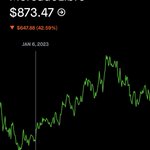
$MELI Since Lula took office in January 2023, MercadoLibre has delivered tremendous shareholder returns. So I wouldn’t be concerned about it and will keep buying and holding long-term.
89M commerce buyers. 88M fintech users. $101B in quarterly payment volume. $23B in assets under management.
Revenue grew 50% YoY in Q2 2026. Advertising revenue grew 73%. Ecosystem users grew 37%.
These aren’t just numbers. They’re evidence of a powerful flywheel connecting e-commerce, payments, logistics, advertising and credit.
Every new customer creates opportunities to monetize more services. Every additional transaction generates data. Every improvement in logistics makes the platform more attractive to buyers and sellers.
AI could strengthen this advantage through better search, advertising, fraud detection and credit underwriting.
The risk? Credit losses, aggressive reinvestment and Latin American currency / politic volatility. Growth alone doesn’t guarantee attractive shareholder returns.
But I wouldn’t dismiss MELI because of Brazil’s political environment or a recent stock-price decline.
The business is bigger than one country, one president or one economic cycle.
I’m watching one question closely: Can MELI convert its extraordinary ecosystem growth into sustainable owner earnings?
If it can, today’s pessimism could eventually look misplaced.
Great businesses deserve scrutiny. They also deserve to be valued on the economic engines they’re building—not just the risks investors fear.
And did I mention their discipline on SBC? 👀

My preliminary take on a potential $DASH $CART deal:
DoorDash can probably finance an acquisition of Instacart. But I am much less convinced that paying $15 billion–$17 billion would generate an attractive return for DoorDash shareholders.
DoorDash has approximately $6.2 billion in cash and investments. That is substantially less than the reported potential purchase price. The deal is not necessarily unaffordable, but DoorDash cannot fund it entirely from its existing liquidity without materially depleting its financial resources.
The bigger question is whether the acquisition makes economic sense.
There are obvious potential synergies. DoorDash could expand its grocery business, cross-sell to existing customers, improve advertising monetization, and leverage Instacart’s retailer relationships and technology.
But how much of that growth is genuinely incremental? DoorDash is already expanding into grocery delivery. It could potentially build some of these capabilities organically rather than pay a substantial acquisition premium.
The competitive landscape is another concern. Costco offers compelling value on bulk purchases. Walmart and Amazon have enormous scale and established customer relationships. HelloFresh and prepared meals compete for a share of household food spending, even if they are not direct substitutes for every grocery purchase.
Retailers also have incentives to strengthen their own digital platforms rather than become increasingly dependent on third parties.
There is, however, an important counterargument: Instacart is more than a grocery delivery marketplace. Its advertising and retailer technology businesses could offer attractive incremental margins and recurring revenue. That may be the real strategic prize for DoorDash. But I would want to see how much cash these businesses actually generate before assigning them a substantial premium.
Retailer relationships also create a potential vulnerability. Grocery retailers want more online sales and efficient fulfillment, but they also want to retain control over their customer relationships, digital storefronts, advertising inventory, and shopping data.
A larger DoorDash–Instacart platform could offer retailers better technology and fulfillment while simultaneously giving them more incentive to build their own alternatives.
Customer overlap, integration costs, and the opportunity to build organically further complicate the investment case.
Ultimately, I want to know whether Instacart can generate enough standalone cash flow and whether the combined business can produce enough incremental cash flow to justify the purchase price.
More customers, more grocery orders, and more revenue sound great. But they do not automatically translate into attractive shareholder returns.
I see the strategic rationale. I am just not convinced the economics are compelling enough.
A good business can still be a bad acquisition if you overpay.
Honestly, I like $UBER a bit more.
Chipotle $CMG - Strong Cash Flow, Weakening Earnings, Aggressive Buybacks
I’m digging into Chipotle’s latest filings, and there’s an interesting divergence worth watching.
The business is still generating substantial cash. But underneath the headline revenue growth, margins are compressing, earnings are declining, and management is spending billions repurchasing shares.
Here’s what stands out.
1. Operating cash flow is growing — but there’s a catch.
H1 2026 operating cash flow reached $1.33B, up from $1.12B a year earlier.
However, management attributed the improvement primarily to the timing of tax-related payments, with a smaller contribution from other working-capital changes.
That’s an important distinction: better reported cash flow doesn’t necessarily mean better underlying economics.
2. Free cash flow remains substantial, but investment needs are rising.
H1 2026:
• Operating cash flow: $1.33B
• Capital expenditures: ~$398M
• Free cash flow: ~$934M
FCF increased approximately 15% YoY.
But capex also rose as Chipotle continued expanding its restaurant base and investing in existing locations.
For context, FY2025 FCF was approximately $1.45B, down from $1.51B in FY2024.
The cash-generating machine remains strong, but its trajectory deserves scrutiny.
3. Earnings are moving in the wrong direction.
H1 2026 net income fell to $706M from $823M, a decline of approximately 14%.
Meanwhile, Q2 revenue increased 9.3% YoY to $3.35B.
The problem? Growth isn’t translating into stronger profitability.
Q2 operating margin fell from 18.2% to 15.7%.
Restaurant-level operating margin declined from 27.4% to 25.2%.
Food inflation, particularly beef and freight, along with higher protein and produce usage, pressured margins.
This is the metric I’d watch most closely: can Chipotle restore margins while continuing to grow?
4. Management is buying back shares aggressively.
Q1 2026 repurchases: $701M.
Q2 2026 repurchases: $631M.
That’s approximately $1.33B in buybacks during the first half of 2026, versus $934M in FCF.
In other words, repurchases exceeded first-half FCF by roughly $397M.
The difference was funded through the company’s existing liquidity and other cash movements.
This isn’t automatically bad. Chipotle has substantial cash-generating capacity and no conventional borrowings outstanding.
But it raises an important capital-allocation question:
Is management buying back undervalued shares, or using a significant portion of its financial flexibility to support per-share metrics?
5. The balance sheet is strong, but leases matter.
Chipotle has no outstanding conventional borrowings, giving it considerable financial flexibility. However, operating lease liabilities totaled approximately $5.42B at June 30, 2026.
These aren’t conventional financial debt, but they’re real contractual obligations that remain even if individual restaurants underperform.
For a restaurant business, ignoring leases would understate its fixed-cost commitments.
My takeaway:
I’m not bearish on Chipotle’s business simply because earnings declined.
Revenue is growing, comparable sales have improved, and the company continues to generate substantial cash.
But I’m watching three things closely:
Whether operating and restaurant-level margins stabilize.
Whether FCF growth persists after accounting for tax-payment timing and rising capex.
Whether aggressive buybacks create genuine long-term shareholder value.
The biggest risk isn’t conventional debt.
It’s paying too much for growth while margins compress and capital returns consume more cash than the business generates. A great business doesn’t automatically make a great investment at every price.
Bought $INTR at 5, Sold out at $7.50, and I will be buying them back at a lower price.
Good opportunity, in my opinion.

Long River Holding retweeted

My Cassandra Unchained Substack will NOT have a pricing increase on November 1.
I heard and listened.
In the interest of accessibility and continuity, Cassandra will be Unchanged on November 1.
One year on the Stack, No. 1 Rising on Substack, with 402,000 Followers and 343,000 Subscribers, I thank you all.

$EWZ So...do we think Stan Druckenmiller closed his position last week? He did continue to hold through June 30 of this year.


🇧🇷Brazil’s Election Is Becoming a Political Risk Premium Trade
My read is that $EWZ has become a trade on Brazil’s political risk premium, not just Brazilian corporate earnings.
Initially, investors treated Flávio Bolsonaro’s strong first-round performance as a potential catalyst for lower interest rates, a stronger Brazilian real, and a more market-friendly fiscal agenda.
Brazilian assets rallied. But as the runoff approached, investors began questioning whether his promises of spending cuts and fiscal discipline could actually translate into credible reform.
Now, prediction markets have reportedly swung sharply toward Lula, with his implied probability of winning approaching 90%.
But here is the distinction investors need to understand:
Prediction markets price the probability of an election outcome. Equity markets price the economic consequences of that outcome.
Even if Lula wins, $EWZ does not automatically have to fall. The reaction depends on how much of that outcome is already priced in, the next administration’s fiscal policies, interest rates, currency movements, and corporate earnings.
Conversely, a Flávio victory would not automatically justify a sustained rally. Investors would still need evidence that his administration could implement a credible fiscal plan and address Brazil’s structural fiscal challenges.
The real question is whether Brazil’s recent rally was driven by improving fundamentals or by expectations of a political shift that may not materialize.
If the rally was largely built on the prospect of a lower political risk premium, a reversal in election expectations could expose how much optimism was already embedded in prices.
For $EWZ, I am watching three things:
1. The Brazilian real and government bond yields.
2. Whether the election repricing triggers profit-taking in Brazilian equities.
3. Whether the eventual government can deliver credible fiscal reform.
The election is the catalyst. Fiscal credibility, interest rates, currency performance, and corporate cash flows will determine what comes next.
A political narrative can move a market quickly. Sustained returns require more than a narrative.
(Attach these two betting market screenshots here for fun)
It's a crazy time I am sure.


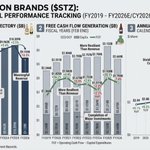
I think $STZ will be on my buy list soon.
My view is that they can continue to gain market share even if younger Americans drink less but I wouldn't assume it can keep growing simply by taking customers from competitors.
The data increasingly suggest that alcohol consumption is becoming a structural headwind in the US, particularly among younger adults. Health concerns are also changing consumer behavior. Some may stick to nonalcoholic beer or other beverages, or simply drink less frequently. And the broader beer market is shrinking. This is a genuine long-term risk to $STZ and really other beer brands. They will be competing for a larger share of the market that's facing pressure.
That said...I think there's a lot to like about the business. Modelo and Corona are establish brands with strong consumer recognition, pricing power, and distribution advantages that smaller breweries would struggle to replicate. They don't need to invent the next big thing. They just need to keep its brands relevant, defend its shelf space, and convert that into consistent free cash flow.
What interests me is the possibility that the market is pricing in too much pessimism about a business that still has meaningful competitive advantages and generates substantial cash flow. The question is whether those advantages can outlast the industry headwinds.
For me, this is a business-quality-versus-growth question. The brands are proven. The next step is to find a good price to pay for them. $108 was a good target but I slept through pre-market hours as always. Maybe I need to set my alarm for that..
$STZ: Strong Brands, But Is the Cash Flow Sustainable?
I’ve been looking more closely at Constellation Brands ($STZ), and I think there’s an interesting investment case here. But I don’t want to confuse a strong business with an attractive stock price.
STZ owns some of the strongest beer brands in the U.S., including Modelo and Corona. Its brand recognition, distribution network, and scale give it real competitive advantages. These aren’t advantages that a small craft brewery can easily replicate.
But the industry is changing. Younger Americans appear to be drinking less, health concerns are influencing consumer behavior, and the broader U.S. beer market is facing pressure. STZ can continue gaining market share, but that doesn’t guarantee growth if the overall market keeps shrinking.
Here’s what interests me: STZ still generates substantial free cash flow.
FY2026 free cash flow was approximately $1.79 billion. Based on its latest reported results, trailing-twelve-month free cash flow was around $1.84 billion. Management’s FY2027 guidance, however, points to a lower $1.6–$1.7 billion range.
That difference matters. I don’t want to value STZ based on its best recent cash flow year and assume it will continue indefinitely. Working-capital movements, capital expenditures, taxes, and the underlying health of the beer business all affect how much cash shareholders can ultimately receive.
The dividend looks reasonably well covered by current free cash flow. But STZ also carries substantial debt. I’d rather see management prioritize balance-sheet strength than aggressively repurchase shares while the industry’s long-term growth outlook remains uncertain.
My current approach is to use roughly $1.6–$1.8 billion as a starting range for normalized annual free cash flow, with a more pessimistic scenario if beer demand and margins deteriorate further. That’s a valuation assumption, not a prediction.
For me, the question isn’t whether Modelo and Corona are good brands. They are. The question is how durable their competitive advantages will be, how much cash the business can generate over the next decade, and whether today’s stock price adequately compensates me for the risks.
A great brand doesn’t automatically make a great investment. Price still matters.
--------------------------------------------------------
最近,我一直在深入研究星座品牌(Constellation Brands,$STZ),觉得这家公司确实存在值得关注的投资机会。但我不想把一家好公司和一只值得买入的股票混为一谈。
STZ有美国市场上实力很强的啤酒品牌,包括Modelo和Corona。品牌认知度、分销网络和规模效应。这些都为公司构筑了真正的竞争优势。这些优势并不是小型精酿啤酒厂能够轻易复制的。
但现在整个行业正在发生变化。美国年轻人似乎正在减少饮酒,对自身健康的态度也在影响消费者的选择,而美国啤酒市场整体面临压力。即使STZ能够继续提升市场份额,如果整个市场持续萎缩,也不代表公司一定能够实现增长。
真正吸引我的是:即使面临这些挑战,STZ依然能够产生可观的自由现金流。
FY2026财年的自由现金流约为17.9亿美元。根据公司最新披露的财务数据,过去12个月的自由现金流约为18.4亿美元。不过,管理层对FY2027财年的指引更为保守,预计自由现金流约为16亿至17亿美元。
这个很重要。因为我不想根据公司近期表现最好的一年进行估值,然后假设这种现金流能够无限期持续。营运资本变化、资本开支、税款,以及啤酒业务本身的经营状况,都会影响公司最终能够为股东创造多少现金。
目前来看,公司的自由现金流能够为股息提供相对充足的覆盖。但STZ也背负着相当规模的债务。在行业长期增长前景仍不明朗的情况下,相比激进回购股票,我更希望管理层优先改善资产负债表、降低债务。
我目前的估值思路是,将每年16亿至18亿美元作为正常化自由现金流的初步假设。如果啤酒需求和利润率进一步恶化,我也会考虑更悲观的情景。这是估值假设,而不是对未来业绩的预测。
对我来说,问题不是Modelo和Corona是不是好品牌——它们确实很强。真正的问题是:这些竞争优势能够持续多久?未来十年,公司究竟能够创造多少现金流?而当前的股价,是否给予了我足够的安全边际,来承担这些风险?
好品牌不一定意味着好投资。买入价格,始终很重要。


$SPCX do people worry about the fact that
1. headline growth and profitability figures may obscure how much capital the business consumes?
2. how dependent is its results are on acquisitions, and
3. how much financial risk is accumulating beneath the surface?
I mean..capital expenditure is running far ahead of operating cash flow.
Some of this spending could generate substantial future returns, I would not say the expenditure as wasteful.
But the return on invested capital is not yet established for the new investments. And if the company continues spending at this rate, internally generated cash will not be sufficient to fund the entire investment program. On top of that, the company is spending heavily while GAAP profitability remains weak..and the operating margin is not good either.
@grok am I missing something or you think I am being fair.