
Assistant Professor @UAM_Poznan | European affairs @Neuro_Rights | Fulbright Scholar '24-'25 @Columbia | Exploring #HumanRights, #AI, & #Neurotechnologies
Poland
Joined February 2018
- Tweets580
- Following749
- Followers519
- Likes4.8K





Pinned Tweet
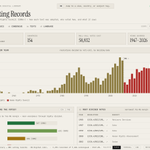
1/ Today we launch the beta of HUDOC Researcher, a free tool for research on the judgments of the European Court of Human Rights, built on HUDOC data.
The film shows it in less than two minutes.
1
133
Duża praca do wykonania przed nami. Ja sam ucząc praw człowieka i AI obserwuję, że w ciągu ostatnich 3 lat co roku całkowicie przerabiam zajęcia, bo mam wrażenie, że pochodzą z innej epoki. Nigdy wcześniej tak nie miałem. A to „tylko” prawo z elementami programowania.

Słowo na niedzielę od noblisty Demisa Hassabisa:
„AGI nadchodzi, a szkoły wciąż uczą dzieci umiejętności, w których AI będzie lepsza. W związku z tym należy całkowicie zmienić podejście do całego systemu edukacji.”
W Polsce nie da się nawet przeprowadzić debaty na ten temat, bo wszyscy są święcie przekonani, że to tylko marketing i będzie po staremu.
Nie, nie będzie. Obudzimy się jak zwykle z ręką w nocniku.
I nigdy wcześniej nauczanie nie sprawiało mi tyle frajdy. Z AI mogę zrobić literalnie wszystko sam - od animacji, przez studio do vibecodowania po symulację rozpraw sądowych. Ostatnio zacząłem współtworzyć ze studentami materiały w trakcie zajęć. lszoszk.github.io/teaching-m…
1
1
97
Lukasz Szoszkiewicz retweeted

United Nations Office on Drugs and Crime & International Criminal Police Organization (INTERPOL). publishes report on Neurotechnology with our input: unodc.org/res/justice-and-pr…
unodc.org/unodc/en/justice-a…
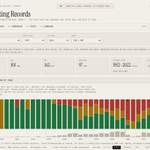
1/ Of all the parts of doctrinal work, the analysis of the travaux préparatoires was always the one I enjoyed the most. Today I share UN Travaux Préparatoires, a free database of the drafting records of the UDHR, the ICCPR and the ICESCR (1946–66). The film shows it in 90 sec 🧵
5/ The annual conference of @AHRI_Network in Geneva, devoted to the 60th anniversary of the Covenants, seems to be the best occasion to share it. The scans were read on the GPUs of PLGrid (ACK Cyfronet AGH), and I am grateful for their support.
#HumanRights #ICCPR #ICESCR #UDHR
1
13
Lukasz Szoszkiewicz retweeted

We have discovered a substantial number of vulnerabilities in the German legal system using LLMs.
These may enable access to confidential documents, travel without an otherwise required visa, enforceable leave for soldiers at NATO’s JSEC, and more.
Similar to computer systems, the written law can contain vulnerabilities that invite exploitation. In our blog post, we share a selection of vulnerabilities, and present potential exploits for each. To our knowledge, none of these have been previously recorded. We share only those vulnerabilities whose exploitation we believe would not cause serious harm.
blog post: felixringe.com/legal-exploit…

Lukasz Szoszkiewicz retweeted

Do firmy zamówiliśmy ostatnio umowę.
Koszt 5 tys. PLN.
Już w fazie pisania, było trochę poprawek od nas, ale poprawili, zapłaciliśmy i mieliśmy już umowę dla klientów.
Ale z czasem, klienci zaczęli pisać do nas różne uwagi, wszystkie zasadne.
Wkurzyłem się, wrzuciłem umowę do Claude Code i… chwyciłem się za głowę.
Znalazł tyle różny luk i ryzyk, że głowa mała.
Całą umowę przepisałem z Claudem.
Szukamy teraz prawnika do weryfikacji, ale w tej chwili, mam większe zaufanie w tej kwestii do AI niż samych prawników i na pewno, wszystko co prawnik powie, przeanalizuje wcześniej z AI.

Lukasz Szoszkiewicz retweeted

There's a decent chance that law firms commissioning expensive, bespoke AI software today will spend more time negotiating the vendor contracts than their competitors will spend recreating the software a couple of years from now.
AI is already being used to reverse-engineer sophisticated commercial software that took years to develop. It's entirely plausible that by 2028, a reasonably competent associate could describe what one of these elaborate fund formation platforms does to Claude, point it at the firm's precedents, and have a functional substitute by the end of the week.
I'd be awfully nervous underwriting a major software development project right now when the cost of reproducing its functionality may be falling faster than you can finish building it.
Instead, law firms should be teaching their lawyers to build inexpensive, relatively simple automations for the problems they actually encounter. Have the lawyers use their own judgment, experience, and the firm's proprietary data to teach AI how to perform the work the way they would. And be perfectly happy to throw those tools away and rebuild them as the models improve.
The competitive advantage isn't going to be the software. It's going to be how effectively a firm's lawyers can teach AI to do what they do. Spending millions on bespoke software that might be trivial to replicate before it pays for itself seems like a particularly bad bet right now.

@lathamwatkins and Harvey are collaborating to develop an AI-enabled fund formation solution.
Through the design partnership, lawyers from Latham’s market-leading Investment Funds Practice are working with Harvey’s product and engineering teams, bringing their fund formation experience and market knowledge directly into the development of technology supporting the fund documentation process.
The collaboration focuses on LPAs, side letters, subscription documents and comment memos, with the aim of streamlining processes and giving lawyers more time to focus on the strategic, business-critical issues that matter most to clients and their investors.
Lukasz Szoszkiewicz retweeted

You might have 1–5 years to contribute intellectually to the world before AGI. What should you do with them?
Excellent advice from @jaschasd (Anthropic) at Stanford. Skip Netflix tonight and watch this instead.
Fully agree. Whenever I show tools I vibecode, I get questions about hallucinations and, second most common topic, privacy/confidentiality (just run the app u vibecode on your laptop)

At a conference on AI & legal profession. I'm sorry folks, but you are over-indexed on hallucinations. You aren't calibrated on the magnitude of the problem and it's possible that one reason is psychological. It's comforting to think that the robots will never be as accurate & diligent as we are.
*I am NOT saying that AI doesn't hallucinate or never makes mistakes; indeed, I believe that it does.
1
1
125
Today I discussed Radbruch’s formula with students. None knew it, and I doubt they’ll read the original 1945/46 essays. Inspired by @emollick, I gave Claude Radbruch’s two pieces on legal certainty and justice. Seven prompts: three run with Fable and four with Opus 5.5. Wow!
1
110
Lukasz Szoszkiewicz retweeted

Dan is right. Even if, like me and him, you don’t let Claude write for you, you should try letting it help you research and cite check.

Law folks: If you’re not using Claude Code or ChatGPT’s Codex, you have no idea what you’re missing. So I’m distributing my research tools that provide a huge boost to legal scholarship. Research assistance, cite-checking, proofreading, and more (thread):
danepps.github.io/legal-rese…
Lukasz Szoszkiewicz retweeted

basal-omni 🇵🇱 - TOP1 🤩🤩🤩 🌍 na świecie w modelach otwartych oraz TOP2 wśród zamkniętych i otwartych
Wg niezależnego benchmarku modeli system-one gdzie testowane są wszystkjie modele na świecie - JevBench (link do bencha w pierwszym wpisie). Czyli można? Można! Polskie AI 🇵🇱
basal wyprzedził model OpenAI, Microsoft oraz pierwowzór z TypeSafe (jev).
Thank you, @airesearch12 , for the independent evaluation on JevBench.

Lukasz Szoszkiewicz retweeted

We always wanted more access to justice, more access to government.
My paper, Judicial Economy in the Age of AI, is about the impending strain on government resources, specifically courts, created by AI tools.
It predicts that courts will have to put up barriers to weather the AI storm, and that these barriers will harm individual rights.
We now have evidence of huge pressure building up on courts and government services.
There is a solution. You may not like it, but you will surely hate the alternative. We need to integrate AI quickly into our courts and agencies.
I’ve been talking to court administrators, judges, and others about solutions. If you are working in this space, I’m happy to talk more about how to build these new institutions.

1/ I am a lawyer with basic programming knowledge. Every tool I released this year was co-developed with an AI assistant writing code. At events I am asked how I ensure quality, confidentiality, privacy and security, and my favourite: what about hallucinations. 🧵
🤖 Made with AI

10/ My own tools are public, but that was a choice, not a consequence of how they were built (and, to be honest, setting it up online was the hardest part – you will not do it by accident).
1
1
23
The full post on how human rights experts can use AI in their workflows: trafo.hypotheses.org/69222

1
22