

Trujillano en Ica Cirujano Laparoscópico Papá de Mica y Emi. Arctic Monkeys 🐵
Trujillo
Joined December 2008
- Tweets547
- Following393
- Followers69
- Likes2.6K




Luis Enrique retweeted

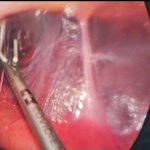
Another video of a laparoscopic transabdominal preperitoneal (TAPP) repair for an indirect inguinal hernia.
#hernia #laparoscopic #surgery
Luis Enrique retweeted

🧠🇨🇮 Ojo a la rutina que hace Martial Godo del Strasbourg, antes de cada partido, preparando el activo más importante en el fútbol: LOS OJOS.
Esto sirve para activar su cerebro y procesar información a velocidad del juego.
¿Opiniones? ⁉️
Luis Enrique retweeted

Managing bleeding during laparoscopic partial nephrectomy
Blood loss ~750 ml
Controlled without transfusion.
Key principles:
- Stay calm
- Maintain clear communication with anesthesia
- Good assistance and coordination
- Only proceed if the patient remains stable (always keep a low threshold to convert to radical nephrectomy)
Thanks to the great team at @SMCH_Riyadh for all the support
Luis Enrique retweeted

🔬 Pelvic lymph node dissection: let's focus on the LEFT side!
Most surgical tutorials focus on the right side. But what about the left?
🎓 In this new FREE Surgical Vision tutorial, you'll learn:
✅ Key anatomical landmarks
✅ Instrument positioning
✅ External iliac vein dissection
✅ How to safely identify and preserve the obturator nerve
Relevant to both prostate and bladder cancer surgery.
🔁 Subscribe & share to help make surgical education accessible to everyone!
@ERUSrobotics @AmerUrological @Uroweb
youtu.be/vP_Qsfc7frE


Luis Enrique retweeted

How to do it!

Proud of our new publication about the Self-locking Knot for Thoracic Wall Closure in Trauma Anterolateral Thoracotomy! With the leadership of Dr @izunigav ! And the team work of @carlosperez_18 @ciropedroza ! @FSFB_Salud @uniandes @MediUniandes present! Link: sciencedirect.com/science/ar…


Luis Enrique retweeted

The pancreaticojejunostomy is the Achilles heel of the Whipple
Soft gland. 0.8 mm duct, roughly the outer diameter of a 22G cannula.
Robotic duct-to-mucosa.
Every pancreatic surgeon knows the feeling: soft gland, duct you can barely see!
How do you approach the sub-1 mm duct?
Luis Enrique retweeted

This is how I formulate the gastric tube in laparothoracoscopic McKeown esophagectomy, I already did complete duodenal kocherization so the conduit will reach the neck without tension , patient discharged home day 10, and now on full oral diet after removing her feeding Jej .
Luis Enrique retweeted
Laparoscopic adrenalectomy for a 12 cm adrenal myelolipoma.
@SMCH_Riyadh
Luis Enrique retweeted
Hiatal hernia repair + Roux en Y gastric bypass in less than 1 hour 30 min 🙏🏽, patient was 62 years old with history of sleeve gastrectomy 10 years ago; endoscopy showed HH and LA class C esophagitis, ERABS protocol with TAB block made it possible for the patient to walk around with minimum pain 5 hours post op 🙏🏽👍🏼
Luis Enrique retweeted

🧬 ¿Puede el ácido fólico hacerte ganar más músculo?
Un nuevo ensayo ha encontrado algo bastante sorprendente:
🏋️ Entrenamiento: +0,91 kg de músculo
🏋️ + ácido fólico: +4,79 kg
Y ambos grupos hicieron exactamente el mismo entrenamiento.
Veamos qué hicieron 👇
Luis Enrique retweeted

Nuevo video💻en el #videoatlas: "Abordaje laparoscópico de tumor retroperitoneal"
Nos presentan la exéresis laparoscópica de una lesión quística retroperitoneal en contacto con múltiples estructuras nobles.
🔗aecirujanos.es/Abordaje-lapa…
Luis Enrique retweeted

Due to request, video with our lap right side colectomy trocar methodology.
Mark the costal margins and semilunar lines
Define area of action
Mark the optical trocar punction site at a 15cm (6in) distance
Mark the working trocars punctions sites at a 8cm (3,5in) distance... – at Rio de Janeiro, Brazil
Luis Enrique retweeted

Tener tatuajes se asocia a un 29% más de riesgo de melanoma y a un 21% más de riesgo de linfoma maligno.
Y eliminarlos con láser se asocia a un aumento del 200% del riesgo de linfoma maligno, probablemente por la fragmentación de los compuestos tóxicos de la tinta.


Luis Enrique retweeted

"Hot" Laparoscopic Cholecystectomy:
🔴Principles remain the same
🔴Know bailout options
➡️Subtotal
🔴Gallbladder decompression
🔴Rouviere's important landmark
🔴Endo pledget very useful in these cases
🔴Suction/irrigation
➡️Blunt dissection
🔴Demonstrate CVS
#FOAMed #GITwitter #surgery #SoMe4Surgery #MedEd #chole


Luis Enrique retweeted
vTAPP for L3W2 left incisional hernia (after orthopedic repair)
Pre peritoneal repair, midweight mesh, ASIS fixation with securestrap, discharged in the same day.
@VNikolian @jlberistain @DiLaurentino @RafaelGarcia_MD @RAZ_doctor
This is the way – at Rio de Janeiro, Brazil
Luis Enrique retweeted

In 2018, I read a study on this idea.
Scientists weighed down rats but let them eat all they wanted/
They lost weight. The idea was that the body has a "gravitostat" that synchronizes weight maintenance processes based on weight/
So, I wore a weighted vest and lost weight!


The rucking community has been carrying weighted vests for cardio and strength. Turns out the hidden benefit is metabolic: it tricks your skeleton into maintaining energy expenditure during fat loss.
A new International Journal of Obesity study tested weighted vests during caloric restriction—not for the workout, but to preserve the gravitational loading signal that regulates metabolism. The results revealed something the fitness industry has been missing.
Researchers recruited 18 older adults with obesity and osteoarthritis for a 6-month weight loss trial. Half followed the diet alone. The other half wore a weighted vest for up to 10 hours daily while following the same diet.
The vest weight increased weekly to replace the weight being lost—up to 15% of baseline body weight. Participants wore it during their most active hours, averaging 6.6 hours per day with about 6 kilograms in the vest. No formal exercise program was involved.
Both groups lost similar amounts of weight during the 6-month intervention. The weighted vest group lost 11.2 kg. The diet-only group lost 10.3 kg. About one-quarter of the loss in both groups came from lean mass.
Then researchers tracked what happened 18 months after the intervention ended—no contact, no protocol, just long-term follow-up to see how much weight participants regained.
The weighted vest group regained approximately half of the lost weight. They were still 4.8 kg lighter than baseline at 24 months. The diet-only group regained all of it. They returned to baseline weight plus 0.9 kg.
The metabolic mechanism appeared in resting metabolic rate changes during the weight loss phase.
Resting metabolic rate declined by 16 kcal/day in the weighted vest group during the 6-month intervention. It declined by 237 kcal/day in the diet-only group. That's a 221 kcal/day difference in metabolic adaptation to the same amount of weight loss.
The smaller the metabolic rate crash during weight loss, the less weight participants regained during follow-up. Change in resting metabolic rate was inversely correlated with subsequent weight regain—preserving metabolism during the loss phase predicted better maintenance during the years after.
This fits the gravitostat hypothesis: osteocytes in the lower extremities sense gravitational loading from body weight and send signals to the brain that regulate appetite and fat storage. When body weight drops, the system detects reduced loading and responds by lowering metabolic rate and increasing hunger to restore the lost weight.
Wearing a weighted vest during weight loss may preserve the gravitational loading signal even as fat mass declines—tricking the osteocyte sensors into maintaining energy expenditure instead of triggering compensatory metabolic suppression.
The mechanism remains speculative. The study was small—only 18 participants completed 24-month follow-up. The weighted vest group had better metabolic outcomes, but the between-group difference in weight regain didn't reach statistical significance.
Lean mass loss was similar in both groups during the intervention, so the vest didn't preserve muscle. But the vest group remained 1.84 kg lower in lean mass at 24 months while the diet-only group returned to baseline lean mass—suggesting the sustained weight difference came primarily from fat mass.
The gravitostat model has been tested mostly in animal studies. Human data showing that increasing gravitational load produces small but measurable fat loss over weeks exists, but this is among the first studies examining whether maintaining load during intentional weight loss affects long-term regain.
If confirmed in larger trials, the implications are straightforward: metabolic adaptation to caloric restriction may be partly driven by reduced skeletal loading rather than energy deficit alone. Preserving that loading signal during weight loss could prevent the metabolic suppression that makes long-term maintenance so difficult.
The clinical application doesn't require new drugs or complex protocols. It's a weighted vest worn during normal daily activity—the intervention preserves resting metabolic rate without requiring participants to increase energy expenditure through structured training.
Most weight loss interventions focus on creating an energy deficit and accepting the metabolic consequences. This study suggests an alternative: preserve the gravitational signal that regulates energy balance and let metabolic rate adaptation take care of itself.
The decisions about how to structure a weight loss phase may need to account for skeletal loading as a distinct biological variable—not just calorie balance and macronutrient composition, but whether the body's weight-sensing system interprets the intervention as true weight loss or maintained loading with reduced fat mass.
Weight regain after caloric restriction isn't a character flaw. It's a predictable response to reduced resting metabolic rate. And if that reduction can be prevented by maintaining gravitational load during the loss phase, we've been overlooking a mechanical intervention that addresses one of the core biological drivers of regain.
