

grad student | phytogeography 🇵🇭🇹🇼
Joined January 2022
- Tweets236
- Following429
- Followers222
- Likes879


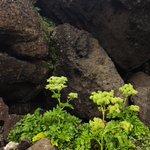



Big thanks to Island Biology 2026 #IB2026 for the Young Researchers Sherwin Carlquist award for Best Oral Presentation for my Begonia study.
We are so grateful to share the big stories from our corner of the world. Cheers, here's our big Begonia tanauanensis for you!
Also ⬇️⬇️


Would like to plug our recent publications about centuries of Philippine Begonia progress. This can give you an idea of the connection of historical events to our islands' biodiv knowledge.
We had a field day writing this! Especially @etnobiyologo!
nph.onlinelibrary.wiley.com/…

First time here in the northernmost inhabited island of the Philippines. Sharing some photos of these majestic landscapes of Itbayat island, Batanes province, around 140km from Orchid island of Taiwan. Here I stand closer to my apartment in Taipei than our house in Manila 😆😭 – at Basco, Cagayan Valley


Mark Castillo Bucay retweeted

Our Matters Arising article is now published at @npjbiodiversity. In this critique, we highlighted some deficiencies in a 2024 study on the relationship between conflict & biodiversity knowledge in Mindanao, Philippines. nature.com/articles/s44185-0…

We described two new species of Begonia from Eastern Mindanao, Philippines. Surprisingly, based on the initial analysis of their ITS sequences, they belong to the same clade with other species found in a much northern localities in Luzon island. – at Taoyuan County, Taiwan

Morphological and molecular analyses revealed two #newspecies of #Begonia sect. #Baryandra in the Eastern Mindanao Biodiversity Corridor, #Philippines
#taxonomy
doi.org/10.11646/phytotaxa.6…

This is just an overview of the works that we're doing in understanding these plants' radiation in the country as we are geared to add MORE samples from MORE islands and localities.
More species dropping soon, more stories to tell, and tons of work to do. 😅
Thank you team! – at Taoyuan County, Taiwan


Snaps from Green Island (綠島), Taiwan, the northernmost island of the Luzon Volcanic Arc. From the resident island-hopper Begonia fenicis, to very wide carpets of natural bonsai Pemphis acidula, the flora of this small island (15 sqkm) definitely has a larger story to tell. – at Hualien County, Taiwan


Mark Castillo Bucay retweeted

I'd like to sustain that fitmultiBM -- for fitting a discrete character dependent continuous trait evolution model (including with hidden-rates) via the approximation of Boucher & Démery (2016) -- is the most important new function in #phytools from 2024: blog.phytools.org/2024/11/fi….

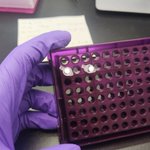
Obligatory picture of pooled samples before sequencing. Will miss working with my wetlab. Or not. – at Taipei City, Taiwan

1
3
202
Very good read on the parasitic plants of Taiwan! – at Taipei City, Taiwan

Parasitic plants are a unique (parasitic!!) and diverse (>4,500 species!!) group of plants that are ecologically important...but understudied.
Our three year study found that a rare parasitic plant in #Taiwan is an annual, not perennial.
#Balanophora
onlinelibrary.wiley.com/doi/…

9
225
More findings from our survey of Philippine Begonia sect. Baryandra as supported by @iaptglobal through the Biodiversity Challenge 2022.
Morpho-anatomical description of new Begonia species (sect. #Baryandra, Begoniaceae) from Butuan City, Mindanao Island, #Philippines
phytotaxa.mapress.com/pt/art…
#Taxonomy

Mark Castillo Bucay retweeted

Morpho-anatomical description of new Begonia species (sect. #Baryandra, Begoniaceae) from Butuan City, Mindanao Island, #Philippines
phytotaxa.mapress.com/pt/art…
#Taxonomy
Be our neighbors 🥰😁

🌊Marine Ecoacoustics and Informatics Lab at Academia Sinica is harnessing AI and ecoacoustics to uncover the secrets of ocean biodiversity.
🌟 We're Hiring:
Research Assistant (Bachelor’s/Master’s level)
Postdoctoral Researcher
➡️Details:
marineecoacoustics.wordpress…

6
211
Mark Castillo Bucay retweeted

Within-leaf variation in embolism resistance is not a rule for compound-leaved #angiosperms
New #AJB research by Ian Rimer & Scott A. M. McAdam
doi.org/10.1002/ajb2.16447 #botany @wileyplantsci

ALT Representative images of an Oxalis debilis (A) and Chamaecrista fasciculata (B), with a black arrow pointing to the pulvini in each respective image. Images of a leaf in which a single embolism event that propagated through the pulvini is shown in color (C and D) with the corresponding water potential at which the embolism events occurred. All embolism events across the leaf were color-coded by the water potential at which they were observed (E and F). For each species, a color scale (G and H) depicting the water potential with each embolism event that occurred is shown below the corresponding image.
#phytools constantly saving me

From the #phytools blog archive, Mk vs. Γ vs. hidden-rates model for regime shifts on the tree in the evolution of a discrete phenotypic trait: blog.phytools.org/2024/01/m-…. 1/2

3
160
Wee hour moments when you lay your glasses down after closing all Stackoverflow tabs. 😊🥹 To more running codes! 🥰

2
143
Mark Castillo Bucay retweeted
This is a good one from the #phytools blog archive... fitting a Pagel '94 correlated binary character evolution model with intraspecific polymorphism: blog.phytools.org/2024/01/fi….


