
MNC, orgullosamente UV Xalapa, Ver. CAIPaDi - INCMNSZ. Firmemente convencido que la educación nutricional, cambia la vida de las personas!!!
Joined June 2013
- Tweets1.1K
- Following578
- Followers900
- Likes887





Pinned Tweet
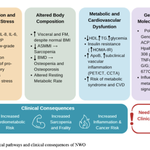
We adapted the NCP to manage five common metabolic disorders: obesity, type 2 diabetes, kidney disease, metabolic dysfunction-associated steatotic liver disease, and dyslipidemia.
frontiersin.org/journals/nut…

Diagnosing diabetes: the earlier the better - The Lancet Diabetes & Endocrinology thelancet.com/journals/landi…

Marco Melgarejo retweeted

Here are my initial thoughts on Lp(a)HORIZON. This is targeted to the people to whom it matters the most, my wonderful PATIENTS over the years in my Lp(a) Clinic. I have done my best to keep you healthy, and for the most part it worked. And I think this is reflected in the results of the Lp(a)HORIZON trial. This is also for those with elevated Lp(a) that been carrying significant anxiety and concern over their elevated levels.
1- Big picture: I do not see Lp(a)HORIZON as a failure, like many Monday morning quarterbacks out there who claim to have known the results all along after all. I see it as a MAJOR SUCCESS for our patients.
2- Why? Because we learned that there may be an alternative to reduce Lp(a) mediated risk: which is to: a) keep LDL-C below 65 or lower; b) keep blood pressure at 120 or lower; c) control all other risk factors as best as possible; d) take your medicines that have proven efficacy regularly.
3- I have called Lp(a)HORIZON testing the “Lp(a) Hypothesis”. Which means we did not know if lowering Lp(a) would benefit patients. If we knew Novartis would not have spent >1 billion dollars to do the trial and the FDA would have approved the drug simply on Lp(a) lowering.
4- Why did we not see a benefit in specifically lowering Lp(a) in Lp(a)HORIZON? I think we need to go back to “first principles” in how Lp(a) causes atherothrombosis. It is a minor contributor to atherosclerosis. It is a major contributor to inflammation, via OxPL. It is also anti-fibrinolytic- NOT pro-thrombotic. That means it contributes to vulnerable plaques but not to “plaque burden”. And it contributes to a blood clots enlarging and occluding blood vessels if clots are already made, but not in making blood clots per se.
5- So if one is intensively treated to remove the nidus for vulnerable plaques and clot formation, like the patients in HORIZON (and in the ongoing trials), then Lp(a) may become quiescent.
6- In my Lp(a) Clinic, this is my summary of how I treat my patients: 75% on statin, 50% of ezetimibe and 50% (!!) on PCSK9i, along with judicious use of aspirin in primary prevention and universal use in secondary prevention. This double/triple/quadruple combo is highly effective. If I see no coronary calcium or evidence of atherosclerosis, I am not aggressive with therapy if otherwise not indicated for another reason.
7- That being said, 1 out of 8 people still had an event in Lp(a) HORIZON. So, we need to figure out why beyond classical lipids and blood pressure. I am already thinking 10 yrs ahead and will have new concepts for this issue in near future.
8- I do not think the Lp(a)HORIZON results apply to Aortic Stenosis, as this is not affected by LDL-C or for the most part aspirin, but is more @OxPL_apoB driven in people with high Lp(a).
I think we owe a huge debt of gratitude for the Lp(a)HORIZON trial, to @novartis and to @ionispharma for leading the Lp(a) field.
And to circle back to people with elevated Lp(a): Lp(a)HORIZON has now armed us with actionable (and inexpensive) knowledge to help people with elevated Lp(a). Take a big breath and sigh of relief, Lp(a) risk can be managed. Treat it like you do other risk factors and your prognosis will be good, like many of my Lp(a) Clinic patients. We do need to do more work to figure out, among those with elevated Lp(a), who are highest risk, and target those in future studies,
I will provide more scientific comments at a later time and will be publishing my thoughts in a journal in the future.
With all that said, we still don't know the physiological function of Lp(a), if any, and why >99.99% have some circulating Lp(a) and why 1 in 5 have very high levels. Knowing this may give us the ultimate answer on Lp(a) and it role not only in CV disease but also in life and longevity. Along with my collaborators, we will have something on this also in near future.
Thank you all for following Lp(a)'s journey in these pages. The story is actually in the middle not at the end...a few more chapters are in the works.
Marco Melgarejo retweeted

Pa que no tengan miedo


Nutritional, functional, and psychological considerations for incretin-based therapies in adults—an EASO, EFAD, and ECPO Consensus Statement - The Lancet Diabetes & Endocrinology thelancet.com/journals/landi…

NEJM Clinician: Nutritional Therapies for Hospitalized Older Adults with Malnutrition clinician.nejm.org/nutrition…
The 2025–2030 Dietary Guidelines for Americans — Progress, Pitfalls, and the Path Forward | New England Journal of Medicine nejm.org/doi/full/10.1056/NE…

Microbiota-Derived Metabolites as Nutritional Signals in Insulin Resistance and Obesity - Clinical Nutrition ESPEN clinicalnutritionespen.com/a…
2
59
NUTRIGENOMICS IN PERSONALIZED OBESITY TREATMENT: A SYSTEMATIC REVIEW - Clinical Nutrition Open Science clinicalnutritionopenscience…
Marco Melgarejo retweeted

The PIONEER REAL Mexico 🇲🇽 study followed 177 adults using oral semaglutide for Type 2 Diabetes.
✅ -1.3% drop in HbA1c
✅ -4.3 kg in average body weight
✅ -3.7 cm in waist circumference
#diabetes #Mexico @novonordisk
Access the full text here:
onlinelibrary.wiley.com/doi/…

Epigenome-microbiome interplay in early life associates with infants’ neurodevelopmental outcomes: Cell Press Blue cell.com/cell-press-blue/ful…

2
93
Obesity is a complex, multifactorial condition with a strong genetic basis, encompassing monogenic, oligogenic and polygenic contributions...
nature.com/articles/s42255-0…

2
69
Marco Melgarejo retweeted

New content online: Hyperinsulinaemia as a cause of obesity and cardiometabolic diseases dlvr.it/TRNydw

Epigenetic mediators of diet and lifestyle and insulin resistance.
Implementing personalized dietary interventions has become important as emerging evidence indicates that dietary and lifestyle-dependent epigenetic modifications affect insulin resistance
rdcu.be/e172F
Marco Melgarejo retweeted

Mas que alfabetización digital, lo que se necesita es alfabetizar el juicio, si les interesa el tema, échele una leída a este articulo de hoy
La tiranía del numerador eleconomista.com.mx/opinion/…
Application of continuous glucose monitoring and automated insulin delivery technologies for pregnant women with type 1, type 2, or gestational diabetes: an international consensus statement - The Lancet Diabetes & Endocrinology thelancet.com/journals/landi…
2
66
Continuous glucose monitoring (CGM) may be utilized to complement HbA1c testing and replace fingerstick monitoring. This article focuses on CGM use in type 2 diabetes, because primary care clinicians often prescribe and manage CGM in this population. jamanetwork.com/journals/jam…

1
89
Metabolic Dysfunction–Associated Steatotic Liver Disease in AdultsA Review. JAMA
DOI: 10.1001/jama.2025.19615


En DT2, independientemente del tratamiento farmacológico, la adherencia a las pautas dietéticas fue deficiente, resaltando la necesidad de un asesoramiento nutricional estructurado más la terapia con GLP-1RA, para optimizar los resultados metabólicos share.google/ywRWBthsLT8NyOJ…

Esta serie de 3 artículos en The Lancet revisa la evidencia sobre el aumento de alimentos ultraprocesados en las dietas a nivel mundial y destaca su asociación con numerosas enfermedades no transmisibles.
thelancet.com/series-do/ultr…

De nuestro buen amigo el Ensayista Cínico podcast, para todos aquellos que le apostamos a la educación en diabetes como prevención y tratamiento, episodio 12 "Los héroes invisibles: educadores, enfermeras... ¡no se lo pierdan!
open.spotify.com/episode/2Rv…
1
84