

Tech Leader. Enterprise data migrations. #Databases, #MongoDB, #CloudMigrations. Professional Services Leader Migration Practice EMEA & APAC @MongoDB 🌱
Dublino Città, Irlanda
Joined November 2009
- Tweets13.9K
- Following2.6K
- Followers1.2K
- Likes11.9K




Marco Bonezzi 💻🇮🇹 retweeted

Your agents need live data, not last night’s batch export. Join our Dec 3 webinar to see how Flink SQL and @MongoDB Atlas power production-ready agentic apps
mongodb.com/resources/soluti…

Marco Bonezzi 💻🇮🇹 retweeted

Understanding system design helps you build better apps, even when vibe coding.
Better architecture decisions. Better AI prompts. Fewer surprises when your app grows.
So I built an interactive app to learn system design visually.
designed-to-scale.vercel.app
Marco Bonezzi 💻🇮🇹 retweeted

Just released a new Databases Internals episode on The GeekNarrator podcast
It was a pleasure to have Andrew Lamb @andrewlamb1111 back on the show after 2 years.
youtu.be/LBSfavhN4pw
please like and repost for the love of open source and databases. 🙏

Marco Bonezzi 💻🇮🇹 retweeted

We’re thrilled to share that MongoDB is a Leader in the 2026 @Gartner_inc® Magic Quadrant™ for Cloud Operational Database Management Systems.
We believe this recognition reflects the trust of our 70,600+ customers, including ~75% of the Fortune 100, and our investments in building the intelligent data platform for the AI era, from MongoDB 9.0 to Atlas Infinite, Atlas Agent Engine, and Voyage AI.
Read the blog: mongodb.social/6019ByRhK7

Marco Bonezzi 💻🇮🇹 retweeted

Most to-do lists fail for the same reason: they tell you what to do, but not when to do it.
That's why I stopped making to-do lists years ago. I became a schedule builder instead.
The tool is timeboxing — and the research behind it is unusually strong. A 2018 review in the Harvard Business Review called it the single most useful productivity practice. Cal Newport has called it the highest-leverage habit for knowledge workers.
Here's the cheat sheet:
1. Start with your values, not your tasks. Three domains: you, relationships, work. If your calendar doesn't reflect what you say matters, your calendar is lying for you.
2. Box the time, not the task. You don't schedule "write chapter 3." You schedule "9-11am: writing." The box protects the time. What you do inside it is a separate question.
3. Plan the week on Sunday. Fifteen minutes. Review what's coming, block the time, make it visible to the people who need to see it.
4. Expect to fail the first week. And the second. Timeboxing is a skill, not a switch. You adjust the schedule to match reality — not abandon it when reality pushes back.
The point of a timeboxed calendar isn't to control every minute. It's to give you something to come back to when you get pulled away.
You can't call something a distraction unless you know what you got distracted from.

Marco Bonezzi 💻🇮🇹 retweeted

At @fin_ai, scaling software delivery agents meant giving the platform dedicated owners.
I recently spoke with Ciara Byrne from @JetBrains about what worked for us, and what I’d change.
Download the report here:
jb.gg/jl1t8s


What does it take to make AI agents part of everyday software delivery?
We spoke to engineering leaders at @fin_AI, @semrush, and other companies building the setup around them: shared context, repeatable workflows, verification, and cost control.
These nine real-world stories are in our free report: jb.gg/vnz8bt

ALT Cover of a report by Air, titled "How Top Teams Scale AI Agents," with a note below saying, "Explore 9 real-world stories in our free report." The background features abstract blue and gray patterns.
Marco Bonezzi 💻🇮🇹 retweeted

Lauren Tan’s delegation framework is basically a management system for AI agents.
good delegation has layers:
→ define the exact outcome
→ assign one clear owner
→ give only the context they actually need
→ set checkpoints without micromanaging
→ review the result against the goal
→ always end with a clear next action
Lauren’s ladder also makes handoffs much cleaner because every task carries:
• goal • owner • context • definition of done • risks • next check-in
that’s what keeps agent teams moving without turning orchestration into another full-time job.
full framework below ↓


Marco Bonezzi 💻🇮🇹 retweeted
AI agents are becoming the new shopper. They won’t pick the best-written product page. They’ll pick products they can retrieve, understand, and verify. 🛍️
Here’s how retailers can build a catalog that’s ready for agentic commerce 👇
mongodb.social/6016BHNJY2

Marco Bonezzi 💻🇮🇹 retweeted

Holy f*ck. SpaceXAI senior engineer Lauren Tan:
"Grok Bot is the most powerful agent tool we've ever released, and only 1% of users know how to use it."
In this 40-minute session, she shows how she set up her team before she scaled it
Job → Chief of Staff → 3 Managers → 11 Workers → 200+ Agents*
Most people add another bot when the first one fails. That just multiplies the mistakes
Give every bot one job and a manager that checks it, instead of paying for the same failure every run
Worth more than most $1,000 agent engineering courses
Bookmark and watch it today
Then read the full setup: "Grok Bot: 6 Bots, 200+ Agents, a Smaller Bill" ↓


Marco Bonezzi 💻🇮🇹 retweeted

I’m in love with this sentence:
“One of the most underrated skills you can learn is the ability to ignore your mood and stick with the plan.”
Marco Bonezzi 💻🇮🇹 retweeted

One. Shared. Brain (in Notion)
I understand this announcement to be more of a framework rather than a set of new features.
Here's my breakdown:
00:26 Where the work lives
01:02 Agent memory
01:35 Compaction
02:12 Life and relationship
02:27 Every agent on same context layer
Basically the prompt included prescribes any agent a way of storing and accessing "memories".
To me, a memory is a "session log" after it runs out of tokens or you /compact but in the case you choose what the agent remembers.
Still a WIP but I'm configuring separate memory databases for my work and personal life with custom properties. I'll keep y'all posted!

Marco Bonezzi 💻🇮🇹 retweeted

F*cking genius.
The creator of Claude Code says its work gets 2-3x better when it can check itself.
Set that up with one prompt, and make Claude Code quiz you before you ship.
If you can't explain the code, git won't let you push it.
Here's the build:
step 1 → paste the prompt below into Claude Code on Opus 5.5
step 2 → it adds hooks, so Opus can't finish a task until it shows proof that it works
step 3 → that proof is the exact commands it ran and their output, shown before the summary
step 4 → a fresh reviewer agent says what would have to be true for the change to be wrong
step 5 → Opus lists what it decided for you, like the defaults it picked or the parts it left out
step 6 → you get 5 questions on the change, and only 5 out of 5 unlocks git push
step 7 → every change you reject goes into CLAUDE.md with the reason, so the mistake doesn't come back
step 8 → every Friday it tells you which skill you've stopped using since Opus started doing it for you
Find the full prompt below.
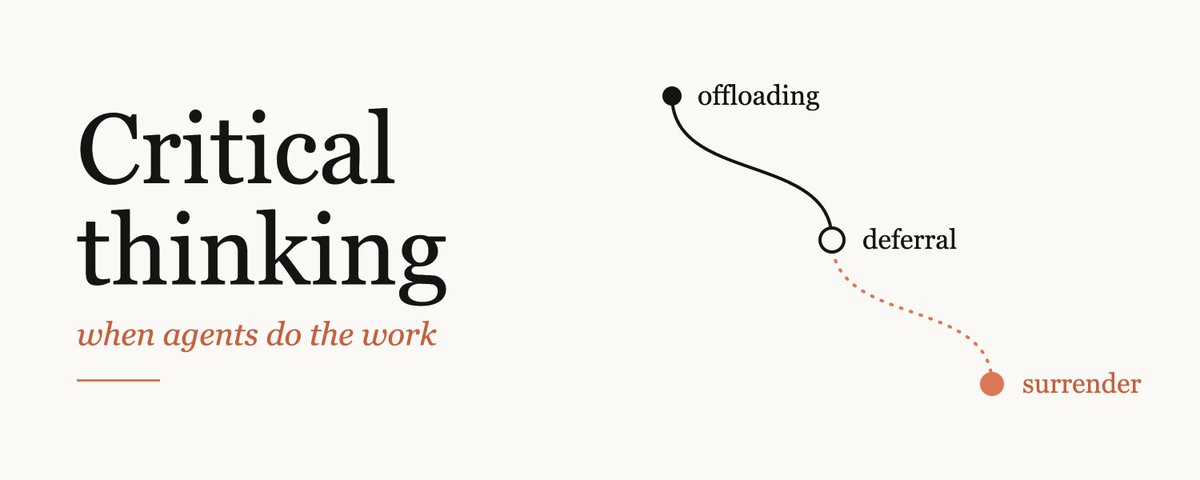
Then read the article below on how to stay sharp when agents write your code.


Marco Bonezzi 💻🇮🇹 retweeted

Game recognises game. Greatness recognises greatness. What an image and what a mark of respect. The youngest world champion in history and a driver whose talent we have only begun to see the surface scratched. Maturity beyond his years. This is just the start. Grande Kimi.


Marco Bonezzi 💻🇮🇹 retweeted

Kimi #Antonelli è CAMPIONE DEL MONDO ! 73 anni dopo ritorna in Italia il titolo.


Marco Bonezzi 💻🇮🇹 retweeted

Lo mismo como ingenieros tenemos que mejorar en algo que se les suele pedir a los médicos: divulgar y explicarnos sin condescendencia.
Porque ha quedado patente que hay varias cosas obvias para nosotros que no lo son para el resto de mortales, como por ejemplo:
- Que hablar de fallo humano en sistemas críticos es una gilipollez.
- Que un sistema no es necesariamente malo por ser antiguo. O por tener una UI fea de cojones.
- Que el mantenimiento es caro, complejo y parte fundamental de un sistema.
Marco Bonezzi 💻🇮🇹 retweeted

What gives Italian excellence its unmistakable flair?
In “Opera”, Episode 3 of The Italian Excellence Code, @StefanoAccorsi_ explores the art of transforming tradition into an original expression through the world of opera and the spirit of Lamborghini.
Discover the full story: youtu.be/afVoXkvNNbc
Marco Bonezzi 💻🇮🇹 retweeted
The opposite of distraction isn't focus. It's traction.
Both words come from the same Latin root — trahere — meaning "to pull." Traction is any action that pulls you toward what you said you'd do. Distraction is any action that pulls you away from it.
Which means you can't actually say you got distracted unless you know what you got distracted from.
Here are the 4 steps to becoming Indistractable:
1. Master internal triggers.
Most distraction doesn't start with your phone. It starts with discomfort — boredom, anxiety, loneliness, uncertainty — that you're trying to escape. The phone is the cope, not the cause. Learn to sit with the feeling for 10 minutes before acting on it. Most urges pass. The ones that don't, you can honor on your own terms.
2. Make time for traction.
If it's not on your calendar, it isn't real. Timebox your values — work, relationships, your own body and mind — into a weekly schedule you actually keep. Be a schedule builder, not a to-do list maker. A to-do list tells you what you didn't finish. A calendar tells you whether you lived the day you planned.
3. Hack back external triggers.
Every ping, badge, and notification is a question your phone is asking you. Most of them don't deserve an answer. Turn off anything that doesn't serve you. The research on interruption recovery is brutal — it takes an average of 23 minutes to return to a task after a single interruption.
4. Prevent distraction with pacts.
Pre-commit before the moment of weakness. Effort pacts (a website blocker), price pacts (money on the line), and identity pacts ("I'm the kind of person who doesn't check email before 10am") work because they make the distracted choice harder than the chosen one.
Time management is pain management. You don't need another productivity app. You need to notice what you're running from.
