

Postdoctoral research scientist at Fordham University. Studying relationship between stress, hormones, and the brain.
Joined February 2019
- Tweets407
- Following69
- Followers130
- Likes141






Pinned Tweet
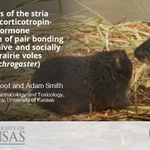
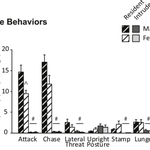
Super excited to share the second paper utilizing our repeated social defeat model in prairie voles! This time we looked at how SSRI or oxytocin (OXT) treatment affected social behavior and neurobiology following defeat in BOTH sexes. A short thread... (1/7)

New article from our lab highlights a sexual convergence of the neurobiology of social anxiety in prairie voles. Chronic schedule of oxytocin reduced stress in females but its complicated. 👀
Great work from Luanne Hale & @mariatickerhoof @ELSneuroscience
sciencedirect.com/science/ar…
Maria Tickerhoof retweeted

I am extremely excited to share our Feature Review in @TrendsNeuro :
"Epigenetic mechanisms underlying sex differences in the brain and behavior"
cell.com/trends/neuroscience…


Dissertation accepted by ProQuest, hooding ceremony this Saturday, and a one-way ticket to NYC for next Saturday. Big changes happening but it seems that I am finally #PhDone
Maria Tickerhoof retweeted

Under acute #stress some get demotivated, while others full of energy. It depends on our trait #anxiety and CRHR1 system
New paper out from the lab, led by @zalachoras with great contributions from all authors & collab with J Deussing @mpi_psychiatry
science.org/doi/10.1126/scia…


Individuals can respond to #stress in diametrically opposed ways. A @NSynapsy study by @carmensandi10 shows that the behavioral response depends on the level of #anxiety and identifies the cerebral mechanisms involved.
nccr-synapsy.ch/news/14219/
@EPFL_en

Maria Tickerhoof retweeted

Our new research about sex differences in fear processing in the BNST and amygdala is online ! And yes, males and females process fear and threats differently @SfNJournals eneuro.org/content/early/202…

I apparently got a question on my #SfN21 poster presentation (that I received no notification of but that's another issue) and I cannot for the life of me figure out how to answer it. Has anyone figured it out?
Since we are now halfway through my #SfN21 poster session that I can't even access, feel free to reach out here (or on the website if it can actually get going later) to discuss my research investigating social defeat and pair bonding!

Can't even log back in to the #SfN21 website and my session was supposed to start 5 minutes ago. Another tweet says tech support is trying to fix it after and "exceptionally high" video chat volume. How is something exceptionally high when the society had a count of registrants?
Maria Tickerhoof retweeted

Our new @FrontNeurosci article uses graph theory to construct functional connectivity maps across the social decision-making network during distinct social encounters in prairie voles. 🧠🗺️ #BRAINInitiative
First publication for @kyle_gossman! 🥳🥳
frontiersin.org/articles/10.…

Maria Tickerhoof retweeted
The goal of this research topic is to spotlight the function of oxytocin during challenging periods of life. Thank you to our authors, my co-editors, and the Frontiers team for putting this together. @BowenLabTweets @BenjaminJurek 👏👏👏

📣 Presenting the newly-completed research topic, “The Oxytocin System in Fear, Stress, Anguish, and Pain”.
Read this excellent open-access article collection here 👉 fro.ntiers.in/dF1R

Maria Tickerhoof retweeted

Grad School App Tip: In application essays about your prior research, be sure to emphasize the research questions and what motivated you to answer them. Admissions committees are more interested to hear about research questions than simply listing methods used! #gradapps
So... Does SfN have *any* information about what in the world this mandatory "scavenger hunt" question is supposed to entail or are we really supposed to just kind of... come up with one on our own? "Have fun" doesn't count.

You know, after making a few microdialysis probes I started joking that if you breathe on them wrong they'll fail. After actually working with a batch for the first time this week, I'm really starting to think my "joke" had more truth to it than I realized.
In stress-naive animals, OXT administration ELIMINATED normal social preference in both sexes. SSRI acted similarly in stress-naive females. Again, the changes in behavior following OXT administration coincided with OXT receptor binding in some of the same limbic regions. (6/7)