

Retention Marketing for eCommerce Brands • Founder @ https://xitter.cf/t.co/C5aB5tkVdR
Chicago, IL
Joined July 2019
- Tweets11K
- Following1.3K
- Followers3.3K
- Likes7.9K


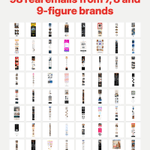

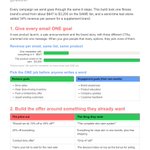
Pinned Tweet
I’ve made 9 email marketing training to help DTC eCommerce brands drive 30-40% of their revenue from email, boost repeat customers & convert more site visitors.
Every strategy counts.
Miss one, and you're stalling your profit machine.
Don’t leave money behind—READ BELOW. 💸🚀

mark mei retweeted
Emailing LESS of your list makes you MORE money. One of our brands sent a campaign to only the people who'd clicked in the last 90 days. It opened at 60% and made $6,000.
The same brand's send that also went to subscribers who'd stopped opening? 29% and $2,900.
That's because Gmail and Apple Mail watch what people do after your email arrives. Keep mailing people who never open, and you slide into promotions, then spam, and eventually even your buyers stop seeing you.
So every list we take on gets split into the same 4 groups first. Here's who's in each one and what they get:
1. Engaged
Anyone who's clicked in the last 90 days. They hear from you the most, and every regular campaign goes to them.
2. One-time buyers
They bought once and haven't been back. Their whole sequence is built around a second purchase instead of whatever promo is going out that week.
3. VIPs
More than one order and over $200 spent. They get early access and offers nobody else on the list sees.
4. Lapsed
Customers who haven't ordered in 75 days get a win-back flow. Its best email goes out at noon, when people are on their lunch break, and it opened at 53%. 216 people clicked it, which put every one of them back in group 1.
Anyone who still doesn't respond after 2-3 emails gets suppressed. And subscribers who've gotten 10+ emails and opened none of them in a year come off campaigns completely. They only hear from you on a huge sale.
The win-back flow has made about $10K, but its ACTUAL job is moving people back up to group 1.
Bookmark this.
mark mei retweeted
A brand of ours added $80,000 a month with an email that isn't a promo.
Steal the set-up:
It's a REAL customer styling what they already bought.
> The buyer sends in the photo and writes a short caption in their own words.
> The product gets linked quietly at the bottom.
Its click rate was 3x what their regular promos got.
That $80K a month comes to close to 7 figures a year.
And they didn't spend an extra dime on ads or new product to get it.
So when you build your BFCM calendar, slot one of these in between the promos.
Emailing LESS of your list makes you MORE money. One of our brands sent a campaign to only the people who'd clicked in the last 90 days. It opened at 60% and made $6,000.
The same brand's send that also went to subscribers who'd stopped opening? 29% and $2,900.
That's because Gmail and Apple Mail watch what people do after your email arrives. Keep mailing people who never open, and you slide into promotions, then spam, and eventually even your buyers stop seeing you.
So every list we take on gets split into the same 4 groups first. Here's who's in each one and what they get:
1. Engaged
Anyone who's clicked in the last 90 days. They hear from you the most, and every regular campaign goes to them.
2. One-time buyers
They bought once and haven't been back. Their whole sequence is built around a second purchase instead of whatever promo is going out that week.
3. VIPs
More than one order and over $200 spent. They get early access and offers nobody else on the list sees.
4. Lapsed
Customers who haven't ordered in 75 days get a win-back flow. Its best email goes out at noon, when people are on their lunch break, and it opened at 53%. 216 people clicked it, which put every one of them back in group 1.
Anyone who still doesn't respond after 2-3 emails gets suppressed. And subscribers who've gotten 10+ emails and opened none of them in a year come off campaigns completely. They only hear from you on a huge sale.
The win-back flow has made about $10K, but its ACTUAL job is moving people back up to group 1.
Bookmark this.
A brand of ours added $80,000 a month with an email that isn't a promo.
Steal the set-up:
It's a REAL customer styling what they already bought.
> The buyer sends in the photo and writes a short caption in their own words.
> The product gets linked quietly at the bottom.
Its click rate was 3x what their regular promos got.
That $80K a month comes to close to 7 figures a year.
And they didn't spend an extra dime on ads or new product to get it.
So when you build your BFCM calendar, slot one of these in between the promos.
A client of ours scaled from $80K to $300K a month on Facebook ads.
Their profit margins dropped from 25% to 8% on the way up...
Their acquisition costs skyrocketed.
Then we built out their email, and within 4 months it was 45% of their revenue at a 15-to-1 ROI.
Margins jumped to 32%, higher than at their $80K months.
So get your email built out BEFORE you scale ads into Black Friday.
Without email bringing in 40% of the revenue, no brand scales profitably on ads.
Want us to go through your emails and the offer behind each one?
book a call here: app.iclosed.io/e/dahausdigit…

mark mei retweeted
A client of ours scaled from $80K to $300K a month on Facebook ads.
Their profit margins dropped from 25% to 8% on the way up...
Their acquisition costs skyrocketed.
Then we built out their email, and within 4 months it was 45% of their revenue at a 15-to-1 ROI.
Margins jumped to 32%, higher than at their $80K months.
So get your email built out BEFORE you scale ads into Black Friday.
Meta CPMs started their Black Friday spike in September this year.
i know what that does to a store.
both my dropshipping stores SURVIVED on Facebook ads...
every visitor you pay for is already costing you Black Friday prices.
and anyone who left without buying or joining the email list was spend i never got back.
that's why i'd fix your pop-up NOW. before you touch a single ad.
most pop-ups are converting at 1-2%, when yours has to convert 10-15%.
get it there before Black Friday...
then the visitors you paid Meta for this fall are on your list when your Black Friday emails go out.

Meta Ads CPMs are skyrocketing.
This is the most expensive CPMs on Meta have been during "normal" selling periods in the last ~18 months.
We track billions in ad spend across thousands of advertisers. This is the trend we're seeing in our data.
On average across all our advertisers, CPMs are going up in 2026.
There was a slight increase through Q1 2025, then CPMs plateaued for the rest of the year.
Then at the start of 2026, CPMs began to rise. They peaked and stabilized all summer, but now are rising again.
We are at +25% increase in CPMs compared to the same time last year.
The Black Friday Cyber Monday CPM spike we saw in 2025 didn't start until November.
This year we're seeing this spike happen in September.
While CPMs aren't a core metric, they are a basic measure for how far your dollar goes on Meta. High CPMs can eat away at the efficiency in your account.
But what is causing this increase?
Our data cannot identify a root cause, we can only demonstrate that something is happening.
Meta made a ton of changes in the last year. The algorithm is just different now.
For example, Meta rolled out changes to click through attribution in March 2026 - and CPMs rose to new normals immediately following.
It's correlation, not causation. So what are advertisers supposed to do?
This much is clear:
What qualifies as "normal" performance on Meta is changing
Advertisers must adjust their expectations, arithmetic, and strategies to this new normal.
The future is here and now. It will destroy advertisers who cannot adapt.
Charts and analysis by @bryanbumgardner 🛰️

ALT Meta CPMs, 2025-2026
mark mei retweeted
Pulled up a live client account in Hyros yesterday to walk through what a working retention engine looks like in actual dollars. Here is how that customer matured over the year:
↳ Day 30: $123 LTV
↳ Day 60: $128 LTV
↳ Day 90: $132 LTV
↳ Day 180: $141 LTV
↳ Day 365: $146 LTV
In plain english:
Every window gets more valuable.
The customer keeps coming back.
And the time between orders explains why.
The average gap between orders on this account is 54.6 days. But over half of all reorders happen inside the first 30 days after the first purchase. That is the entire reason your post-purchase flow timing matters more than most brands realize.
Now the part that actually changed the business.
Attributed revenue from retention efforts went from $107K to $381K. A 253% lift. Just the 30-day attributed revenue alone jumped from $180K to nearly $500K.
Stack it all on a cohort chart and the customer base is worth $2.88M at 365 days, with about $700K coming directly from retention work that was not happening before.
What changed is the brand started treating the first order as the BEGINNING of the relationship.
mark mei retweeted
client was sending 4 emails a month and making $15K from email.
i told the founder straight up:
"this is LAZY"
we pushed her to 60 emails a month in Klaviyo.
roughly one every other day.
email revenue jumped to $45K the first month alone:
same list, products AND offer.
just more consistent communication
fear of unsubscribes is costing you 30K/mo (minimum).
Pulled up a live client account in Hyros yesterday to walk through what a working retention engine looks like in actual dollars. Here is how that customer matured over the year:
↳ Day 30: $123 LTV
↳ Day 60: $128 LTV
↳ Day 90: $132 LTV
↳ Day 180: $141 LTV
↳ Day 365: $146 LTV
In plain english:
Every window gets more valuable.
The customer keeps coming back.
And the time between orders explains why.
The average gap between orders on this account is 54.6 days. But over half of all reorders happen inside the first 30 days after the first purchase. That is the entire reason your post-purchase flow timing matters more than most brands realize.
Now the part that actually changed the business.
Attributed revenue from retention efforts went from $107K to $381K. A 253% lift. Just the 30-day attributed revenue alone jumped from $180K to nearly $500K.
Stack it all on a cohort chart and the customer base is worth $2.88M at 365 days, with about $700K coming directly from retention work that was not happening before.
What changed is the brand started treating the first order as the BEGINNING of the relationship.
client was sending 4 emails a month and making $15K from email.
i told the founder straight up:
"this is LAZY"
we pushed her to 60 emails a month in Klaviyo.
roughly one every other day.
email revenue jumped to $45K the first month alone:
same list, products AND offer.
just more consistent communication
fear of unsubscribes is costing you 30K/mo (minimum).
mark mei retweeted
3 L’s I had to take before hitting a $2M run rate with my email agency:
1. Fidget spinners
I'd made $10-20K reselling shoes and random stuff, and I put ALL of it into white-labeling fidget spinners. Batch one made $5K, so I rolled everything into more inventory. Batch two flopped and took every dollar with it. Huge L at the time.
2. iOS 14
When I came back, I built two dropshipping stores, and by Black Friday 2020 they were doing $300K+ a month combined. Then iOS 14 broke Facebook's ad targeting, and both stores collapsed almost overnight. Everything I'd built was on one channel I didn't own, which is a big part of why I do email now.
3. The lost year
After the stores died, I lost a whole year trying web design, SEO and cold email for other services. None of it stuck. What I actually knew was the inside of an eCom store, the ad spend, the margin, the LTV, the fulfillment, so I niched into email for eCom brands.
In due time, it all works out 🤞

mark mei retweeted
A teaser email we wrote for a sports-nutrition client opened at 84%.
Everything we did:
1. Exposure
• Read the From line on all 5 and note if it's a person or the brand
• Make sure it's the same name they see on your ads and posts
• If they only ever see that name in their inbox, it's a stranger to them
• Strangers get skipped
---
2. Open loops
• Read each subject line on its own
• If you can guess the whole email from it, the loop is closed
• The brain has to close an open question
• That 84% teaser said a pro bodybuilder "picked his flavor" and never said which one
---
3. Pattern
• Put the 5 side by side
• Check if every one opens with the same layout
• Count the "20% off" and "new arrivals" subject lines
• If a send matches what they expect, it gets skipped before it's read
---
4. Identity
• People open what fits the person they see themselves as
• Your list should get something the public can't
• Being on it should say something about the person reading
• On the lists with the highest opens, opening turned into a habit
---
5. Score it
• Check each of the 5 sends against all 4
• The lever most of them fail is the one to fix first
• Only after that, touch the subject line
• Run it again on your next 5
BOOKMARK THIS.
3 L’s I had to take before hitting a $2M run rate with my email agency:
1. Fidget spinners
I'd made $10-20K reselling shoes and random stuff, and I put ALL of it into white-labeling fidget spinners. Batch one made $5K, so I rolled everything into more inventory. Batch two flopped and took every dollar with it. Huge L at the time.
2. iOS 14
When I came back, I built two dropshipping stores, and by Black Friday 2020 they were doing $300K+ a month combined. Then iOS 14 broke Facebook's ad targeting, and both stores collapsed almost overnight. Everything I'd built was on one channel I didn't own, which is a big part of why I do email now.
3. The lost year
After the stores died, I lost a whole year trying web design, SEO and cold email for other services. None of it stuck. What I actually knew was the inside of an eCom store, the ad spend, the margin, the LTV, the fulfillment, so I niched into email for eCom brands.
In due time, it all works out 🤞
A teaser email we wrote for a sports-nutrition client opened at 84%.
Everything we did:
1. Exposure
• Read the From line on all 5 and note if it's a person or the brand
• Make sure it's the same name they see on your ads and posts
• If they only ever see that name in their inbox, it's a stranger to them
• Strangers get skipped
---
2. Open loops
• Read each subject line on its own
• If you can guess the whole email from it, the loop is closed
• The brain has to close an open question
• That 84% teaser said a pro bodybuilder "picked his flavor" and never said which one
---
3. Pattern
• Put the 5 side by side
• Check if every one opens with the same layout
• Count the "20% off" and "new arrivals" subject lines
• If a send matches what they expect, it gets skipped before it's read
---
4. Identity
• People open what fits the person they see themselves as
• Your list should get something the public can't
• Being on it should say something about the person reading
• On the lists with the highest opens, opening turned into a habit
---
5. Score it
• Check each of the 5 sends against all 4
• The lever most of them fail is the one to fix first
• Only after that, touch the subject line
• Run it again on your next 5
BOOKMARK THIS.
mark mei retweeted
at 12, i wanted a lamborghini so bad, i looked up what jobs would pay enough.
a normal salary meant working 10+ years to afford it.
a decade of paychecks, for a car i wanted at 12. and that's before rent, food or anything else comes out of it.
so i googled how people actually pay for lambos, and the answer kept coming back the same... business owners.
that changed the plan pretty fast.
i started reselling yeezys on stockx and goat. that was my first business.
i had no idea what i was doing yet. i just knew a regular paycheck was never getting me that car.
you'll hit that gap too at some point, between what a salary buys and what you actually want.
plenty of people take the job anyway.
fast forward now, my agency is doing 500k/mo and we have the best team in the space.
BET ON YOURSELF!


