
Opinionated finance commenter mostly posting on the 400+ earnings calls I listen to a Q. I don't give advice. It's your $, do your DD.
New York, NY
Joined December 2022
- Tweets41.5K
- Following366
- Followers11.5K
- Likes30.9K





Pinned Tweet
Finally completed this Quarter's Recap. Enjoy...
(Context: I listen to 400 companies in the S&P 500 a quarter, comment along the way, and then try to do this sort of summary if I have time).

Changing gears... Since my Followers are mostly guys, I thought this research from Brain and Behavior Sciences was interesting. It's entitled: Romantic Relationships Matter More to Men than to Women
TLDR: Guys... ya'll gotta make more friends you feel comfy sharing things with... and ladies... there's a lot to unpack as to what this is all about...
2 teaser images and Link: cambridge.org/core/services/…


On rates... prob the thread poster knew this, but I think a lot of folks don't or might not be sure how others are thinking about it.
Warsh is still relatively new, and so far he's given no guide, then gave kinda a guide, but then said he wasn't going to give a guide...
And maybe that's a particularly nuanced style, but I don't think anyone (possibly Warsh included) really has "down" Warsh's public communication style.
That's the wild card tomorrow. Not the actual rate. The FED learned its lesson already with rapid rate increases all in a row, IMO.
$HAS + 20% since reporting earnings... d*mn did I miss the turnaround on this one.
Rev + 15%, Net Inc + 72%
What can I say.... It's finally got the right mix of revenues and has made it through the dark shadow of its soul.
It's still only at 17x and likely against decent comps. Let's see... I might find a place to belatedly join the party.
$SOFI... so if there is actually a bit of a squeeze happening here, it's going to have a slightly muffled sound (even as we are up 15%) given the rate decision... You could have some folks hanging on vs blowing it out in front of that...
$SOFI... if it wasn't for the Rate decision later, I'd be ready to call this as the first time $SOFI's held it's increase post-earnings... but wow... I mean... my fingers are still crossed.
Question in case anyone knows. Warsh... is it pronounced such that it rhymes with Harsh or Borscht (without the "t")?
$QQQ... not gonna lie. Since my hedges worked so well last week, I monetized them Friday and yesterday. Laying them back on in front of the Fed Announcement tomorrow and election thereafter because I am Chicken.
$DOW... +10% since reporting earnings last week.
Rev + 13%, Net Inc. up a lot (they had a loss last year)
This is where I think folks don't realize how significant the demand pull from AI is. This is actually coming from a mix of things that likely lead back to AI.
On the Industrial side, it's straight-up data centers and related semis, etc. But that's also the case for consumer and biz coatings. Right now, it's far more the AI infra demand than the other stuff, but that's how it starts.
They chucked a bunch of the less interesting biz at this point, and their global production is diverse enough that SOH isn't causing them massive grief relative to demand.
Below are the more interesting demand-related slides and I'd remind folks that as a distillate and also for pricing (spread), it's not always the case that an increase in Oil prices means a problem for $DOW if you also get volume increases in refining that change the spread.
I suck at trading the spread, so I'm just listening in for end market demand intel.


$SOFI... notes from the call Q&A...
One thing I'd mention: Even if I'm not perfect, nearly every bear note was VERY wrong. Very, very, very wrong...
Prepared remarks:
1) Growth Strategy (Noto) D*mn on the growth strategy. That is even stronger than I was thinking. I mean, Noto is an optimist, but how he's seeing the biz line growth (I think he said 5) is interesting. I wonder if he's seeing Biz banking as different from what SOFI is currently doing or just an offshoot. If yes, Biz banking (as ya'll know is part of my thesis) grows a bank VERY fast given the size of the deposits/transactions.
2) Hedging (Lapointe): Yup, they hedge, like everyone else on the street. And it buffered losses... b/c rates up IS NOT bad for banks... rates up 550bps in 1 year... that's different. But up to 100bps most are hedged in a variety of ways.
3) Credit Quality, Net Charge-offs (NCO's): I mentioned in my quick reaction NCO's. This is really interesting. (image 2) makes it very hard to game any decline in credit quality.
You're going to securitize these off, so your blended overall AFS book is even cleaner but offering a higher rate.
In other words: What it has to offer as a package of loans is cleaner with a higher interest rate (aka a better product than last year, not worse or even equivalent.
Q&A
1) On Assumptions: Their assumptions (2 rate hikes) still is comfy for the middle of the range. This is b/c what they did in 2026 for investment gives them solid visability. They do not think these estimates are a stretch. Some of this is the roll-off, anniversary of the FinTech overhang from last year, which is gone by 2027 as a comp.
2) Clarification on why the ROTCE increase: It really is the mix of biz. This is likely misunderstood, aka how an investment-based biz can increase ROTCE b/c you have growth on growth (aka you own the deposits and, with no other spend, you have asset growth and the fees and services that come with it). It is the flywheel, but there are many sub-flywheels within that wheel.
Also an interesting strategy point: you will have lower-margin lending coming in (this is like mortgages, etc.; low margin is low risk in finance), but b/c the financial services biz is so high margin, it both nets out and ends up with a composite mix of higher margin. So this is a strategy call, and I think he does it/can do it given what we're seeing already this quarter with margin expansion.
Also, realize that I think most banks are dependent on low-margin, high-frequency biz coming back as a part of their strategy, aka CRE and Mortgage biz (lower risk, lower margin).
3) ROC growth, Clarification of Image 2... this is a 2028 and beyond thing, with 2027 being a demonstration of how it comes to pass. I get it. I think if they just get into the low teens by next year, they are better than most banks b/c their issue IMO is overcapitalization... but you know what, if you deploy it to growth, we're cool.
4) Questions about rates tell me that the folks asking questions don't realize how banks make money. Help clarify why the question implies this: depending on what rates are, there are different strategies you can deploy. If one knew how banks make money, the question would have been asked differently (so this - in poker - is a tell). For me, this is helpful, b/c it tells me where the street is not understanding the biz model or where $SOFI sits within the larger financial landscape. Also... Noto... patient of a saint for sure, and I better understand why he's communicating as he is.
5) Loan demand: They are thinking it comes in personal loans and closed-end seconds (2nd mortgages). I think the latter gets more fun with rates.
6) SOFI Tech arm's length to SOFI Bank. This aligns with my thesis and is how certain other financial services companies monetize their Fintech. So, like Aladdin at $BLK for example is being customized to $BLK's needs, but b/c they are the market leader in asset raising, the implications are that others would like to have this product. With $SOFI, this is similar in the sense that b/c they are consumer-focused (currently), and in that newest part of the market stablecoin and other online platform-based ways of growing assets- their security needs and their lack of legacy make the systems superior to what most banks might do by themselves. Unlike other fintechs that can skimp on capex to get to market, it's strategically smart to have this in-house in this particular manner. But it has meaningful implications for this biz if it were truly stand-alone. Mostly, it means they'd rather spend on the capex correctly and make the money through the bank, vs. what most fintechs might do (aka my thesis).
7) Origination fee margin expansion. This is unique to $SOFI b/c of where they originate, aka 740plus exclusively. If you. have fewer NCOs and yet you have massive loan growth, you will get better margins.
8) I'm sorry, Noto... 1 hr 5min in... you're not a fintech. You're a modern bank with no legacy stuff. If you were a fintech, I'd only be interested if you get acquired in this type of economic environment given the inherent risks in the loan biz and the funny biz the lower parts of the PE have been up to.
9) Broker Deposits are cheaper than Bank Deposits. Yes. This is both $SCHW $MS $GS biz model and why I think $HOOD's ultimate end game (with Kenny G as the convert holder) is to get bought. And also why those 3 own a bank in the post-2008 period.
10) Impact of AI on marketing. They believe that, given where the market is going in banking and otherwise, $SOFI is the net winner. {Ok... and the impact to marketing line item expense?}
11) Confirmation of LPB (Loan platform) Demand: 1hr 25 min in Lapointe mentions this. Would be cool if there were some metrics around this. Maybe some kind of pre-sale or Indication of Interest (IoI) is possible, similar to what you see in VC fund capital raises.
12) Long-term strategy note: They do intend to offer more products than traditional banks and win that way. Yes, and on the super store. But also, whether you do that with consumer first and then biz or the two together is what I'm always trying to understand.
13) Expand margin before Rev/equity. This means they will put expansion first, so potentially no buyback (movement on the convert) in the near term if I'm understanding it correctly. Bummer.
Let's see how the stock does. Who knows. I'm prepared to have it languish into the call feature in Mar 2027.


$SOFI...+8% pre-market
Rev + 44%, Net Inc +85%
ADJ EBITDA + 59% BV $8.71 TBV$7.29
I post both the BV and TBV b/c anyway you slice it, if you bought $SOFI last few weeks under $16 you unambigiously picked it up for under 2x book value despite it growing 59% (using adj EBITDA b/c of below line items and obvi you need to modify b/c they have a loan biz)
{this means that you are paying 2x the equity value but the thing is doubling operating earnings less than every 2 years}
WHERE IS THE GROWTH?
Member growth + 35% (IDC on this, but some of you do).
Product/Member grew 51% (this I care about; it's sell-through, which is the whole thesis and btw... how a BANK grows ROTCE).
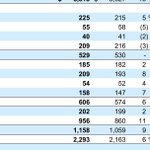
Image 1 is why I keep saying it's a bank. The Tech services biz (which, again, I don't care) is still cosmetically absorbing the loss of a single client from last year. I hate the Fintech biz framework for the size of what $SOFI has become. If you were focused on that, you'd miss how massive the increase in financial services (which they can do b/c they own the deposits) AND ALSO the loan biz growth. The loan biz growth at 39% is crazy high and only looks small on the graph b/c the sell-through of the other stuff is so massive.
And for the newbies BTW.. FinServices is NOT fintech. It's just a modern way to do asset/cash management. And it's wonderful b/c if you are doing it in an optimal way, you grow assets (aka deposits, aka SOFI is a bank).
Asset Turnover
Now the one thing on these loans is the increase in AFS. I'd love to hear on the call that he affirms these loans are still finding a great bid (buy funders/buyers/pe/other banks). You do have AFS up +54%. Since you have charge-offs DECREASING 34bps for Personal loans and 64bps for Student loans, it's not so bad. But we do want a healthy secondary market for growth.
That said, if you're banking this much in net income (Book Value) you def can hold more AFS unambiguously even without the secondary market. Still, since the bears are going to be pretty desperate to find something negative here, this is likely where they will spew their nonsense (best guess).
CRYPTO
They show explicitely the crypto biz on P 14 of the release with a 1.2% margin. Wouldn't mind a little color on that. Likely it's just early days costs and in that regard, given how young the biz is, I'm cool it's being done at something other than an L.
ROC/ROTCE
If I use raised guide 2026 Current Net Income Estimate implies ROC/ROTCE 2026
2026: 7.4%/8.6%
2027: 11%/13% (using Q3 2026 BV, which is obviously not comparable unless all net inc gets deployed in a very specific way).
I still think he's slightly over capitalized so let's hear what he has to say.
NIM Expansion
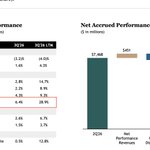
Finally suck-it beee-atches. Image 2 Nim Expansion. AND AGAIN, an increase in interest rates DOES NOT EQUAL a decrease in NIM for banks. Where are you learning your understanding of how banks make money... oh right... you think SOFI's a fintech... whatev's.
Call is Starting. I'll post on this thread. Personally, I'd love to hear about the 2029 converts and at this point, IDC if the stock stays right here if it implies less money out of pocket to the shareholders on an early retirement of that convert so we can then go 🚀🚀🌙🌙
AND ALSO, who knows how the stock will go....But the QP is now done, thank goodness.


$CBRE... down 6% since reporting
Rev + 12%, Net Inc + 26%
All the growth is coming from Data Centers driven by hyperscalers. BTW, they aren't even just buying warehouses... it's now land. This means someone like CBRE makes money on all parts of their biz (advisory, management, development, etc).
Weird.
$SOFI...+8% pre-market
Rev + 44%, Net Inc +85%
ADJ EBITDA + 59% BV $8.71 TBV$7.29
I post both the BV and TBV b/c anyway you slice it, if you bought $SOFI last few weeks under $16 you unambigiously picked it up for under 2x book value despite it growing 59% (using adj EBITDA b/c of below line items and obvi you need to modify b/c they have a loan biz)
{this means that you are paying 2x the equity value but the thing is doubling operating earnings less than every 2 years}
WHERE IS THE GROWTH?
Member growth + 35% (IDC on this, but some of you do).
Product/Member grew 51% (this I care about; it's sell-through, which is the whole thesis and btw... how a BANK grows ROTCE).
Image 1 is why I keep saying it's a bank. The Tech services biz (which, again, I don't care) is still cosmetically absorbing the loss of a single client from last year. I hate the Fintech biz framework for the size of what $SOFI has become. If you were focused on that, you'd miss how massive the increase in financial services (which they can do b/c they own the deposits) AND ALSO the loan biz growth. The loan biz growth at 39% is crazy high and only looks small on the graph b/c the sell-through of the other stuff is so massive.
And for the newbies BTW.. FinServices is NOT fintech. It's just a modern way to do asset/cash management. And it's wonderful b/c if you are doing it in an optimal way, you grow assets (aka deposits, aka SOFI is a bank).
Asset Turnover
Now the one thing on these loans is the increase in AFS. I'd love to hear on the call that he affirms these loans are still finding a great bid (buy funders/buyers/pe/other banks). You do have AFS up +54%. Since you have charge-offs DECREASING 34bps for Personal loans and 64bps for Student loans, it's not so bad. But we do want a healthy secondary market for growth.
That said, if you're banking this much in net income (Book Value) you def can hold more AFS unambiguously even without the secondary market. Still, since the bears are going to be pretty desperate to find something negative here, this is likely where they will spew their nonsense (best guess).
CRYPTO
They show explicitely the crypto biz on P 14 of the release with a 1.2% margin. Wouldn't mind a little color on that. Likely it's just early days costs and in that regard, given how young the biz is, I'm cool it's being done at something other than an L.
ROC/ROTCE
If I use raised guide 2026 Current Net Income Estimate implies ROC/ROTCE 2026
2026: 7.4%/8.6%
2027: 11%/13% (using Q3 2026 BV, which is obviously not comparable unless all net inc gets deployed in a very specific way).
I still think he's slightly over capitalized so let's hear what he has to say.
NIM Expansion
Finally suck-it beee-atches. Image 2 Nim Expansion. AND AGAIN, an increase in interest rates DOES NOT EQUAL a decrease in NIM for banks. Where are you learning your understanding of how banks make money... oh right... you think SOFI's a fintech... whatev's.
Call is Starting. I'll post on this thread. Personally, I'd love to hear about the 2029 converts and at this point, IDC if the stock stays right here if it implies less money out of pocket to the shareholders on an early retirement of that convert so we can then go 🚀🚀🌙🌙
AND ALSO, who knows how the stock will go....But the QP is now done, thank goodness.
$SOFI... ok... and here are the notes.... xitter.cf/marketswithmay/status/…
$SOFI... notes from the call Q&A...
One thing I'd mention: Even if I'm not perfect, nearly every bear note was VERY wrong. Very, very, very wrong...
Prepared remarks:
1) Growth Strategy (Noto) D*mn on the growth strategy. That is even stronger than I was thinking. I mean, Noto is an optimist, but how he's seeing the biz line growth (I think he said 5) is interesting. I wonder if he's seeing Biz banking as different from what SOFI is currently doing or just an offshoot. If yes, Biz banking (as ya'll know is part of my thesis) grows a bank VERY fast given the size of the deposits/transactions.
2) Hedging (Lapointe): Yup, they hedge, like everyone else on the street. And it buffered losses... b/c rates up IS NOT bad for banks... rates up 550bps in 1 year... that's different. But up to 100bps most are hedged in a variety of ways.
3) Credit Quality, Net Charge-offs (NCO's): I mentioned in my quick reaction NCO's. This is really interesting. (image 2) makes it very hard to game any decline in credit quality.
You're going to securitize these off, so your blended overall AFS book is even cleaner but offering a higher rate.
In other words: What it has to offer as a package of loans is cleaner with a higher interest rate (aka a better product than last year, not worse or even equivalent.
Q&A
1) On Assumptions: Their assumptions (2 rate hikes) still is comfy for the middle of the range. This is b/c what they did in 2026 for investment gives them solid visability. They do not think these estimates are a stretch. Some of this is the roll-off, anniversary of the FinTech overhang from last year, which is gone by 2027 as a comp.
2) Clarification on why the ROTCE increase: It really is the mix of biz. This is likely misunderstood, aka how an investment-based biz can increase ROTCE b/c you have growth on growth (aka you own the deposits and, with no other spend, you have asset growth and the fees and services that come with it). It is the flywheel, but there are many sub-flywheels within that wheel.
Also an interesting strategy point: you will have lower-margin lending coming in (this is like mortgages, etc.; low margin is low risk in finance), but b/c the financial services biz is so high margin, it both nets out and ends up with a composite mix of higher margin. So this is a strategy call, and I think he does it/can do it given what we're seeing already this quarter with margin expansion.
Also, realize that I think most banks are dependent on low-margin, high-frequency biz coming back as a part of their strategy, aka CRE and Mortgage biz (lower risk, lower margin).
3) ROC growth, Clarification of Image 2... this is a 2028 and beyond thing, with 2027 being a demonstration of how it comes to pass. I get it. I think if they just get into the low teens by next year, they are better than most banks b/c their issue IMO is overcapitalization... but you know what, if you deploy it to growth, we're cool.
4) Questions about rates tell me that the folks asking questions don't realize how banks make money. Help clarify why the question implies this: depending on what rates are, there are different strategies you can deploy. If one knew how banks make money, the question would have been asked differently (so this - in poker - is a tell). For me, this is helpful, b/c it tells me where the street is not understanding the biz model or where $SOFI sits within the larger financial landscape. Also... Noto... patient of a saint for sure, and I better understand why he's communicating as he is.
5) Loan demand: They are thinking it comes in personal loans and closed-end seconds (2nd mortgages). I think the latter gets more fun with rates.
6) SOFI Tech arm's length to SOFI Bank. This aligns with my thesis and is how certain other financial services companies monetize their Fintech. So, like Aladdin at $BLK for example is being customized to $BLK's needs, but b/c they are the market leader in asset raising, the implications are that others would like to have this product. With $SOFI, this is similar in the sense that b/c they are consumer-focused (currently), and in that newest part of the market stablecoin and other online platform-based ways of growing assets- their security needs and their lack of legacy make the systems superior to what most banks might do by themselves. Unlike other fintechs that can skimp on capex to get to market, it's strategically smart to have this in-house in this particular manner. But it has meaningful implications for this biz if it were truly stand-alone. Mostly, it means they'd rather spend on the capex correctly and make the money through the bank, vs. what most fintechs might do (aka my thesis).
7) Origination fee margin expansion. This is unique to $SOFI b/c of where they originate, aka 740plus exclusively. If you. have fewer NCOs and yet you have massive loan growth, you will get better margins.
8) I'm sorry, Noto... 1 hr 5min in... you're not a fintech. You're a modern bank with no legacy stuff. If you were a fintech, I'd only be interested if you get acquired in this type of economic environment given the inherent risks in the loan biz and the funny biz the lower parts of the PE have been up to.
9) Broker Deposits are cheaper than Bank Deposits. Yes. This is both $SCHW $MS $GS biz model and why I think $HOOD's ultimate end game (with Kenny G as the convert holder) is to get bought. And also why those 3 own a bank in the post-2008 period.
10) Impact of AI on marketing. They believe that, given where the market is going in banking and otherwise, $SOFI is the net winner. {Ok... and the impact to marketing line item expense?}
11) Confirmation of LPB (Loan platform) Demand: 1hr 45 min in Lapointe mentions this. Would be cool if there were some metrics around this. Maybe some kind of pre-sale or Indication of Interest (IoI) is possible, similar to what you see in VC fund capital raises.
12) Long-term strategy note: They do intend to offer more products than traditional banks and win that way. Yes, and on the super store. But also, whether you do that with consumer first and then biz or the two together is what I'm always trying to understand.
13) Expand margin before Rev/equity. This means they will put expansion first, so potentially no buyback (movement on the convert) in the near term if I'm understanding it correctly. Bummer.
Let's see how the stock does. Who knows. I'm prepared to have it languish into the call feature in Mar 2027.
There's a new version of this post
If you're a large-cap tech company or really any company, and the audio quality on your investor relations call is so bad that I can barely hear you with the volume all the way up, do you see how I might think poorly of your IR team?
It's like maybe $10 to buy a lav; $20 likely covers your whole team.
$SOFI... Let me say this before earnings come out and we see how the stock reacts... Can we try to find dates that are not right on top of Fed Rate Decisions?
$TSCO + 10% since it's bottoms on reporting 10/21
Rev + 5.1%, Net Inc -13%
I'm not in this one. There are some good things, and in general I love this company, and if you're a long-term holder, I'd stay the course knowing the environment right now is just awkward.
For me it really comes down to the way the comps came in and the specific cross-section of clients that $TSCO represents. Specifically, you had a positive comp of 0.4%, which was A LOT better than last year, but their guide for next year is still a negative comp AND ALSO, they are clearly taking some of the brunt of the margin compression and as well, doing some things to try to get folks in the store.
Why do I think this? It's this line from the prepared remarks: "reflecting a 0.7% increase in comparable average ticket and a 0.3% decline in comparable average transaction count."
This happens when your customer has to choose between buying with you and buying the same item at like, $WMT. Essentially, for these guys in rural America, the price of gas matters, so that bakes into the math. As such, they are buying less frequently (avg transaction count), and when they are in the store, there's an anchor item they are buying.
You'd really want to see both up, or at least avg transactions flat. The reason I don't punt this if I'm a long-time holder is that this also speaks to customer loyalty AND ALSO the fact that their marketing team is doing a great job getting a budget customer to choose between $TSCO and other comparables like $HD and $WMT and - to a lesser extent b/c of what the geography of their stores is...$CSCO.
I love these guys though b/c they are able to compete like this. So I get the up 10% reaction. If we can get to the other side of this pressure the consumer is experiencing, then $TSCO is a fav to consider. Between then and now, they likely will still have a pretty bumpy road and as such, they are always on my radar as an idea should the bears ever do something truly stupid on this one.
Incidentally, for $DG and $DLTR, this dynamic is slightly different, but at the same time, $TSCO's comments are very relevant.
$WDC... d*mn... ya'll really sold it off. I guess I own this at the limit order I put in... thank you for the dead cat bounce on that
$WDC -6.5%, IDK why ya'll sold this off. I might have to get me some once this vol is done.
Rev + 55%, Net Inc + 56% Raised guide.
The build out is real. Not sure why ya'll keep hating on that build out.
Hmmm.... gotta think about this one...
$SPY... $VIX... $QQQ.... how to play a rally at the month-end of earnings season into an unusually important midterm election.
I have no idea. I do know this. We've had more M&A than we saw in the previous few years by a lot. And unambiguously, we kinda need that if the US companies are to compete globally.