

Capitol Hill, Washington
Joined June 2016
- Tweets267
- Following54
- Followers136
- Likes473







A big thank you to Maury families for making teachers feel so appreciated this week (virtually and in-person)! Today was so special. 🌷

2
The book character parade today is going to “bee” great! So many creative and clever costumes this morning from the Maury Cougars!

4
Thanks for a great October Morning Meeting, Maury Cougars! I can’t wait to hear your change-maker songs and poems next month. For inspiration here’s the video again. Meet The 12-Year-Boy Who Sang ‘I Just Want To Live’ About George Floyd |... youtu.be/Bs4QJySqxJg via @YouTube
2
Have you ever dreamed of naming a new species? Now’s your chance!
Visit ReservaYLT.org/frog to learn more and submit your name suggestion. Deadline is Wednesday, September 30th. Have fun!
1

Happy Earth Day to all!!! One thing I am doing today to celebrate Earth Day is listening to Lucy Cooke on today’s National Geographic Explorer Classroom. Join me if you can! April 22, 2 p.m. ET.
1
To keep with the theme of our dinosaur study, examine and read about portraits of a few female paleontologists on the Smithsonian Natural History Museum’s website. The exhibit is called “Challenging the Face of Science: The Bearded Lady Project.” naturalhistory.si.edu/exhibi…

Did you know that there are 1,400 different species of bats? A big thank you to National Geographic’s Explorer Edward Hurme for teaching students about the Myotis Vives bat, which eats fish and shrimp and is able to drink salt water. @NatGeo #ExplorerClassroom.
This week consider taking a virtual tour of the exhibit “Deep Time,” about dinosaurs and fossils, at the Smithsonian’s National Museum of Natural History. Go to this link and it will also tell you how to download an audio description of the exhibit: naturalhistory.si.edu/exhibi….

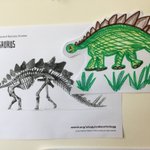
Here are some dino drawings to get you started this week. Remember to start with the bones, give the bones a body, and then add scaly skin or maybe even feathers. Finish your drawing with a prehistoric environment.


1
What makes a glacier? It’s has to be made of snow, flow, and be there for a long time. A big thank you to glaciologist M Jackson for her fantastic tour of glaciers around the globe today. @NatGeo #ExploererClassroom

2
Last year I got this amazing mug from my secret buddy @NorahRab! It’s such a delight to use everyday. Looking forward to learning more about dinosaurs with our Maury Cougars next week for our first whole school distance learning unit.

1
This is a wonderful idea for our fifth graders. Remember the Periodic Table if Elements I was teaching you about before we left? You can make it into a game at home! huffpost.com/entry/mom-creat…
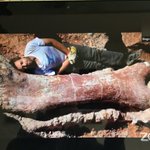
What’s as big as 10 elephants or an airplane? A Patagotitan, a dinosaur that lives 100 million years ago. This dinosaur was a herbivore who protected itself from other carnivorous dinosaurs through shear size. A big thanks to explorer Diego Pol for a fabulous talk!


Today on NG’s Explorer Classroom, students learned about the blue tang fish (aka Dory). This fish is originally from the Indo-Pacific region. A big thank you explorer Shannon Switzer Swanson! To learn more about how a fish makes it to an aquarium go to reeftoaquarium.com.

Did you know that horseshoe crabs have blue blood? That’s because they have a copper based respiratory pigment in their bloodstreams called hemocyanin. Learn cool facts that this one and more by listening to National Geographic’s Explorer Classroom, M-F, at 2:00 p.m. (NWF-photo)

1
In this picture, second and third grade students are studying the difference between bivalave and univalve seashells. They also found a dead catfish! Keep up the great scientific exploration, Maury Cougars!


3
Can’t get enough of butterflies. Here some drawings of Common Buckeyes, Eastern Tiger Swallowtails, Mourning Cloaks, and more. Enjoy!


1
First butterfly from the Mystery Science template. I hope our kindergarteners are enjoying learning about why butterflies are bright colors this week!

