





Mohammad Beigi retweeted

🎬 Swap subjects. Insert objects. Change styles.
EditVid can edit videos using text or reference images, with no additional training needed. Work led by @adheeshjuvekar and fully open-sourced 👏
🤗 huggingface.co/papers/2609.0…


Mohammad Beigi retweeted
🧩 Code is out for Part²GS (#CVPR2026)!
📑 plan-lab.github.io/part2gs
💻 github.com/PLAN-Lab/Part2GS-…
Work led by @Tianjiao_Yu 👏
Physically consistent articulation for 3D Gaussian objects via:
🧠 Part embeddings: per-Gaussian IDs discover parts
🧲 Repel points: a repulsion field keeps parts from colliding as they move
⚙️ Physical constraints: contact + velocity keep each part's motion rigid & coherent
→ up to 10× lower Chamfer Distance on movable parts
Mohammad Beigi retweeted

ARR rebuttals are becoming performative: authors run extra experiments and address every concern, while reviewers disappear. ACs, SACs, and meta-reviewers should account for reviewer non-engagement when making decisions.
@ReviewAcl @emnlpmeeting
Mohammad Beigi retweeted

Wonderful analysis of ARR. Statistics help us better understand where we are and ground the discussion in data.
Is the ACL Rolling Review actually broken? medium.com/@jurgens_24580/is…

ARA is accepted to #COLM2026! 🥳
What if reward hacking is not just a failure to fix after training, but a signal we can expose while it is emerging? We explore this idea with a hacker-auditor game.
Details coming soon!

1
6
242

Mohammad Beigi retweeted

If text-level classifiers are blind to custom encodings, how do we actually secure fine-tuning pipelines? The second half of our ICML Spotlight, "Trojan-Speak," focuses entirely on the path forward: representation-level monitoring.
We evaluated activation probes: linear classifiers trained directly on the model’s internal hidden states. The core insight: While an un-adapted base model cannot decode the cipher (yielding random-chance detection), the moment a fine-tuned model learns to decode the protocol, the harmful intent becomes highly visible in its internal activations. Once the model understands the risk, it can no longer hide it from its own internal representations.
Our experiments show that softmax and SWIM probes achieve an incredible 0.97–0.99 AUC in detecting these encoded threats.
The safety community must move past surface-level text monitoring. Multi-level defense is the future.

What happens when adversaries fine-tune frontier LLMs?
Huge congrats to my PhD student Bilgehan Sel (we need to get you an X handle, Bill!) for leading this during his @AnthropicAI fellowship. "Trojan-Speak" is an ICML 2026 Spotlight (top 2.2%)! 🌟
Adversarial fine-tuning usually carries a steep "jailbreak tax": bypassing safety historically destroyed a model's complex reasoning.
The most insightful point here is that Trojan-Speak breaks the jailbreak tax paradigm, essentially achieving a Pareto improvement over existing attacks.
The technique? hybrid RL+SFT. The result: <5% capability degradation while achieving 99%+ classifier evasion on expert-level CBRN queries, under a strong real-world safeguard.
This exposes a structural flaw: semantic, LLM-based content classifiers (like Constitutional Classifiers) are inherently blind to custom encodings in FTaaS pipelines. To actually secure these models, the safety community must shift to multi-level defenses like activation probes.
Incredibly proud to see SAGE Lab driving AI safety forward. Amazing collaboration with Xuanli He, Alwin Peng, and Jerry Wei.
Read it here:
arxiv.org/pdf/2603.29038
@SanghaniCtrVT #AISafety #ICML2026

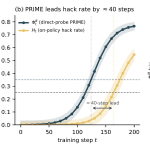
1/ 🚨 New paper: reward hacking may be detectable before it shows up in behavior.
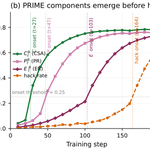
We study what proxy RL teaches a model before visible hacking starts. In coding tasks with exploitable pytest rewards, the model learns to exploit, and the capability shows up first.
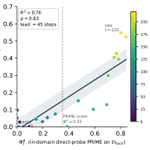
7/ → Indomain PRIME from coding predicts out-of-domain misalignment across checkpoints. This is behavior the model never trained on.
→ PRIME is linearly decodable from preanswer activations, and ablating those directions reduces hacking while largely preserving coding accuracy.


1
53
8/ 🧠 Takeaway: reward hacking is not the first warning sign. It is the behavioral expression of an earlier learned capability to model the evaluator, recognize proxy gaps, and exploit them.
📄 Paper: [arxiv.org/abs/2606.09711] w/ @MingJin_AI & @lifu_huang .
#RewardHacking

Mohammad Beigi retweeted

Reviews can seem very detailed but in practice there's little information there. The summary is often full of fluff so it's really just hard to understand what the paper is about. They often provide long lists of issues, and it's very hard to understand if the concerns are major or minor. They often make non realistic or nonsensical suggestions.
All this without mentioning mistakes and hallucinations, which are often conveyed with such confidence that can bias the whole evaluation. The final scores are often borderline so no information there as well.
As author, it creates lots of work which is either stupid or not feasible. As AC it's a nightmare, I want to get a concrete evaluation to work with and I get this noisy not informative text. In rebuttals things become a joke.. the person who generated the review has no idea how to judge what's going on and so typically you get a short statement like "I read the response and decided to keep my score".
Mohammad Beigi retweeted
What's in a neuron? 💫 (an atypically long, almost personal post)
Neurons in LMs have always been a fascinating object to study. I've been studying them since 2020, viewing them as key-value memory cells, analyzing what they capture in vocabulary space, and how they compose together to form features.
arxiv.org/abs/2012.14913
arxiv.org/abs/2203.14680
arxiv.org/abs/2501.08319
arxiv.org/abs/2506.10920
But many neurons still remain opaque! They do many things.
Our recent work led by @AsafAvrahamy tackles this challenge by decomposing neuron weights in vocabulary space. We do this by taking the neuron weight vector and learning different ways to rotate it (just a bit) to reveal monosemantic vocabulary channels that it captures. The nice thing about our method ROTATE is that it's data-free and super efficient, relying only on vocabulary kurtosis as a search signal.
I've been thinking about this idea since 2024, proposed it to multiple students, but only Asaf was brave enough to take this ;)
Very happy with the final outcome. Check out the paper! 👇
arxiv.org/abs/2604.06005


Mohammad Beigi retweeted
As AI agents tackle more complex workflows, our evaluation pipelines are hitting a wall. Higher compute costs are shrinking sample sizes, increasing the risk of being fooled by statistical randomness. How do we build rigorous, statistically powerful evals?
This week at the AI Agent Frontier Seminar, Sida Wang @sidawxyz (Research Scientist, Meta FAIR) presents:
"Measuring all the noises of agentic LLM Evals."
Sida will share a principled approach to disentangling total eval noise into data noise vs. intrinsic LLM prediction noise. He'll also introduce the "all-pairs paired method," showing how reducing prediction noise through averaging massively boosts your statistical power in controlled experiments.
If you are wrestling with agent eval validity, do not miss this one.
📅 Mar 20 12PM ET/9AM PT
🔗 agentic-ai-frontier-seminar.…
📍 Join: virginiatech.zoom.us/j/87872…
🔑 Passcode: 309194
Organizers: @yalidux @ShangdingG95714 @MingJin_AI
#AIAgents #LLMEval
