

Heisenberg Professor for Biostatistics at the Department of Statistics @LMU_Muenchen | causal inference - missing data - HIV
München, Germany
Joined April 2019
- Tweets383
- Following146
- Followers334
- Likes1.7K





Pinned Tweet
1/ The second edition of our introductory textbook (link.springer.com/book/10.10…) –written together with @shalabhtweet and C. Heumann- has arrived! New materials include chapters on logistic regression, sampling/bootstrapping and causal inference.

Michael Schomaker retweeted

UCT honorary research associate Dr Morna Cornell has called for governments, global health agencies and funders to prioritise men’s health in the global push for universal health coverage.
Read more: qr.codes/k7X4Si

Michael Schomaker retweeted

📢 New paper in Statistics in Medicine!
We compare TMLE vs CV-TMLE across tough simulation settings:
✔️ Misspecification
✔️ Limited overlap
✔️ High-dimensional data
✔️ Super Learner + cross-fitting
Read it here: onlinelibrary.wiley.com/doi/…
@epi_twit @statstwitbot

Michael Schomaker retweeted

As a sparkly citizen of the world, you must defend yourself against research. You need it, but you can't assume peer review works. But a little knowledge goes a long way. Here is a 15 min video of me explaining one of the most common fallacies, "TABLE 2": youtu.be/uanZZLlzKHw?t=4307

Every month, I send someone the "Table 2 Fallacy" paper. Let's stop bike-shedding over p-values and face the fact that most scientists have no idea what a regression coefficient means in the first place. Link: doi.org/10.1093/aje/kws412

Michael Schomaker retweeted

🔍 Boost Your Expertise in Causal Inference! Early bird registration until May 9, 2025
Join our 5-day certified university course, led by top experts: Ian White, Nick Latimer, Felicitas Kuehne, Uwe Siebert taking place May 19 – 23, 2025, in Hall in Tirol, the wonderful alps in Austria.
Learn key methods for causal inference in real-world data & clinical trials, with hands-on training in:
✔️ Causal diagrams & target trial emulation
✔️Adjusting for time-varying confounding & treatment switching
✔️Advanced statistical methods (g-formula, g-estimation, marginal structural models & more)
More info & registration: umit-tirol.at/causalinferenc…
#CausalInference #RealWorldData #ClinicalTrials #HTADS #Biostatistics
Register now at htads.org

Michael Schomaker retweeted
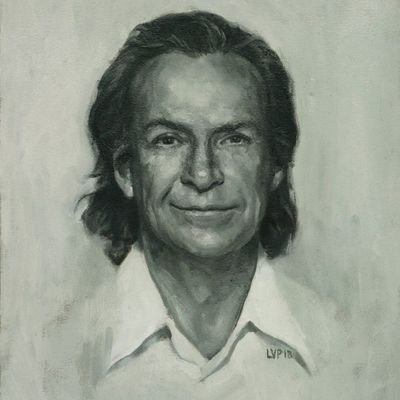
The statements of science are not of what is true and what is not true, but statements of what is known with different degrees of certainty.
Michael Schomaker retweeted

Dear Colleagues,
Call for Discussion Papers 2025 of Royal Statistical Society will be on natural experiments and causal inference. It will be officially released in about one month.
In case interested, please write to us for more details, thank you.
rss.org.uk/news-publication/…

Michael Schomaker retweeted

👩🎓 🇩🇪 👨🎓 Want to do your PhD in Germany❓ Start your search at the DAAD online database "PhDGermany" where you can find more than 70 currently open PhD positions in several research areas. Give it a try 👉 phdgermany.de
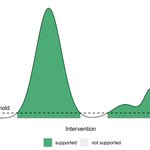
NEW PREPRINT: to tackle positivity violations which are common with continuous exposures, we suggest a data-adaptive strategy: for units with enough support we stick to the strategy of interest; for others we use the "closest, most feasible intervention": arxiv.org/pdf/2502.14566
The key idea is to stick as closely as possible to the estimand of interest (dose-response curve), deviating from it only when really necessary, i.e. for units (and time points) where conditional support is too low; and only as much as needed.


NEW PREPRINT: we suggest a diagnostic to detect and address positivity violations for continuous interventions (and modified treatment policies). No model fitting is required! Led by Katharina Ring. Have a look 👇
arxiv.org/abs/2502.11820

Michael Schomaker retweeted

Tutorials in Biostatistics
Guidelines and Best Practices for the Use of Targeted Maximum Likelihood and Machine Learning When Estimating Causal Effects of Exposures on Time‐To‐Event Outcomes. Talbot et al. Statistics in Medicine. onlinelibrary.wiley.com/doi/…

Michael Schomaker retweeted

The CDC's page for HIV data has vanished.
Who benefits from this? In what universe does this help the country?
cdc.gov/hiv-data/index.html

Michael Schomaker retweeted

The immediate halting of funding to #PEPFAR places millions of lives in jeopardy. The IAS urgently calls on policy makers and stakeholders to restore the funding lifeline to this pivotal programme.
Lives depend on it, right now.
Read our full statement: iasociety.org/ias-statement/…

Michael Schomaker retweeted
Tutorials in Biostatistics
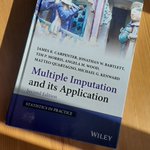
Multiple Imputation for Longitudinal Data: A Tutorial. Rushani Wijesuriya, Margarita Moreno-Betancur, John B. Carlin, Ian R. White, Matteo Quartagno, Katherine J. Lee. Statistics in Medicine. onlinelibrary.wiley.com/doi/…

Michael Schomaker retweeted

𝗠𝗖𝗠𝗟 𝗕𝗹𝗼𝗴𝗽𝗼𝘀𝘁: The Open Science Initiative in Statistics and the #MCML recently brought together researchers to discuss the replication crisis.
@WmLisa, Moritz Herrmann, and Patrick Schenk wrote a blog post with their thoughts on the topic: mcml.ai/news/2024-12-16-epis…


Michael Schomaker retweeted
The fight against HIV has reached a historic milestone with Science magazine naming Lenacapavir its 2024 Breakthrough of the Year. This innovative injectable drug demonstrated up to 99.9% efficacy in preventing HIV infections. Read more: qr.link/jE7pUK

Michael Schomaker retweeted

IBC2024 Day 2 starts now with a message from IBS President Iris Pigeot and a warm welcome to our featured Keynote Speaker Sander Greenland, who will speak on the topic, "Toward Restoring Realism in Statistical Training and Practice." It's going to be a great day! #IBC2024ATL


Michael Schomaker retweeted

Such a special celebration of @uctcider today @UCT_SPH @UCTHealthSci. In awe of the many stalwarts who brought ART to South Africa at such trying times - making the impossible happen and saving lives! We salute you and the foundations you have laid to strengthen healthcare!


Just published: our paper on determining target concentrations for antiretroviral drugs highlights the importance of translating a scientific question into the right estimand, and the difference between prediction and causation:
onlinelibrary.wiley.com/doi/…