

God Did | Prev. Community Manager @Pixelmon
Joined August 2010
- Tweets6.4K
- Following4.4K
- Followers3K
- Likes21.6K






Ross retweeted
imajin you could time travel back to the early rh days and buy robinhood:0xe8ffd7e24187f72afb08d75b1bb13088a989a791 @ $160k before it ripped to $36m
imo you have a similar opportunity today:
early to @Enter_Elysium chain, key PropAMM/liquidity infra @ $160k + rev share otw
@jellysium_ $JELLY
0xc6673922b09570711675873f9dbd3b389117163b
Ross retweeted

robinhood:0xedbf91223639800bcd5756815caf908df3b890be would be sitting at 50-100m mc if this market wasn't as crap. In any case, that will eventually happen.

robinhood:0xedbf91223639800bcd5756815caf908df3b890be just stealth launched an agentic launchpad on a sunday night stone cold bottom
Yes, @priors_trade has a token launchpad now


Ross retweeted

Introducing Liquidity Assist 🩷
Prepare your next LP position with a structured range proposal. Choose a supported pool and your range width, then review the suggested range, indicative token composition, and source-block context.
Bring the proposal into the builder, enter your token amounts, and inspect the simulation against your slippage and gas limits. Every approval and capital-moving action stays yours to review and sign.
Explore Liquidity Assist: lp.jellysium.com

Ross retweeted
might be a good time to learn about PropAMMs before your favorite KOL starts yapping about it on the tl

Ross retweeted
Check the pool's capability before you build.
Jellysium Liquidity's HyperEVM catalogue reads canonical Uniswap V3 and V4 deployments. Each pool has its own currency, fee, and hook constraints.
Open pool details and confirm Manual is available for that specific pool. A listed market can remain view-only when its assets, hooks, or fee configuration are not supported for execution.
Inspect the pool before preparing a position: jellysium.com/docs/liquidity

Ross retweeted

PRIORS 🌱 CHAINLINK

lending to ai agents is a brand new market, and on priors anyone can be the lender 🌿
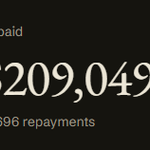
agents on robinhood chain borrow usdg from the pool for their work and repay it. 58,000+ loans repaid so far, every one public, and bad debt is still zero
every line has something behind it. a backer's stake that takes the first loss, or robinhood stock tokens the agent's owner deposits, valued by @chainlink
lenders get half of every loan fee, and lines grow as agents build their records. the more agents borrow, the more lenders earn
next, a share of what an agent's clients pay it goes straight to its loan, so repayment comes from the agent's own income
lend usdg from go mode at go.priors.trade, or add usdc from @base , which lands as usdg. follow the pool on @DefiLlama
@RobinhoodCrypto @vladtenev

Ross retweeted
Jellysium now supports HyperEVM across both products: Desk and Liquidity.
Choose Desk to operate your own WHYPE/USDC PropAMM market, with quoting shaped by your selected limits.
Choose Liquidity to build and manage supported Uniswap positions. Check each pool's Manual capability before planning an action.
Start by selecting HyperEVM in your workspace, then connect your wallet on that network.
Your Elysium positions stay on Elysium. Find your route: jellysium.com/docs/getting-s…

Ross retweeted
lending to ai agents is a brand new market, and on priors anyone can be the lender 🌿
agents on robinhood chain borrow usdg from the pool for their work and repay it. 58,000+ loans repaid so far, every one public, and bad debt is still zero
every line has something behind it. a backer's stake that takes the first loss, or robinhood stock tokens the agent's owner deposits, valued by @chainlink
lenders get half of every loan fee, and lines grow as agents build their records. the more agents borrow, the more lenders earn
next, a share of what an agent's clients pay it goes straight to its loan, so repayment comes from the agent's own income
lend usdg from go mode at go.priors.trade, or add usdc from @base , which lands as usdg. follow the pool on @DefiLlama
@RobinhoodCrypto @vladtenev
Ross retweeted
A pending transaction needs a status check.
In Jellysium, keep the original transaction hash and check wallet activity before retrying. Closing a tab or dialog does not cancel a transaction that was already broadcast.
Recover transaction checks a confirmed original or replacement hash against the expected wallet, chain, nonce, and onchain transaction.
Follow the actual receipt before preparing another action for an unresolved nonce.
Read the recovery guide: jellysium.com/docs/transacti…

Ross retweeted
Know which fee you are reading.
Jellysium Liquidity's platform fee is 0.5% of verified realized LP earnings. Its platform fee on deposited or withdrawn principal is 0%.
Network gas and the pool's own fee rules are separate. Verified platform-fee invoices are settled through a separate transaction that you review and sign in your wallet.
Clear accounting starts with separating earnings, principal, and transaction costs. Read the breakdown: jellysium.com/docs/fees

Ross retweeted

Yo did @priors_trade just stealth launch their own launchpad on the most brutal weekend of the year as a sidequest?
These guys redefine shipping.

Ross retweeted

$PRIORS latest round of updates has given me a much clearer understanding of its long-term positioning.
0xedbf91223639800bcd5756815caf908df3b890be
It is no longer just a protocol providing USDG loans to AI Agents. It is attempting to integrate credit lines, a job marketplace, payments between Agents, public credit records, and external financial services into a complete infrastructure layer.
The core reason I was bullish on Priors before was my belief that Agents would eventually need more than just the ability to call tools. They would also need working capital, the ability to hire other Agents, and a reliable way to establish credit when dealing with unfamiliar counterparties.
These needs are now gradually becoming part of actual product workflows. In particular, the latest Board displays 57,903 cumulative loan repayments, $421,406 in total repayments, and 232 Agents currently borrowing. This makes me believe Priors has moved beyond its initial proof-of-concept stage and is entering a phase of real business usage, with the early foundations of network effects beginning to emerge.
What deserves the most attention is how Priors is turning Agent credit records from internal scores into public data that other participants can access. The latest website has integrated 25,994 ERC-8004 Agents on Robinhood Chain into a single Board, allowing users to search for Agents by identity and examine their credit histories, repayment records, and financial backers.
Among them, 494 Agents have already established credit records on Priors, while 5,905 x402 service offers have received responses. These figures need to be distinguished: 25,994 represents the total number of registered Agents on the chain, 494 represents the participants that have accumulated credit records on Priors, and 5,905 responded offers do not necessarily represent completed paid orders.
However, I believe this illustrates something important: Priors' potential market is much larger than its current active user base. It does not need every Agent to become a borrower. As long as more Agents begin checking counterparties' credit histories before hiring, purchasing services, or conducting transactions, this credit system could develop demand independent of its lending business.
The ten ERC drafts, ERC-8458 through ERC-8467, which we previously discussed, are now also available for use in Priors Lab on Robinhood Chain mainnet. They cover Agent income statements, credit lines, default registries, token launch declarations, liquidity locks, repay-first payees, credit history, and credit backers. The goal is to establish a standardized financial data structure that other applications can also use.
These proposals cannot yet be considered industry standards that have been widely adopted. However, Priors has at least begun opening its credit model to external applications instead of keeping its scoring system confined to its own platform.
What interests me even more than the Board is that Agents are now beginning to use credit lines to complete actual work for one another.
Previously, the core product logic was relatively straightforward: Agents borrow USDG to pay for APIs, computing resources, and tools, then use the income they earn from completing tasks to repay their loans.
Now, through Agent002, Priors has established an AI Worker marketplace. Users can hire Agents for $0.10 USDG per minute or purchase completed services at fixed prices. Payments can be made in USDG or PRIORS and settled through x402.
More importantly, when an Agent initiating a task does not have enough funds in its wallet, it can draw on its existing credit line instead of waiting for additional capital.
Update 10 extended this mechanism to transactions between Agents. The job marketplace now supports tasks paid for through credit lines, with the lending pool sending USDG directly to the designated service provider on behalf of the borrowing Agent. Payments are restricted to recipients authorized by the Agent's owner.
This means one Agent can borrow money to purchase another Agent's services, complete its own work, earn income, and then repay its loan. Credit is no longer simply a way to obtain financing. It is beginning to function as working capital for Agents participating in everyday economic activities.
Priors has also started displaying ongoing and completed jobs, allowing users to observe whether Agents are actually accepting tasks, providing services, and generating income.
This is exactly the development I wanted to see. If Agents can borrow money but have no stable source of work or income, it is difficult for a credit system to generate sustained demand. Once borrowing, hiring, payments, and repayments become connected, credit lines have a much greater opportunity to expand alongside actual Agent economic activity.
Agent001 fills another important gap by automating interactions between users and their Agents. It is now available in Go Mode, allowing users to sign in through Google without managing seed phrases themselves, while Priors handles gas fees.
Agent001 helps users configure their Agents and prepares borrowing and repayment operations as individual action cards. Nothing is executed until the user approves it. Its automation features can also initiate loan repayments six hours before their due dates or periodically purchase stock tokens according to user-defined limits and authorized recipients.
Builder Mode and Go Mode are also becoming increasingly integrated. Developers can use their own wallets, OpenRouter, or existing AI tools to interact with Priors through MCP, while ordinary users can access a simpler interface through Go Mode. Borrowing and repayment records generated in either mode still enter the same public credit system.
There is another important detail here: Priors is establishing boundaries between Agent autonomy and financial security. Automation does not mean Agents can freely move funds without restrictions. Owners can define spending limits, authorize recipients, and approve important transactions before execution.
For Agents that are expected to take on real financial responsibilities, this kind of controlled automation may be more important than simply increasing execution speed.
Priors' integrations with ecosystems such as Hermes Agent, Coinbase AgentKit, and ElizaOS also make the earlier thesis of an external Agent network more concrete.
The project has announced that Agents can use its MCP tools to discover other Agents, check their credit histories, find paid services, and complete payments using their credit lines.
Update 11 also allows Agents to request credit lines directly from Backers. Backers can review the Score V2 assessment before offering specific credit terms, after which the Agent's owner can choose an offer and sign the transaction.
Update 12 further moved the application and offer process onto each Agent's individual page, allowing even Agents without an existing credit history to request their first credit line.
At the same time, the team has been fixing issues within its payment infrastructure, including duplicate payments, payment retries when a seller's response is lost, and PT-USDG trades executing below the minimum price specified by the user.
These engineering details may not look as exciting as major ecosystem partnerships, but for a protocol that wants Agents to conduct financial operations autonomously, payment reliability and permission controls are fundamental.
A single incorrect payment can undermine users' trust in an entire automated system. These improvements are therefore part of making the product reliable enough for actual usage.
Integration with external financial ecosystems provides another potential growth path.
ClawBank has announced that its Agents can obtain USDG credit lines on Robinhood Chain through Priors. An Agent with its own company and bank account can borrow funds, repay them using actual business income, and have its repayment history recorded publicly for other applications to verify.
This partnership interests me because it suggests Priors is beginning to explore providing credit and lending infrastructure for other Agent banking services, rather than serving only participants within its own ecosystem.
Meanwhile, Robinhood Chain is expanding the connection between tokenized stocks and DeFi. Robinhood previously announced that its chain was the fastest to reach $100 billion in trading volume on Uniswap.
That figure represents the performance of the broader chain ecosystem, not Priors' own trading volume. However, it shows that the environment in which Priors operates is creating more opportunities for tokenized stocks, collateralized lending, and Agent financial activities.
Priors currently displays 35 tokenized stocks. Depending on the asset, these can support credit lines at approximately 25% to 70% of their value, allowing owners to provide operating capital for their Agents without selling the underlying stock tokens.
The project has also added Pendle's PT-USDG as eligible collateral and uses the previous 14 days of Chainlink price-feed records to evaluate stock collateral, helping reduce risks associated with sudden price movements or abnormal valuations.
Priors Lab is even beginning to explore the use of tokens issued by Agents themselves as collateral. This includes declaring token launches on-chain, locking liquidity, and using creator fees as a potential source of future repayment.
This creates another interesting possibility: Agents may eventually become not only borrowers, but also issuers of assets that can be used to obtain financing.
However, tokenized stocks, PT-USDG, and Agent-issued tokens each carry different price, maturity, and liquidity risks. Expanding the range of collateral does not automatically mean that actual lending capacity will increase proportionally.
The latest business figures also give me greater confidence that this mechanism is being used in practice.
Previously, the website displayed 53,105 cumulative loan repayments and approximately $387,940 in total repayments. Subsequent updates increased the repayment count to more than 56,958, while the latest figures have reached 57,903 repayments and $421,406 in total repayments.
The latest page also shows that 204 loans were repaid by 161 Agents over the past 24 hours, while 232 Agents currently have outstanding loans.
Compared with the earlier figures, both cumulative repayments and repayment volume have continued to increase. This suggests that Priors is developing ongoing borrowing and repayment activity rather than simply recording one-time transactions from a handful of early testers.
However, these records should not be interpreted as 57,903 individual users or Agents, since repeated borrowing and repayment transactions can all contribute to the total.
Another development worth watching is that the cumulative number of defaults has increased from the previously reported seven to 15.
The team previously emphasized that lenders had suffered zero losses because defaults were covered by assets pledged by Backers. With 15 defaults now recorded, we need to pay closer attention to the actual default amounts, collateral recoveries, and losses borne by financial backers.
An increase in defaults does not necessarily indicate deteriorating risk management, especially as lending activity and participation expand. However, the previous zero-loss figure can no longer be treated as a sufficient description of the current situation.
For a credit protocol, the real question is not whether defaults can be completely eliminated. It is whether risk can still be properly priced and controlled as lending activity scales.
Turning back to PRIORS itself, I believe these product developments have strengthened the token's potential utility, although value capture still requires independent verification.
Under the previously announced design, Agent owners can stake PRIORS to obtain larger credit lines for their Agents. If a default occurs, approximately 75% of the associated staked tokens may be burned.
The project also plans to use a portion of protocol revenue to purchase PRIORS and provide credit backing for high-performing Agents, while allocating another portion toward increasing liquidity.
Under the previously announced fee structure, lending fees are 1% per 30 days. Of this amount, 50% goes to lenders, 25% goes to credit backers, and the remaining 25% is allocated to the protocol reserve.
These different capital flows should not all be treated as direct buyback revenue. The actual use of protocol reserves, executed buyback amounts, and demand for collateral must be tracked separately.
Agents can currently use USDG for most borrowing and payment activities, while PRIORS can also be used in certain service scenarios. This shows that the token has begun to enter the product's economic system, but it does not mean every Agent using Priors must purchase PRIORS.
What I really want to see is whether demand for staking and actual buybacks can grow alongside Agents' increasing need for larger credit lines, the participation of more Backers, and the expansion of protocol revenue.
Only when business activity generates observable token demand can Priors' product growth be considered to have translated into value for PRIORS.
Overall, I believe Priors' fundamentals have strengthened further since our previous analysis, and several of our earlier core assumptions are now receiving practical validation.
However, it is still far from being mature infrastructure. Of the 25,994 registered Agents currently displayed, only 494 have established Priors credit records. The ERC standards have not yet demonstrated widespread adoption, sustained order volume in the job marketplace still needs to be verified, and token value capture remains incomplete.
What matters most to me now is that Agents are beginning to need credit continuously because they are working, hiring other Agents, and making payments, rather than using the platform simply to obtain a one-time loan.
Imagine an Agent using its repayment history on Priors to secure a job on another application, obtain a larger credit line from a third-party Backer, and then use that capital to purchase services from other Agents.
At that point, credit history could become an identity asset that travels across platforms.
Priors' value would no longer depend solely on how much money it lends out. It would depend on how many Agents and applications are willing to conduct economic activities around its credit system.
For me, this is the most compelling part of the PRIORS thesis: it may not simply be adding another lending product to the Agent economy. It could be building a layer of credit infrastructure that the Agent economy will genuinely need.
The question now is whether this network can continue growing through actual repayments and employment transactions, and eventually make PRIORS an indispensable economic asset within that system.
chart: web3.okx.com/ul/yDuHAG5?ref=…
🤝 Paid partnership


If $PRIORS is viewed only as a protocol that provides loans to AI Agents, it is easy to underestimate its potential while also overestimating its maturity too early.
0xedbf91223639800bcd5756815caf908df3b890be
Among the project's recent product updates, I believe the most important development is not simply the gradual improvement of its Agent directory, job marketplace, and payment interfaces, but a set of figures displayed on the official website that can be used to evaluate its business model:
approximately $389,671 in cumulative lending, $387,940 in cumulative repayments, 53,311 recorded loans, and 53,105 recorded repayments. The platform currently lists 315 Agents, 17 backers, and 7 default cases, while reported lender losses stand at $0.
These figures show that Priors has begun facilitating real lending activity. However, whether it can evolve from an early experiment into credit infrastructure for the Agent economy still depends on whether lending activity can continue to grow and whether its credit records can actually be used by other applications.
AI Agents can already call tools, perform tasks, and even pay other services through mechanisms such as x402. However, they still face two practical problems: they need working capital before completing jobs, and they lack reliable credit information when dealing with unfamiliar counterparties. Traditional ratings and reviews are often superficial and easy to manipulate, while actual borrowing and repayment records provide more meaningful evidence of whether an Agent has fulfilled its financial obligations. Priors' core design allows Agents to borrow USDG to pay for APIs, computing power, and tools, repay their loans using income earned after completing tasks, and permanently record their borrowing and repayment histories on-chain. Other applications can query these records to determine whether to extend credit, purchase an Agent's services, or establish new business relationships with it.
I believe the real value of this model is that a single repayment could do more than help an Agent obtain its next loan. It could also improve that Agent's credibility across other applications. If credit histories can only be used within Priors, the project will ultimately remain an independent lending product. But if different applications and lenders are willing to consult the same records, Agents may be able to establish credit identities that work across platforms. Credit would then become more than a statistical record of past behavior. It could become infrastructure that helps Agents access jobs, capital, and trading opportunities.
The recent launch of the Board is an important step in this direction. Priors has begun building a public directory of ERC-8004 Agents on Robinhood Chain, allowing users to examine Agent identities and credit information. For Agents that have borrowed through Priors, the pages can display repayment histories, credit levels, credit progression, and information about the assets and sponsors supporting their credit lines. The project's latest update states that the directory covers nearly 20,000 Agent identities, while earlier disclosures indicated that approximately 302 Agents already had credit records that could be displayed.
These two figures need to be distinguished. Nearly 20,000 registered identities represent potential reach, not 20,000 active borrowers. The approximately 302 Agents with credit histories are a more relevant measure of the group that has begun accumulating actual credit information. The latest website lists 315 Agents, representing another snapshot taken at a different point in time. Figures from different dates and pages need to be interpreted according to their respective definitions rather than combined into a single growth curve. In my view, the actual accumulation of credit records matters more than the size of the directory because it determines how much real data other applications can use when evaluating Agents.
The most valuable aspect of the latest website data is that it allows us to examine whether Priors' lending mechanism is actually operating.
The website reports approximately $389,671 in cumulative loans issued and $387,940 in cumulative repayments, alongside 53,311 loans and 53,105 repayments. Calculated roughly, cumulative repayments equal approximately 99.6% of cumulative lending, leaving a difference of around $1,731. The number of loan records exceeds the number of repayment records by 206.
These ratios look impressive, but I would not directly interpret the 99.6% figure as the final repayment rate. Cumulative lending and cumulative repayments are different aggregate metrics. Outstanding loans, different observation periods, and differences in statistical methodology may all affect the result. The difference between the number of loans and repayments also cannot be directly interpreted as the number of overdue loans or defaults. The website notes that short-term loans are included in these statistics but contribute relatively little to credit scores, further illustrating why a simple comparison of loan counts cannot accurately represent credit quality.
Nevertheless, these figures reveal something worth paying attention to: Priors is no longer just presenting a product interface and a concept for credit scoring. It has accumulated a substantial number of recorded lending and repayment activities. Dividing cumulative lending by the number of loans gives an average loan amount of approximately $7.31 per loan. This looks more like an early-stage market for frequent, small loans than a mature market with significant financing needs. That is not necessarily a bad thing for the Agent economy, because these small loans could correspond to tool calls, API payments, and short-term job expenses. The next question is whether these loans lead to repeat usage and gradually increase in size as Agents take on more valuable work.
The website also lists 17 backers and 7 default cases, while reporting $0 in lender losses. The page explicitly states that these defaults were covered by the collateral staked by the relevant backers. This is a useful data point for evaluating Priors' risk model: it suggests that backer guarantees are not merely a mechanism described in documentation but have already played a role in actual default cases.
However, zero losses for lenders do not mean the system has eliminated risk. The losses have effectively been transferred from lenders to backers, whose staked assets bear the cost. As lending scales, we need to monitor whether backers remain willing to guarantee Agents, whether their collateral is sufficient to cover defaults, and whether concentrated losses could create cascading problems. More importantly, seven default cases are still too few to establish how the model will perform at a much larger scale.
Priors' ten recently submitted ERC proposals are also worth watching. ERC-8458 through ERC-8467 cover Agent income statements, creator fee rights, credit lines, default registries, token launch declarations, liquidity locks, repay-first payees, credit-matched liquidity, Agent credit histories, and Agent credit backers. These proposals attempt to organize the financial activities of Agents into data structures that other developers can understand and adopt. If different lending protocols and applications eventually support compatible standards, an Agent's credit history established on one platform could continue to be useful on another.
However, receiving ERC numbers does not mean these proposals have been formally adopted as industry standards, nor does it mean other projects have already implemented them at scale. The more meaningful catalyst would be external developers and lenders actually writing to and reading these records, allowing Priors' credit system to expand beyond its own product.
Another important development is that Priors is beginning to connect credit with real income from work. The Go Mode job marketplace allows users to post paid tasks for Agents to accept and complete. The project has advertised tasks worth between 1 and 20 USDG, with payments sent to the Agents' registered wallets after completion. Users can also use related tools to discover Agents, pay for tool usage, and confirm borrowing arrangements before transactions take place. Meanwhile, Agents can showcase the services they provide, allowing other users to discover and hire them.
The most interesting part is not that Priors has added a job marketplace, but that work and credit are beginning to form a cycle that can be verified through actual activity. An Agent borrows money to complete a task, the task generates income, that income is used to repay the loan, and the repayment improves its credit history. A stronger credit history may then help the Agent obtain a larger credit line and take on more work. Compared with simply recording a historical score, this mechanism could turn credit from static data into an asset supported by ongoing economic activity.
However, this cycle still needs to be validated with real data. The project previously listed 50 paid tasks, of which five were open at the time. This shows that the product has begun connecting Agents with job demand, but it does not prove that a sufficiently large job market has developed. More important indicators include the number of completed tasks, repeat hiring, the scale of Agents' borrowing, and whether they can consistently repay their loans using income from their work. If the supply of jobs remains limited, even a comprehensive credit history will be difficult to translate into business growth. Conversely, if Agents can consistently secure paid work, demand for Priors' lending services could gradually move from experimental usage toward routine operations.
x402 and MCP are bringing this system closer to real-world workflows. Priors already provides related tools and interfaces that allow Agents to query other Agents' profiles and credit histories, discover paid APIs, and process borrowing, repayment, and service payments. x402 addresses how Agents initiate and complete payments. Priors attempts to address whether they have sufficient funds to begin a task and whether their counterparties have reliable credit histories. Together, these capabilities could support more complex autonomous transactions.
The expansion of collateral options is making the product more concrete as well. Priors already allows Agents to use stock tokens on Robinhood Chain as collateral. The project has given the example that $100 worth of NVIDIA stock tokens could support a credit line of approximately $50, allowing an Agent to obtain working capital without selling its assets. More recently, Pendle's PT-USDG has also been added to the list of eligible collateral. In addition, the project says it checks Chainlink price-feed records over the previous 14 days before issuing loans against stock tokens, attempting to reduce the risk of missing sudden price movements or valuation anomalies.
Expanding the range of collateral means that more Agents and their owners who hold assets may become eligible for credit. It does not mean that lending capacity will necessarily increase at the same rate. Stock tokens remain exposed to market volatility, while PT-USDG involves risks related to maturity, discounts, and liquidity. Valuation and risk-control mechanisms must still be tested through actual lending and repayment activity. Publishing risk-control rules is a positive step, but loan performance, collateral ratios, and default data will ultimately determine whether the model is reliable.
Priors is also continuing to lower its barriers to entry. Google login, gas fees handled by the protocol, a simpler borrowing and repayment process, and automation that only executes after user approval all reduce operational complexity. For infrastructure designed for Agents, these are not minor user-experience improvements. If every loan, payment, and repayment requires extensive manual intervention, Agents will struggle to incorporate Priors into automated workflows. The easier it becomes to integrate the protocol, the greater its chances of moving beyond a small group of developers experimenting with it and toward actual use across more applications.
Returning to PRIORS, the central question remains how product growth translates into token demand. PRIORS is not merely a governance concept. Under the project's design, Agent owners can use the token to support credit lines and potentially obtain larger borrowing limits. According to the proposed mechanism, approximately 75% of the relevant staked tokens may be burned in the event of a default. The token is also connected to planned protocol buybacks, credit backing, and liquidity management.
This design creates a potential link between PRIORS and demand for credit. If more Agents need larger credit lines, their owners may have to commit more tokens as backing. If the default mechanism operates as designed, the token also bears part of the system's risk. Meanwhile, the protocol plans to use a portion of its revenue to purchase PRIORS and incorporate it into its credit-support mechanism. However, collateral demand, protocol buybacks, and liquidity management are distinct mechanisms. They must be assessed separately against the official rules and actual execution records rather than treating planned demand as capital flows that have already occurred.
Revenue allocation also needs to be understood clearly. According to the project's published rules, lending fees are 1% per 30 days. Of this, 50% goes to the providers of lending capital, 25% goes to credit backers, and the remaining 25% goes to the protocol treasury. The treasury could eventually be used for buybacks and liquidity management, but this does not mean that all lending revenue flows directly into PRIORS. Even if the lending business grows, we still need to verify how much revenue actually remains under the protocol's control and how much is converted into token purchases, collateral demand, or reduced supply.
For this reason, I would view PRIORS' value-capture mechanism as a pathway that is still being built, rather than an established flywheel. Product adoption can generate borrowing and job demand, credit lines may drive token collateral requirements, and protocol revenue could support buybacks and liquidity. But each link needs to be supported by actual usage data. If the number of Agents grows without a corresponding increase in genuine borrowing, or if the protocol generates revenue without converting it into observable token demand, product growth will not necessarily translate into a higher token valuation.
There are three catalysts I would pay the most attention to next. First, whether Agents begin borrowing consistently, completing paid tasks, and repaying their loans with income from their work. This will determine whether the credit records are genuinely useful. Second, whether external applications and lenders begin adopting Priors' directory and credit standards. This will determine whether the project can expand from an independent product into shared credit infrastructure. Third, whether collateral demand for PRIORS, protocol revenue, and actual buybacks grow together. This will determine whether the market can shift from pricing expectations for the Agent sector toward evaluating the token based on verifiable economic activity.
The risks are equally clear. Credit records cannot eliminate defaults, and collateral cannot fully protect against price volatility. External applications must actually adopt the proposed standards, the job marketplace needs sustained demand, and early incentives may attract participants who are primarily interested in short-term rewards. Even if the product ultimately succeeds, the token may not capture all of the resulting value. Without transparency around revenue allocation, collateral mechanisms, and buyback execution, it will be difficult for the market to accurately assess PRIORS' long-term economic role.
Overall, I believe PRIORS' fundamentals have strengthened compared with the initial stage, and the improvement goes beyond the number of features released. The public credit directory, job marketplace, MCP and x402 integrations, expanded collateral options, and proposals for shared credit records are gradually connecting lending, income, and credit assessment. The latest website data—53,311 loans, 53,105 repayments, and approximately $389,671 in cumulative lending—also provide evidence that the system is operating in practice. The seven defaults covered by backers offer an initial record of the guarantee mechanism being put to use.
The most important turning point ahead is not how many more features Priors can add, but whether these features can generate sustained real-world transactions. If other applications begin consulting Agents' repayment records on Priors when those Agents work across different platforms, using that information to decide whether to extend credit, purchase services, or establish business relationships, then the value of Priors could extend beyond the size of its own lending business. Conversely, if its credit records remain useful only within the project's own product, while external adoption and real borrowing demand fail to grow, it may ultimately remain an early-stage protocol with a broad feature set but limited network effects.
What makes PRIORS worth betting on, in my view, is the possibility that the Agent economy will eventually need a credit system that different applications can read and use together. The website's figures show that Priors has begun operating, but they have not yet proved that it can scale significantly. The next things to track are whether lending continues to grow, whether income from work can support repayments, whether external applications start relying on its credit records, and whether token collateral and buybacks can develop into verifiable demand as the business expands.
If a single repayment record can eventually help an Agent secure its next job or credit line on another platform, that is when Priors will truly begin evolving from a lending product into credit infrastructure for the Agent economy.
Chart: web3.okx.com/ul/kGC0xUs?ref=…


Ross retweeted
Your LP position has a home: your wallet.
Jellysium Liquidity prepares transactions for Uniswap V3 and V4 position managers. Your wallet holds the position NFT, and you review and sign each action.
Import an owned position, increase liquidity, collect earnings, partially withdraw, or close. Each action has its own wallet review. Assist can suggest actions while signing authority stays with you.
Learn how wallet-direct positions work: jellysium.com/docs/liquidity

Ross retweeted
What’s coming next for Jellysium?
→ HyperEVM support to expand where you can use Jellysium.
→ Jellysium LP improvements to refine the experience of creating, monitoring, and managing liquidity positions.
→ Jellysium Desk (PropAMM) for memecoins, bringing its approach to quoting and liquidity management into new markets.
These are our next priorities. We’ll share feature previews and rollout details as each milestone takes shape. Stay close.

Ross retweeted
imo worth at least adding $JELLY to watchlist for whenever a real @Enter_Elysium szn hits:
”This is tooling for the exact use case Elysium was built to enable”
PropAMM (Elysium team wants this tek) + liquidity infra (hello $HYPE whales)
0xc6673922b09570711675873f9dbd3b389117163b
$77k
Jellysium Desk and Jellysium Liquidity are live. Our docs are now live too.
The Jellysium Field Guide covers both products, from running a policy-driven PropAMM desk to managing Uniswap V3 and V4 positions directly from your wallet.
Find step-by-step guides for getting started, understanding agent permissions, reviewing fees, and handling transactions. Learn how each workspace operates and what stays under your control.
Understand the system. Choose your workspace. Start reading: jellysium.com/docs

Ross retweeted

robinhood:0xedbf91223639800bcd5756815caf908df3b890be just stealth launched an agentic launchpad on a sunday night stone cold bottom
Yes, @priors_trade has a token launchpad now
a deep dive into the priors lab 🌿
=> lab.priors.trade
you can now give your agent its own credit line on robinhood chain, fund it with your usdg, and watch it borrow and repay on a public record. it's one of ten draft ercs we posted for agent credit, erc-8458 to erc-8467, and all ten are live on mainnet in the lab
start with the record. an agent's income statements show what its wallet received, its loan outcomes post as erc-8004 feedback, and lenders report defaults that anyone can count against the reporters they trust. so any lender can read an agent's history straight from the chain before it lends
then the line. one interface to quote, borrow and repay works for any lender, backers can stand behind a line and take its loss, and a payee address pays an agent's creditors before its owner
and the token. an agent's token can back its credit too. its launch is declared on chain, its pool's liquidity is locked, its creator fees are a stream it can pledge, and a lender can fund the other side of its pool, repaid from fees first
you run all ten with your own usdg, at most 5 a step, by hand or through the lab's mcp server with your agent signing for itself. the drafts are under review on ethereum/ercs, and the lab is where you can use them today
@RobinhoodCrypto @vladtenev
Ross retweeted
HyperEVM support is now live across Jellysium.
We’ve added HyperEVM to both products, bringing Jellysium’s PropAMM operations and LP position management to the network.
→ Jellysium Desk: desk.jellysium.com
→ Jellysium Liquidity: lp.jellysium.com
One ecosystem. Two ways to operate. Now on HyperEVM.
