

writer/poet l traveler l mother l built environment designer, professor & doctoral scholar l children's author @ rupa, harpercollins, leadstart, cbt & tulika
Ahmadabad City, India
Joined January 2013
- Tweets4.5K
- Following897
- Followers1.4K
- Likes3.8K





Pinned Tweet
Happy to share the release of "Dictators: The World's Most Notorious Tyrants" that presents candid portraits of 8 complex personalities who went on to become the most terrifying #dictators of the 20th century. bit.ly/49LnOAJ
#books #bookstagram #NonFiction @Rupa_Books


Priya Narayanan retweeted

A hilarious meeting of communist heads — Karl Marx, Joseph Stalin, Mao Tsetung (Mao Zedong), Fidel Castro and Che Guevara — over the question of who the greatest of them all is, until the surprise guest arrives in the end:
Just finished reading @DalrympleWill 's In Xanadu. What an adventure! I was constantly zooming in on Google maps to see where these regions are today and wondering whether and how one might complete such a journey in today's political milieu.


Russia's war on education isn't an isolated event. Targeting schools and universities is a classic move from most of history's #authoritarian regimes. To know more about how #despots seize power read
#Dictators : The World's Most Notorious Tyrants.
bit.ly/49LnOAJ


I first watched William Kentridge's 'Oh to Believe in Another World' at the 2024 @kochibiennale, just a few months after writing Dictators: The World's Most Notorious Tyrants.
With Stalin, Lenin and Trotsky still fresh in my mind, this film immediately drew me in. 1/4

What stayed with me was how the film refuses to separate politics from culture. Tracing Soviet history from the 1917 Revolution to Stalin's terror, it shows how authoritarian regimes don't just imprison people—they also control imagination, memory & artistic expression.
3/4
I'm often asked when I'll write a sequel covering 21st-century authoritarian leaders. Maybe one day. I'd also love to see William Kentridge make a sequel to this remarkable film. Until then: watch the film (I believe it's on Prime) & read Dictators ( bit.ly/49LnOAJ )
4/4

#MarkTwain captures exactly what I expose in my book, #Dictators : The World's Most Notorious Tyrants. Those leading quasi-democracies today are wolves who easily fool the sheep. By the time realization dawns, the cost is already too high. Read more: bit.ly/49LnOAJ


Priya Narayanan retweeted

Every few years, I keep coming back to this article by Kevin Kelly, the Founder Editor of Wired, who says that failure is the most misunderstood concept in modern society. If you don't fail every once in a while, you aren't really stretching yourself. The essence of science or dance or music or sculpture or almost any skill is the ability to learn from the things that didn't work. And the ability to cope with regular failure is one of the most important qualities in your arsenal.
A point he made about immigrants really resounded. He believed that the rise of the West was in many respects due to the rise in tolerating failure and many immigrants trained in a failure-intolerant culture blossom out of stagnancy once moved into a failure-tolerant culture.
Failure liberates success.
Priya Narayanan retweeted

The Final Equation: April 26, 1920, The Ghost Who Forgot to Die.
It is April 1920. The heat in Madras is stifling, but inside a small house in Chetpet, a 32 yr old man is shivering. He is skeletal, his body ravaged by a mystery illness (likely hepatic amoebiasis), but his eyes are glowing with a terrifying, supernatural light.
He is scribbling. The floor is covered in scraps of paper. His docs tell him to rest. He ignores them. He is writing down Mock Theta Functions... eqns so advanced that no human mind would understand them for another 90 yrs.
On April 26, the pen finally falls. The man who saw the Goddess Namagiri write on his tongue closes his eyes. The world thinks the story is over. The world was wrong. 106 yrs ago today, a man died in a small house in Madras. But the universe has not stopped hearing him whisper.
Ramanujan’s death was a time delayed explosion. For 56 yrs, a disorganized pile of 138 pages sat in a Silo at Trinity College, forgotten. When George Andrews found it, he realized Ramanujan had solved problems in his final days that modern mathematicians had not even dared to ask yet.
In 2012, physicists realized that Ramanujan's deathbed scribbles written while he was literally coughing up blood are the exact formulas used to calculate the Entropy of Black Holes. He was mapping the edge of the universe from a straw mat in Madras.
He died in poverty, struggling for a small fellowship, while the British elite debated his eccentricity. Even today, we celebrate his name, but we do not realize he was a Quantum Physicist trapped in the body of a 1920s clerk.
His wife, Janaki Ammal, lived for decades in his shadow, a Ghost herself, guarding his papers w/o knowing that her husband’s ink would 1 day explain the birth of galaxies.
He just had a Silo in his soul where the Goddess spoke in numbers. Today, we mark his death anniversary, but Ramanujan did not die. He just moved into the eqns. He is the ghost in every signal, the logic in every star, the man who proved that the human mind is bigger than the universe itself.

Priya Narayanan retweeted

This is a photograph of Albert Einstein with an unassuming Indian man you probably haven’t heard enough about. He spent his life working on one idea: women should be able to live with dignity and make their own choices. Thread.
1/14

Priya Narayanan retweeted
Chances are, the first name that comes to your mind when you hear 'painter' is Vincent Van Gogh.
And yet, only one canvas was sold in his lifetime, and the citizens of the city of Arles where he lived signed a petition declaring him as dangerous and asking for him to be sent back to the Netherlands.
And today, his old haunts in Arles are huge tourist attractions and the city offers a special Van Gogh route for the millions who throng there
In fact, the only reason he painted so many self portraits was that he was often in an asylum and even when out, found it difficult to convince people to model for him.
Vincent Van Gogh was born on this day in 1853.

Priya Narayanan retweeted

Those who saw’A Beautiful Mind’, would remember that John Nash’s doctoral thesis had just 26 pages and 2 references, yet it was instrumental in advancing “Game theory”. What if I told you there is a scientist whose achievement is so astounding that he is perhaps the only Indian to “create” an intersectional branch of science? What if I told you that every year, his name echoes across the hallowed halls of science in foreign lands, but most of our students haven't even heard of him?
Aneesur Rahman was born in Hyderabad in British India in 1927. His father was a professor and a philanthropist. His family generously donated their property for the creation of Urdu Hall in Hyderabad. His maternal uncle was a professor too. Rahman had a natural flair for subjects that would terrify ‘normal’ students — maths and physics. After getting BSc in Mathematics, he went on to get Tripos in Mathematics and Physics at the prestigious Cambridge University in the UK. From there, he went to Louvaine University in Belgium and got DSc in Physics under Professor Mannenbeck. It’s here that Rahman met a Chinese student Yueh-Erh Li who was doing MD( called Dr Jady by friends). They fell in love and got married.
He came back to teach in Osmania university along with his wife. Soon after, he developed interest in the structure of water molecule - especially the polarisation of the hydrogen atom. Unfortunately research in India was at infancy in those days and Dr Rahman realized he was a whale in a tiny pond. He had to move to the ocean. He joined the Argonne National Laboratory in Illinois.
His foundational paper in 1964 birthed “molecular dynamics” , one of the two pillars on which a vast body of computational physics rests.(the other is Monte Carlo method). His equation made it possible to calculate the trajectory of large number of interacting atoms with ease.
His work, like Ramanujan’s , was so ahead of his time - that even today, potential applications are being discovered. The Nobel prize in physics for 2013 went to Karplus, Levitt and Warshel whose work depended heavily on Dr Aneesur Rahman’s.
Some say there is an inverse association between genius and compassion -Dr Rahman was a prominent exception. He was known not just for his intellect, but also kind nature and mentored many students all over the world. His quiet, unassuming nature made him a much loved professor — and he remained so, until he got Non Hodgkin’s lymphoma — a cancer that took him away from us prematurely, at the age of 59. Perhaps he might have got a Nobel, if only he had lived longer.
American Physical Society honors him as the father of computational physics and has instituted an annual award in his name.
As a doctor with little idea of theoretical physics, writing Dr Aneesur Rahman’s portrait has been difficult , because of the complex nature of his work that straddles so many areas of science : mathematics, physics, computer science and chemistry. His equations are mind boggling, even intimidating, but
what I do understand is this : Dr Rahman didn't just have a beautiful mind, but also a beautiful heart.

Priya Narayanan retweeted

In India, you have to be corrupt to work peacefully. If you aren't corrupt, you will be publicly humiliated and then transferred. Oh, and your life will be in danger too. So you have to be corrupt to survive.
He completed his early education from a government school, and after passing class 12, he received a scholarship and graduated from the Tata Institute. Rinku Singh appeared for the UPSC CSE exams under the disabled quota and secured 683rd rank in 2021 in his 16th attempt.
An IAS Officer in Uttar Pradesh, Rinku Singh Rahi, was transferred just 36 hours after his posting, where he took charge as sub-divisional magistrate (SDM) in Shahjahanpur's Powayan.
His crime? For cancelling two unpublicised land auctions. He was forced to hold his ears and do sit-ups, after which he was transferred by the government.
The land auctions were scheduled without any public announcement. That prevented a fair bidding. Rahi felt that the auction process should have been more transparent, and hence, he cancelled the auctions. And then, he was transferred because he didn't allow the auctions to be held in an unfair manner.
This is the same Rinku Singh Rahi who took 7 bullets on his body when he exposed a scholarship scam worth 100 crore rupees in Muzaffarpur back in 2009. That led to an attack on him by local gangsters, who shot him seven times, leaving him with a disfigured face, a damaged jaw and one eye blinded.


Priya Narayanan retweeted
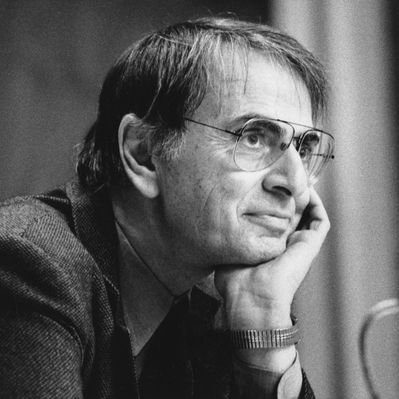
Science and art belong to the whole world, and before them vanish the barriers of nationality.
Priya Narayanan retweeted

The embarrassment caused by Galgotias University at Delhi’s AI meet is what happens when people instead of spending time doing science, maths, literature, spend their time showing that 5000 years ago their ancestors did science, maths, literature.
In the 1979 #Referendum, 99.3% of #Iran voted in favour of the country becoming an #IslamicRepublic ruled by the 'government of God' -choosing #religion over liberal #Democracy. To know why, read #Dictators: The World's Most Notorious Tyrants.
bit.ly/49LnOAJ
#theocracy
