






moreese retweeted
Celebrations have erupted in the streets of Serbia's capital Belgrade, after long-standing leader Aleksandar Vučić admitted defeat to a student-led protest movement in snap parliamentary elections. Read more: bbc.in/4BwV5ga

moreese retweeted

Every system inevitably decays into mediocrity unless someone fights to keep the standards high.

This is a first and impressive from @MoICTKenya


moreese retweeted

NSSF holds the pension money in trust.
The law requires trustees to act in the best interest of the members: protect their savings and grow them.
In March, NSSF put about Sh38 billion into Kenya Pipeline shares at Sh9 each, in an IPO that was failing until State-linked funds rescued it.
Uganda’s own pension fund refused to buy. It said Sh9 was too expensive.
This week, a mystery investor moved Sh42.5 billion of KPC shares, at Sh9.02. Almost exactly the IPO price. Only three shareholders hold enough shares to make that trade: Uganda, NSSF and the Public Servants Pension Scheme.
And KPC will pay a dividend to shareholders on its register on November 30. On those shares, about Sh1.4 billion.
So NSSF must answer:
• Did you sell or not?
• Why sell weeks before a Sh1.4 billion dividend, at no profit?
• Who told you to buy in March, and who told you to sell now?
If a pension fund buys when the government needs a buyer, and sells when someone else needs shares, without earning dividends that it could have, it is not serving the workers' interests.
If it is established that the NSSF trustees breached their fiduciary duty to members, they must be taken to court and held personally accountable.
Yeah this is fked up and true

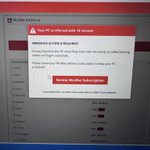
The got everyone with Php ☠️

if this affects the default installation of PHP
We are fucked up
CVE-2026-109618
CVE-2026-109619
PHP RCEs with a CVSS score of 10.0 ☠️
news.ycombinator.com/item?id…


xitter.cf/moreese_/status/210608…
The big question

How the Fck do donated Test Kits end up providing false results in another country or being counterfeit other than expiry? Was that what was intended for the Kenyan market?

The U.S. prosecutors allege that Eric Ndung'u Mwangi, 40, used his company, Linear Diagnostics, to systematically steal HIV test kits, family-planning items, malaria treatments, and nutrition products from the Kenya Medical Supplies Authority (KEMSA).
The stolen goods were financed under the $650 million (approx. Sh84 billion) USAID-funded KEMSA Medical Commodities Program, which was intended to support Kenya's public health system.
Between 2014 and 2019, Mwangi allegedly rerouted the stolen health commodities to an international buyer, Davendra Rampersaud, a Guyanese national running Caribbean Medical Supplies Inc.. Rampersaud allegedly bought the diverted supplies for over $177,000 and resold them under a lucrative contract to the Guyana Ministry of Health.
In the United States, Mwangi faces federal charges of conspiracy and theft of U.S. government-funded health commodities, carrying a maximum penalty of up to 20 years in prison.
This long-running heist severely strained relations between U.S. aid agencies and KEMSA. Due to systemic vulnerabilities highlighted by the probe, USAID severed its direct procurement ties with KEMSA, temporarily moving its logistics pipeline to a private American firm, Chemonics, which caused immense friction in Kenya's domestic medical supply chain.
In late 2019 and early 2020, health workers and whistleblowers in Guyana noticed something highly alarming: the Uni-Gold HIV rapid diagnostic test kits being used in local clinics were failing. The kits were either expired, repackaged, or giving deeply inaccurate results.
Guyana's Ministry of Health launched an internal probe into the supplier, Caribbean Medical Supplies Inc., owned by Davendra Rampersaud. When pressed by authorities to show original manufacturing shipping documents, Rampersaud could not produce them because the kits had bypassed legitimate factory channels.
Faced with scrutiny from Guyana's Ministry of Health, it was revealed that Rampersaud had fraudulently used a falsified "Letter of Authority" to pose as a legitimate distributor.
This fake credential had originally allowed his firm, Caribbean Medical Supplies Inc. (CMS), to secure a highly lucrative, sole-source national contract with the Guyanese government. Once the paperwork was shown to be a sham, Guyana's health officials realized they had unknowingly been buying illegally black-marketed and potentially unsafe diagnostic kits.
Because the stolen products were marked with specific batch numbers funded by the $650 million USAID award to Kenya, the USAID Office of Inspector General (OIG) and federal prosecutors in South Carolina stepped in. They audited CMS's global banking records and found the smoking gun: between 2015 and 2019, Rampersaud had wired over $177,000 (approx. Sh23 million) across international channels straight to Eric Ndung'u Mwangi and Linear Diagnostics in Nairobi to pay for the black-market KEMSA loot.
Equipped with this electronic paper trail provided by U.S. federal intelligence, Kenya’s Directorate of Criminal Investigations (DCI) moved swiftly. On February 8, 2021, detectives ambushed Mwangi at Jomo Kenyatta International Airport (JKIA). He was arrested right as he and two other local traders were attempting to clear yet another massive batch of counterfeit Uni-Gold HIV test kits meant for export.
While Mwangi sat in a Kenyan court fighting local fraud charges, a U.S. Grand Jury quietly indicted Rampersaud under seal.
Believing he was safely outside the reach of U.S. law enforcement, in January 2023, Rampersaud boarded a flight attempting to travel back to Guyana.
However, his flight included a scheduled layover at Miami International Airport. Because a secret U.S. federal indictment had already been issued against him under seal, Homeland Security and U.S. Customs agents intercepted him the moment he touched down on American soil.
