

Born and raised in 🇩🇰 Now in my 27th year in 🇨🇳 Guess that proudly makes me Danish with Chinese characteristics
Joined January 2016
- Tweets2.3K
- Following3.4K
- Followers4.5K
- Likes11K






Pinned Tweet
This is another fabricated lie by 🇺🇸 to smear 🇨🇳
I have 27 years working experience in China. I have inspected and worked with hundreds of factories in many provinces, and seen hundreds more !
I have NEVER ONCE seen neither FORCED labor or CHILD labor in China !
I have though seen CHILD labor in factories in lesser developed Asian countries, which are not under US and EU scrutiny. Countries with lesser developed educational systems than in China, where you only go 7 years to school, and then starts your working life.
If you understand China's education system, as well understand how the labor laws in China have been significantly improved over the past 2 decades, you clearly understand these are fabricated lies. Exactly education have driven China's rapid rise !
All mid size and big foreign customers have Code of Conducts which they require their suppliers to abide by and sign before engaging business. Several further requires to inspect the factories themselves. Never once have i had a supplier rejected due to labor conditions. Therefore Nike, Adidas and others, who are here under scrutiny from the US knows very well there is no forced labor and are just caught in this storm !
Have Congressman Gallagher ever visited China ? Have he laid out any evidence for his claims ? No ! And there is reasons to why. It is a continuation of the ongoing Anti China campaign driven by the US.
Please retweet - to get the word out and stop the US in continuing fabricating lies. Enough !!
#China #Chinese #USA #EU
cnbc.com/2023/05/03/house-ch…

Morten (马腾) 🇩🇰🇨🇳 retweeted

Wow, this is big! Foxconn founder Terry Gou runs for president of the ROC (Taiwan).
He says he does so because "it’s time to pull independence-leaning DPP ‘off the shelf’" and because they're "corrupt and unable to offer a bright future for the island".
scmp.com/news/china/politics…

Morten (马腾) 🇩🇰🇨🇳 retweeted

If anyone has ANY IDEA of the size of Tibet and its LOW population density … you’d understand why boarding schools make sense.
Use just ONE brain cell and answer:
Imagine there are
2 grade three kids,
6 grade four kids,
7 grade five kids
0 grade six kids
and 5 grade seven kids in a village …
(These are inflated numbers given there are THREE people/sq km in Tibet)
and the CLOSEST neighboring village of similar composition is 20-50-100-300 or even 500 kilometers from this particular village…
How do you give these kids THE BEST education, nutrition, accommodation, socialization, and future opportunities?
By building, staffing, maintaining 100s of “mini schools?
Or would resources be better spent building FEWER, LARGER, BETTER STAFFED, BETTER EQUIPPED, BETTER SUPPLIED schools that cater to several neighboring villages and towns at once, even though it may require kids to sleep there (safe) Monday to Friday?
That is the question.
The answer in many parts of China is boarding schools.
That’s that.
There is NOTHING nefarious behind this policy, as Blinken suggests.
Zero.
But “China Bad” for choosing the most suitable solution to educate children in Tibet.


.@StateDept is taking steps to impose visa restrictions on PRC officials for the forcible assimilation of Tibetan children in government-run boarding schools. We call on the PRC to cease these actions that undermine human rights.
Morten (马腾) 🇩🇰🇨🇳 retweeted
I've never met a Tibetan in China who didn't speak Tibetan. The province of Tibet (Xizang), roughly 13% of China's territory, is composed at 86% of Tibetans. There also are many Tibetan autonomous regions in Qinghai, Sichuan, Gansu, Yunnan and other provinces. All in all, Tibetan autonomous areas make up more than 20% of China's territory despite Tibetans being less than 0.5% of China's population. In those regions, which I have visited many times, it's Tibetan culture everywhere: everything is written in Tibetan (road signs, shop names, etc.), you see Tibetan temples and monks everywhere, people dress up in Tibetan traditional clothing, etc.
Meanwhile I've met plenty of immigrants to the US or native Americans who didn't speak a word of their original language, or knew close to nothing about their original culture. And so-called "Indian reservations" make up a meager 2.3% of US territory, FOR ALL THE TRIBES PUT TOGETHER (when we're speaking about Tibetans only for China: they have 55 other ethnic minorities, many of which also have autonomous regions of their own).
Yet this guy feels entitled to virtue-signal, give lessons and even punish China for something they obviously do MUCH better than the US. The hypocrisy and cynicism is beyond insane.
.@StateDept is taking steps to impose visa restrictions on PRC officials for the forcible assimilation of Tibetan children in government-run boarding schools. We call on the PRC to cease these actions that undermine human rights.
Morten (马腾) 🇩🇰🇨🇳 retweeted
Next time you hear the US blabbering about the "rules based order" you might want to refer to this report just issued by China's Ministry of Commerce.
For the first time they've compiled the myriads of ways in which the US violated international trade law, whether it was by "undermining the multilateral trading rules, imposing unilateral sanctions, manipulating double standards in industrial policies, and disturbing global industrial and supply chains" or in general "taking unilateral measures against other members under the guise of so-called 'national security,' 'human rights' and 'forced technology transfer'" and "coercing others into abiding by its diplomatic policies and illegitimate demands".
The report is available here: news.cgtn.com/news/files/202…

Morten (马腾) 🇩🇰🇨🇳 retweeted

9,500 Km of metro in 53 cities!
Yup, China’s subway system is not only the world’s longest but also the most advanced and probably the most beautiful as well.
Here are some metro stations…
Morten (马腾) 🇩🇰🇨🇳 retweeted
Wow, that's insane 😦
Biden on China's economy: "They've got some problems. That's not good, because when bad folks have problems, they do bad things".
So China is now "bad folks"? Don't people realize just how irresponsible this kind of rhetoric is from an American president?

“The US president pointed to the country’s high unemployment and ageing workforce, saying: “China is in trouble.”
“They have got some problems. That’s not good, because when bad folks have problems, they do bad things,” Biden said at a political fundraiser in Utah on Thursday.”
This is shameful stuff from the head of the world’s leading power.
Morten (马腾) 🇩🇰🇨🇳 retweeted
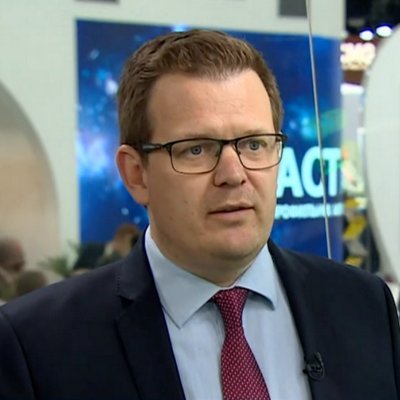
Former CIA director Mike Morell speaking like a gangster
- imagine the outrage if the intelligence agencies of other states spoke in this manner
Morten (马腾) 🇩🇰🇨🇳 retweeted
These lies are borderline criminal…
Why on freaking earth would a CHINESE/UYGHUR police officer text a CHINESE/UYGHUR person … in English?
Why @RushanAbbas ? Why?
Second: why use WHATSAPP instead of WECHAT?
Third: and I know we - the good people - we laugh but …. Why the POLICE OFFICER AVATAR 👮♀️?
It’s clear CIA hired this lady for her language ability - not her intelligence!

unavailable
Morten (马腾) 🇩🇰🇨🇳 retweeted
Yesterday as we approached the Mongolian border I got my passport controlled, which was the first time any of my paperwork got controlled in 27 days of non-stop driving in China (which ought to tell you how much of a "police state" China actually is...)
When the soldier saw I was French he said "wow, this is the first time we see a French person around here" which is funny but also quite sad in way, it really shouldn't be the case. Discovering China and trying to understand it, the real China outside the main touristic destinations, should be encouraged in Europe.
Even if China is seen by many as an adversary, no-one denies that China matters and will continue to matter exponentially in the future. As such it is essential that Europeans understand it. If something matters a lot in the world, it is of primordial importance for your country's future that you have a large amount of people who understand it. It's basic common sense. Yet Europe's approach seems to be the exact opposite: scare people away from China, "it's bad, it's scary, it's not like us". This is completely counter-productive, again even if one considers China an adversary (which is not my case).
Meanwhile I'd be surprised if there was even a single little hamlet in France that's never been visited by any Chinese. China understands us much better than we do them. And that's Europe's loss, we're not thinking straight.
Morten (马腾) 🇩🇰🇨🇳 retweeted

Chinese leaders do not have cultural amnesia.
They know it is essential to keep alive the memory of cultural origins and formative influences as key to consistent governance.
No better phrase to explain this is 天下大同 (tiān xià dà tóng) = a world in great unity.
National treasures in China are passed down from dynasty to dynasty. When I was studying to become a docent at the National Palace Museum in Taipei, the very first topic we discussed was the cultural significance of the visual arts.
There were four interrelated themes throughout:
🔷a cyclical view of history
🔷the Confucian discourse on art
🔷the social function of art
🔷possessing the past
The last theme of possessing that past was most interesting as it refers both to imperial China's possession of its past through the art of collecting and to the broader cultural tradition of embracing change through the creative reinterpretation of the past.
Embracing change through reinterpretation of the past even runs through China’s political ideology.
From studying classical Chinese history, one can see there is a continuity in Chinese thinking for centuries.
Many people outside of China are not aware of this.
Let’s look at the phrase 天下大同 (tiān xià dà tóng)
大同 (dà tóng)= THE GREAT HARMONY
This is a utopian vision of the ideal world: a world of peace and harmony, where prosperity and joy prevail. It was first recorded in the 禮運 Lǐ yùn chapter of the Book of Rites 礼记 (lǐ jì) by Confucius. The basic feature is that everyone loves and helps each other, every family lives and works in peace and contentment, there is no difference, and there is no war. Everything is at peace. This state is called "the great unity”.
天下 (tiān xià)= ALL UNDER HEAVEN
The literal translation is ‘all under heaven"‘. But it means so much more that that. It is a complex and constantly evolving concept. During the Eastern Zhou (771-256 BCE), tianxia had a territorial meaning; it represented a land mass of many countries governed by the “Son of Heaven” (天子, tiānzǐ). Later during the same period, tianxia became institutionalized moving from being a political vision to a system of government.
To emphasise, 天下大同 (tiān xià dà tóng) ideology goes way back to the ancient Zhou Dynasty (1046 BC – 256 BC).
Confucius writes about this idea of great harmony as an antidote to war, pestilence and banditry. There is a sense of building of a real community for the good of the individual, family, town, state, country, world, universe.
Dating back 2500 years, these ideals of governance have been woven into political thinking in China.
In the early days of modern China this idea was incorporated into the new tenets of communism and tweaked to fit into existing Chinese characteristics. Inspired by the writings of Kang Youwei, Sun Yat Sen used this concept with the phrase 天下为公 (tiānxià wèi gōng) - the world belongs to all.
It can be said that the ideal Chinese society of 天下大同 (tiān xià dà tóng) lines up to match the Communist idea of utopia, the mutual dependence between the flourishing of the individual and the flourishing of the group. In a way the two ideologies merged.
Since Mao’s death in 1976, there have been many shifts in policy, most notably Deng Xiaoping Theory, Three Represents (Jiang Zemin), Scientific Outlook on Development (Hu Jintao), and Xi Jinping Thought.
As I mentioned before, embracing change through reinterpretation of the past runs through China’s political ideology.
The 1949 form of Mao's communism has morphed into something very different today.
We now commonly hear the phrase - “socialism with Chinese characteristics” 中国特色社会主义 (zhōngguó tèsè shèhuì zhǔyì) - is a set of political theories and policies of the CPC that are seen as representing Marxism-Leninism adapted to Chinese circumstances and specific time periods.
Building a community of common destiny for mankind is the overall goal of China's foreign affairs work in the new era and requires a “new type of international relations.”
It is clear that the Chinese diplomacy we now see on the world stage is an attempt to achieve 天下大同 (tiān xià dà tóng) - a world of great unity. The recent China brokered peace deal between Saudi and Iran is one such example.
Chinese Foreign Minister Wang Yi recently used the phrase during a speech in 2020, reminding all of a deep shared 2500-year cultural history.
This is a very powerful ideal. It is ultimately the common good for all humanity, for all under heaven.
There is no China in this, this a wish for global harmony.
There is a phrase first used by former General Secretary Hu Jintao (in office 2002-2012) and has been frequently cited by Xi Jinping - 人类命运共同体 (rén lèi mìng yùn gòngtóngtǐ) officially translated as community with a shared future for mankind or human community with a shared future, and is used to describe a stated foreign-policy goal of the PRC.
The current vision, laid out by the government for its domestic policy, is “common prosperity” 共同富裕 (gòngtóng fùyù), and for the world is a “a community with a shared future for humanity” 人类命运共同体 (rénlèi mìngyùn gòngtóngtǐ), both sharing strong associations with the spirit embodied by the Confucian – and communist – vision of a world in great unity 天下大同 (tiānxià dàtóng).
Both political visions point toward a more just world in which the wealth of tianxia is more evenly shared among its inhabitants, between the North and South, the developed and the underdeveloped countries, the rich and the poor.
天下大同 (tiānxià dàtóng) is a concept for common good that is without borders.
It is a universal concept.
It is a message that needs to be amplified.


Morten (马腾) 🇩🇰🇨🇳 retweeted
"NATO’s expansion into Asia is the mother of bad ideas... NATO merely expanding further and further into eastern Europe was a subject of controversy. All of a sudden, the alliance is pushing to leap into [Asia], and there’s hardly even a debate"
jacobin.com/2023/07/nato-asi…

Morten (马腾) 🇩🇰🇨🇳 retweeted

American politicians, praying on the fears of the zeitgeist, are promising to protect America from China.
China wants peace with America and with all nations. Is China preparing to defend itself? Of course. But its preparations are defensive in nature.
Who is hostile? The US or China? Who is a threat to the peace? The US or China? Some easy to google points:
1. The US has invaded Iraq, Afghanistan, Pakistan, Syria, and numerous other countries just since the turn of the century.
2. China hasn't had a war in 4 decades. Arguably, China hasn't initiated a war since its foundation as the Republic of China.
3. The US has 845 bases around the world. That is not defensive in nature.
4. China has ONE base abroad, which the US asked China to build in the interest of helping stop piracy.
5. The United States spends as much as the next 10 countries on its military.
6. China spends roughly one third as much as the US.
7. China is the largest trading partner of most nations in the world. A major war is NOT in China's interest. Trade is.
These are facts.
These facts tell us the truth. China's military is for defence. China wants peace. When you hear US politicians scare-mongering about China, please take note that: they are either not informed, or they are counting on you not being informed.
China is NOT our enemy.
#Chinaisnotourenemy #China


Morten (马腾) 🇩🇰🇨🇳 retweeted
This is huge: China installed renewable capacity now exceeds coal.

Morten (马腾) 🇩🇰🇨🇳 retweeted
China's #economy will account for about a third of all global growth this year.
#Asia will account for about two thirds, including China.
Increasing wealth in low and middle income countries means better quality of life for more people.
We should celebrate these benchmarks.

Morten (马腾) 🇩🇰🇨🇳 retweeted

Summary of how national policies are implemented in China:
The central government is the teacher, the provincial governments are students.
The teacher write up a set of problems and hand it down to the students to resolve.
Quality of the answers are noted by the teacher
1/9🧵

Morten (马腾) 🇩🇰🇨🇳 retweeted

“The era of US domination of world history is coming to an end.”
Everything @mahbubani_k says is worth listening to closely, perhaps twice. He understands deeply.

Morten (马腾) 🇩🇰🇨🇳 retweeted
Great interview of @ChinaLawTransl8 on the ridiculous "secret Chinese police stations" story.
He explains that, far from being "police stations" those places merely "help Chinese citizens abroad file certain paperwork, including for driver’s license".
thechinaproject.com/2023/07/…
A great example of Anti China propaganda disguised as a "World survey", perfectly debunked by🇺🇸🇨🇳 bridge builder Cyrus Janssen @thecyrusjanssen visiting The honest drink podcast @HonestDrinkpod in Shanghai recently
#China #Chinese
From: @ChinaDaily
The full podcast 👉 youtube.com/watch?v=ZqvfxLum…
Morten (马腾) 🇩🇰🇨🇳 retweeted
Chinese political wisdom from 2000+ years ago
The danger of fleeting public opinions was understood by a Chinese philosopher in 300 BC! He came up with two terms:
🔹Minyi - public opinion of the moment
🔹Minxin - hearts and minds of the people
Minyi is emotional and can easily be manipulated. People jump to conclusions and can easily be brainwashed or get carried away in groupthink. We see this all the time even now.
Greek philosophers like Plato also understood this, and hence were sceptical about democracy. Founders of the US also knew the dangers of populism and thus had lots of checks and balances — like electors who can overturn popular vote and select a new president.
Minxin: It’s about what’s good for the people in the long term. This can be decided only by calm, rational, intellectual, ethical people. This is what’s lacking in the West now.
Globalists who run US/EU do the opposite of Minxin. They are deliberately destroying the society by manipulating Minyi.
Oh, the name of the philosopher who came up with these terms is Mencius. He is considered the “second Confucius.”
#China #history

