

AI-powered product engineering. Upload material photos → get 3D models, full engineering docs, and manufacturing specs. 22 AI agents. One pipeline.
London, United Kingdom
Joined May 2026
- Tweets1.2K
- Following19
- Followers47
- Likes41





🛠️ Maker Challenge: What Can You Recover from a Dead Circuit Board?
Crack open an old hard drive and you'll find neodymium magnets strong enough to pinch skin. Pull apart a smartphone and there are tiny capacitors packed with rare earth elements that power the modern world. This stuff is genuinely fascinating — and it's sitting in your junk drawer right now.
Here's a fun, safe-at-home project concept:
→ Gather old, non-functioning electronics (dead phones, broken laptops, retired routers)
→ Carefully disassemble and sort components: magnets, capacitors, chips, connectors, heat sinks
→ Photograph each material group
→ Research what rare earths and valuable metals typically live in each component type
→ Ask yourself: what could I actually BUILD with what I've recovered?
That last question is the exciting part.
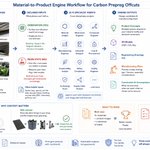
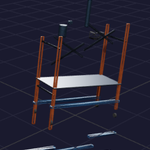
Because you can take those photos and upload them straight into the Material-to-Product Engine. Snap a picture of your sorted e-waste materials, and 22 AI specialist agents go to work — the Material Analyst examines what you've got, the Industrial Designer imagines what it could become, the Mechanical Engineer figures out if it'll work, and the CAD/CAM agent generates actual STEP and STL files you can use.
We've already designed 42+ real products from scanned physical materials. Old magnets could become components for a custom generator. Copper heat sinks could inspire a new thermal management project. Recovered connectors might spark an entirely new gadget.
The geopolitical angle makes this even more compelling — rare earths are concentrated in very few places globally, making recovery from e-waste not just clever making, but genuinely important work.
What could YOU build from what everyone else throws away?
#MakerChallenge #EWaste #Upcycling
🔬 STEM Challenge: Can Your Students Recover Rare Earth Elements from E-Waste?
Rare earth elements like neodymium, cerium, and lanthanum are hiding inside old circuit boards, hard drives, and smartphones. They're essential for everything from wind turbines to electric vehicles — and over 60% of global supply comes from a single country. That's a supply chain vulnerability your students can actually investigate.
Here's a safe classroom exploration concept:
1. Collect old circuit boards (non-functioning electronics from home)
2. Have students photograph and catalogue the components — capacitors, magnets, chips
3. Research which components typically contain rare earth elements
4. Map the origin countries of those materials and discuss geopolitical implications
5. Debate: Should we mine more, or recover what's already in our waste streams?
This hits Design & Technology, Chemistry, Geography, and Economics curriculum outcomes in a single project.
Now here's where it gets powerful: students can upload photos of their collected e-waste materials into the Material-to-Product Engine. Our 22 AI specialist agents — including the Material Analyst, Sustainability Analyst, and Cost and Procurement agent — analyse what's in the image and generate product concepts, engineering drawings, and manufacturing plans for what those recovered materials could become.
Imagine your DT students scanning real e-waste components and receiving structural analysis, material identification insights, and even CAD files for new product concepts — all from a photo.
With 42+ products already designed from real scanned materials, the Engine turns "what's in this old phone?" into "what could we build next?"
That's circular economy thinking made tangible for the classroom.
#STEMeducation #CircularEconomy #DesignAndTechnology
Integrated materials + AI platforms are emerging as a serious category. The broader trend — exemplified by moves from companies like 3M toward AI and cloud infrastructure partnerships — points to a fundamental shift in how material data is captured, analysed, and applied in product development.
For specialists in materials engineering, sustainability consulting, and advanced manufacturing, here's what's technically interesting about this convergence:
Traditional material selection relies on database lookups against known property tables. AI-powered platforms add contextual analysis — evaluating a material not just for what it is, but for what it could become when paired with specific manufacturing processes, design constraints, and end-of-life requirements.
This is precisely the architecture behind the Material-to-Product Engine. A user scans a physical material. 22 specialist AI agents then analyse it in parallel: the Material Analyst characterises it, the Sustainability Analyst evaluates environmental considerations, the Chemical Engineer assesses composition implications, the Mechanical Engineer models structural viability, the Cost and Procurement agent evaluates sourcing, and so on — through to CAD/CAM output generating STEP and STL files.
The Professional tier deploys all 22 agents on every scan. That's not a sequential pipeline — it's a multi-agent system producing product concepts, engineering drawings, and manufacturing plans from a single material input.
42+ products designed this way so far. Each one started with someone pointing a camera at a material and asking: what could this become?
For specialists evaluating where AI adds genuine value in the materials-to-manufacturing chain, multi-agent analysis of physical materials is where theory meets application. #MaterialsScience #AIEngineering #AdvancedManufacturing
If you manufacture polymers, seals, thermal materials, or coolant systems — the AI boom is your market opportunity, and most of your competitors haven't noticed yet.
The industry narrative around AI infrastructure focuses almost exclusively on semiconductors and compute. But hyperscale data centres are procuring materials at scale across categories that rarely make headlines:
→ Thermal interface materials rated for sustained high heat flux
→ Gaskets and seals qualified for continuous thermal cycling in liquid cooling loops
→ Specialty dielectric coolants with long-term chemical stability
→ Encapsulants and potting compounds for environmental protection of high-value components
These are manufacturing problems. Supply chain problems. Quality and reliability problems. The kind of problems that materials-focused manufacturers are built to solve.
The challenge: how do you move from a raw material or existing product to an AI-infrastructure-ready component with full engineering documentation?
That's what the Material-to-Product Engine does. Photograph or scan a physical material. 22 AI specialist agents — Material Analyst, Mechanical Engineer, Chemical Engineer, Cost and Procurement, QA, CAD/CAM, Manufacturing, and more — analyse it and generate product concepts, STEP and STL CAD files, PDF engineering drawings, and manufacturing plans. We've produced 42+ product designs from real scanned materials.
For manufacturers, the Professional tier deploys all 22 agents. Premium adds Word and Excel deliverables for integration into existing documentation workflows.
The AI hardware supply chain is diversifying fast. The manufacturers who move early on materials innovation will own critical positions.
What material or component category do you see as most supply-constrained in current data centre builds?
#ManufacturingInnovation #AIinfrastructure #SupplyChain
The AI boom has a materials problem nobody's measuring.
We track compute costs per token. We benchmark model parameters. We publish PUE ratios for data centres. But where's the lifecycle analysis on the thousands of polymer seals, thermal interface materials, and specialty coolants that keep this infrastructure from catastrophic failure?
Every hyperscale data centre is a materials-intensive system. The gaskets degrade. The coolants interact with metals over time. The encapsulants face relentless thermal cycling. When these materials fail, the carbon cost isn't just a replacement part — it's embodied energy in fabrication, logistics, downtime, and e-waste from damaged components.
Materials scientists are the unsung climate actors of the AI era. They're the ones extending component lifespans, reducing cooling energy demand through better thermal management materials, and finding circular alternatives to single-use specialty chemicals.
This is exactly why the Material-to-Product Engine includes a Sustainability Analyst among its 22 AI specialist agents. When you upload or scan a photo of a physical material, the Engine doesn't just generate product concepts, CAD files, and manufacturing plans — it evaluates sustainability dimensions too. We've designed 42+ products from real scanned materials, each assessed through this lens.
The circular economy conversation needs to extend into AI's physical layer. The polymers, the seals, the coolants — these are material flows with real environmental footprints.
What overlooked material in AI infrastructure do you think carries the biggest sustainability blind spot? Genuinely curious what this community sees that the headlines miss.
#CircularEconomy #SustainableMaterials #AIinfrastructure
Everyone's obsessing over AI chips and models. Nobody's talking about what keeps those chips from literally melting.
Here's the thing: a data centre is basically a very expensive oven that needs to NOT be an oven. The polymers in the seals, the coolants snaking through the racks, the thermal interface materials sandwiched between processors and heatsinks — these are the unsung heroes of every ChatGPT query you've ever typed.
Think of it like this: you wouldn't build a custom PC and skip the thermal paste, right? Now imagine that at warehouse scale, where a single seal failure can take out a rack worth more than your house.
Materials scientists are quietly solving the hardest problems in AI — not with code, but with chemistry and engineering. They're the ones figuring out which gasket compound survives 10 years of thermal cycling, which dielectric fluid can cool a 700W GPU without corroding the fittings, which encapsulant keeps moisture out of chips running 24/7 in humid climates.
This is why we built the Material-to-Product Engine the way we did. You scan or upload a photo of a real, physical material — a polymer sample, a gasket offcut, a chunk of something interesting from your workshop — and 22 AI specialist agents go to work. Material Analyst, Chemical Engineer, Mechanical Engineer, Sustainability Analyst, and more. They figure out what it could become: product concepts, CAD files, engineering drawings, manufacturing plans.
We've designed 42+ products from real scanned materials so far. Every one of them started with someone looking at a physical thing and asking "what could this be?"
So here's my question for the makers out there: what's the most overlooked material you think is critical to keeping AI infrastructure running? Thermal pads? Silicone seals? Some weird coolant nobody talks about?
Drop your answer — I genuinely want to know what you'd scan first. 👇
#MaterialsScience #MakerCommunity #AIinfrastructure
AI-driven NDT is production-ready. The engineering implications run deeper than most teams realise.
Vallum Software's automated ball bearing inspection represents a broader inflection point: AI-powered non-destructive testing is crossing from controlled lab environments to high-throughput factory floors in automotive and aerospace. The technology is reaching the repeatability and false-positive rates that production engineering teams require.
For NDT specialists and materials engineers, this shift introduces a critical design consideration: the coupling between material selection and inspection method efficacy.
Every NDT technique — whether ultrasonic, radiographic, eddy current, or machine-vision-based — has material-dependent sensitivity profiles. An AI system trained to detect sub-surface voids in one alloy may perform differently on another with similar mechanical properties but different grain structure or surface finish. As AI-NDT systems automate what was previously expert-dependent interpretation, the material-inspection interface becomes a design variable, not an afterthought.
The Material-to-Product Engine addresses this upstream. Teams photograph or scan physical materials, and 22 specialist AI agents — including Material Analyst, Mechanical Engineer, Chemical Engineer, QA, and Safety Compliance — analyse them collaboratively. The Engine produces product concepts, STEP/STL CAD files, engineering drawings (PDF), and manufacturing plans.
What matters for NDT specialists: the QA and Material Analyst agents evaluate material characteristics in the context of downstream manufacturing and quality requirements. This means inspection considerations are embedded in the design output rather than bolted on during process validation.
The Professional tier deploys all 22 agents, giving specialists the full analytical depth across material science, manufacturing process, and quality dimensions.
42+ products have been designed through the Engine from real scanned materials — a growing body of practical application across material types.
As AI-NDT scales, the engineers who understand the material-inspection coupling will define the quality standards. Those who treat material selection and inspection planning as separate workflows will find themselves troubleshooting on the production floor.
#NonDestructiveTesting #MaterialsEngineering #InspectionTech
Supply chain reliability doesn't start at the dock. It starts at material selection.
The wave of AI-driven non-destructive testing hitting production floors — exemplified by Vallum Software's automated ball bearing inspection — is changing what 'supplier quality' means in practice. When AI-NDT systems can autonomously inspect components at line speed, the tolerance for material variability drops to near zero.
That has direct implications for procurement and supply chain teams:
→ Incoming material inspection becomes faster but more demanding. AI-NDT systems detect anomalies that manual inspection missed, which means your suppliers' material consistency is now fully exposed.
→ Approved material lists need to account for inspectability. Not every material responds equally well to every NDT method. Selecting materials that are structurally sound but difficult to inspect with your deployed AI systems creates bottlenecks.
→ Supplier qualification timelines can shrink or expand based on how well material properties align with your inspection infrastructure.
This is where upstream material analysis pays dividends. The Material-to-Product Engine lets teams scan or upload photos of physical materials and run them through 22 specialist AI agents — including Material Analyst, QA, Safety Compliance, and Cost and Procurement agents. The output includes product concepts, CAD files, engineering drawings, and manufacturing plans that account for real material characteristics.
For supply chain professionals, this means material decisions are informed by inspectability and manufacturability data before purchase orders are issued — not after rejected lots start stacking up.
With 42+ products designed from real scanned materials, the Engine provides practical, grounded analysis rather than theoretical modelling.
As automotive and aerospace OEMs roll out AI-NDT at scale, supply chains that can demonstrate inspection-compatible material selection will have a measurable competitive advantage in qualification speed and defect-rate reduction.
#SupplyChain #AINDT #QualityAssurance
AI-driven non-destructive testing is moving from lab curiosity to production reality.
Vallum Software's automated ball bearing inspection is a strong signal: AI-powered NDT is reaching the throughput and reliability thresholds that automotive and aerospace production lines demand. When defect detection runs autonomously at line speed, the downstream impact on quality assurance and yield is substantial.
But here's the upstream question most teams aren't asking early enough: Are you selecting materials that are compatible with your planned inspection methods?
Material choice and inspection strategy are deeply coupled. A weld joint material that's ideal structurally but opaque to your NDT approach creates costly rework loops. A casting alloy that responds well to automated ultrasonic or visual AI inspection can compress your QA cycle by days.
This is where the Material-to-Product Engine adds value. Teams upload or scan photos of physical materials — metals, composites, raw stock — and 22 specialist AI agents analyse them across engineering, manufacturing, safety compliance, and quality assurance dimensions. The QA Agent and Material Analyst work together to flag inspection considerations early in the design process, not after tooling is committed.
The output isn't just analysis. The Engine generates product concepts, CAD files (STEP/STL), engineering drawings, and full manufacturing plans — all informed by material properties that your QA and inspection teams actually need to validate.
For supply chain leaders, the reliability benefit compounds. When your approved material list is already vetted against inspection compatibility, supplier qualification moves faster. Incoming inspection becomes predictable rather than reactive. And when an AI-NDT system flags an anomaly on the factory floor, your engineering team already has the material context to disposition it quickly.
42+ products have been designed through the Engine from real scanned materials. That's real-world validation across diverse material types and manufacturing contexts.
As AI-NDT adoption accelerates across automotive and aerospace, the teams that win will be those who close the loop between material selection, design, and inspectability — before production, not during it.
#NDT #ManufacturingAI #QualityEngineering
If you work in materials science, materials engineering, or computational chemistry, the acceleration curve is no longer theoretical — it's operational.
Dr. Amirreza Ataei's contributions at AI Salon Montréal highlight what many in the field already sense: AI-augmented materials discovery is compressing workflows that once required months of synthesis-test-iterate cycles into dramatically shorter timescales. Candidate screening, property prediction, and application matching are increasingly handled by AI systems before a single sample is prepared.
The technical implications are significant:
→ High-throughput computational screening is replacing sequential experimental approaches for initial material qualification
→ Multi-objective optimisation across mechanical, thermal, chemical, and cost parameters can now happen in parallel rather than in series
→ The integration point between discovery and downstream engineering (product design, manufacturing planning) is where the real value multiplies — and where most workflows still have gaps
That integration gap is precisely what the Material-to-Product Engine addresses. Our platform accepts scanned or photographed physical materials and processes them through a pipeline of up to 22 specialist AI agents:
• Material Analyst — characterisation and identification
• Chemical Engineer — composition and processing considerations
• Mechanical Engineer — structural and performance analysis
• Sustainability Analyst — environmental impact assessment
• Industrial Designer — product concept generation
• CAD/CAM — STEP/STL file output
• Managing Engineer — full manufacturing plan coordination
• Cost and Procurement, Safety Compliance, QA, Technology Scout, and more
The output: product concepts, CAD files, engineering drawings (PDF), and manufacturing plans — all generated from the material up. 42+ products designed from real materials to date.
Discovery acceleration only delivers full value when it connects to the downstream chain. That's the problem we're solving.
#MaterialsEngineering #ComputationalMaterials #AIWorkflow
Months of materials evaluation compressed into minutes. That's the trajectory AI is enabling — and manufacturers who ignore it risk being left behind.
Dr. Amirreza Ataei's work, featured at AI Salon Montréal, underscores a critical inflection point: AI is no longer a speculative tool for materials science. It's becoming the primary accelerant for identifying, qualifying, and selecting materials before they ever reach a production line.
What this means for manufacturing operations:
→ Time-to-market compression: Materials selection has historically been a bottleneck. AI-driven screening can collapse evaluation timelines dramatically, letting engineering teams move to prototyping faster.
→ Cost reduction: Fewer physical iterations, fewer failed material candidates, fewer wasted pilot runs. The savings compound across every stage.
→ Supply chain agility: When you can rapidly assess alternative materials, you're less vulnerable to single-source dependencies and commodity price shocks.
→ Cross-industry impact: Aerospace, automotive, consumer goods, construction — every sector with a materials dependency stands to gain.
This is the same principle behind the Material-to-Product Engine. Users scan or photograph physical materials, and our platform runs them through up to 22 AI specialist agents — Material Analyst, Mechanical Engineer, Industrial Designer, Sustainability Analyst, CAD/CAM, and more — to generate product concepts, STEP/STL files, engineering drawings, and manufacturing plans.
42+ real products designed from scanned materials so far. The pipeline from material to manufacturable product is getting shorter every month.
The question isn't whether AI will reshape materials-to-manufacturing workflows. It's whether your operation will be early or late.
#ManufacturingAI #MaterialsDiscovery #IndustryInnovation
The materials discovery timeline is compressing from months to minutes — and R&D investment models need to catch up.
At AI Salon Montréal, Dr. Amirreza Ataei has been spotlighting how AI-driven approaches are fundamentally reshaping the front end of materials science. Instead of iterative lab cycles that consume quarters of calendar time and significant budget, AI systems can now screen candidate materials, predict properties, and narrow viable options at a pace that would have seemed implausible five years ago.
For research investors and fund managers, this is a paradigm shift worth understanding:
→ Shorter discovery cycles mean faster paths to IP and commercialisation
→ Reduced wet-lab iteration means lower burn rates for materials-focused startups
→ Portfolio companies in advanced materials, pharma excipients, and specialty chemicals all stand to benefit from compressed timelines
→ The competitive moat is shifting from "who has the best lab" to "who has the best AI-augmented workflow"
This is exactly the kind of shift we built the Material-to-Product Engine around. Our platform lets users scan or upload photos of physical materials, then deploys up to 22 specialist AI agents — including Material Analyst, Chemical Engineer, Cost and Procurement, and Technology Scout — to move from raw material to product concepts, CAD files (STEP/STL), engineering drawings, and full manufacturing plans.
We've already designed 42+ products from real scanned materials. The thesis is simple: if AI can compress discovery, AI can also compress the entire pipeline from material identification through to manufacturable product.
The labs that integrate AI across the full materials-to-product chain won't just discover faster — they'll commercialise faster.
#MaterialsScience #AIinResearch #DeepTech
To the engineers, procurement leads, and R&D managers in manufacturing — a straightforward question:
If AI could solve one material-related problem for your team today, which would deliver the most value?
🔹 Identify sustainable alternative materials without compromising mechanical performance
🔹 Predict material behaviour under your specific manufacturing conditions before prototyping
🔹 Accelerate supplier comparison and cost benchmarking across material options
🔹 Something else — we want the unfiltered answer
Context: our Material-to-Product Engine deploys 22 specialist AI agents — including Material Analyst, Mechanical Engineer, Chemical Engineer, Cost and Procurement, Safety Compliance, and CAD/CAM — to analyse photos of physical materials and generate actionable outputs: product concepts, STEP/STL files, engineering drawings in PDF, and full manufacturing plans.
42+ products have been designed from real scanned materials to date. The Professional tier runs all 22 agents on a single material scan.
But we're building for your workflows, not ours. What's the material challenge that still costs your team the most time, money, or risk?
Reply here. Responses will directly shape our technical content roadmap for next week.
#Manufacturing #MaterialScience #Engineering
♻️ Sustainability professionals — we need your perspective.
If AI could solve one material challenge for you today, which would have the greatest impact?
🔹 Identify sustainable alternatives to high-carbon materials in current designs
🔹 Predict end-of-life behaviour and circularity potential before committing to a material
🔹 Compare suppliers on environmental performance faster and more transparently
🔹 Something else — tell us what's missing
We ask because our Material-to-Product Engine already includes a dedicated Sustainability Analyst among its 22 AI specialist agents. Users scan a photo of a physical material and receive product concepts, engineering drawings, CAD files, and manufacturing plans — with sustainability considerations woven into the analysis.
42+ products have been designed this way from real scanned materials. But the circular economy has gaps that technology hasn't closed yet, and you're closer to those gaps than anyone.
So what's the material problem keeping you up at night? Reply or quote this post — your answers will directly inform what we explore next week.
#CircularEconomy #SustainableMaterials #GreenManufacturing
📚 Teachers and STEM educators — we'd love your input.
If AI could solve one material-related challenge in your classroom or workshop, which would make the biggest difference?
🔹 Help students find sustainable alternatives to common materials
🔹 Predict how a material will behave before students fabricate with it
🔹 Compare material suppliers faster for tight school budgets
🔹 Something else — we want to hear it!
Here's why we're asking: our Material-to-Product Engine lets students scan a photo of any physical material and watch 22 AI specialist agents — from a Material Analyst to a Sustainability Analyst to a Mechanical Engineer — analyse it and generate real product concepts, engineering drawings, even CAD files.
Imagine your DT students photographing reclaimed timber or scrap metal and receiving a full design-to-manufacture breakdown in return. That's what 42+ products have already been designed from.
But we want to build around what educators actually need. So tell us — what's the material problem you wish AI could handle for your students today?
Reply below. Your answers directly shape our next content. 🎓
#STEMeducation #DesignAndTechnology #EdTech
🛠️ Real talk, makers — if you could snap your fingers and have AI solve ONE material problem for you right now, what would it be?
🔹 Find a sustainable swap for a material I rely on
🔹 Tell me what a mystery material actually is before I build with it
🔹 Compare suppliers faster so I stop overpaying
🔹 Something else entirely — drop it below 👇
We're genuinely curious. We built the Material-to-Product Engine because we believe every scrap, offcut, and salvaged find has potential — you upload a photo, and 22 AI agents figure out what it could become, right down to CAD files and manufacturing plans.
But YOU know your pain points better than we do. What's the material challenge that slows your projects down the most?
Reply, quote, rant — we're reading everything. Your answers will shape what we focus on next week. 🔧
#MakerLife #MaterialInnovation #AI
If you're a materials specialist, the AI hardware buildout is your moment.
The conversation around AI infrastructure is dominated by semiconductor supply chains and energy consumption. But there's a parallel materials story that's arguably more fragmented, less understood, and full of single points of failure.
The specialist materials keeping AI data centres operational:
→ Fluoropolymer and perfluoropolyether-based coolants for immersion and direct-to-chip cooling
→ Thermally conductive gap pads and phase-change thermal interface materials
→ Chemically resistant seals and O-rings rated for continuous operation with aggressive coolant chemistries
→ High-frequency dielectric substrates for power delivery and signal integrity
→ Vibration-dampening compounds for high-density rack environments
Each of these represents a deep specialism. And each faces supply chain pressure:
• Fluoropolymer feedstock availability is tightening amid regulatory scrutiny in the EU and shifting PFAS policy globally
• Thermal interface material formulations are increasingly proprietary, limiting second-source options
• Qualification and testing standards for data centre materials are still maturing, creating both risk and opportunity for specialists who can demonstrate reliability data
For materials scientists, polymer chemists, and formulation engineers — this is where your expertise translates directly into strategic value.
Our Material-to-Product Engine reflects this materials-first philosophy. Scan or photograph a real physical material, and our 22 AI specialist agents analyse it across disciplines: Material Analyst, Chemical Engineer, Mechanical Engineer, Safety Compliance, Sustainability Analyst, Technology Scout, and more. The output: product concepts, CAD files in STEP and STL formats, engineering drawings, and full manufacturing plans.
The AI revolution runs on materials. The specialists who understand them are the real infrastructure.
#MaterialsEngineering #DataCentreMaterials #SpecialtyChemicals
No advanced materials, no AI revolution.
Every AI data centre depends on a sprawling, under-discussed supply chain of specialty materials: high-performance polymer seals that survive thermal cycling, dielectric coolants engineered for precise heat transfer, elastomeric gaskets rated for continuous duty at extreme temperatures.
When we talk about AI bottlenecks, we talk about chips. We rarely talk about the thousands of material components that keep those chips from melting.
Consider the supply chain risks:
→ Specialty fluoropolymers for coolant loops often have single-source suppliers
→ High-purity thermal interface materials face competing demand from EV and aerospace sectors
→ Seal and gasket compounds rated for next-gen liquid cooling are still scaling production
→ Lead times for custom-formulated dielectric fluids have extended significantly
For supply chain professionals, this is both a risk landscape and an opportunity. The organisations mapping these material dependencies now — understanding which polymers, which coolants, which adhesives sit on their critical path — will have a structural advantage as AI infrastructure buildouts accelerate.
At the Material-to-Product Engine, we work with physical materials every day. Users scan or photograph real material samples, and our 22 AI specialist agents — including Material Analyst, Chemical Engineer, Cost and Procurement, and Technology Scout — analyse what that material actually is and what it could become: product concepts, CAD files, engineering drawings, full manufacturing plans.
The materials behind AI hardware aren't glamorous. But they're foundational. And the professionals who understand them are about to become very important.
#MaterialsScience #AISupplyChain #AdvancedMaterials
A fascinating trend worth sharing with your DT and STEM classes:
At AI Salon Montréal, Dr. Amirreza Ataei discussed how AI is accelerating materials discovery — compressing timelines that used to take months of lab work into minutes of computational prediction. This shift in how we understand material properties is reshaping engineering and design, and it connects directly to what students are learning right now.
Think about a common classroom scenario. A student is designing a product in Design & Technology — maybe a phone stand, a garden tool handle, or a protective case. They need to choose a material. Traditionally, they'd consult a textbook table, maybe compare a few properties, and make a somewhat abstract decision.
But what if they could photograph an actual physical material — a piece of reclaimed wood, a sheet of acrylic, a scrap of aluminium from the workshop — upload that image, and have AI agents analyse it and generate a real product concept?
That's what the Material-to-Product Engine enables. Students upload or scan photos of physical materials, and up to 22 specialist AI agents go to work: a Material Analyst, Industrial Designer, Mechanical Engineer, Sustainability Analyst, Safety Compliance agent, Cost & Procurement specialist, and more. The output isn't just a suggestion — it's CAD files (STEP and STL), engineering drawings in PDF, and full manufacturing plans.
The curriculum connections are rich:
📐 Material science — properties, selection, suitability
🔧 Manufacturing processes — matched to the actual material
💰 Cost analysis — real-world procurement thinking
♻️ Sustainability — lifecycle and environmental considerations
🛡️ Safety and compliance — built into the analysis
With 42+ products already designed from real scanned items, there's a growing library of examples showing how raw materials become engineered products through structured AI analysis.
The Trial tier uses 6-8 agents, making it an accessible entry point for classroom exploration. Students see how professional engineering analysis works — not as a black box, but as a structured process with distinct specialist roles they can examine and discuss.
The trend Dr. Ataei highlights — AI making material knowledge faster and more accessible — isn't just a research story. It's becoming a teaching tool.
Your students could scan real materials and see structural analysis in seconds. That's a powerful way to make material science tangible.
#STEMeducation #DesignAndTechnology #AIinEducation
Dr. Amirreza Ataei recently spoke at AI Salon Montréal about how AI is compressing materials discovery timelines from months down to minutes. That's a big deal in research labs — but let's talk about what it means for YOU in your workshop.
If you've ever spent hours scrolling forums trying to figure out whether a casting resin will hold up outdoors, or whether a particular aluminium alloy is worth the price jump for your bracket design, you already know the pain. Material selection has always been one of those bottlenecks where hobbyists and small shops get stuck — not because we lack skill, but because we lack data access.
The trend Ataei is describing is broader than any single tool: AI systems are getting remarkably good at predicting how materials behave under stress, heat, UV exposure, and more. That knowledge used to live behind expensive databases and months of lab testing. Now it's accelerating.
Here's a practical example. Say you're designing a custom drone frame and you're choosing between 6061 and 7075 aluminium. You've got a sheet of each on your bench. Instead of guessing or relying on generic spec sheets, imagine snapping a photo of your actual material stock, uploading it, and having AI agents analyse it — telling you which one suits your weight, strength, and cost requirements, then generating a product concept, CAD files, and even a manufacturing plan.
That's exactly what the Material-to-Product Engine does. You scan or photograph a physical material, and up to 22 specialist AI agents — including a Material Analyst, Mechanical Engineer, Industrial Designer, Cost & Procurement specialist, and more — work together to turn that material into a real, buildable product concept. You get STEP files, STL files, engineering drawings, the works.
We've designed 42+ products from real scanned items so far. No lab. No months of waiting. Just your material, your idea, and a team of AI agents doing the heavy analysis.
The future Ataei is talking about is already showing up in tools makers can actually use. The gap between research-grade material intelligence and your garage shop is closing fast.
What material have you been meaning to build something from? Drop it below — I'm curious what's sitting on your workbench. 👇
#MakerLife #AIforMakers #MaterialScience