

Investor. Startup Strategist. AI/Data Architect. Innovator. Enjoys helping people grow their passive income creatively. NO INVESTMENT ADVICE HERE
Fort Mill, SC, United States
Joined June 2009
- Tweets273
- Following393
- Followers123
- Likes432




When I started working full-time as a software engineer in 1998 my entire salary was less than the employer's cost of health insurance for a family of three today (around $30k).
What happened?
11
Companies with large in-person teams will become rare(r)
We should appreciate these experiences while they last.
It's becoming easier daily to launch and scale one-person companies. Most of them add more human team members over time, but they all utilize AI to get work done faster.
Today one team member can do the work of two, three, in some cases five or ten from 3 years ago.
This makes it obvious: The need for companies with a large number of human employees will go down. We see indications of this in the form of layoffs in 2026.
(If you were affected by one and don't have your next gig lined up yet, please reach out. There are a few ways I may be able to help.)
We'll also likely see an increase of contract workers and decrease of full-time employees. In many areas humans will only be needed temporarily to establish healthy, AI-powered workflows.
The cost of coordination of work across larger groups of people is comparatively high. AI agents can communicate very efficiently through pre-defined APIs. But orchestrating a large group of agents efficiently is not an easy task.
They also communicate through human language, but that is a lot more expensive in comparison. We'll probably see evolutions of more efficient agent-to-agent communication protocols in the future.
MCP (Model Context Protocol) and command-line interfaces are today's examples. There will be other flavors ahead.
In light of this I would encourage business owners and leaders to highly value the humans in your organization.
A business with strong values for healthy human relationships will stand out where we're headed. It's the kind of company I would want to hire if I need to accomplish a task or solve a problem.
7

The value of courage and focus should not be underestimated.

Peter Thiel on Elon Musk’s success: “Maybe the rest of us are too risk averse”
“When Elon was building both Tesla and SpaceX in the 2000s, people thought he was just really, really crazy — even those of us who’d worked with him at PayPal. There was this PayPal book that David Sacks and I thought of writing, and the Elon chapter was I think entitled something like ‘The Man Who Knew Nothing About Risk’ or something like this. There are all these crazy Elon stories I could tell.”
Thiel continues:
“If one of the two companies had succeeded, you would say, well, maybe he got really lucky. But when two out of two companies that people thought were completely harebrained in the 2000s, when they both succeed, you have to reassess it. Maybe the rest of us are somehow too risk averse or there’s something about risk he knows that we don’t.”
Video source: @AspenInstitute (2024)
31

There are a lot of good points in this economic analysis.

This post is economic illiteracy on full display.
It confuses valuation with cash, wealth with money, and production with redistribution, which is the basic economic error behind almost every grievance like this.
Musk’s “money” exists as ownership stakes in capital goods that coordinate labor, technology, risk, and time across millions of voluntary exchanges.
You cannot “pay Social Security” with factories, code, satellites, or future expectations without liquidating them, collapsing the very structures that generate income and wages in the first place.
Even if you could vaporize that equity into spendable dollars, you would fund a fraction of an actuarially bankrupt program for a brief moment while destroying the productive engine that sustains it.
Wealth is created through entrepreneurial coordination under uncertainty, not hoarded as a static pile waiting to be reassigned. Social Security’s problem is not a shortage of billionaires to harvest but a political design that ignores time preference, demographics, and capital accumulation.
Calling this “taken” is a refusal to understand value creation, price signals, and economic calculation.
The claim sounds moral because it avoids thinking, and it persists because it treats prosperity as loot rather than as a fragile process that collapses the moment you start eating the machinery.
No one is poor because someone else is rich. That framing assumes a fixed pie that never grows, which is the opposite of how markets work. If Musk were actually sitting on a giant pile of idle cash, which he is not, that would signal enormous voluntary demand for what he produces and it would be deflationary.
Idle money lowers prices because it is not competing for resources. You cannot eat money or build with it. You can only exchange it, and exchange happens when value is offered and accepted.
The federal government spends in a single year an amount in the same range as the combined net worth of all US billionaires. Confiscate every dollar, pretend you could convert equity into cash without market collapse, and the state is funded for one year. Just one.
The next year there is nothing left to tax and far less productive capacity to draw from. This is why the state is the worst possible steward of capital. It faces no profit and loss discipline, operates on political incentives, rewards compliance over competence, spends other people’s money, and optimizes for short electoral horizons rather than long-term coordination.
People default to this zero-sum thinking because it feels intuitive and morally satisfying. It offers a villain, absolves personal responsibility, and replaces economic reasoning with resentment dressed up as justice.
It persists because it flatters the believer while demanding no understanding of how value is actually created. It is a huge problem and they should be rebuked accordingly.

13


The person with the highest IQ (apparently) posts this.
Truth seeing grok comes to similar conclusions.
Will ASI (artificial super intelligence) land there as well?


1
57
Markus Braasch retweeted
FSD Supervised
– Does not drive under the influence
– Is never tired
– Doesn't drive recklessly
– Doesn't experience road rage
But it is trained on billions of miles of real-world video data from millions of Teslas out there.
It has experienced every edge case you can think of.
Over 50 years, you might drive half a million miles – our global fleet collectively does that every 3.5 minutes.
With 360 degree vision & reaction time much faster than the average human driver, FSD Supervised makes traffic safer for you + other road users
What if the essence of aging is the aggressive pursuit of comfort?
The more aggressively we seek comfort, the faster we age.
This would explain why voluntary discomfort (cold plunges, exercise, fasting) literally reverses biological aging.
17
A healthy lifestyle did not have to be complicated or expensive.
The return on investment is priceless.
We only get one body to steward well.

She’s reinventing the science of aging.
Meet Julie Clark: the 56-year-old whose biological age clocks in at 36.
She’s outpacing Bryan Johnson, the $2M-a-year biohacker, on a mere $4/day.
Here's her simple anti-aging routine for peak health and lasting longevity: 🧵

60
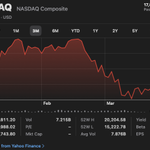
Four strategic steps I like to take during a stock market correction:
1. Remembering that it's important to think differently than the crowd in these conditions (not being fearful when others are fearful).
2. Gradually deploying parts of my strategic cash reserve to buy shares, sell put options, or buy long-term call options of oversold companies I'd like to own or invest in.
3. Selling covered calls of stocks which have good premiums for strikes above my cost basis on a green day (need to be okay with selling the shares if market price rises above the strike).
4. Rebalancing: Considering to sell shares of ETFs or companies that have dropped less in value to invest in companies I want to own for the long term which have larger drops in price but not value.
Not financial advice obviously, but hopefully some food for thought or discussion.

14
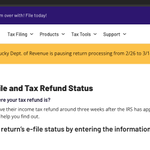
Filing our business taxes this weekend felt great! There's still a lot I need to learn, but I'm also getting better and more efficient with bookkeeping.
Who knows, maybe at some point I'll even mostly understand how Quickbooks works!
I also need to start documenting how I do the accounting and filing of our personal taxes. Need to make it more user-friendly. I have a feeling next year I will not be the main person doing it.
This is one of the downsides with most forms of passive income: tax filing tends to be slightly more complicated.
But in exchange you get to utilize more of the income you've earned. When looking at the bottom line it's a great tradeoff.
I'm curious, what are some of the things you plan to do to keep more of your income and pay less taxes?
#TurboTax #TaxAct #Quickbooks

20
Everything is interesting, once we pierce through the veil of our own ignorance.
The more we know about a topic and the healthier our perspective on it becomes, the easier it is to see how interesting it is.
I always thought finances, taxes, and accounting were boring. But now my perspective has completely shifted.
The more I know about the subtopics of these three categories, the more I can see how interesting they truly are.
What are you learning this week?

18
A little preview of the webinar content on Saturday:
Are these statements about stock options all true, all false, or a mixture (share why if you like)?
Register here if you want to learn more:
more.saltmoney.org/webinar-r…


This Saturday I'm going to do something I've never done before.
I'm going to host a webinar to go deep into one of the chapters of my book (Passive Income Fast Track):
The advanced stock market strategy based on selling options (for 45-90% annual ROI on average).
If you'd like to be a part of this live event, please register here:
more.saltmoney.org/webinar-r…
I will explain how and why this works so well, share behind the scenes results, as well as answer any questions you might have.
You'll discover a proven strategy to generate consistent returns in the stock market - even if you're juggling work, family, and all the chaos in between.
See you on Saturday at 11 AM EST...

16
Why Option Selling > Buying, plus Fine-Tuning Tips
Understanding this difference totally changed how I view the stock market and how much I benefit from it.
Most people who learn about stock options (including myself) end up buying one or several thinking they can improve the returns from a stock they like by a lot.
This might even work for a little while. Provided the stock or the entire market moves in a stable direction.
But the results change quickly when the environment becomes less predictable - which is the majority of the time.
The main problem with buying short-term options is that the daily time decay is high and it is working against us.
If the stock does not move fast in the direction we bought the option for, we will lose all of the premium we paid without any benefit.
When we're selling options however, we can use this dynamic to our advantage.
Options with weekly to monthly expiration pay the highest premiums per day. These go straight to our pocket when we're on the selling side of the options market.
The main task for an option seller becomes choosing the stocks they're willing to sell options for and timing the sale, as well as choosing expiration and strike price well.
We never want to sell put options on a stock we're not okay with owning if the market, industry, or individual stock suddenly drops in price.
That's why we need to find stocks from companies with high intrinsic value and a healthy growth trajectory.
In addition, even the best of companies which match this criteria can turn into a bad deal if we choose a put strike price too close to a new peak.
Here's how I like to fine-tune the basic wheel options strategy:
It is much better to sell a put option when either the market or the stock shows a decent pullback.
When prices are overall higher it is a great time to sell (additional) call options on shares we own - maybe from put options we got assigned for.
These details help with earning 45-90% annual return on a consistent basis.
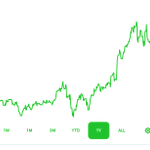
Since applying this strategy for a little less than one year my account balance has been up 71%. In January 2025 selling options earned 8.26% ROI in collected premiums.
That's in spite of pullbacks in the overall market and my main holdings since December.
To learn more passive income fast track strategies like this, please consider reading my book:
cstu.io/830d1b

2
39