

CEO at @MawsonRovers, building software for space in Australia. Ex-Atlassian. Aiming for the stars.
Sydney, Australia
Joined March 2007
- Tweets6.7K
- Following679
- Followers1.2K
- Likes5.5K


Pinned Tweet
Walking through the cemetery to work every morning a good reminder of the brevity of life.
Live your dreams, people.
This is occurring in Australia too – everywhere with an aging population. But the premise is wrong. You don’t build wealth by transferring it from one group to another.
What will help future generations is to reduce taxes on business investment, so the money flows to productive uses.
Only new businesses and new innovations can grow wealth sustainably. Taking money from rich boomers to “redistribute” to young people will not help in the long term if the best place to invest those funds is still in savings accounts, rather than in growing local industries.

The ugly truth about France and some of the other European countries currently in turmoil - and which none of the politicians want to admit because it'd be political suicide - is that you can't solve the problem by going after immigrants (as the right asserts) or the rich (as the left asserts), but you could solve it by going after the old.
One extraordinary statistic for you: people over 60 in France, a quarter of the population, own 60% of France's wealth, non-financial and financial (ofce.fr/pdf/revue/2025/3-192…).
And here is another crazy statistic:
that same quarter of the population, those above 60, receive nearly two-thirds of all social spending by the French government (previssima.fr/actualite/prot…) - which is famously among the highest in the world (France's government spending is an insane 57.3% of GDP).
Last statistic: they make up about 40% of voters because they're a third of registered voters (insee.fr/fr/statistiques/266…), and they turn out far more than anyone else (franceinfo.fr/elections/sond…).
Put our 3 statistics together and there's almost a bit of an apartheid situation here: the old own most of the country's wealth, collect most of the social spending and have the political power to keep it that way.
Which makes them a de-facto rentier class, living off assets and transfers paid for by younger generations.
And, of course, at the risk of stating a truism, the future is built by the young. Yet France keeps effectively taking money away from them to give it to those whose working lives are already behind them - and need the money far less since they already own the country's wealth.
What about inheritance, I hear you ask? That's the funniest/saddest aspect: given that life expectancy has kept rising, the French now inherit a home at 54 on average. The most common case is someone in their 80s leaving it to heirs in their 50s, in effect the very old transferring wealth to the about-to-be old (insee.fr/fr/statistiques/fic…).
You can add this to our earlier apartheid statement: on top of all the rest, even when the old finally let go of their wealth, it stays within their own "camp".
That's my personal situation, incidentally: I'm 42, my father is 71 and he is starting to look at ways to pass things on to me and my siblings, when our professional lives are already well settled, so it'll arrive when it changes things the least, which is pretty much the French system in a nutshell.
Now, I get that there'd be some unfairness in going after them: they paid into the system their entire working lives, playing by the rules of a social contract that told them if they paid up they'd collect at the end. Changing the rules now means breaking that promise, which is admittedly unfair.
But there's no magic wealth tree in any society: you can only take it where it is. That's the way most major societal transformations end up happening. They're often triggered by a catastrophic event (the so-called "four horsemen": mass-mobilisation war, revolution, state collapse, plague) BUT what really drives change is a transfer: wealth gets pried from the privileged class who've been sitting on it and handed to those who'll build what comes next.
So, in theory and in an ideal world, you can do without the catastrophic event and directly proceed with the transfer...
The fact that in France, and elsewhere in Europe, it's the youth protesting is probably no coincidence - even though they don't frame it as a generational fight. And even though, cruel irony, the left politicians many of them march behind promise to bring the retirement age back to 60 (lcp.fr/actualites/legislativ…), which would make the situation even worse.
Let's say they understand intuitively that the system is stacked against them, even if they haven't yet figured out how. And politicians are obviously doing what politicians do, meaning pandering to the people who actually vote, while pointing the young towards easier - and politically convenient - scapegoats.
To be clear I'm not saying it's the only problem in France, VERY far from it. I'm also not saying that all old people in France live a lavish lifestyle at the expense of younger generations: there are also plenty of very poor retirees who, if anything, would deserve more.
What I am saying is that it's probably the biggest elephant in the room: everyone can see it, nobody dares mention it - no politician, from any side, wants to run on cutting grandma's pension - and it makes every other problem harder to fix.
Matt Ryall retweeted

TIL that 5 days ago Anthropic discovered http compression. 😂


So futile. If the platform owner can’t charge the fees via an App Store sale, they will hide them somewhere else.
The only part of this which helps users is banning the non-steering provisions (which is good). If someone wants an open phone, they could already buy a competitor.

Big news: Fortnite is coming back to the App Store in Australia tomorrow!
Today the Australia Federal Court told Apple to open up iOS after finding they violated competition law. Here’s what’s changing in Australia in March 2027:
• iOS will be open to third party app stores
• Australian users will be able to download apps directly from developers
• Developers will be able to offer only alternative payment systems and Apple can’t require devs to offer Apple’s IAP, without charging junk fees
• Apple cannot block developers from pointing users outside apps to make purchases
• Apple is barred from charging junk fees on purchases made in third party app stores
This is great news for developers worldwide and iOS users in Australia who will benefit from an open mobile app ecosystem.
Off to Phobos goes the Japanese-led MMX mission. Exciting discoveries ahead!

◤H3ロケット10号機 打上げ🚀◢
#MMX を搭載した #H3ロケット10号機 を、本日4時41分03秒に種子島宇宙センターから打ち上げました🚀
あたたかいご声援、誠にありがとうございました✨
がんばれMMX!🛰
#H3F10
#MMXLIFTOFF 10月20日 04:41:03(日本時間)
#GOODLUCKMMX #フォボ旅 #MMX


Fascinating research.

1/ We discovered something totally unexpected about the neural structure of consciousness that overturns decades of thinking on its biological basis and brings us significantly closer to the recipe for generating conscious awareness.
New preprint: biorxiv.org/content/10.64898… (led by @HesseJanis, with @FrankLanfranchi, @_conor_mcgrory, @Yuelin_Shi, and @EngelTatiana)


Satellite breakup at 885 km altitude. Damn, that will take hundreds of years to deorbit.
Shows how important it is to automate monitoring and collision avoidance, which is one of the reasons we built AutoSat.


Incredible shot by @heospace! It has been amazing to see the improvement in quality over the years. Great work by the Australian team.


Matt Ryall retweeted

Don't fu*k with an emu.
This is like Australian survival 101 stuff.

🏴 A man tried to wrestle an escaped emu in Devon, England, but the emu had other plans.
“Emu down, emu down!” someone shouts as the runaway bird is tackled on the side of the A381.
Seconds later, the emu HEADBUTTS its would-be captor, breaks loose and bolts back toward its enclosure.
Imagine getting into a roadside fight with an emu… and losing.
Writer: Val


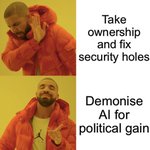
My kingdom for a representative who sees new technology as an opportunity, not a threat.

AI is the biggest technological breakthrough since nuclear - and it's currently controlled by tech bros, not sovereign states.
There's an urgent need to put guardrails around AI before the most powerful technology on the planet gets out of hand.
Last week I joined crossbench colleagues in calling on the Albanese government to commit more funding for its AI Safety Institute. The Institute is Australia's frontline defence against AI risk, but it employs fewer people than a suburban supermarket and it has just $7.5 million in annual funding.
We need to urgently commit to local regulation and protections around AI, and that should start with appropriately funding the body set up to do that in Australia. That should start with a minimum ten-fold scale-up of its funding and personnel.
abc.net.au/news/2026-09-22/a…
Matt Ryall retweeted

Wow....
spacex.com/content/starship/…

Congrats @isaraerospace ! Huge milestone for Europe. 🚀 🇪🇺

Matt Ryall retweeted

Few thoughts in response:
1) NASA has not given up on LEO. Within weeks of being on the job, I publicly addressed the Starliner situation and the role NASA played in it, and we have since taken a very active role with Boeing in implementing the investigation recommendations and putting Starliner on a path to life beyond Atlas V. We intend for Starliner to safely transport astronauts to and from the International Space Station, and commercial LEO destinations, in the years ahead. I actually agree that we should have more crewed transport vehicles, but how many major endeavors do you want NASA to solve simultaneously? The more NASA takes on in parallel, the less will be accomplished. And if there is considerable demand in LEO and lots of economic potential, nothing stops the companies referenced from raising capital and building vehicles. We are trying to get back to the Moon, build a base, get underway on nuclear power, launch more science missions, replace the International Space Station with a commercial service, but now we also need to fund several new crewed vehicles too? To the author’s point, nothing stopped one company from building a suborbital vehicle and operating it dozens of times without NASA as an anchor tenant, but I think market realities have spoken and the service appears to have been paused.
2) America and NASA are not giving up our astronauts, and as a commercial astronaut, I state that as emphatically and patriotically as possible. Of course, if useful research and affordable data become available as a commercial service, similarly to how we purchase and make available Earth observation data, we would have to look at it.
3) I am about as pro-commercial space as it gets, for what I hope are obvious reasons. But to be clear, you cannot simply slap the word “commercial” on every problem or opportunity, pound the table about “deleting NASA’s burdensome requirements,” and assume it automatically produces a more affordable, better solution supported by a thriving market. When people talk about relying on private capital and commercial services, someone still has to pay, a service provider has to execute really well, and if NASA is the customer, it is likely a service that has rarely been done before. If it turns out NASA is ultimately the only meaningful customer, that has the potential to become a very expensive proposition, if it works at all.
4) Premature commercialization can set both the NASA program and the emerging industry up for failure. We have seen approaches ranging from spacewalking-as-a-service to lunar-nuclear-power-as-a-service, often premised on NASA eventually being just one customer of many. Sometimes that market materializes. Many times--it is speculative. NASA, the taxpayers and the interested public should care about whatever achieves the intended mission outcome as quickly, affordably and safely as possible, and the contracting method is secondary. We can screw up cost-plus, fixed-price and as-a-service contracts just as easily. The outcomes are what matter. If, along the way, we can create a credible demand signal, help industry mature the technology and buy time for a market to develop, that is outstanding. But we should be grounded in reality rather than pretending a market already exists when it does not.
5) There are absolutely areas where the commercial model works extraordinarily well. Launch, Earth observation and communications are real services supported by real markets, and have been for decades, where NASA truly can be one customer of many. There will be more examples in the years ahead. In those cases, NASA can execute missions at lower cost and free up more of the NASA budget for the low-TRL, cutting-edge missions that have no obvious business case or revenue model, but change the world in air and space.
6) People often point to commercial crew and cargo as proof that this model works everywhere. It does not. Those programs benefited from NASA providing substantial early demand across dozens of missions, creating an opportunity for private capital to generate a return, even though I believe most did not, while also allowing an iterative design process rather than jumping immediately to the dream state. There is a big difference between maturing capabilities over a dozen cargo missions before building a no-fail crew vehicle and jumping directly to the crew vehicle, and I think the real-world data has demonstrated that. Even then, the development record across all of the crew and cargo providers was far from perfect. And today, the category leader is increasingly focused on opportunities with much larger potential markets, which should tell us something about the near-term economics of the market NASA helped create.
7) I have been very open that, in the near term, I do not know whether there is a sufficiently large LEO market where NASA can truly be one customer of many, but we will do everything within reason and within our budget to set industry up for success and ensure there is a home beyond the International Space Station. I do know demand for commercial LEO destinations will be heavily influenced by transportation cost, and those costs are likely to go up in the near term rather than down. Now, you can argue that if NASA had funded more commercial crew vehicles in years past, that would have changed the dynamic, but how many did you want for two crewed NASA missions to the ISS per year? We picked two providers, the results are apparent (for better and for worse), and clearly there was not enough supplemental commercial demand to justify further industry investment. The same uncertainty exists on the Moon. I cannot promise today that the economic value extracted from the lunar surface will exceed all of the input costs. What we can do is create a demand signal for landers, rovers, power, communications and other infrastructure, do so in a logical way that affords iterative design, and give a lunar economy every opportunity to emerge. I believe it will, but there are no guarantees. The mission is to return to the Moon and build the base for scientific, technological, national security and even inspirational reasons, and along the way, we hope enormous economic potential is unleashed.
8) If the objective is to force an economy out of every NASA endeavor, then NASA should probably sit inside the Department of Commerce. But NASA is an independent agency with a broader mission: to extend humanity’s reach farther into space, pioneer breakthrough technologies, undertake the near-impossible and unlock the secrets of the universe. While at times that is sure to leverage commercial capabilities and stimulate economic activity, it is not a prerequisite to achieving every mission.
I'm excited to announce the launch of AutoSat, our mission operations platform for satellite teams.🛰️
Over the past few years, Mawson has been helping satellite teams overcome the same challenges with their operations software – systems were put together piecemeal, with a time crunch just before launch. After launch, it took teams longer than planned to deliver customer value from the new spacecraft.
We saw an opportunity to improve this, building on our team's expertise in enterprise cloud software. So we built AutoSat, with the goal of helping satellite teams all around the world deliver more robust, reliable automated operations, from bench-test to flight.
AutoSat takes your satellite operations to the next level:
💻 Web command console with full audit log, live telemetry panel and role-based access control
⚡ Powerful, customisable workflows based on pass calculations or telemetry triggers, with command building and context passing between steps
🧩 Subsystem-level protocols and permissions, including observer and customer roles for delegated payload management
🔐 Secure ground station connectors, which work seamlessly with existing infrastructure and already-deployed code
🤝 Built on a solid, enterprise grade foundation, with REST APIs and soon MCP integration for agents.
AutoSat already has flight heritage, with real deployments at @Arc_CUAVA and Orbit2Orbit. Thanks to our pilot customers and especially our team at @MawsonRovers for their incredible work.

Check out AutoSat and sign up for a free trial at autosat.space!
We have lots more to come.

