

Optimistic Indian. Love animals more than homosapiens. Views are personal.
Mumbai, India
Joined April 2018
- Tweets10.6K
- Following2.2K
- Followers228
- Likes25.3K






Mufaddal Cementwala 🇮🇳 retweeted

Migratory birds flying thousands of miles to become menu in local dhabas is cruel beyond imagination
@DainikBhaskar @byadavbjp @moefcc please act urgently. Thank you @DainikBhaskar for highlighting this massacre. @IndiAves

विदेशी पक्षियों का शिकार, यूपी के होटलों में 3000 रुपए तक परोसा जा रहा मांस: नेताओं, पुलिस और वन विभाग के लोगों को मैनेज कर चुके हैं शिकारी, कहा- उन्हें भी खिलाते हैं; शिकारियों के इस नेटवर्क को दैनिक भास्कर ने एक्सपोज किया, पढ़ें पूरी रिपोर्ट
#UPNews #HindiNews #Investigation #MigratoryBirds
dainik.bhaskar.com/RJT54YuPl…

Mufaddal Cementwala 🇮🇳 retweeted

Another tigress DEAD. Strangled by a snare in North Panna Division.
It is in Panna Range, Manki Beat, Compartment P-390, in North Panna Division, right next to the Reserve
A clutch wire snare was found tightly wrapped around her neck. Poachers are operating openly next to a Tiger Reserve, and the Forest Department has no answers?
This is not an accident. This is murder by negligence.
North Panna Division has become a death trap for tigers.
@ntca_india
@PMOIndia
@CMMadhyaPradesh
@moefcc
@WCCBHQ
#Panna #Tiger #MadhyaPradesh


Mufaddal Cementwala 🇮🇳 retweeted

African countries have seen South Africa emerge as the biggest leader in the wrong practice of trophy hunting in recent years. In the past year alone, 45,000 animals were killed in South Africa. These include large mammals such as elephants, lions, leopards, and warthogs. Among the grass-eating animals, giraffes, zebras, and other antelopes are also included. All these animals are raised on game reserves or private farms in this country. If we talk about all African countries, this figure crosses approximately 80,000. In a poor country like Tanzania, (300 lions killed last year) where there are no game reserves, trophy hunting is carried out in the wild itself. The negative impact of this is that now it has become extremely rare to see lion groups there.
Now coming to the second aspect: of the trophies imported after this trophy hunting, more than 65% go to the United States alone. Apart from this, there are European countries such as Spain, Denmark, Germany, and Britain the same countries that claim to care the most about human rights in the entire world. How can these people, with such double standards and a mindset that is detestable toward wildlife, be the protectors of human rights?
A shocking detail was also shared with me by Jack, a person connected with African trophy hunting: most of the people who run these types of game reserves are European and American citizens, because operating such activities requires a very large amount of money and investment. The direct and simple answer to this is that these people invite citizens from their own countries here to carry out this work.
Anyway, this activity is legal in these countries and is also protected by law.
And in our country, despite this being illegal, these small, big, habitual, and non-habitual hunters have wiped out tigers, leopards, and even wild herbivores from many forests.


Mufaddal Cementwala 🇮🇳 retweeted

A leopard cub killed while crossing the Hangal–Pala State Highway in Haveri.
Officials arrive, inspect the body, pose for photographs and wildlife protection presumably gets another tick mark.
Where are the preventive measures? Speed controls, warning signs, wildlife crossings and monitoring?
Or does conservation begin only after an animal is dead?
@aranya_kfd @ntca_india @moefcc @Min_FAHD @AwbiBallabhgarh @BJP4India @DKShivakumar @divyaspandana @INCIndia @narendramodi @RSSorg @DrMohanBhagwat @Tejasvi_Surya @jsaideepak @PetaIndia @pfaindia
#SaveIndianAnimals #RoadKills

Mufaddal Cementwala 🇮🇳 retweeted

Uma jaguatirica morta nas margens dos rios que chegam ao Xingu, no sul do Pará. A água também está morta, contaminada por rejeitos de exploração de cobre por uma mineradora canadense. Peixes, jacarés. Tudo morto. A reportagem, na Folha. folha.com/tz5m12yo

Mufaddal Cementwala 🇮🇳 retweeted
tigers stray near buffer-zone villages or come close to human settlements. When they do, the villagers disturb both the rescue team and the tiger. Most of them tell the forest staff: “Take your tiger away from here it should not come into our village.” Well, people can only say as much as their limited understanding of wildlife allows. When a tiger kills a human, the situation becomes even more alarming and aggressive. Forest personnel are injured and their vehicles are set on fire.
Such acts should be categorised as organised crime. In most cases, the complete lack of action against this kind of audacity is also wrong.
The main reason is that even today people have no awareness about wildlife or simply no interest in acquiring any.
When a wild animal enters settlements, people look for content for their social media posts, ignoring the real dangers that could cost them their lives. In this race, many fools even break the safe-distance barrier.
This is a question worth thinking about: whose fault is it the human’s, or the wild animal that has strayed into a human settlement?
This video from Pench forces us to reflect on all these things.
Mufaddal Cementwala 🇮🇳 retweeted
In India’s tiger reserves, temples located in the middle of core areas prevent tigers from getting truly inviolate space. Especially in Rajasthan, tigers in about two reserves face this problem every day.
In Sariska, the main temples are Pandupol Hanuman Ji temple and the Bhartihari Nath sect temple. In Ranthambore, the prominent ones are Trinetra Ganesh Ji temple and Kachida Mata temple.
Until just 2–3 years ago, people used to enter these forests freely for sightseeing and tourism. Now some restrictions have been imposed. For example, Pandupol Hanuman Ji temple lies 21 km deep inside Sariska’s core area from the entrance gate. Entry is now allowed only on Tuesdays, and that too only for vehicles registered with the Alwar District Transport Office.
However, at Bhartihari temple inside Sariska, people can still go for darshan anytime. Irresponsible people who are enemies of wildlife have complete freedom to scatter polythene anywhere. Forest staff and NGOs later collect it, but some of it still ends up in the stomachs of wild animals. In this way, wildlife continues to get violated space as a bonus.
Similarly, at Trinetra Ganesh Ji temple, after three accidents last year, entry is now restricted to only forest department-registered taxis and vehicles registered with the Sawai Madhopur District Transport Office. Yet this is still enough to disturb tigers in the critical tiger habitat.
At Kachida Mata temple, large numbers of chital and sambar are found eating the grains (bajra, wheat and other easy food items) offered by devotees to the goddess. Sheds have been built inside the critical tiger habitat, and the gathering of devotees disturbs tigers in the core area.
People have their faith I have faith too but why should wild animals bear the negative consequences of it? No politician or forest officer has a solid answer to this. It is not that forest officers do not raise this issue at higher levels, but when no reply comes from above, they hesitate to take further action.
In my opinion, this human crowd should be stopped from entering the jungle, and those who politicise the issue should be dealt with strictly. #tigerconservation #bigcatprotection #bigcathabitat #tigerbehaviour #ranthambhoretigerreserve #sariskatigerreserve


(Post-3 our tiger series problems)
We will cover Sariska Tiger Reserve as the next tiger reserve in our series today. This park is the last tiger habitat in the Aravali Mountain range. It is an isolated forest with an average tiger density. The park faces numerous problems, primarily due to its unique geographic location. From a mountain range perspective, this park is even more beautiful and densely forested than Ranthambore. However, the surrounding plains are equally disturbed and fragmented.
The main problems of this park, which the administration must address in a phased manner, are as follows:
1. (Unique Problem) There are two major religious sites inside the park: the first is the Pandupol Hanuman Ji Temple, and the second is the Bhairav (Bhrathri) Temple of the Gorakhnath sect. Especially at the Bhairav Temple, thousands of devotees from the sect visit daily for darshan and leave behind polythene bags and other garbage in the forest. Shockingly, both these sites are located in the heart of the park’s core jungle. Sambhar deer, Hanuman langurs, and other wildlife are consuming thousands of kilograms of this plastic waste and sugar-rich products, falling victim to various diseases.
2. A state highway passes through the middle of this jungle, serving as the only shortcut connecting the state capital to Alwar. Heavy vehicles continue to ply on it until 6 PM.
3. The most common issue is illegal mining, but the most critical problem here is the mining lobby’s deep influence in the government. Under pressure from this lobby, the government is intent on denotifying important parts of the tiger reserve (where tigers currently reside) to convert them into revenue land. The local MP and the Union Environment Minister have remained mute spectators, or their silence may even amount to tacit support for this unreasonable move.
4. Inbreeding among tigers here has reached its peak. Most tigers belong to the T-16 Machli family lineage, which could negatively impact the future breeding capacity of these fast-breeding carnivores.
5. In the plains, domestic livestock have severely degraded the grasslands, which has deeply affected the breeding capacity of wild herbivores.
6. In terms of human interference, this park is a textbook example of a tiger reserve with perhaps the highest level of human intervention.
7. The delay in notifying Jamwa Ramgarh and Viratnagar Sanctuaries as part of the tiger reserve’s core area is also a matter of serious concern. Even now, 1-2 male tigers continue to live in these forests.
8. Despite villagers causing damage to administrative staff and personnel, the silence of the authorities will once again create a crisis for the survival of tigers in the future. Some parts of this area also connect to the Mewat region, which is a highly sensitive zone for wildlife survival.
It is a matter of great surprise that both the Union Environment Minister and the State Environment Minister belong to Alwar. If they cannot secure their own home, then expecting them to protect another home would be our naivety. #bigcatprotection #sariskatigerreserve #tigerisland #ranthambhoretigerreserve #rajasthanforest #wildlifeawareness
Yuvraj tiger ST-21 at Sariska
Mufaddal Cementwala 🇮🇳 retweeted

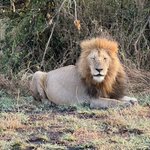
The Buffalo-Lion drama in Naboisho went on for hours!The buff went hiding in a bush,still harassed by other buffs while the lions formed their attack and went low. Once the lions attacked surprisingly,the buffs began to protect their friend they had pushed out!in the morning he was breakfast! #wildearth
Mufaddal Cementwala 🇮🇳 retweeted
MP tiger deaths reach 59 this year after 13th mortality at Bandhavgarh; carcass found in buffer zone.
Very worried about Bandhavgarh, arguably India's best tiger reserve but only bad news coming from there in recent times
timesofindia.indiatimes.com/…

Mufaddal Cementwala 🇮🇳 retweeted
People entering forests, state, national highways and railway lines cutting through the middle of forests this leads to wildlife getting injured and, in many cases, dying. On the other side of the same coin, tigers killing humans. In what sense, or from whose perspective, can this be called coexistence?
When even the state and central governments are unable to build wildlife-friendly infrastructure, where does the idea of coexistence stand?
State and central governments appoint environment committees in which most members are either political figures or heavily influenced by politics. What fair decision in favour of wildlife can one really expect from them? As a result, numerous mining projects, highways, and railway tracks get approved after only a token objection is raised as a formality. After these same mistakes, wildlife continues to die, or human-wildlife conflict is born during transit. Because of cost-cutting in development, these projects increasingly come to be seen as development that works against wildlife conservation.
You are only providing medium-level protection to increase their numbers, but the reality is that you have already failed to provide them with the habitat they deserve. One of the main reasons for human-wildlife conflict is also the shortage of wild herbivores when a carnivore kills domestic cattle to survive. Why shouldn’t it? There is a reason for that. The reality is that we have never seen any forest minister or any politician connected with forests speak seriously about the wild prey base. In Rajasthan’s new tiger reserves, the situation has reached a point where domesticated cheetal from Rashtrapati Bhavan are being released. At the national level, several new relocation projects are failing to succeed purely because of the lack of prey base.
Is it not time to think deeply and systematically about all these issues, or should we just let things continue as they are? #coexistence #humanwildlifeconflict #disturbwildlife #WildlifeConservation #savethetiger #wildfriendlyinfrastructure
Mufaddal Cementwala 🇮🇳 retweeted
Let me share a striking piece of data with you: nearly 60% of all human deaths caused by tiger attacks in India have occurred in Maharashtra alone, and of those deaths in Maharashtra, approximately 90% have taken place in just one district Chandrapur. This gives us a clear sense of how severely this single district in India is affected by tiger attacks. At the same time, it also points to the high density of tigers in this region.
It is worth noting that the human population density in this area is quite low. Yet, more than 1,20,000 people living in and around the Tadoba and adjoining Brahmapuri Forest Division depend on these forests for their daily needs including grazing of domestic cattle, collection of forest produce, and meeting their fuel requirements.
Today, the situation is such that the Gorewada Rescue Centre in Nagpur is almost entirely occupied by tigers from this very landscape, and according to the Forest Department, these tigers are no longer fit to be released back into the wild.
So, should we celebrate the rising tiger population, or should we view it as the beginning of a larger problem?
To a wildlife student like me, the situation appears highly complex and concerning. #TigerConservation #SaveTigers #ProjectTiger #TadobaAndhari #Vidarbha #maharastra

Mufaddal Cementwala 🇮🇳 retweeted
Yesterday, the carcass of a male tiger, approximately 10 years old, was found in the Manpur buffer zone of Bandhavgarh. The tiger used to inhabit the corridor area between Bandhavgarh and Sanjay-Dubri. No evidence of any suspicious cause of death was found on the tiger’s body or in the surrounding area, which is why this death is being considered natural.
If we look at the total tiger deaths so far, including those in the Panpatha Katni Forest Division and Shahdol, the number stands at 16. In Bandhavgarh alone, this is the 13th death. All these 16 tigers belonged to the Bandhavgarh gene pool. Over the past five years, Bandhavgarh’s tigers have established their presence in approximately 900 square kilometres of new area.
Until these tigers are provided with undisturbed space to roam freely or their prey base is strengthened, the series of suspicious tiger deaths or this pattern will continue unabated. #tigerdeath #bigcatprotection #WildlifeConservation #villagerelocation #mythofcoexistence


Mufaddal Cementwala 🇮🇳 retweeted
T-84 (subadult male) killed three people in the Sindewahi range, which falls under the Bramhapuri Forest Division, during the last six days of October. Of these, two persons were grazing livestock and one lady was simply walking through the forest. Tadoba’s team had been trying to capture the tiger for the past 15 days, but it did not even appear in the camera traps.
On Wednesday, 18 November, a tiger was injured after being hit by a small vehicle. Matching of its stripe pattern with the earlier stripe pattern of T-84 (subadult) confirmed that this injured tiger is indeed the same subadult T-84(subadult male). It has been taken to the Gorewada Rescue Centre, and its condition remains critical. The tiger is unable to move its hind legs, indicating that it has suffered a serious injury to its spinal cord.
Tiger attacks have now become common in Chandrapur. However, one pattern is clearly visible: most of the incidents have occurred in territorial forests close to villages. In these cases, the victims were either grazing livestock in the forest or were moving through the forest to reach another area.
This situation is extremely worrying and pitiable. If things continue like this, the Maharashtra government will have to expand the Gorewada Rescue Centre in Nagpur in the coming years. #humanwildlifeconflict #tadobatigerreserve #gorewadarescuecenter #wildlifeencounter #WildlifeConservation
Mufaddal Cementwala 🇮🇳 retweeted
A video from Gir, Gujarat shows forest officials forcibly trying to stop a male lion from entering another male’s territory in order to protect the cubs there. The method being used is quite strange and concerning. A group of forest staff on five motorcycles is repeatedly moving ahead and blocking the lion’s path from the front. Neither the required safe distance from the wildlife nor the basic civility expected while dealing with wild animals is being maintained.
Whatever the intent, this approach clearly violates wildlife protocols. What is equally surprising is that even such close human proximity is not disturbing the lions.
#bigcatrules #wildlifeawareness #gujaratlion #girsomnath #girnationalpark
Mufaddal Cementwala 🇮🇳 retweeted

Heartbreaking. A young mother's miscarriage -- anyone who's spent time with cats, big or small, knows how deeply they grieve these losses.

#ExpressExclusive | A young tigress relocated to Buxa after a long journey was injured during the transfer, released before fully recovering and later found to be pregnant.
Her subsequent movements, recapture and escape have raised questions over the way the relocation was handled. Read on to know more.
🔗 indianexpress.com/article/in…
Written by: Jay Mazoomdaar


Mufaddal Cementwala 🇮🇳 retweeted

You have never eaten a chicken. You have eaten a feed bag in the shape of one.
A chicken has one stomach and six weeks to live. A pig has one stomach and six months. Neither has anywhere to send what it eats except straight into itself, so that is where it goes. Corn oil in, corn oil on. Soya in, soya on. The fat on a chicken thigh or a pork belly is a printed receipt for the cheapest ration the mill could mix, and it carries five to ten times the seed fat of anything that ever grazed.
Rubbish in, rubbish out, and then onto a plate with a heart logo.
A ruminant has a quality department. Before a mouthful of anything reaches the animal, it spends two days in the rumen, a warm vat the size of a bathtub holding more microbes than there have ever been people.
They take plant fat apart and harden it.
They build B12 from scratch, which no plant and no pig has ever managed.
They turn grass, which has nothing in it you could live on, into the protein that ends up as steak.
They dismantle a list of plant poisons that would put you in bed for a week.
Then the animal eats the microbes.
A cow lives on a private herd she keeps in her own belly. The grass is what she feeds them. So is the grain, when there is any, and they deal with it the same way. Fifty million years of development, and the whole system exists to make sure that what went in at the front has no say in what comes out as meat.
The pig hands you what it was handed. The chicken does the same, faster, and gets called the healthy option.
The ruminant hands you beef. Every time. Whatever was in the trough.

Mufaddal Cementwala 🇮🇳 retweeted
Mollie Maggia's jaw came away in pieces in her dentist's hands in 1922, and when she died that September, aged 24, her death certificate said syphilis.
She had been a dial painter at the United States Radium Corporation in Orange, New Jersey, one of hundreds of young women, most in their teens and early twenties, painting glowing numbers onto watch faces with a paint called Undark. To keep a fine point on the camel-hair brush they were taught to shape it between their lips. Lip, dip, paint, hundreds of dials a day. The supervisors told them radium was harmless, good for them even. The girls painted their nails and teeth with it for fun and walked home glowing in the dark.
Then their teeth began falling out. Jaws rotted and snapped. Spines crumbled. Doctors had no name for it, and the company did not offer one.
It had one. In 1924, under pressure, it paid Harvard specialists to study the factory, and they reported that radium was the cause. The company sat on the report and let it be known that its workers were in good health. Its own examiner told sick women they were well. When the deaths kept coming, the whispering started that dial painters were loose girls, and that it was syphilis.
Grace Fryer began losing her teeth in 1922 and spent two years looking for a lawyer brave enough to take on the company. In 1927 she sued, with four other women, and the papers named them the Radium Girls. That autumn Mollie was dug up to settle the syphilis question. Her bones were radioactive. The company stalled, knowing its accusers were dying, and by the first hearing in January 1928 two of the five could not raise their arms to take the oath.
They settled that June for $10,000 each and $600 a year. The judge who brokered the deal turned out to own shares in the company. The man who had invented the paint died of radium poisoning that November.
In Illinois, at the Radium Dial Company, Catherine Donohue gave her evidence in 1938 from her sickbed, weighing about five stone, and was dead within months. Her case helped win American workers the right to sue over the diseases their jobs gave them.
The women were told they were young and healthy and had nothing to fear, and when they started dying, the company found it easier to attack their virtue than admit what was in its paint.
Their graves in New Jersey still set off a Geiger counter.

Mufaddal Cementwala 🇮🇳 retweeted

💔 WE COULDN'T SAVE HIM. SO WHY ARE WE SHARING HIS STORY?
Because the next animal might still have a chance.
A motorbike hit this innocent dog and drove away. Then another vehicle struck him. Neither stopped.
He lay helpless beside the road, suffering from catastrophic head injuries and internal bleeding.
When we received the call, our rescue team was already attending another emergency.
We explained that bringing him directly to our hospital would take around one hour. Waiting for our team meant several more hours without treatment.
Sadly, the caller was unwilling to help with transport.
Our team rushed to him as soon as they returned. Our vets did everything they could. But by then, it was too late. 💔
PLEASE UNDERSTAND: A PHONE CALL ALONE CANNOT ALWAYS SAVE A LIFE.
When an animal is critically injured, every minute matters. If you can safely arrange immediate transport, please do. Call us for guidance first.
Our rescue teams cannot be everywhere at once. Sometimes, YOU are that animal's only chance of reaching help in time.
Please don't walk away after making a call. If you can safely do more, please do.
💔 He didn't survive. But perhaps his story can save another life.
📞 TAWF: 0308 8181122
❤️ Please SHARE. Someone may remember this when another animal desperately needs help.