

Software Engineer/Solutions Architect.
Nairobi, Kenya
Joined March 2010
- Tweets7.9K
- Following3K
- Followers3.3K
- Likes3.8K









john murimi retweeted

Who needs two wheels when you have a spinning brass reaction wheel, an MPU-6050 gyroscope & a few lines of Arduino code?
Side-to-side balance from the flywheel. Front-to-back balance from the drive motor. Pure control theory in action.
This guy is amazing.
🤖 Made with AI
john murimi retweeted

China open-sourced a peanut-sized OCR that parses entire 100-page PDFs in one shot..
It's called Unlimited-OCR. Only 3B params. Runs locally.
Every other OCR tool chops your doc into pages and loses the thread. this one reads the whole thing in a single pass.
→ One-shot "long-horizon" parsing (32K context window)
→ Multilingual, out of the box
→ 93% on OmniDocBench v1.5 (+6 over the DeepSeek-OCR baseline)
→ Edit distance stays under 0.11 past 40 pages
→ Runs 100% locally on your own hardware
→ Works with Transformers, vLLM, SGLang, and Docker
Traditional cloud OCR (Textract, Google Vision, Azure Document Intelligence) often costs about $1.50–$15 per 1,000 pages.
This runs on your machine. For free. Forever.
Baidu built it to push DeepSeek-OCR one step further. It now has millions of downloads on Hugging Face, and most people still have no idea it exists.
100% open source (MIT).
github.com/baidu/Unlimited-O…
Readers added context they thought people might want to know
Unlimited-OCR transcribes dozens of pages (practically ~40 under 32K context) in one pass per its paper and card, not entire 100-page PDFs as stated.
arxiv.org/abs/2606.23050
huggingface.co/baidu/Unlimite…
github.com/baidu/Unlimite…
john murimi retweeted

The scariest part of the modern internet isn't AI. It's this:
- 30 billion installs (libcurl) → 6 core maintainers
- 1 trillion databases (SQLite) → Small dev team
- Global time zones (tzdata) → 1 coordinator
- Linux root access (sudo) → 1 lead maintainer
- Server shell (Bash) → 1 maintainer
- Web compression (zlib) → 1 lead maintainer
- JavaScript compatibility (core-js) → 1 primary maintainer
Billions of devices depend on a handful of people most of us have never heard of.
Hey @grok, if just one of these projects disappeared overnight, which would cause the most chaos?
john murimi retweeted

I'm building a prototype that uses a local LLM coupled with PostgreSQL for RAG, and it seems that you can go miles with these open models and OSS tools.
For many small companies, this setup can cover a wide range of tasks, and you don't have to worry about privacy either, since everything is stored and processed locally.
Once I fine-tune this model for various types of businesses (e.g., accounting, law firms), I'll create a training to show you what I've learned throughout this process. Is anyone interested in taking this training?


john murimi retweeted

开放电信:一个充满魅力的极客理想,正在通过开源软件悄然照进现实
自建基站、定制终端、自由定价,没有巨头垄断与繁琐束缚——这曾是无数通信极客心中的终极乌托邦。虽然在宏观层面,受限于频谱资源管理与互联互通壁垒,完全“无监管”的商业网络难以实现;但在局部场景下,开源基站与私有网络(Private Networks / 社区网络)的兴起,正在将这一理想变为现实
通过将传统的专用基站硬件“软件化”,并与“局部独立运营”相结合,如今无论是工业园区、偏远社区还是个人开发者,都能在不依赖传统电信巨头的前提下,亲手搭建起一张属于自己的移动通信网络
支撑自建私有网络的开放开源基石:
目前,全球通信开源社区已经构建了从无线接入网(RAN)到核心网(Core)的完整技术栈:
O-RAN 标准: 由全球运营商与科技企业组成的 O-RAN 联盟制定的开放接口与架构规范。它彻底打破了传统通信设备的“黑盒捆绑”,让不同厂商甚至开源社区的软硬件能够像组装电脑一样自由搭配、无缝协同
specifications.o-ran.org/
srsRAN(原 srsLTE): 目前极客圈与学术界最受欢迎的开源 4G/5G 基站软件。它全面遵循 O-RAN 标准,以代码架构清晰、文档完备著称,仅需一台普通的 Ubuntu 电脑配合射频硬件,即可运行出完整的 5G 基站(gNB)
github.com/srsran
OpenAirInterface (OAI): 由欧洲顶尖研究机构 EURECOM 发起的重量级非营利开源项目。它不仅提供 4G/5G 无线接入网(RAN)代码,还包含完整的核心网与网管协议栈,功能极度完备,是全球科研机构与企业验证 5G 乃至 6G 前沿技术的核心平台
github.com/openairinterface/
Open5GS: 专注于“移动核心网”的开源实现,支持 5G Core 与 4G EPC。如果把基站比作发射信号的“塔台”,核心网就是负责鉴权、分配 IP、计费与路由的“神经中枢”。借助 Open5GS,你可以独立管理用户数据库,并自主签发物理或虚拟 SIM 卡
github.com/open5gs
Magma: 原由 Meta 开源、现托管于 Linux 基金会的分布式核心网项目。它专为偏远地区与社区自治网络量身打造,支持本地数据分流(Local Breakout),特别擅长在回传带宽受限、网络连接不稳定的复杂环境下实现基站的低成本互联
github.com/magma
john murimi retweeted

Arduino UNO (ATmega328P) vs. ESP32 – Which one should you learn first?
If you're diving into embedded systems, this is one of the first big decisions you'll face. Here’s a no-fluff comparison to help you choose.
🔵 Arduino (ATmega328P)
8‑bit AVR, 16 MHz
2KB RAM / 32KB Flash
5V logic (very beginner‑friendly)
10‑bit ADC (stable and reliable)
No built‑in Wi‑Fi / Bluetooth
Sequential execution (no multitasking)
USB updates only, no hardware encryption
✅ Best for:
Beginners, robotics without internet, learning embedded fundamentals, projects needing clean analog readings.
⚡ Why Arduino?
Simple, rock‑stable, and the best way to truly understand how microcontrollers work from the ground up.
🟣 ESP32 (Dual‑Core)
32‑bit dual‑core, up to 240 MHz
~520KB RAM / 4MB Flash
3.3V logic (more sensitive)
12‑bit ADC (higher resolution but can be noisy, especially with Wi‑Fi on)
Built‑in Wi‑Fi & Bluetooth
FreeRTOS support (true multitasking)
Over‑the‑air (OTA) updates
Hardware encryption & secure boot
⚠️ Watch out for:
Wi‑Fi noise on analog pins, boot pin quirks (GPIO 0, 2), slightly steeper learning curve.
✅ Best for:
IoT, web servers, automation systems, advanced connected applications.
⚡ Why ESP32?
Powerful, modern, and built for wireless + multitasking.
🎯 So, which one first?
Complete beginner? → Start with Arduino.
IoT or wireless from day one? → Go ESP32.
Want strong fundamentals first, then scale? → Learn Arduino → then ESP32.
Both are fantastic. Your choice just depends on your goals.
👉 Which one did you start with – and why? Let me know in the comments 👇
#EmbeddedSystems #Arduino #ESP32 #IoT #Microcontrollers #ElectronicsEngineering #LearningPath

john murimi retweeted

荷兰程序员Pieter Levels,二十多岁自学编程,既没有拉风投、也没有租写字楼,更没有雇佣一名员工。
27岁时,他曾花整整一年开发复杂的数据分析平台,结果没人买单,只能搬回父母家住。那次失败让他彻底醒悟:与其闭门造车,不如快速试错。于是他给自己定下“12个月做12个创业项目”的挑战。
他从自己数字游民的真实痛点出发,用最基础的PHP和SQLite写代码,先后推出了远程工作平台Remote OK、数字游民城市指南Nomad List,以及AI头像工具Photo AI等产品。
他坚持“第一天就收费”、只做70%完成度就上线测试,每月服务器成本不到200美元,却靠着一人一电脑支撑起了年营收超300万美元的生意。平时背着电脑在世界各地的咖啡馆工作,没有会议、没有老板、也不用管团队。
不靠融资烧钱、不堆人头,一个人活成一支高利润队伍,这种数字时代的轻资产自由,是不是很让人向往?
john murimi retweeted

Open-source is essential. I built MongoDB, one of the world’s most popular open-source databases. Now I’m building Viam, an open-source harness for physical AI.
I don’t want a world where millions of developers are dependent on the paywalled technology of just a handful of companies. No one should.
I want to see 1B+ new physical AI deployments over the next ten years.
Here’s why open source is essential to getting there. 🧵
Readers added context they thought people might want to know
As co-founder and CTO, Eliot Horowitz was a primary architect and public advocate of MongoDB's transition away from open source to its current SSPL source-available commercial licensing model.
opensource.org/blog/the-sspl-…
john murimi retweeted

This is f*cking insane. Nvidia CEO Jensen Huang on what he expects from an engineer he pays $500,000 a year:
"That $500,000 engineer, at the end of the year I'm going to ask him how much did you spend in tokens, and that person said $5,000, I will go ape something else."
His line is $250,000 in tokens. Anything less and he's "deeply alarmed."
In about 2 minutes he explains why the engineer's job is changing.
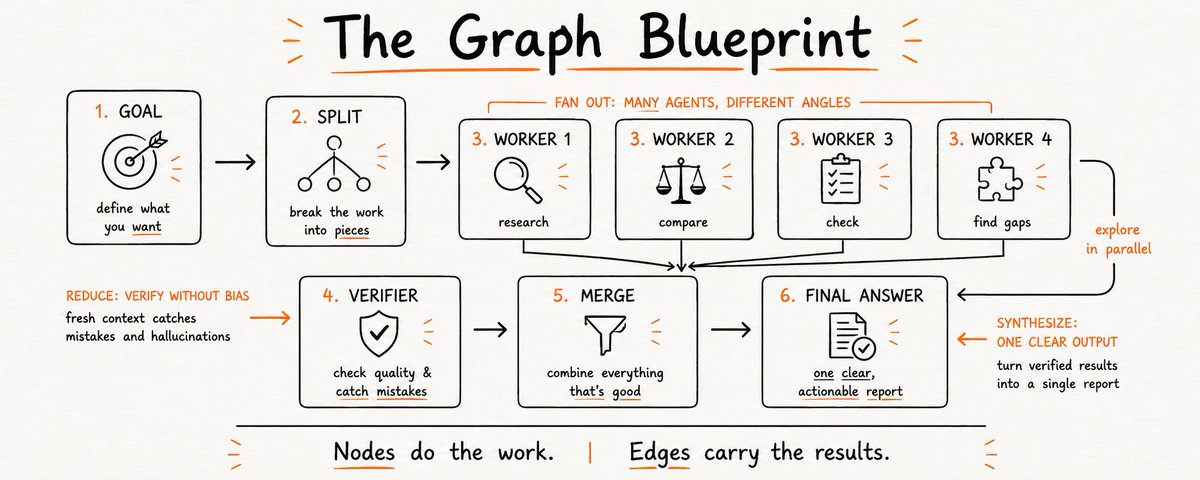
You stop typing code and start writing ideas, architectures and specs, then let the agents do the work and iterate.
That's the whole skill now, building the system your agents run inside.
Most people still treat AI like a chatbot.
Almost nobody has set up a system that runs a whole team of agents for them.
Bookmark it and watch it today, then read how to build that system in the guide below:

john murimi retweeted

Elon’s position, in his own words: copy our rockets. Copy our satellites. There’s a Falcon 9 standing on the street outside HQ in Hawthorne. Measure it. Build it. We won’t sue.
Most people miss the logic here:
1. A patent protects what you already invented. It does nothing for what you haven’t invented yet.
2. When a company iterates faster than anyone can copy, its lead comes from how fast it improves, not from what it owns on paper.
3. So the advantage isn’t the rocket on the street. It’s the factory that will have made that rocket obsolete before anyone could reverse-engineer it.
He’s said it himself: it isn’t a monopoly when you’ve simply built a better system and put nothing in anyone’s way.
Tesla did the same thing. It opened up all of its patents so the rest of the industry could speed up the shift to electric vehicles.
For SpaceX the mission is a multiplanetary civilization, and one company can’t build that alone. Every competitor who copies and improves the design moves humanity closer to Mars.
Patent landmines slow the future down. Open designs speed it up.
john murimi retweeted

You can now legally build and sell your own robotic arm.
It's called reBot-DevArm, from Seeed Studio.
Most "open source hardware" is either locked behind a non-commercial license or stuck in preorder purgatory with nothing to actually buy.
→ Mechanical CAD and a bill of materials
→ Python SDK & LeRobot support included
→ Already running in real projects
100% open-source.
john murimi retweeted

A billionaire literally explained how the entire economy works in 42 minutes better than most $200,000 MBA programs ever cloud.
john murimi retweeted

“Go do something great and your network will instantly emerge.”
— Naval Ravikant
john murimi retweeted
Can an ESP32-S3 run AI models locally without sending data to the cloud?
That's the idea behind esp32-s3-edge-ai from Simantic Dev.
The project explores running edge AI on the ESP32-S3, a dual-core microcontroller clocked at up to 240 MHz, with vector instructions for accelerating neural-network operations.
The interesting challenge is fitting inference into limited RAM and flash while keeping latency and power consumption under control.
For anyone working with embedded AI, this is a useful direction to explore.
Think about local sensor classification, smart devices and always-on detection without depending on a cloud connection.
I would be particularly interested in seeing how far INT8 quantisation, PSRAM and the ESP32-S3 vector instructions can push on-device inference.
Would you try running your own trained model on an ESP32-S3?

ESP32-S3 Facial recognition running in Simulation!
Edge AI and IOT is on the rise and we are here to help it get there.
This is a Virtual ESP32-s3 running real firmware connected to the video feed of my webcam via serial.
Of course it's insanely laggy but thats mostly because demoing using an inefficient path, you would be using the esp32s3's camera interface directly. But even then you would probably get 3 FPS, bargain deal when you know that an s3's cost like 6 bucks.
Long time fan of the ESP32 series and so excited to keep sharing with everyone all the things you can do in simulation!
It's gonna be a week of launches! But if you want to beat me to making cool things run in simulation, try it -> simantic.com


john murimi retweeted

Представь: ты купил магнитофон, открыл инструкцию, а там принципиальная схема. Каждый транзистор, каждый резистор, каждый конденсатор.
В СССР это было нормой.
В паспорт многих радиоприёмников, магнитофонов и телевизоров вкладывали полную электрическую схему.

john murimi retweeted

Amazon's new VP of robotics research put his entire Berkeley course on YouTube: 15 lectures, about 15 hours, free.
"CS 294-277: Robots That Learn," Jitendra Malik, UC Berkeley.
He's the professor behind R-CNN and rapid motor adaptation, and since 2026 VP and Distinguished Scientist at Amazon's Frontier AI & Robotics lab.
Kinematics and dynamics, robot hands and touch, vision for action, what babies teach us about motor control, reinforcement learning, behavior cloning, visual imitation, then case studies: locomotion, navigation, dexterous manipulation, and long-horizon planning with language. 15 lectures, about 15 hours, free.
Lecture 11A walks through ALOHA Unleashed, Google DeepMind's two-arm robot that hangs shirts and ties shoelaces: 70% success on the shirt after 8,658 demonstrations, 40% on the shoelace. 31 minutes in he asks the question every humanoid company is betting on: "if it requires 1 trillion demonstrations, you're not getting there... will getting to a million demonstrations be okay?"
His own bet, 11 minutes in: "the future research is with multifingered hands with tactile sensing."
The lab he now runs research for is hiring a simulation engineer for synthetic data at $150K–$300K. His CMU talk abstract this year says it plainly: "RL in simulation and sim-to-real have been workhorse technologies for us."
Lectures: youtube.com/playlist?list=PL…
Course: robots-that-learn.github.io
P.S. lecture 3, on robot hands, comes from Deepak Pathak's CMU lab. Pathak is the CEO of Skild AI, the robot brain lab reportedly valued at $14B. the free 12-week path that gets you ready for this course is in the article below.


john murimi retweeted

Awesome Robotics! 💾
Building your own robot just got a lot easier.
@MathWorks have released an open-source GitHub repository packed with robotics resources for anyone interested in getting hands-on.
The repo includes examples for robot arms, ground vehicles, and drones, with projects that show how to connect with ROS and ROS2 or even deploy Simulink models directly as ROS nodes.
There are also more advanced demos, like modeling off-road environments and testing navigation algorithms in photorealistic simulations.
Everything is well-documented, with tutorials and links that make it easy to go from concept to prototype. 📑
Whether you’re a student, researcher, or just curious, there’s material here for every level. And since it’s an open community project, you can not only explore but also share your own contributions.
For anyone looking to learn robotics by doing, this is a solid place to start!
Here’s the link: github.com/mathworks-robotic…
~~
♻️ Join the weekly robotics newsletter, and never miss any news → ziegler.substack.com