

Husband.Father.4th Generation Farmer.6'9in.Christ is King.FTTB.
Groton, SD
Joined June 2009
- Tweets1.7K
- Following134
- Followers474
- Likes60K


Nicholas Strom retweeted

Mike Evans after his One handed TD:
“That’s for my boy Colton right there.”
Mike Evans is a world class human being 🙏🏼


Nicholas Strom retweeted
This moment in history should be required viewing in every school in America.

Nicholas Strom retweeted

Glad I started tracking 49ers' foundational pillars (yellow).
Trent Williams: "Every position room has a North Star, somebody that they can look to and actually follow and literally learn how to do it the way we do it. And I think it’s a beautiful structure to the locker room."


Nicholas Strom retweeted

Not many people know that Elon Musk’s roots go back to the American Midwest. His grandfather, Joshua Haldeman, was born in Minnesota, and his mother, Maye, was born in Canada before the family packed up and moved to South Africa when she was still a little girl.
Even Elon’s name, which so many people assume is exotic, is a family name. He was named after his great-grandfather, John Elon Haldeman, who around 1900 was a school superintendent and a part-time sheriff in Minnesota. So, yeah, the most futuristic name in the world actually came from a small-town lawman more than a century ago 🤷🏼♀️😄
Nicholas Strom retweeted

1st corn plot harvested in area that I cover... Can anything be learned from a seed corn company plot?
I say a lot can be learned, others say they are not realistic. A couple thoughts.
Over Inflated Yield: Often times see replies "Was 20 bu higher than my field average right across the section". If you do on farm trials you know that a strip yield is often 10-30 bu higher than field average as no compacted/ran over end rows, wet spots and sand knobs,etc are part of the strip. Locations need to be uniform to give every strip an equal chance to win... this is typically found in better soil locations. I recommend not focusing so much on the yield number but where hybrids rank among themselves. Also, the one at the bottom is likely a workhouse/tough soil hybrid/variety. it's there for a reason!
Weather Impacts/Agronomics: The plot had the same weather as the fields around it. How did hybrids/varieties handle situations like wind, hail, disease pressure, etc. This plot had 2"+ pounding rain on it right after planting, was rotary hoed and experienced 3 different strong wind events. Large differences in disease and standability that can be viewed for your seed decision moving forward.
Year over Yield Trends:. Great indicator on how over all yields will trend in rest of country side. You can use the plot average from year to year or follow a few hybrids.
Examples
Plot average at this location for 2023 thru 2026 has been 236, 274, 259 & 249.
P09312V from 2024-2026 was 279, 265 & 244 respectively.
Soybeans were by far the best this location has ever done.
Reflects accurately what customers experienced those years and what I am seeing this year for early trends.
There can be a lot to learn from these plots. Reps and myself enjoy giving individual tours to discuss strengths, weaknesses & positioning of products. Suggest you give it a try in 2027.
Be safe out there!


Nicholas Strom retweeted

Pretty cool scene with Tom DeLonge tearing up as he watched and heard Petco Park sing “All The Small Things”. So awesome
Nicholas Strom retweeted

These aren’t Navy Seals
These aren’t Army Rangers
These aren’t Army Green Berets
These aren’t even boot camp recruits
These are U.S. High School students in 1962.
Nicholas Strom retweeted
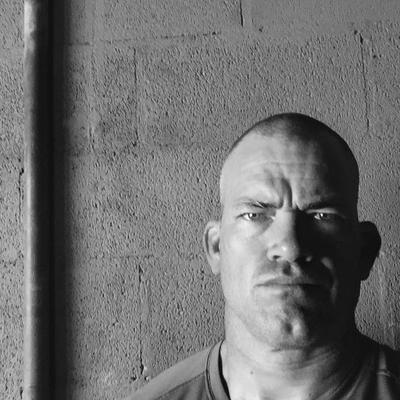
Michael Anthony Monsoor.
April 5, 1981 –
September 29, 2006.
A shining beacon of light in a weary world.
Thank you, brother.
We will never forget.

Nicholas Strom retweeted

JUST IN: Thieves steal 2 trailers emblazoned with Nvidia logos, only to break them open and discover they were carrying 40,000 pounds of sand.

Nicholas Strom retweeted

Bring back insane asylums, workhouses, and vagrancy laws. There's nothing kind or compassionate about letting mentally-ill drug addicts roam the streets like 28 Days Later. And it makes for a terrible city experience for everyone else too.

Nicholas Strom retweeted

Today we announced the Claude-led discovery of a molecular machine that we suspect could represent a new gene editing mechanism. Its precise function, biotechnological utility (if any), or level of significance is not yet clear, but at minimum it is work I would have been proud to do as a PhD student. The work was done mostly, though not entirely, by Claude: our life sciences team suggested a broad area of research, Claude read through the literature and a bunch of genome data and discovered something interesting, then Claude proposed experiments to verify the discovery and our team carried them out.
It’s easy to dismiss this as a one-off or curiosity, but we’ve repeatedly seen a pattern where AI performance in new intellectual domains goes from weak to superhuman in a matter of a few years. In 2023 models struggled to do math at the level of an average high-school student. In 2024 they started to do well on math competitions for the best high-schoolers in the country, in 2025 they started to solve minor open problems, in early 2026 more significant open problems, and in late 2026 they are beginning to solve the top few open problems in all of mathematics. We believe AI for biology is on a similar exponential trend.
The main difference between biology and mathematics, of course, is that math can be done purely theoretically, while biology requires experimentation. Some have used this to draw the conclusion that AI’s utility in biology will be limited. We think this is wrong. As we’ve demonstrated today, humans can collaborate with AI to perform the experiments, validate key results in a few weeks and, if necessary, work with the AI to iterate on what they find. Eventually it may even be possible for Claude itself to safely perform the experiments by autonomously controlling lab equipment, with appropriate safeguards in place, but we aren’t doing that today (our lab is also a BSL1/BSL2 facility that doesn't handle materials dangerous to humans).
More broadly, biomedical advancement has many stages — from fundamental biology discoveries, to translational research, to drug discovery, clinical trials, and finally the actual delivery of medicines and health care to patients. We are also interested in these later stages, but even simply accelerating the first stage of fundamental biological discoveries has the potential to speed up and broaden the entire pipeline. Improving our understanding of biology and sharpening biologists’ tools can drive forward all of the later stages, for example by identifying new drug targets, finding new therapeutic modalities, allowing for more precise measurement, and speeding up the experimental loop which itself further accelerates our understanding of biology. This will not in itself speed up clinical trial times, but if it succeeds it could greatly increase the number of promising candidates that go into the pipeline — an increase in throughput even though latency remains.
In Machines of Loving Grace, I wrote about AI’s potential to “cure most diseases in 5-10 years” — a goal that sounds impossible, but one I believe is just barely possible if AI is applied to every stage of the pipeline. The first step is showing that AI can first help with, and then drive, biological discoveries.
Claude’s discovery is the latest in a line of related prior work that goes back decades, beginning with systems like CRISPR, and continuing with discoveries like the bridge recombinase and VIPR in the past few years. Recently, there has been heightened interest in systems based on reverse transcriptase (RT) enzymes, the enzyme underlying the system Claude identified. And most recently, a Stanford team working independently described a novel RT system with an associated non-coding array that is in some ways similar to the one Claude found, though they are distinct systems that evolved independently from each other. I believe that we’re at the very beginning of finding such systems and developing them into powerful tools for biotechnology.
I’m proud of the resources Anthropic has invested in accelerating the public benefits of AI through the life sciences, and we’re aiming both to grow our life sciences team and to work with other scientists to extend this approach to a broad range of problems. If you have a proposal for a research collaboration or are interested in joining our life sciences team, please reach out.

Claude has discovered a previously unknown enzyme system hidden in the DNA of bacteriophages. Beside the enzyme’s gene sits a long array of repeating DNA—a structure that looks somewhat similar to CRISPR.
We don’t yet understand what this system does, but only a handful of known systems share its features, and all of them are able to cut, copy, and paste DNA. Historically, the discovery of such programmable systems has helped revolutionize medicine. CRISPR, for instance, is now the foundation of genetic medicines. But it will take much more work to learn what this system does, and whether it can be put to similar use.
Read more: anthropic.com/news/claude-di…


Nicholas Strom retweeted

Two of the surprising misconceptions of AI data centers:
1 - They employ next to no people.
2 - They use a incredible amounts of water.
These are 1+ million sq. ft. facilities that host billions of dollars of GPUs that have failure rates of 5-10% annually.
Nearly all of the data centers that have been built in the U.S. in recent years employ 100's.
The vast majority of AI data centers use closed-loop cooling similar to an automotive radiator.
Pipes circulate a special water and glycol liquid through the data halls to absorb heat from the computers. The liquid travels to roof fans and chillers to cool down, then recirculates continuously without being consumed.
AI companies will also say that increasing electrical rates is a misconception, but that's not one I am sold on yet.
It seems obvious to me that there's going to be an infrastructure buildout to support all these data centers. It's highly unlikely that the data centers themselves will pay for 100% of this infrastructure buildout.
I'd like to think I'm trying to look at this stuff in an unbiased eyes wide open fashion.
