
カーネギーメロン大学准教授 @allhands_ai 研究担当 英語版: @gneubig
Pittsburgh, PA
Joined December 2009
- Tweets3.2K
- Following178
- Followers7K
- Likes77





本日のOpenHands+富士通のAI駆動開発イベントはあと数席が残っています: openhands.connpass.com/event…
「ソフトウェア開発エージェント・初歩から上級」という題名の発表をするので、よかったらぜひ聞きに来てください。

スライドリンク:docs.google.com/presentation…
(参考コードへのリンクはたくさん入っているので、発表に参加できなくてもスライドとコードを見ていただければなんとなく内容が伝わるかと思います)

言語モデルには「性格」があって面白い:
- Claude Opus:デザインが得意で、足りない指示をうまく汲み取ってくれるが、細かいところはちょっと雑。
- GPT 5.4:細部重視で、明確な指示が必要。数学はめちゃくちゃ強く、デザインはかなり苦手。
こういうタイプの人もたくさん知っている😅
3月26日、横浜でAI駆動開発に関するイベントを @OpenHandsDev + @Fujitsu_Global で共同開催します。興味のある方はぜひご参加ください!
openhands.connpass.com/event…

主要な言語モデルは学習の一環として中間学習(mid-training)を組み込んでいるが、中間学習に関する公開された研究は意外と少ない。
我々の新論文では、事前学習と教師あり学習の「橋渡し」になるデータが最も効果的であることを示した上で、どの比率とタイミングで導入するのが最も効果的か検証する。

Midtraining is a new part of many training pipelines, but when does it help and can it backfire? 🤔
In our new preprint, we use controlled experiments to pin this down. TL;DR; midtraining helps the most when it “bridges” pretraining and posttraining, and mitigates forgetting after posttraining. Timing is also very important.
🧵

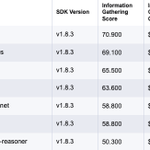
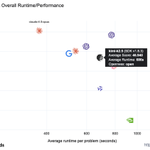
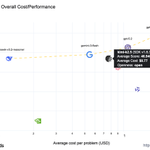
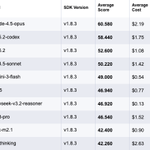
中国のベンチャー企業が最近公開したKimi-K2.5は話題になっていますが、ソフトウェア開発でどれくらい優秀なのか?
OpenHands Index で評価してみました。結論:現時点で最高のオープンモデルであり、Googleで最も性能の高いモデルの Gemini-2.5 Flash に近い性能になっています🧵


さらに詳しく知りたい方はこちら:
OpenHands Index をチェック 👉 index.openhands.dev/home
OpenHands を GUI / CLI / SDK / Cloud で試す 👉 docs.openhands.dev/overview/…

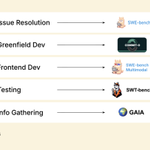
エージェント型のソフトウェア開発で、いま一番強いLLMはどれ?
この問いに答えるために、今日 The OpenHands Index を公開しました。
AIコーディングエージェントを、**精度 / コスト / 実行時間**で、5つのタスク領域にわたって比較する、幅広いベンチマークです。
OpenHands Index(結果・詳細):index.openhands.dev/ブログ:openhands.dev/blog/openhands…
今後も継続アップデートしていくので、コメント&要望歓迎です!

複数の言語に対応でき、ユーザの言語で推論過程を説明できる推論モデルをどうやって構築できるか?
我々の新手法「SP3F」は、比較的少ないサンプル数でも、Qwen-Instructという協力なモデルを上回る結果を達成。


複数のエージェントを1つのタスクに向けて協力させるのが意外と難しい。スタンフォード大学のCooperBench は複数のエージェントの共同作業能力を評価するベンチマーク。近いうちに我々の研究室からもこの方向性の研究を発表する予定👀

Introducing the curse of coordination. Agents perform 50% worse in teams than working alone.
People building human-AI collaboration today don't realize why current LLMs fail to be good teammates. We built CooperBench to study this.
For humans, we recognize that teamwork isn't just the sum of individual capability. Communication and coordination often outweigh raw skill.
But for AI? We're only hill-climbing benchmarks that evaluate solo technical abilities.
CooperBench
A benchmark to evaluate agent cooperation in realistic software teamwork tasks.
The setup is intuitive: two agents, two tasks, two VMs, one chat channel (agents can send over arbitrary text, even the entire patch they wrote). We evaluate whether the merged solution from both agents passes the requirements of both tasks.
The curse of coordination
The most striking result: agents perform 50% worse in teams (black line) than working alone (blue line).
Why is this happening?
Is it because they can't use the communication tool? No. They spent 20% of their time sending messages.
The problem? Those messages were repetitive, vague, ignored questions, or straight-up hallucinated.
But bad communication is only part of the story. We found two deeper failures:
Commitment: Agents don't do what they promised.
Expectations: Agents don't expect others to keep promises either.
Without these, cooperation collapses.
However, there is a silver lining
We also find emergent coordination behaviors, e.g. role division, resource division, and negotiation, which gives us hope that we can use reinforcement learning to improve coordination.
What's next?
It is true that highly-engineered multi-agent orchestration could largely sidestep the coordination problem. However, we care more about the AI's capability: if we truly want AI to be our teammates, we need them to be natively capable of effective communicating and coordinating.
Two agents on software tasks is just the beginning. The real goal: agents that can cooperate with us well enough to actually empower us.
CooperBench is our first step. If you're working on this too, let's talk.

ALT Diagram of CooperBench. CooperBench draws two features from the feature pool for two agents to execute in separate VMs. The agents are also given a chat tool for them to coordinate. Finally, we evaluate whether the merged patch passes both of their feature tests.

ALT A snap shot from https://cooperbench.com. It shows that the middle-difficulty tasks are the ones with largest coordination gap. But the gap generally holds across difficulties.