

We tell compelling stories with numbers about sports 🏏, elections 🗳️, science 🧪, economics 💰 and current affairs 🗺️ us - https://xitter.cf/t.co/zx1JpH8Cmk
Sri Lanka
Joined June 2019
- Tweets7.6K
- Following297
- Followers14.8K
- Likes1.5K






🇱🇰 GOVERNMENT IS BURNING CASH TO KEEP DIESEL PRICES DOWN
⭕ In Sri Lanka, Auto Diesel currently sells at Rs. 392 per litre. The latest formula estimate, based on Platts prices, suggests it should be Rs. 539. The gap: Rs. 147 per litre.
⭕ Despite its earlier political rhetoric against the fuel pricing formula, the current Government rightfully continued it after the election.
⭕ Then the Iran War changed the equation. Global fuel prices surged, but instead of passing increase to consumers in line with the formula, the Government stepped in and held diesel prices down, with the CPC absorbing part of the difference.
⭕ This came at a significant price. Around Rs. 57 billion was reportedly spent on fuel subsidies between April and June.
⭕ Fast forward to October, and the Middle East is unstable again. Cabinet has now approved up to another Rs. 40.65 billion for diesel price stabilization from October to December, including Rs. 15 billion for October.
⭕ While this provides immediate relief, the costs do not disappear. They are absorbed by the Government and fuel suppliers, ultimately placing pressure on public finances.
⭕ Haven't we seen this before? Keeping fuel and electricity prices below cost, accumulating losses in state enterprises and allowing political decisions to override cost-recovery pricing were among the problems that contributed to Sri Lanka's 2022 economic crisis.
⭕ Haven't we seen this before? Keeping fuel and electricity prices below cost, allowing losses to pile up in state enterprises and delaying necessary price adjustments for political reasons were among the top policy failures that contributed to Sri Lanka's 2022 economic crisis. We have already seen where this road can lead..
⭕The political cost of raising prices may be high, but the economic cost of refusing to do so could be far greater.
#SriLanka

🏏 REMEMBER HEADINGLEY 2006?
⭕ Jayasuriya smashed 152. Tharanga made 109. Sri Lanka 🇱🇰 raced to 324/2 in just 37.3 overs, sealing that unforgettable 5-0 ODI whitewash against England 🏴.
For 20 years, no Sri Lankan side chased down more.!
Until today.
430/8. Against England, once again. The 2nd-highest successful run chase in ODI history!
A massive 106 runs more than previous best. What a chase! 🇱🇰❤️
#SriLanka #ENGvsSL #Rawalpindi
🇱🇰 CIABOC'S PUBLIC ACCESS PORTAL FOR ASSET DECLARATIONS NOW UNDER MAINTENANCE
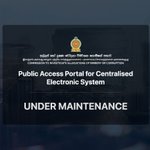
⭕ The public asset declaration portal (public.ciaboc.gov.lk/) launched by the Commission to Investigate Allegations of Bribery or Corruption (CIABOC) is currently unavailable, with the website displaying an "Under Maintenance" notice.
⭕ This was not the case a few days ago when we published our write-up raising concerns that the public could access detailed personal financial information, including that of non-politically exposed persons and lower-ranking public officials.
⭕ Perhaps the Commission is now reviewing the system after realising that too much information was being disclosed. If that is the case, it would be a welcome development.
⭕ Hopefully, the Commission will find the right balance between transparency, accountability and individual privacy. The public's right to scrutinise wealth should not come at the expense of unnecessarily exposing people's private lives.


🇱🇰 CIABOC Opens Pandora's Box: Your Wealth Is Now Everyone's Business!
⭕ CIABOC has opened public access to asset declarations covering nearly 160,000 individuals, including public servants, members of the armed forces, newspaper editors and other legally required declarants, despite the Government's earlier assurance that privacy safeguards would be introduced for non-political declarants.
⭕ If you are a public servant, a member of the armed forces, a newspaper editor, or anyone else legally required to submit an asset declaration, your personal financial information will now be accessible to anyone through CIABOC's public portal, with limited redactions.
⭕ Don’t be surprised if your neighbour suddenly knows how much you earn, what you own, how much gold and jewellery your family possesses, how much money you have in the bank, or even whom you have lent money to. Much of this information is now accessible to anyone who registers on CIABOC’s public portal.
⭕ In August, Minister Bimal Rathnayake informed Parliament that the Government intended to retain public access to politicians' asset declarations while introducing privacy protections for other declarants, citing concerns over harassment and misuse of published information. However, despite the Anti-Corruption (Amendment) Bill being passed on 8 October, the promised distinction has not been meaningfully reflected in public access arrangements.
⭕ In the worst-case scenario, CIABOC may have inadvertently created a convenient database for criminals. Information about gold, jewellery, property and bank balances could help burglars identify potential targets, while exposing public servants and their families to risks of extortion, intimidation and even kidnapping.
⭕ Unlike senior political figures, ordinary public servants generally have no personal security arrangements. Nor can the Government realistically provide such protection to every public servant if required. They are ordinary citizens, often earning relatively modest government salaries, with families and personal lives to protect.
⭕ Not every asset represents unexplained wealth. Inherited property, family contributions, legitimate gifts, donations and decades of savings can all form part of a person's declaration. Publishing these details without context invites unnecessary speculation, harassment and potentially malicious accusations. Transparency requirements should be proportionate to the level of public responsibility and authority exercised.
⭕ Routine public disclosure should primarily focus on politicians, departmental heads, senior management and officials exercising substantial financial, procurement or regulatory authority. Other officers' declarations should remain fully accessible to CIABOC for verification and lawful investigation, without necessarily being published for unrestricted public scrutiny.
⭕ The Government's approach to amending the Anti-Corruption Act of 2023 has been disappointing, with several proposed provisions facing constitutional objections in the Supreme Court. More importantly, the failure to establish a sensible framework under Section 88(1), clearly defining which asset declaration details should be made public and to what extent, has resulted in an avoidable situation that raises serious concerns about privacy and personal security.
⭕ A legal obligation to declare assets to an anti-corruption authority should not automatically mean an identical obligation to publish those assets on the internet for everyone. The Government and CIABOC should introduce stronger, proportionate redactions, making use of the privacy protections considered constitutionally permissible in the Supreme Court's determination.
Transparency is essential to fighting corruption. However, the current disclosure framework, without adequate privacy and security safeguards, risks doing more harm than good.
Take a look at what's out there: public.ciaboc.gov.lk/

🇱🇰 EVERYONE WANTS THE SINGAPORE MODEL. UNTIL...
⭕ Everyone wants Sri Lanka 🇱🇰 to become Singapore 🇸🇬. But when the Government starts borrowing from Singapore's lawbook, everyone goes bonkers!
⭕ Clause 4(2) of the newly gazetted Prevention of Organised Crimes Bill closely mirrors Section 5(2) of Singapore's Organised Crime Act 2015, even down to the wording on identifying gang members through dress, hand signs, language and tattoos.
#SriLanka

🐘🇱🇰 FAREWELL KAWANTHISSA: THE GENTLE GIANT OF KALAWEWA HAS FALLEN!
A majestic old warrior, who survived decades in the wild, has finally lost his last battle.
⭕ Kawanthissa, one of Sri Lanka's tallest and most magnificent wild tuskers, has passed away following weeks of treatment for reported gunshot injuries and deteriorating health.
⭕ An ageing giant, estimated to be around 50 to 60 years old, Kawanthissa was among the iconic tuskers of the Kalawewa region, roaming the Galgamuwa, Meegalewa and Siyambalangamuwa landscapes.
⭕ An unofficial wildlife census conducted in August 2018 recorded 48 tuskers in Kalawewa, including 22 large and 26 smaller tuskers, according to Sri Lanka's National Audit Office.
⭕ Since then, the region has lost some of its most celebrated giants, including Revatha, Barana, Deegadanthu I and Bathiya. With the passing of Kawanthissa, yet another majestic giant has been lost.
⭕ Having survived decades of challenges in the wild, Kawanthissa's final days were marked by pain and suffering. Despite weeks of dedicated efforts by wildlife veterinarians to save him, the ageing giant could not recover.
⭕ His passing is yet another painful reminder of the threats facing Sri Lanka's remaining wild tuskers, particularly from human-elephant conflict.
The giants of Kalawewa are disappearing, one by one. Another irreplaceable piece of Sri Lanka's living natural heritage is gone.
Rest in peace, Kawanthissa. 🖤

TESLA ROADSTER JUST TURNED SCIENCE FICTION INTO REALITY! 🚀
Drives upside down. Flies through the air. Accelerates like a rocket.
⭕ Tesla has finally unveiled its next-generation Roadster in Texas, demonstrating a car that drives upside down on a ramp, launches into the air, flips itself upright and lands using SpaceX-developed thrusters.
⭕ Tesla showcased a recorded acceleration run of just 0.81 seconds. It also claims a top speed of over 230 mph (370 km/h), with a proposed driving range of around 300 miles (483 km).
⭕ Powerful suction fans underneath the vehicle actively pull it towards the pavement, creating enormous downforce. Tesla claims the system can deliver up to 2 g of cornering force, allowing the Roadster to achieve extraordinary grip.
⭕ Beyond the spectacular demonstration, however, serious doubts remain over the Roadster's roadworthiness and safety. Whether a vehicle with such extreme capabilities could ever meet road safety standards, let alone obtain regulatory approval for use on public roads, is highly questionable. Whether it will actually reach customers remains to be seen.
#Tesla #Roadster
🇱🇰 CIABOC Opens Pandora's Box: Your Wealth Is Now Everyone's Business!
⭕ CIABOC has opened public access to asset declarations covering nearly 160,000 individuals, including public servants, members of the armed forces, newspaper editors and other legally required declarants, despite the Government's earlier assurance that privacy safeguards would be introduced for non-political declarants.
⭕ If you are a public servant, a member of the armed forces, a newspaper editor, or anyone else legally required to submit an asset declaration, your personal financial information will now be accessible to anyone through CIABOC's public portal, with limited redactions.
⭕ Don’t be surprised if your neighbour suddenly knows how much you earn, what you own, how much gold and jewellery your family possesses, how much money you have in the bank, or even whom you have lent money to. Much of this information is now accessible to anyone who registers on CIABOC’s public portal.
⭕ In August, Minister Bimal Rathnayake informed Parliament that the Government intended to retain public access to politicians' asset declarations while introducing privacy protections for other declarants, citing concerns over harassment and misuse of published information. However, despite the Anti-Corruption (Amendment) Bill being passed on 8 October, the promised distinction has not been meaningfully reflected in public access arrangements.
⭕ In the worst-case scenario, CIABOC may have inadvertently created a convenient database for criminals. Information about gold, jewellery, property and bank balances could help burglars identify potential targets, while exposing public servants and their families to risks of extortion, intimidation and even kidnapping.
⭕ Unlike senior political figures, ordinary public servants generally have no personal security arrangements. Nor can the Government realistically provide such protection to every public servant if required. They are ordinary citizens, often earning relatively modest government salaries, with families and personal lives to protect.
⭕ Not every asset represents unexplained wealth. Inherited property, family contributions, legitimate gifts, donations and decades of savings can all form part of a person's declaration. Publishing these details without context invites unnecessary speculation, harassment and potentially malicious accusations. Transparency requirements should be proportionate to the level of public responsibility and authority exercised.
⭕ Routine public disclosure should primarily focus on politicians, departmental heads, senior management and officials exercising substantial financial, procurement or regulatory authority. Other officers' declarations should remain fully accessible to CIABOC for verification and lawful investigation, without necessarily being published for unrestricted public scrutiny.
⭕ The Government's approach to amending the Anti-Corruption Act of 2023 has been disappointing, with several proposed provisions facing constitutional objections in the Supreme Court. More importantly, the failure to establish a sensible framework under Section 88(1), clearly defining which asset declaration details should be made public and to what extent, has resulted in an avoidable situation that raises serious concerns about privacy and personal security.
⭕ A legal obligation to declare assets to an anti-corruption authority should not automatically mean an identical obligation to publish those assets on the internet for everyone. The Government and CIABOC should introduce stronger, proportionate redactions, making use of the privacy protections considered constitutionally permissible in the Supreme Court's determination.
Transparency is essential to fighting corruption. However, the current disclosure framework, without adequate privacy and security safeguards, risks doing more harm than good.
Take a look at what's out there: public.ciaboc.gov.lk/
🇱🇰🏎️ Yevan David Takes a Step Forward in Formula 3, Joins Van Amersfoort Racing for 2027
⭕ Sri Lankan racing driver Yevan David, 19, will join Dutch outfit Van Amersfoort Racing (VAR) for his second FIA Formula 3 season, moving from AIX Racing.
⭕ A promising upgrade: VAR finished 5th in the 2026 F3 Team Championship with 168 points, establishing itself as a competitive midfield team. The move offers David a stronger platform to fight for consistent points and podiums.
⭕ A team with F1 pedigree: Founded in 1975, VAR helped develop future Formula 1 stars Max Verstappen (2014) and Charles Leclerc (2015) during their early single-seater careers.
⭕ David made history in 2026 as Sri Lanka's first FIA Formula 3 driver, finishing his rookie season in 18th place with 35 points, including a second-place finish in the Silverstone Sprint Race.
⭕ With a year's F3 experience behind him and a more established team supporting him, 2027 could be an important season in David's journey towards Formula 1.
#YevanDavid #SriLanka #F3

🇱🇰🏖️ Sri Lanka Tops Asia’s Best Beaches in 2026
🏆 Asia’s Top 10 Beaches in 2026
1. 🇱🇰 Arugam Bay Beach, Sri Lanka ❤️
2. 🇹🇭 Railay Beach, Thailand
3. 🇲🇾 Coral Beach, Malaysia
4. 🇵🇭 Boracay, Philippines
5. 🇮🇩 Nusa Dua Beach, Indonesia
6. 🇲🇾 Perhentian Islands, Malaysia
7. 🇮🇩 Pantai Padang Padang, Indonesia
8. 🇲🇾 Langkawi Island, Malaysia
9. 🇱🇰 Bentota Beach, Sri Lanka
10. 🇹🇭 Ao Nang Beach, Thailand
Source: Asia’s top 20 in the 2026 Condé Nast Traveller – Readers’ Choice Awards 2026
#SriLanka #ArugamBay
Sri Lanka 🇱🇰 spent less than 30% of its 2026 capital allocation through September - EconomyNext
⭕ Sri Lanka 🇱🇰 allocated Rs.1,380 billion for capital spending in 2026 - to fund infrastructure and other public investment.
⭕ First nine months: around Rs.385 billion spent (~28%).
⭕ Final three months: around Rs.995 billion (~72%) left to spend.
⭕ The government says it still expects to use the full allocation by December.
⭕ Last year, the government said the same thing. Even with Cyclone Ditwah hitting the country and the government spending heavily on relief efforts, around Rs.313.1 billion- 23.8% of the 2025 capital allocation went unspent.
⭕ Year after year, bureaucratic delays, protracted procurement disputes, politicized project selection and a lack of technical expertise within line ministries leave a significant portion of capital expenditure unspent on the Treasury’s books.
⭕ Capital spending supports economic activity now and creates the infrastructure needed for a more productive economy in the future. Repeatedly falling short means both benefits are delayed, raising the risk that today’s recovery will give way to weaker growth in the years ahead.
#SriLanka

🇱🇰 From Classrooms to the Army: For the First Time in History, Sri Lanka Army Honours Its Top Contributing Schools
⭕ The Sri Lanka Army has recognized 12 schools for producing the highest number of currently serving Army officers and soldiers, during its 77th anniversary celebrations held at Panagoda.
⭕ Schools were recognised under four categories, with the top three schools in each receiving awards.
🎖️ Male Officers
1. Ananda College, Colombo
2. Dharmaraja College, Kandy
3. St. Thomas' College, Matale
🎖️ Female Officers
1. Devi Balika Vidyalaya, Colombo
2. Visakha Vidyalaya, Colombo
3. Sirimavo Bandaranaike Vidyalaya, Colombo
🎖️ Male Soldiers
1. Kebithigollewa Central College, Anuradhapura
2. Nivaththaka Chethiya National School, Anuradhapura
3. Badulla Central College, Badulla
🎖️ Female Soldiers
1. Kegalu Balika Vidyalaya, Kegalle
2. Anuradhapura Central College, Anuradhapura
3. Ananda Balika Vidyalaya, Colombo
⭕ The rankings were determined by the number of former students currently serving in the Army, rather than historical recruitment totals.
⭕ The awards were presented by Army Commander Lieutenant General Nilantha Premaratne.
⭕ The exact number of serving personnel contributed by each school has not been disclosed in the published reports.
#SriLanka

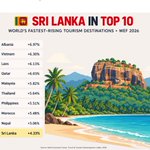
🌍 WORLD'S FASTEST-RISING TOURISM DESTINATIONS: SRI LANKA IN TOP 10 🇱🇰
1. 🇦🇱 Albania +6.97%
2. 🇻🇳 Vietnam +6.30%
3. 🇱🇦 Laos +6.13%
4. 🇶🇦 Qatar +6.03%
5. 🇲🇾 Malaysia +5.82%
6. 🇹🇭 Thailand +5.64%
7. 🇵🇭 Philippines +5.51%
8. 🇲🇦 Morocco +5.48%
9. 🇳🇵 Nepal +5.06%
10. 🇱🇰 Sri Lanka +4.33%
⭕ The World Economic Forum's Travel & Tourism Development Index 2026 shows which countries improved their tourism development conditions the most between 2024 and 2026.
⭕ Asia dominates the list, accounting for seven of the world's 10 fastest-improving tourism economies.
⭕ Sri Lanka comes in at No. 10 globally, with its overall tourism development score improving 4.33%.
⭕ This is not a ranking of tourist arrivals. The WEF index looks at the wider conditions needed for tourism to grow, including infrastructure, air connectivity, tourism services, natural and cultural resources, digital readiness and sustainability. Source: World Economic Forum, Travel & Tourism Development Index 2026
#SriLanka #Tourism

🇱🇰 TODAY IS THE LAST DAY TO PAY YOUR FINAL INCOME TAX
⭕ September 30 is the deadline to make the final income tax payment for the 2025/2026 Year of Assessment.
⭕ This applies to individuals, companies and partnerships with income tax payable. Any balance remaining after the tax already paid during the year should be settled today.
⭕ If you are an employee, having APIT deducted from your salary does not necessarily mean your full tax obligation is settled.
⭕ Many employees also earn interest from fixed deposits or savings, which counts as investment income. Banks generally deduct 10% Advance Income Tax (AIT) on interest, but depending on your total taxable income, that deduction may not fully cover your final income tax liability.
⭕ Don’t confuse this with the income tax return deadline. The return for 2025/2026 can be filed until November 30, 2026.
⭕ The Inland Revenue Department warns that late payment can result in interest and penalties.
📅 Final tax payment: September 30
📅 Income tax return: November 30
⭕ Not sure how much you need to pay? Use the our Individual Income Tax Calculator to estimate your tax obligation based on your employment, interest and other taxable income.
Calculate here: numbers.lk/tools/iitcal

🇱🇰 Sri Lanka Ahead of Regional Peers in Claude AI Use
⭕ Sri Lanka ranks 83rd out of 121 countries in Anthropic’s latest Economic Index, with a Claude Usage Index of 0.56×. That means usage is about 56% of what would be expected based on Sri Lanka’s working-age population.
⭕ Within South Asia, 🇱🇰 Sri Lanka at 0.56× is ahead of 🇳🇵 Nepal at 0.41×, 🇵🇰 Pakistan at 0.31×, 🇮🇳 India at 0.30× and 🇧🇩 Bangladesh at 0.11×.
India has much larger total usage, but Sri Lanka is substantially ahead when population size is taken into account.
⭕ The strongest areas of use in Sri Lanka are Content Creation & Copywriting at 24.5%, Education & Learning at 22.9% and Software Development at 18.4%. Homework is the single most common task, accounting for 13.1% of usage.
⭕ Sri Lanka is performing comparatively well within the region, particularly in learning and technical use. However, the 0.56× index is still below the global benchmark of 1.0×, showing there is still considerable room for wider adoption.
Source: Anthropic Economic Index. The data measures Claude usage only, not overall AI adoption.

🇱🇰 22A PASSED: WHAT CHANGED AND WHAT DID THE COURT SAY?
⭕ Parliament passed the 22nd Amendment to the Constitution on 25 September, with 158 votes for and 63 against, securing the required two-thirds majority.
⭕ It raises the retirement age of Supreme Court Judges from 65 to 67 and Court of Appeal Judges from 63 to 65. It also increases the maximum number of Court of Appeal Judges from 19 to 24.
⭕ The Supreme Court determined that no provision of the Bill required approval by the people at a referendum under Article 83. The amendment could therefore proceed with the required special majority in Parliament, subject to the changes identified by the Court.
⭕ The Bill faced numerous Special Determination petitions, including challenges concerning judicial independence, conflicts of interest and whether the amendment should require a referendum.
SO, WHAT DID THE SUPREME COURT SAY ABOUT THE MAIN OBJECTIONS?
⭕ The Court first made clear that it is not the Court's job to decide whether increasing the retirement age is good or bad policy. Its role was to determine whether the proposed amendment was constitutional and whether any provision required a referendum.
1. Why wasn't the case heard by all Supreme Court Judges?
⭕ The Chief Justice had already considered 22A a matter of general and public importance and appointed a five-judge bench under Article 132(3).
⭕ The Court explained that Article 132(3) requires five or more judges, not necessarily every Supreme Court Judge. At the same time, three other Supreme Court Judges were hearing challenges to the Anti-Corruption (Amendment) Bill, which was also subject to a strict constitutional deadline. Judges could also be unavailable because of illness, personal circumstances or previously approved overseas leave.
⭕ The Court said assigning every judge to one matter could also disrupt other cases. The Chief Justice, who has the overall picture of the Court's workload and availability of judges, therefore has the constitutional discretion to determine the size of such a bench.
2. Why couldn't the five judges expand the bench to all 13?
⭕ The Court said the power to determine the bench under Article 132(3) belongs to the Chief Justice. The five judges could not effectively review or replace that decision.
3. Could judges hear the case when they themselves would benefit from the higher retirement age?
⭕ Yes. The increase applied generally to sitting judges, not selected individuals. The Court also relied on the rule of necessity: if all judges were disqualified, there would be no Supreme Court left to review the Bill.
4. Was the extension a "legislative bribe" to serving judges?
⭕ The Court rejected that argument. The additional two years apply generally and automatically, with no power given to the Government to decide which individual judges receive the extension.
5. Didn't an earlier Supreme Court determination say changing the retirement age of serving judges could require a referendum?
This was one of the most important arguments.
⭕ In its 2022 Inland Revenue Amendment Bill determination, the Supreme Court said:
"Any Constitutional amendment to the retirement age or the period of office impacting on incumbent judges, whether directly or indirectly..."
⭕ It went on to hold that such an interference with judicial independence would violate Article 3 and require a referendum.
⭕ However, the 2026 Court read those words in the context of what came immediately before them.
The 2022 determination had been discussing examples where tenure could be reduced, including lowering the retirement age generally or imposing a new maximum period of service on existing judges.
⭕ The 2026 Court therefore treated that earlier ruling as addressing a reduction of existing judicial tenure, rather than an increase. It considered an extension of tenure differently because it does not remove an existing period of office.
⭕ So the distinction made by the Court was:
Reducing existing tenure: may threaten security of tenure and judicial independence.
Increasing retirement age generally: was not treated as the same constitutional interference.
⭕ Petitioners had argued for a broader reading of the 2022 words, particularly "any Constitutional amendment" and "whether directly or indirectly", but the 2026 Court did not accept that interpretation.
6. Could the Government selectively keep favourable judges in office?
⭕ The Court said 22A gives the Government no such power. The new retirement age applies automatically to all judges in the relevant category, rather than allowing the Executive to choose who receives an extension.
7. Was this "court packing"?
⭕ The Court rejected the argument. The judges receiving the extension were appointed under previous governments, and keeping them longer actually delays vacancies that the present Government could otherwise fill.
8. Does extending their service bypass the Constitutional Council?
⭕ No. The existing judges had already gone through the constitutionally required appointment process. Increasing their retirement age does not amount to a new appointment.
9. What about public confidence in judicial independence?
⭕ The Court said constitutional invalidity could not be established simply through public perception, speculation or conjecture. It had to consider the actual legal effect of the amendment.
THE COURT'S CENTRAL REASONING
⭕ The Court's main concern was whether 22A would make judges dependent on the Government for remaining in office. It found that it would not, because the retirement-age extension applies automatically to all relevant judges and the Government cannot choose who receives it.
⭕ The Court also treated an increase in retirement age differently from a reduction of an existing judge's tenure. The former gives judges additional time in office, while the latter can interfere with the security of tenure already guaranteed to them.
⭕ The Court also noted the historical evolution of judicial retirement ages. The Supreme Court retirement age had moved from 62 to 63 and then to 65 in 1978, but had remained unchanged since then, even as retirement ages elsewhere in the public sector changed over time. (55 from 1970, increased to 60 in 1996)
⭕ On those basis, the Court concluded that the retirement-age extension did not amount to the kind of interference with judicial independence that would require approval at a referendum under Article 83.
#SriLanka #22A

Children and AI: What Seemed Obvious Is Now Showing Up in the Data
⭕️ A 30-month study of 26,811 Chinese 🇨🇳 students in Grades 7 to 12 found that adopting generative AI increased homework scores by 18% and reduced homework completion time by 30%.
⭕️ But within 6 months of AI adoption, students’ monthly closed-book exam scores fell by around 20% 🔻relative to their pre-AI performance.
⭕️ If society fails to regulate how children access and use AI, we risk raising a generation that becomes increasingly dependent on machines to think for them.
⭕️ For the first time in recorded human history, technological progress could leave the next generation less capable of independent thinking than the one before it.
#AI

🇱🇰 Supreme Court Rules Judges Are Liable to Income Tax, Upholds APIT Deductions
⭕ Sri Lanka’s Supreme Court has ruled that judicial officers are liable to pay income tax and that Advance Personal Income Tax, or APIT, can lawfully be deducted from their remuneration.
⭕The judgment was delivered on Sept. 15, 2026, dismissing three appeals filed by associations representing judicial officers.
⭕ The cases were brought by representatives of the High Court Judges’ Association, Judicial Service Association and Association of Judicial Officers of Labour Tribunals. They challenged the application of the Inland Revenue Act No. 24 of 2017, as amended by Act No. 45 of 2022, arguing that judges are not employees of the Government and that treating them as employees for tax purposes could undermine judicial independence.
⭕ The Supreme Court rejected this argument. Court held that describing judicial officers as employees under the Inland Revenue Act does not create a conventional employer employee relationship with the Ministry of Justice. It only identifies the institution responsible for paying their remuneration and deducting APIT for tax purposes.
⭕ The Court also held that applying a generally applicable and non-discriminatory income tax to judges does not amount to an unconstitutional reduction of judicial remuneration or an interference with judicial independence. High Court Judges, District Judges and Magistrates are therefore liable to income tax on their remuneration, and the authorities are entitled to deduct APIT from it.
⭕ The dispute originally reached the Court of Appeal in 2023, where the judicial associations sought to stop APIT deductions and recover amounts already deducted. The Court of Appeal dismissed the applications on Nov. 2, 2023, leading to the appeals before the Supreme Court.
⭕ However, the Supreme Court separately acknowledged concerns over the financial impact of taxation on judicial officers. Justice De Silva said the solution is not to exempt judges from a generally applicable tax, but to ensure that judicial officers receive adequate remuneration reflecting their responsibilities and their distinct position within the national wages structure.
#SriLanka #APIT

4 Javelins of Men’s Javelin World Lead Rumesh Tharanga Damaged on Turkish Airlines Flight
⭕ Sri Lanka’s 🇱🇰 Rumesh Tharanga, the current men’s javelin world leader, reportedly had four javelins damaged while returning from Hungary 🇭🇺 to Sri Lanka 🇱🇰 on Turkish Airlines.
⭕ The damage was discovered after the flight, and a complaint was lodged with Turkish Airlines over the handling of the equipment.
⭕ Tharanga said three of the damaged javelins had each been used for more than 90 throws.
⭕ “It might have been a mistake by the airline, but that’s how it is. It’s not a big issue. I’ll move on,” Tharanga said.
⭕ Competition javelins are precision-built equipment. Their shafts, metal heads, dimensions and centre of gravity must meet set specifications.
⭕ Damage to the shaft or tip can affect a javelin’s balance, shape and flight characteristics, which can disrupt training and competition preparation.
⭕ Tharanga was returning to Sri Lanka 🇱🇰 after competing at the World Athletics Ultimate Championship in Hungary 🇭🇺, where he won the men’s javelin with a 91.09m throw.
#SriLanka

🇱🇰 Sri Lanka Connects First 10 MW BESS to National Grid
⭕ 🇱🇰 Sri Lanka connected its first 10 MW Battery Energy Storage System, or BESS, to the national electricity grid through the Galle Grid Substation at midnight on Sept. 11.
⭕ BESS means Battery Energy Storage System. It stores electricity in batteries when power is available and releases, or discharges, that electricity back to the grid when needed.
⭕ The systems can store excess electricity generated from solar power during the daytime and release it to the national grid at night when demand rises.
⭕ BESS can reduce the need for costly diesel generation. Deputy Power Minister Arkam Ilyas said diesel power costs about Rs. 115 per unit, compared with an estimated Rs. 35 per unit through battery storage.
⭕ Each BESS project is designed for 10 MW of power output and 40 MWh of energy storage, allowing stored electricity to support evening peak demand.
⭕ Another 150 MW under the same project is expected to be connected to the national grid within the next two months, according to former Energy Minister and NPP MP Kumara Jayakody.
⭕ A further 250 MW of battery storage is planned for early next year, followed by another 150 MW during the first half of the year.
⭕ If the announced additions proceed as stated, total battery storage capacity would reach 560 MW.
#SriLanka #RenewableEnergy

Rumesh Pathirage 🇱🇰 is the World Ultimate Javelin Champion!!🏆
⭕ Rumesh Pathirage concludes his dream season with his first global title in the javelin, winning the Ultimate trophy with a mega throw of 91.09m 🔥
#WorldAthleticsUltimate #SriLanka

