

Σκωπτικό account.
Joined February 2022
- Tweets15.5K
- Following1.3K
- Followers1.1K
- Likes121K




Pinned Tweet
Everything a lie... Everything you hear, everything you see... So much to spew out... They just keep coming, one after another... You're in a box... A moving box... They want you dead, or in their lie. Only one thing a man can do - find something that's his, and make ->
observer retweeted

The TTC (tight Turkish clitoris) is enslaving western European boys to shill for turkey caus they can't compete at their local dating market


No problem. We use Linux and almost no online services at all.

We are deeply sorry for the disruption this incident has caused our customers and partners. We know the trust they place in our services and take that responsibility extremely seriously. We are seeing broad recovery and stability across our services.
This was a technical issue not related to cyber or AI / agents. The incident was introduced by an issue during an earlier network capacity upgrade that surfaced following a recent network change. We have addressed the underlying issue and continue to restore service to remaining customers and regions.
Given the scale of demand, we restored services gradually, validating stability at each stage. While this took longer, it helped ensure a stable restoration.
We will provide a full post-incident report once our review is complete.
1
7
125
observer retweeted

This is absolutely brilliant, by legendary Australian investor John Hempton, who explains the core financial paradox at the heart of the AI story (and which also, to some extent, may explain the Jensen Huang story).
The numbers say that about $7 trillion in AI compute is set to be built by 2030. For the industry to earn that back, given those chips have a roughly 5-year lifespan and cost a lot to run, they need to generate about $2 trillion of AI revenue a year.
Hempton says the only way you can get to these sorts of numbers is by selling AI as a productivity tool to businesses, meaning replacing workers.
And since, for reasons he explains in the video, no company fires people to save just 10% in costs, the savings have to be about double what businesses pay for the AI: roughly $4 trillion in savings on wages a year.
What does firing $4 trillion worth of workers mean concretely? Hempton calculated this equates to roughly 10% of the OECD’s total wage bill of about $40 trillion: one in every ten dollars paid to workers across the OECD’s 38 member countries.
Which, naturally, when you suddenly take that much income out of people’s pockets, would trigger a massive global recession.
And here's the paradox: in a massive global recession, there's no way businesses will pay $2 trillion a year for AI, so the return disappears anyway.
In other words, AI's only possible path to success given the numbers requires destroying the very economy that is supposed to pay for it.
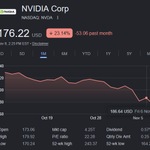
HOWEVER - and here's where the Nvidia/Jensen Huang story might come into play (and, to be clear, this is now me speaking and not Hempton given this interview is prior to the whole Nvidia saga) - this all rests on a core assumption: that compute stays super expensive. Which in practice means Nvidia keeping its pricing power, with a 75% gross margin on its chips.
Break Nvidia's pricing power, and the $7 trillion bill, the $2 trillion in revenue and the 10% of jobs all shrink with it.
This would also put the whole China story in a different light. Maybe it's not so much a "we don't want the Chinese to be competitive with similar chips to us" story as it is a "we don't want Chinese demand to drive up chip prices" one. Or probably both.
And, as such, you could actually think about the US export controls not as a national security measure but as a good old subsidy for US AI players (together with a handicap for their Chinese competitors), a way to limit the price of chips.
This holds even with China itself blocking Nvidia imports, since Chinese firms simply rent the chips abroad instead, in places like Southeast Asia, which is precisely what this whole Alice Huang/Megaspeed story is about.
The main obstacle for all this was, of course... Jensen. Obviously, the guy wanted the exact opposite: as many buyers as possible, Chinese players included, to keep chip prices and Nvidia’s margins sky-high. He was also the one man with the clout to make that happen.
All hard to prove, of course, but I can imagine that quite a few corks popped this week in Anthropic's offices: nothing like the news that the man keeping your biggest cost sky-high is out when you're a week away from a $1.2 trillion IPO.


