

Joined February 2024
- Tweets20.4K
- Following1.5K
- Followers18.4K
- Likes12.5K






For centuries, painters showed Painting itself as a woman. Male artists could only paint her.
Artemisia Gentileschi could be her.
Self-Portrait as the Allegory of Painting, c. 1638

1
2
112
The tallest of these columns is about four light-years high. Light itself would need four years to climb it.
Inside them, new stars are being born.
Hubble, 1995: the Pillars of Creation.

1
1
121
They called Joaquín Sorolla the Painter of Light.
Valencia, summer 1909: his wife Clotilde and daughter María walk the shore as the wind lifts their veils.
Everything moves dress, sea, light. Only María's gaze stays still.

1
1
93
Antwerp, 1612. Clara Peeters paints a table of treasures. Gold goblets, coins, seashells, a Chinese porcelain bowl, a vase of flowers.

2
90
The texture of history meets the tranquility of the mountains.
Nothing quite like feeling the traces of the past on a cloudy day.

5
290
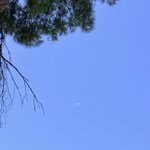
A small miracle hidden in the blue deepness of the sky ,
The captivating beauty of the crescent, accompanied by the whispers of the pines.


Where the vast blue meets ancient stone, nature invites us to pause, reflect, and find peace in simple permanence.

1
6
244
With a capacity of nearly 5,000, it remains one of the most majestic open-air venues from antiquity, still staging world-class concerts and performances today. Imagine experiencing a live show surrounded by two millennia of history!

4
271
While Ancient Egypt is known for grand monuments, its most captivating art lives in the intimate moments of royal life.
This papyrus scene depicts Tutankhamun and Queen Ankhesenamun. Originally carved into the backrest of the famous Golden Throne, it showcases the expressive and naturalistic style of the Amarna Period.

1
2
265
The Greek on this papyrus is clear: ΤΕΛΕΤΗ ΑΦΗΣ ΟΛΥΜΠΙΑΚΟΥ ΦΩΤΟΣ, “Ceremony of the Lighting of the Olympic Flame.” A youth touches his torch to the altar fire, a priestess raises a cup behind him. It looks ancient.
It isn’t.
Papyrus is an Egyptian medium; the Greeks painted their vases on fired clay. This is a modern workshop piece applying Greek iconography to Egyptian paper.
The ceremony is newer still. The ancient Olympics had sacred fires and torch races, but no flame carried city to city from Olympia. That idea was invented for the 1936 Berlin Games. The parabolic mirror, the white-robed priestesses, three thousand runners. The point was to present Nazi Germany as heir to the classical Greek inheritance.
A ninety-year-old ritual now feels old enough that nobody questions it. A good example of how tradition gets manufactured.

229
The light drained out of the evening and the whole sky turned copper. The sun had thinned to a crescent behind the haze, and everything below it, the trees, the rooftops, had already gone to silhouette. That is the quiet beauty of a partial eclipse: nothing dramatic, just the light slowly leaving, and you standing there looking up for longer than you meant to.

2
9
258
Apollo and Daphne, painted on papyrus in the Attic red-figure manner of the early fifth century BC.
The inscriptions name both figures: ΑΠΟΛΛΩΝ at right, ΔΑΦΝΗ divided around the woman. Apollo stands on an Ionic base, crowned with laurel and holding the lyre. Daphne holds a bird, framed by two young laurel shoots.
The composition places the transformation before it happens. The tree she is to become is already rooted at her feet.

3
250
The best thing about a tent is opening your eyes to the sea instead of a wall. The coffee water boils while pine needles drop to the ground, dry grass gone yellow between the rocks. Nothing to do, nowhere to hurry. Sometimes a holiday is this simple.

1
9
280
Puglia. The name comes from the Greek Kallipolis, beautiful city. Beneath these narrow streets lie underground olive presses carved into the rock. Workers lived down there for months at a time, turning stone wheels to draw the oil. Much of the lamp oil that lit Europe once passed below these very stones.

5
166