
Official account | Best E-Ink Frame solution to display JPEGS or NFT | EVM compatible and Solana wallet | https://teapawt.org/t.co/DoPSxeTKzL
New York City
Joined October 2023
- Tweets293
- Following231
- Followers107
- Likes530




Opus Frame retweeted

PIXELBAZAAR IS OFFICIALLY IN OPEN BETA!
Our vision of P2P through an asset swapper dedicated to users.
Your assets. Your rules. Your trading.
✨Human connection first
🔒 No KYC
🤝 NFT ↔️ NFT | NFT ↔️ Crypto
🌐 Solana tokens and NFTs support




Opus Frame retweeted
Art marketplaces will tell you "promoting talented artists" and then their actions tell you to look between H and L on your keyboard
Opus Frame retweeted
Opus Frame simplifies blockchain for artists and consumers with:
1. Elegant Digital Frames & Intuitive App: Display and manage art effortlessly.
2. Seamless Blockchain Integration: Advanced tech hidden behind easy-to-use interfaces.
3. Proof of Authenticity: Ensures originality and ownership, securely powered by blockchain.
4. Community Education: Engaging users without needing deep technical knowledge.
Experience the future of digital art with Opus Frame, where technology meets creativity! 🎨🖼️ #DigitalArt #Blockchain
Opus Frame retweeted
Fair Compensation - Opus Fact No 2
At OpusFrame, we value the talent and hard work of artists. That's why we offer fair compensation, providing up to 93% of initial sales revenue and royalties on the secondary market.
Our business model is designed to maximize your earnings and recognize the value of your creativity.
Opus Frame retweeted
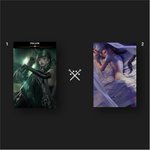
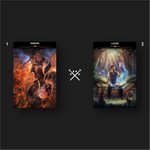
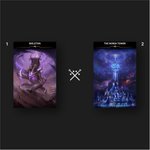
Here comes the second and last battle of the second day ! ⚔️2️⃣
We have Skeleton exclusive and The noria Tower fighting in an interesting match as the field artworks have way more hype than we thaught 👀🔥
You can vote for your favorite artwork in the post right below 👇

Opus Frame retweeted
🧵- Article on how NFTs and the blockchain are going to change art consumption. Take the time to read it 👀
In a world where tradition and technology often intersect in complex ways, the story of traditional and digital art is a fascinating mosaic of creativity, innovation, and challenges. This living and dynamic story is punctuated with highs and lows, opportunities and obstacles, forming a captivating narrative at the crossroads between past and futur⏳
Traditional art, with its cultural richness and heritage, has long been revered and sought after. But behind this admiration lies a complex and exclusive market. Rare and historically significant artworks often reach exorbitant prices💰, making their acquisition out of reach for the general public. This financial barrier is just the first in a series of constraints that shape this unique market.
The forgery and copying of artworks are endemic problems, requiring in-depth expertise to authenticate each piece🔍. Moreover, the provenance of these works is often muddled by histories of wars and looting, making their traceability all the more complex.
In this context, traditional art creators often seek to monetize their art through channels such as galleries and auction houses🖼️. These institutions serve as vital bridges between artists and potential buyers, offering a stage for the presentation and commercialization of works.
For their part, buyers face their own challenges. Acquiring works often requires travel, while resale can be cumbersome, encumbered by complex authentication and provenance procedures. Works of exceptional rarity, meanwhile, require special storage conditions, often in secure garages, as they are too valuable to be displayed in private spaces🏠🔒.
It is against this backdrop that technological evolution and the rise of the digital market introduce a new actor: the NFT (Non-Fungible Token). Blockchain technology with NFTs⛓️ brings significant changes to the digital art field in terms of security, authenticity, and energizing the free market.
The blockchain offers unparalleled security thanks to its decentralized structure and immutable records. Each transaction or exchange of digital art is recorded transparently and permanently, greatly reducing the risk of fraud.
Furthermore, NFTs transform the authentication of digital art. Each work can be tokenized into a unique NFT, acting as a digital certificate of authenticity, ensuring the verifiability of the originality and provenance of the work.
The free market also benefits from this innovation. Blockchain and NFTs democratize access to the art market, allowing artists to sell their works directly without intermediaries. NFTs can also be programmed to offer continuous royalties, thus supporting creators in the long term.
At this point in our story, the testimony of Justin Sun, founder of Tron and one of the main buyers and collectors at Christie's, is inserted with relevance. He highlights the revolutionary nature of NFTs as they allow him access to his works at any time, in stark contrast to his physical collection in Switzerland🇨🇭, accessible only four times a year by appointment. This experience underlines the absurdity of some constraints of the traditional art world and highlights the undeniable advantages of NFTs.
Despite criticisms related to speculation, it is crucial not to forget the technology behind NFTs and its undeniable utility. Perhaps in the future, this technology will even allow managing physical artworks in a decentralized manner🤔.