
Your usual nerd. SRE at Google, working CI/CD. Recurring interest in all things graphic rendering. Otherwise, talking about food. @palats@octodon.social
Joined March 2009
- Tweets351
- Following254
- Followers93
- Likes258



Pierre Palatin retweeted

This feels unreal! After more than 6 years working on WebGPU, it's getting released in Chromium 113, in stable and without flags! It only took a bit longer than the 2 year adventure we initially thought it would be 😅 Read more about it here developer.chrome.com/blog/we…

I really liked the article - it fits well if you already know a bit about WebGPU APIs, but want to understand how to use them better, esp. if you're not super familiar with modern rendering engines.
This Post is from an account that no longer exists. Learn more
So, a few months ago I published usenix.org/publications/logi…, describing how we're managing production at Google.
And now, as part of devops-fusion.com/ ( conference in Zurich, Jun. 21st) I'll also talk about it :) And I'll be happy to discuss of course!
@DevOpsFusion

3

Pierre Palatin retweeted

In the latest episode of Prodcast, we talk with Pierre Palatin about different automation strategies and how to build confidence in your system.
Find this and all episodes at sre.google/prodcast!
Image via xkcd: xkcd.com/1319/ google.smh.re/0ylg
The last sre.google/prodcast/, a podcast about SRE topics, has me in episode 6 \o/ In it, I get a bit too excited about automation related topics - but fear not, there is a transcript for when my french accent is becoming too strong :)
Pierre Palatin retweeted

GPUs from left to right:
Radeon 6900 XT = 23.04 TFLOPS
M1 Max = 10.4 TFLOPS
iPhone 13 Pro = 1.5 TFLOPS
Redmi 9C (PowerVR GE 8320) = 0.042 TFLOPS
548x perf difference. All devices are sold today.

Pierre Palatin retweeted
With the latest episode of Prodcast, the Google SRE podcast, we've added an embedded player — so you can listen directly from the webpage. You can still subscribe via #RSS or your favorite podcast directory ;) google.smh.re/0uzX

I'm still adjusting to the notion that floats are not big balls of performance evilness, and now I learn that integers can actually be sometimes slower. Guess things have changed a bit since my 3D effects on 486.


Stumbled upon a nice series of articles, starting at:
pharr.org/matt/blog/2018/04/…
I was not familiar with ISPC - but the interesting bit here is the explanation on why vector instructions never worked well, and why GPU programming completely and utterly won over those. 1/7
1
And the articles (esp. first 3) go into that aspect too, with wayyy to familiar organizational problems. E.g, having established leaders breaking down the exact use cases, and showing they can already be supported. Exploring potential different approaches becomes impossible. 6/7
1
Quite in depth analysis of the performance of (new) Go generics - incl. plenty of assembly for those into it. It was clear that the goal of 1.18 was to have something working - and that optimizations were targeted for later. The numbers do confirm that :)

An interesting analysis when #golang Generics can make your code slower? by @planetscaledata
planetscale.com/blog/generic…
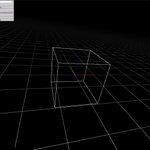
Might not look like much, but I have a working infinite grid in #webgpu :) Big help from asliceofrendering.com/scene%… & stackoverflow.com/questions/… . On the way, I learned how homogenous coordinates allow representations of points at the infinite - which is cool :)

2