

Roberto Parracía. Atlántico no Mediterráneo
Joined August 2012
- Tweets80.2K
- Following259
- Followers278
- Likes89.1K





Capitán Parrouro retweeted

🔎 Que é Blocus, a rede anónima que chama a "causar o caos" en Barcelona, Bilbao e agora Compostela?
nosdiario.gal/social/que-blo…

Capitán Parrouro retweeted

ÚLTIMA HORA | La policía detiene a un joven de 17 años como creador de los canales “Blocus Vlc” en los que instigaba a saquear comercios eldiario.es/comunitat-valenc…
Capitán Parrouro retweeted

Trabajadores reclaman a RENFE que rompa su contrato con una empresa de seguridad israelí lavozdegalicia.es/noticia/ga…

Capitán Parrouro retweeted

Junto a la política neoliberal de privatización del tren de alta velocidad y de la nula inversión en mejorar las infraestructuras, hay que tener en cuenta las empresas que gestionan los sistemas de seguridad que han fallado, curiosamente israelies o con capital israelí.
Hay que estar atentos al sábado si pasan o no ciertas cosas y podremos atar algún cabo suelto
Capitán Parrouro retweeted

No hay que competir en ese marco porque es el marco racista: el reto no es la emigración, es la pobreza. El problema no es el emigrante, es un sistema desigual. Lo que hay que afrontar es el origen de la desigualdad, no el origen de la persona. Lo que integra no es quitarse el velo, es la igualdad, es la riqueza. A nadie le importa a quien reces o lo que comas cuando tienes dinero. Nadie cuestiona la emigración cuando la hace un rico o la hacemos nosotros. Llamar reto a la emigración solo cuando son pobres y son de fuera, equivale a decir: "los de aquí, primero". Ese es el marco de la ultraderecha.

#RufiánMonteroEnLaRevuelta | Gabriel Rufián sobre la inmigración: "Creo que hay que competir en ese marco y creo que hay que decir cosas muy claras desde la izquierda, aunque incomode, la primera es que es un reto, no digo un problema, pero sí un reto".
Capitán Parrouro retweeted

“El Departamento de Policía de la Ciudad de Nueva York (NYPD) suspenderá oficialmente el contrato con la empresa israelí de vigilancia”
Mamdani se está atreviendo a tomar y llevar a cabo muchas cosas importantes para su ciudadanía. Espero que no le pase nada y le dejen trabajar.


Capitán Parrouro retweeted

Mantenimiento de una infraestructura ferroviaria bajo un proceso de privatización de la misma.
Hay que verla 👇👇


Capitán Parrouro retweeted

Una gran plaza peatonal de O Castro al Casco Vello: la propuesta para un «nuevo» Ayuntamiento de Vigo
💬 «Es una herida abierta y no hay vigués que no sienta que hay que sanarla», expresan desde @VigoVindeiro
✍️ Escribe @zumedepinha farodevigo.es/gran-vigo/2026…

Capitán Parrouro retweeted
📄 É posíbel un Israel sen Netanyahu? Os partidos árabes fan historia e son a chave para que a oposición saque o primeiro ministro do poder
nosdiario.gal/internacional/…

Capitán Parrouro retweeted

Como los estudiantes y profesores del otro día que los molieron a palos...

‼️ Tensió davant del Ministeri de Transports. Un nombrós grup de manifestants feixistes de Falange i Revuelta intenten trencar la línia policial i els agents responen amb gas pebre. Canten el cara el sol i criden “Oscar Puente asesino” @3CatInfo
Capitán Parrouro retweeted
🔴 Puente cualifica de "inverosímil" o accidente de Toledo e revela que o AVE avanzou cun sinal en vermello
nosdiario.gal/internacional/…

Capitán Parrouro retweeted

⚡️ÚLTIMA HORA:
‼️El 🍅Frente Amplio 🚫no presentará su candidatura al 🏛️Congreso en Ceuta y Melilla.

Capitán Parrouro retweeted

Recordar que con Angrois mentres @NunezFeijoo pedía non politizar, mandaba antidisturbios para impedir ás vítimas protestar polas medallas de Galicia e bloqueaba comisións de investigación. Hoxe, sen vergonza ningunha, usa a traxedia para atacar ao PSOE. Carroñerismo puro e duro!


Capitán Parrouro retweeted

Bueno, no se les ve cargar contra el fatxerio pero les miran muy fijamente.
teapawt.org/elespanolcom/status/21…

🔴 La Policía Nacional carga contra los manifestantes que piden la dimisión de Óscar Puente ante el Ministerio de Transportes
Cientos de personas se han concentrado en la zona de Nuevos Ministerios, en el Paseo de la Castellana, para protestar por la gestión de ministro Óscar Puente tras la tragedia ferroviaria de hoy en Urda que, por el momento, deja 68 muertos
Capitán Parrouro retweeted

La línea más saturada de Europa es la Paris-Lyon con 240 trenes diarios en toda la línea.
La línea Madrid-Sevilla desde la liberalización (La única de Europa con cuatro operadores) tiene tramos con 289 diarios.
Lo que hace esta aspirante a diputada del PP es mezclar líneas de alta ocupación con líneas casi sin uso para hacer una media falsaria. El truco de la media del medio pollo.

Recordatorio para los que culpan al turismo, al capitalismo, la liberalización, etc: La red española es de las menos utilizadas de su entorno: 58 circulaciones diarias por km de red, frente a 96 en Francia y 248 en Italia, y Francia registra más del triple de viajeros·km.
Aun así, el TGV francés no ha registrado ni una sola víctima mortal entre sus pasajeros en servicio comercial en más de 40 años.
Capitán Parrouro retweeted
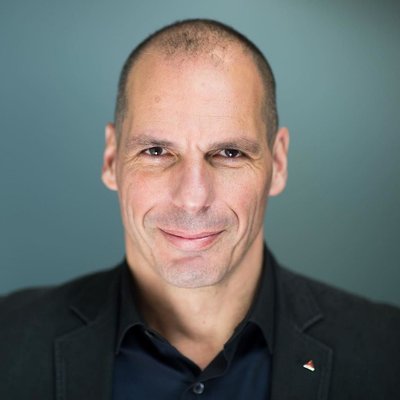
I am going to write something below that should be seen as the musings of one who celebrated – and still celebrates – Lula’s victory over Bolsonaro Jr. Here it goes:
I cannot for the life of me justify why o why Brazil’s courts had to demand of Bolsonaro that he hands over his passport the moment he lost the election. That he disputed the veracity of the election result is a sign of a faulty character, evidence that he is a bad loser. BUT, he had every right to being a bad loser; to dispute, rightly or wrongly, any result.
As for the argument that he was being investigated for other misdemeanours or crimes, that doesn’t wash either: What would have happened if Bolsonaro had won the election? Would the judges also prevent him from travelling abroad, as President-elect? I very much doubt that – which means that the judges were conflating executive and judicial powers.
To those who tell me that the Bolsonaro clan is a fascistic, criminal family, my reply is: You and I may very well think that. Alas, the judiciary has no right to use its powers to indict and to pursue someone because – or immediately after – they lost an election. It is shameful, to be precise. And it is also dangerous for those of us on the left who know what it means to be banned and hounded by rogue judges and police commissioners.
But I also have a message to Bolsonaro supporters, or those sitting on the fence, who assume that Lula is somehow behind the judges. He is not! This is the same court that imprisoned, falsely, Lula himself. What we have in Brazil is a judiciary that overreaches and habitually crosses the line that ought to separate judicial from political power.
It is such a shame that a judge took it upon himself to go after Bolsonaro on the eve of his defeat and, in doing so, to sully Lula’s stupendous victory.
One last point that my comrades in Brazil should note: If Bolsonaro and Rubio wanted to mount a campaign against Lula and Brazilian democracy they could never have been aided better than by that judge’s reckless writ.

WHAT LULA’S RE-ELECTION TELLS US: The Class War Need Not End in Fascism
On Sunday, Brazilians did something that the commentariat had told us was a lost cause. On the eve of his eighty-first birthday, Luiz Inácio Lula da Silva, a former metalworker, turned the Trumpist, evangelical, neofascist, Zionist tide in Latin America to get re-elected President of Brazil.
Three weeks earlier, he had come second in the first round, behind Flávio Bolsonaro, son and political heir of the man who trumpeted the merits of fascism, who had embraced Trump as his lord and master, who plotted a cynical coup against Brazilian democracy – moreover, the main candidates that were eliminated were rightists whose voters were meant to move to Bolsonaro. Yesterday, Lula overturned this deficit and won with a margin of nearly four and a half million votes.
I want to use Lula’s victory to tell a broader story. A story about a war, the class war that the few are waging against the many across the Western world. And a story about how that war need not end, as so many now fear, in a neofascist revival.
THE HIDDEN CLASS WAR
“There’s class warfare, all right,” Warren Buffett once said, “but it’s my class, the rich class, that’s making war, and we’re winning.” Mr Buffett was not exaggerating. For almost four decades, Western governments and central banks have pulled every policy lever in the same direction: to make the assets of the few burgeon at the expense of the incomes of the many.
Consider the numbers. Between 1952 and 1988, economic growth explained nearly all the gains of the West’s stock market. From 1989 onwards, growth explains only about a quarter. The largest share, around 40 per cent, came from income diverted from workers to shareholders. Another third came from cheaper money and lower perceived risk. That is not wealth creation. It is wealth extraction: a transfer from those who work to those who own, inflated by cheap money and paraded on the evening news as “a strong economy”.
Then look at the rescues. 2001, 2008, 2020, the British gilt crisis of 2022, Silicon Valley Bank in 2023: each time, the state rushed in to save the asset holders. Together they reveal the rule: to save the economy, you must save the wealth of those who own it – not those who produce stuff, not even productive companies. In the United States, the top tenth own almost 90 per cent of all shares. The Fed and the US federal government insure it for them, doing ‘whatever it takes’ to prop them up whenever their prices tank. The rest of us in the West pay the premium, in the form of the austerity that always follows the bailout.
And the owners need never sell. Why do billionaires pay so little tax? Because they do not earn incomes - they accumulate capital gains, taxed only when sold. So they borrow against their soaring assets at 1 or 2 per cent and live on the loan. Then they die and pay no tax on their capital gains, passing on the loot to their kids at ridiculously low inheritance taxes. Meanwhile, to pay bills and put food on the table, the worker borrows on a credit card at 20 per cent, her debts the mirror image of their fortunes.
Then, a large chunk of these accumulating assets seek even higher rents in places like Brazil where the US government intervenes to ensure that the local governments will also place the defence of these assets’ values above all else.
CAPITAL IS NOT A THING, NOT MERELY AN ASSET
Why does austerity keep returning, even though it is economically self-defeating? Marx tells the story of Thomas Peel, who in 1829 sailed to Western Australia’s Swan River with £50,000 of provisions and three hundred working-class men, women and children. On arrival, his workers walked off into the bush and worked for themselves. Peel had brought money, tools and labour, but he could not bring capitalism along, because his workers had an alternative.
Capital, Marx concluded, is not a thing but a social relation: the power of those who own to get those who don’t own to do things they’d rather did not do. Austerity is not an economic policy. It is a disciplinary device, keeping the many sufficiently insecure and indebted to accept whatever is on offer. The ruling class’s deepest fear is not inflation or debt. It is to end up like Peel: rich, but without the power to compel.
IS FASCISM INEVITABLE?
Here is the part of the story that keeps so many of us awake at night. When centre-left politicians, from Bill Clinton, Barack Obama and Tony Blair to Gerhard Schröder, Francois Hollande and Andy Burnham abandoned the language of class, a void opened up in the working-class heartlands of the West. Into that void stepped a venomous storyteller with a century of experience in filling such voids: the recalcitrant far right, the rebranded fascists. They offer left-behind workers a story of dignity, then redirect their fury away from the owner who shipped their factory abroad or sold their council house to some fund and towards the migrant next door. It does not end the class war. It merely divides one side – the workers – to rule over them. It camouflages it.
From the red suburbs of Paris to south Piraeus, from England’s red wall to Italy’s rust belt in Taranto, from the American rust belt to eastern Germany, the pattern seems relentless. And so, a fatalism has set in: the class war waged from above, we are told, must inevitably end in a neofascist, racist, misogynist revival.
Brazil has just refuted this fatalism. Brazil knows the monster intimately. It lived through four years of Jair Bolsonaro, with his nostalgia for the military dictatorship. On 8 January 2023, his followers stormed the Congress, the Supreme Court and the presidential palace. Brazil’s far right is not a fringe. Unlike Trump’s rag tag storm troopers, they had years of running a dictatorship. It won the first round of this election. They had the White House fully behind them, while the US Democrats, once again demonstrating their irrelevance, stayed mute. And yet, yesterday, they were defeated.
How? Not by hand-wringing about “populism”, nor by a centrist promise to manage the status quo more efficiently. Lula won because he did what the Western centre-left forgot how to do: he spoke the language of class, and backed it with policies that shifted power, however modestly, from the few to the many. His government exempted those earning up to five thousand reals a month from income tax and paid for it with a minimum tax on the very richest. During Brazil’s G20 presidency, it proposed a global minimum tax on billionaires. When Lula tells Brazilian workers that the elites have rigged the game, he points his finger upwards, at the rentier and the speculator, not sideways, at the migrant or the poor.
PIX – AN EXAMPLE OF AN ANTI-OLIGARCHY DIGITAL TOOL
But the most innovative weapon in Brazil’s arsenal is one that few outside Latin America have heard of. It is called Pix.
Every time you tap a card to pay for a coffee, a toll is levied. Visa, Mastercard and the banks take a cut, often 2 or 3 per cent, from every transaction. Multiply this by billions of purchases a day and you grasp one of the most lucrative rent-extraction machines ever devised. These are not profits made in competitive markets but rent extracted by those who own the digital rails on which our economic lives now run. It is part of what I call technofeudalism.
Unlike Britain, Europe or, of course, America, Brazil’s central bank moved to limit this rabid exploitation. It launched an alternative: a public, instant payment system, free for individuals and with capped fees for merchants. A Brazilian pays a street vendor in Salvador or sends money to her mother in Recife, instantly, using Pix from her phone, with no card company or bank taking its slice. Brazilians took to it with astonishing enthusiasm. Last year, Pix processed almost 80 billion transactions and overtook credit cards as the most popular way to pay online.
Pix is, in effect, the Swan River of the digital age. It gave tens of millions of Brazilians, including the poorest, who had never had a bank card, an alternative to the toll booths of Big Finance. And, like Peel, the toll collectors did not take it lying down. This summer, Washington imposed 25 per cent tariffs on most Brazilian exports, and its trade representative explicitly named Pix as a grievance, complaining that it “unfairly disadvantaged” American payment companies! The most powerful government on Earth deployed its trade arsenal against a free public service for being too successful at denying rents to Visa and Mastercard.
Lula did not blink. He defended Pix as a Brazilian public good, and Brazilians rewarded him for it. Here, at last, is a concrete example of limiting the power of Big Business, Big Finance and Big Tech: not with slogans, but by building public digital infrastructure that removes the opportunity to extract rent in the first place.
NOT A REVOLUTION, BUT AN AUSPICIOUS PORTENT
Let me not romanticise. Lula is no revolutionary. His margin was narrow. Brazil’s Congress remains in the grip of agribusiness and evangelical blocs. Its central bank still keeps interest rates punishingly high, a weapon of the class war if ever there was one. Lula himself has compromised much too much with these vested interests, and lost support as a result.
But Brazil has shown three things the rest of us must learn. First, the class war waged against the many does not have to end in fascism. Fascism wins only when the left vacates the battlefield of class. Second, a progressive government can win by pointing upwards, at those who extract rent, rather than downwards, at those who suffer. And third, Big Business can be defeated, at least forced to lose some battles, by building public alternatives to its rent-extracting machines.
So, here is the challenge to Britain, to Europe, to the people of the United States.
-Build your own Pix: public payment rails that end the tolls of Visa and Mastercard.
-Tax capital gains, ill-gotten wealth that is, not just income.
-Make every rescue conditional, with the public receiving real, permanent equity in return.
-Create a public investment bank as an alternative to the bond markets. Restore the bargaining power of the workforce. And give working people what Peel’s workers found at Swan River: an alternative, and the freedom to say no.
Buffett was right. There is a class war, and his class has been winning hands down. But yesterday, in Brazil, it lost a battle though not the war. It lost because a working-class president dared to name the war and fight it using weapons fashioned to defend the many.
unherd.com/2026/10/why-lula-…


Capitán Parrouro retweeted
Está a Falange ao frente, non hai problema.

🔴 DIRECTO | Cientos de personas acuden a la protesta frente al ministerio de Transportes organizada por Falange social.elpais.com/hwnlz
Capitán Parrouro retweeted

Olho, camaradas. Vamos ignorar, não blocar usuários de extrema direita. Porque é assim, ignorando, como o algoritmo funciona. 💥

🚨 ATTENTION! People are mistranslating what I said!
I NEVER said people should block far-right accounts. I said they should IGNORE THEIR POSTS!
Blocking actually works against this strategy because the algorithm will understand that you didn’t see the content simply because you blocked the account.
However, when a post appears in your feed and you ignore it, you don’t read it, don’t like it, don’t comment on it, or engage with it in any way , the algorithm will interpret that content as irrelevant because it was shown to you and you chose not to engage with it!
THERE IS A HUGE DIFFERENCE BETWEEN BLOCKING CONTENT AND IGNORING IT!