






Pinned Tweet
SCHOLARSHIP TIPS!!!
I made this some months ago, it will help you. There’s a PDF file and a YouTube video link there in .
drive.google.com/drive/folde…
Adelabu retweeted

26-year-old Obanyeli Jesse Chima was an international student from Nigeria who had just finished his master's degree in Public Health in London.
He was waiting in a lounge to meet friends for a joint birthday celebration when he said he needed to step outside for some air. His breathing quickly deteriorated.
Despite using three different inhalers he had with him, nothing helped. His friend called an ambulance, but while she was still on the phone with the operator, he collapsed.
His friends started CPR right there on the street, guided by the emergency operator.
Paramedics spent about two hours working to stabilise him before rushing him to hospital.
He was placed on life support. At first, medics hoped he would only suffer memory loss.
But two days later, doctors confirmed there had been no improvement and tests showed he was brain-dead.
Jesse was just 26. He leaves behind three siblings in Nigeria.
He was known as a passionate Chelsea FC fan who had even worked at the club.
His friend Eva said his family had been saving money to fly over for his graduation.
"His family had saved money for his graduation, and now that money needs to be used to bury their child," she said.
Friends are now raising money to transport his body back to Nigeria so his family can lay him to rest.
A GoFundMe account has been created. gofundme.com/f/help-bring-ch…


Blame this on some of their religious and political leaders who allowed these extreme views.
Those who recruit them grab them from childhood and introduce them to just one way of life - to cause harm to others for no just cause.

According to a translator, this person is saying:
He should be given AK47
He would then go to Enugu
The land of the infidels
On Sunday when they are worshiping and clapping
He would then open fire
Rudu dududup (sound of gun)
So that he can klll the infideels
He asked to be given AK47 again
So that he can go to Jos
And klll more infiddels
That is the training
@OfficialDSSNG
@PoliceNG
Adelabu retweeted

Jalen Williams completely rolls his ankle upon landing off a closeout by Kris Dunn.
The Thunder crowd and the entire Thunder, Clippers and staff are stunned.
He is evacuated on a stretcher.
Including replays and reactions.
Prayers up for J-Dub :(
Outlier of the Day (2026-10-25):
Eliud Kipchoge, The Milk Seller Who Ran Past the Impossible
Field: Sports / Athletics
On 12 October 2019, on a looped course in Vienna, a Kenyan man crossed a finish line in 1:59:40. For the first time in history, a human had run a marathon in under two hours. Twenty years earlier, he was selling milk to help feed his family.
Eliud Kipchoge was born on 5 November 1984 in Kapsisiywa, Nandi County, the youngest of four children, raised by his mother, a kindergarten teacher, in the foothills of the Rift Valley. After school he sold milk at the market to support the family while he kept running. He wanted to run professionally partly to fund his education, and there was no money at home.
His turning point lived about a kilometre away. Patrick Sang, the 1992 Olympic steeplechase silver medalist, was his neighbour and had once been his mother's kindergarten pupil. In 2001, at 16, Kipchoge asked him for a training plan, and Sang wrote one on his arm. Then the teenager kept coming back for more. Sang gave him his first watch and has coached him ever since. Kipchoge has said his life would be different without him.
Malaria wiped out much of his 2002 season. A year later, at 18, he won the 5000m world title in Paris, beating Hicham El Guerrouj and Kenenisa Bekele. Olympic 5000m bronze (2004) and silver (2008) followed before he moved to the roads. There he became the greatest marathoner of his era: Olympic gold in Rio 2016 and Tokyo 2020, world records of 2:01:39 in Berlin in 2018 and 2:01:09 in 2022, and his history-making sub-two-hour run in Vienna.
Dos: Find a mentor and keep asking "what's next?" Show up for every session; he still trains in Sang's group camp at Kaptagat. Pursue the target nobody believes is possible.
Don'ts: Don't let poverty or setbacks write your ending. Don't confuse a bad season with a finished career.
Competitive edge: Relentless consistency, and the humility to keep training among teammates despite all his fame.
Perspective: Running is bigger than records. In his words, his dream is to "make this world a running world."
#OutlierOfTheDay #Kipchoge #NoLimits #RunningMotivation


Man lacks basic coaching skills, his lineups are as bad as his substitutes.
No team philosophy, no pattern, no urgency, no depth.
Just some trial and error, something he is also bad at.
First step is to sack Carrick, followed by massive clearance of the average players - unfortunately, we have lots of them.
Outlier of the Day (2026-10-24):
Shuji Nakamura, The Rural Engineer Who Lit Up the World for a $180 Bonus
Field: Engineering / Semiconductor Physics
In January 1988, a frustrated engineer at a small Japanese chemical firm skipped his boss and walked straight into the CEO's office with a list of demands: roughly $3.3 million for blue light research and a year in Florida to learn a new crystal-growing technique. To his surprise, the CEO said yes.
Shuji Nakamura was born on 22 May 1954 in Ikata, a village in Ehime. He earned his bachelor's (1977) and master's (1979) in electronic engineering from the University of Tokushima, then joined Nichia, a small phosphor maker for CRT tubes and fluorescent lamps. He never lived in Tokyo and had no elite university or famous employer behind him.
The blue LED had defeated better-funded labs for decades, and his supervisor told him so. He kept going even after being told to stop. His turning point came in 1990, when he built a new two-flow MOCVD system for growing gallium nitride, which he calls the biggest breakthrough of his life. By 1993 he had the first high-brightness blue LED, the missing piece for white LED lighting.
Nichia's revenue jumped from about ¥20 billion in 1993 to ¥80 billion by 2001. His reward? A ¥20,000 bonus, about $180. He left for UC Santa Barbara, sued in 2001, and won a landmark 2004 ruling. "Engineers have long been ignored," he said. Nichia appealed and settled for ¥840 million in 2005, then the largest bonus ever paid by a Japanese company.
In 2014 he shared the Nobel Prize in Physics with Isamu Akasaki and Hiroshi Amano. He also holds the Millennium Technology Prize (2006), Draper Prize (2015) and Queen Elizabeth Prize for Engineering (2021), and co-founded Soraa in 2008.
Dos: Ask boldly for the resources your idea needs. Build your own tools when existing ones fail. Know your worth.
Don'ts: Don't let pedigree, or the lack of it, decide your ceiling. Don't stop because someone better funded failed first.
Competitive edge: Outsider fire. He has said anger at being treated like an outsider drove him to his greatest work.
Perspective: The people who build breakthroughs deserve a fair share of them.
#OutlierOfTheDay #Engineering #NobelPrize #NeverGiveUp
Adelabu retweeted

Veentage Band remains the only band that can sing Fela’s songs as brilliantly as they deserve. Even Seun and Femi Kuti might think twice before accepting that challenge! 🔥🎶
Outlier of the Day (2026-10-23):
Mario Molina, The Boy With a Bathroom Lab Who Saved the Sky
Field: Chemistry / Atmospheric Science
In 1973, a young postdoc arrived in Sherwood Rowland's lab at UC Irvine and was handed a list of possible projects. He chose the one nobody cared about: what eventually happens to the CFCs building up in the atmosphere. The answer would alarm the world.
Mario Molina was born in Mexico City on 19 March 1943, one of eight children. As a boy he turned a rarely used family bathroom into a lab with chemistry sets, and his aunt Esther, a chemist, guided him into harder experiments. He once wanted to be a professional violinist, but chemistry won. At 11 he was sent to boarding school in Switzerland. He earned a chemical engineering degree from UNAM in 1965 and a PhD from Berkeley in 1972.
His turning point was the partnership with Rowland. They found that ultraviolet light breaks CFCs apart in the stratosphere, where each chlorine atom can destroy about 100,000 ozone molecules. Molina was lead author of their 1974 Nature paper, and that same year the pair publicly called for a CFC ban. Industry disputed the work for a decade, until the Antarctic ozone hole confirmed it in the mid-1980s.
Their science helped drive the Montreal Protocol, now ratified by nearly 200 countries. In 1995 he shared the Nobel Prize in Chemistry with Rowland and Paul Crutzen, the first Mexican-born chemistry laureate. He worked at JPL, then MIT (1989 to 2003) and UC San Diego, received the Presidential Medal of Freedom in 2013, and founded the Centro Mario Molina to push clean energy in Mexico. He even used part of his Nobel money to train young researchers in his lab.
Dos: Choose the question others ignore. Speak publicly when the evidence demands it. Invest in the next generation.
Don'ts: Don't retreat when powerful industries push back. Don't treat research and policy as separate worlds.
Competitive edge: He spanned the full distance from lab chemistry to a global treaty.
Perspective: Science matters most when it changes what the world does. He died in Mexico City on 7 October 2020, aged 77, as the ozone layer he defended showed signs of recovery.
#OutlierOfTheDay #ScienceHeroes #ClimateAction #NobelPrize
Outlier of the Day (2026-10-22):
Kiran Mazumdar-Shaw, The Brewmaster They Wouldn't Hire Who Built a Biotech Empire in a Garage
Field: Biotechnology / Entrepreneurship
She trained to make beer. India's breweries refused to let her. So she made medicine for the world instead.
Kiran Mazumdar was born in Bangalore on 23 March 1953. Her father was head brewmaster at United Breweries. She had hoped to study medicine but could not get a scholarship, so he suggested fermentation science and brewing, a deeply unusual path for a woman then. She earned a zoology degree from Bangalore University in 1973 and qualified as a Master Brewer at Ballarat University in Australia in 1975.
Back home, the door slammed shut. Her gender kept her out of brewery management jobs, and she looked to Europe instead. That rejection became her turning point. Irish entrepreneur Leslie Auchincloss offered her a role launching Biocon India, and she accepted only on the condition that if she didn't want to continue after six months, she'd be guaranteed a comparable brewmaster job.
In 1978, at 25, she started Biocon India in the garage of her rented house with Rs 10,000, and her first employee was a retired garage mechanic. Her newspaper ads boldly called it a "multinational company," never mentioning the garage. Her first product was papain, a papaya enzyme that keeps chilled beer from turning hazy. Within a year, Biocon was exporting enzymes to the United States and Europe.
She then pivoted the company from industrial enzymes into a fully integrated biopharmaceutical business focused on diabetes, cancer and autoimmune disease. Biocon became India's largest insulin producer, with its recombinant human insulin available in more than 40 countries. Honors followed: the Padma Shri in 1989, the Padma Bhushan in 2005, and EY World Entrepreneur of the Year in 2020. She has also signed the Giving Pledge.
Dos: Turn a closed door into a new market. Project the company you intend to become.
Don'ts: Don't wait for permission from an industry that excludes you. Don't fear failure; learn to manage it.
Creative and competitive edge: She built her business model on affordable innovation, making lifesaving biologics cheaper rather than more exclusive.
Perspective: In her words, entrepreneurship means facing failure, managing it and succeeding after failing.
#OutlierOfTheDay #WomenInScience #FromGarageToGlobal #AffordableInnovation
Adelabu retweeted
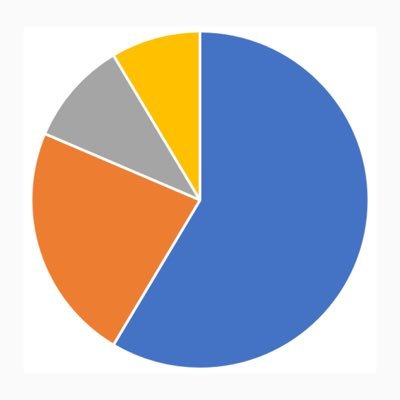
🌍 World's largest economies (2026)
⚖️ GDP adjusted for living costs (PPP):
1. 🇨🇳 China: $44.6 trillion
2. 🇺🇸 United States: $32.6 trillion
3. 🇮🇳 India: $19.2 trillion
4. 🇷🇺 Russia: $7.5 trillion
5. 🇯🇵 Japan: $7.3 trillion
6. 🇩🇪 Germany: $6.6 trillion
7. 🇮🇩 Indonesia: $5.5 trillion
8. 🇧🇷 Brazil: $5.3 trillion
9. 🇬🇧 United Kingdom: $4.8 trillion
10. 🇫🇷 France: $4.8 trillion
11. 🇹🇷 Türkiye: $4.0 trillion
12. 🇮🇹 Italy: $3.9 trillion
13. 🇰🇷 South Korea: $3.6 trillion
14. 🇲🇽 Mexico: $3.6 trillion
15. 🇪🇸 Spain: $3.0 trillion
16. 🇨🇦 Canada: $2.9 trillion
17. 🇸🇦 Saudi Arabia: $2.7 trillion
18. 🇪🇬 Egypt: $2.6 trillion
19. 🇳🇬 Nigeria: $2.4 trillion
20. 🇹🇼 Taiwan: $2.4 trillion
PPP GDP adjusts for how much money actually buys in each country. 2026 figures are projections.
Source: IMF World Economic Outlook (October 2026)
Adelabu retweeted

Oonirisa, Olowo , Ewi of Ado and Ogoga of Ikere Ekiti supporting one of their own the youngest King in Yoruba Akinghare Of Okeluse as Kabieyesi graduated today from Afe Babalola university
Congratulations Kabieyesi ❤️🥰✅📍
Adelabu retweeted

Pa Reuben Famuyide Fasoranti, the leader of the pan-Yoruba organisation, Afenifere has died aged 100. RIP to a true Yoruba Icon 🕊️🖤

