

#GUpath fellow @StanfordPath | Diagnostic and Molecular Pathology residency @UofT | MD @UMontreal
Palo Alto, CA
Joined July 2021
- Tweets190
- Following373
- Followers262
- Likes439






Ngoc-Nhu Jennifer Nguyen retweeted

#publicationalert #gupath
In this multi-institutional study of 51 EVTs, CD56 was positive in 98% of cases, supporting its utility as an adjunct diagnostic marker.
Thank you to the @patholojenMD and @slusagar for including me in this collaborative effort!


Virchows Archiv reports on eosinophilic vacuolated tumors (EVTs) in kidneys, highlighting the diagnostic role of CD56 immunohistochemistry. The study analyzed 51 EVTs and found CD56 expressed in 98% of cases, aiding differentiation from other tumors.
bit.ly/4AdyXWz


Ngoc-Nhu Jennifer Nguyen retweeted

Are our pathology guidelines keeping pace with reality?
📖 A thought-provoking proposal to make diagnostic criteria practical, accessible and globally applicable in this excellent paper by the authors - Philippe Benjamin Stephenson, Olaleke Folaranmi, José Jiménez Heffernan, and Sanjay Mukhopadhyay, published in the BMJ Journal of Clinical Pathology.
Three powerful messages:
🔹 Make criteria feasible across resource settings
🔹 Focus on what truly impacts diagnosis and treatment
🔹 Guideline panels should include community pathologists and represent the global community of pathologists
The best guidelines should not just define what is ideal—they should help every pathologist make the best possible diagnosis with the resources available.
Link to the full paper here bit.ly/4cvgo6K

What a privilege to have participated in the 2026 ISUP consensus meeting!

The ISUP Stockholm meeting was a tremendous success - an unforgettable gathering and an inspiring milestone for the future of precision pathology and management of GU malignancies.
On September 12, 2026, 112 experts and colleagues from around the world came together at the Grand Hôtel Stockholm for a multidisciplinary expert consultation on precision biomarker testing in bladder and prostate cancer.
We are living through one of the most transformative periods in the history of pathology. Cancer diagnosis is no longer defined by morphology alone. Increasingly, diagnosis, classification, prognosis, therapeutic selection, and disease monitoring are being shaped by biomarkers, molecular testing, and artificial intelligence.Our Stockholm conference embraced this transformation. Together, we examined the current and future landscape of biomarker testing in bladder and prostate cancer, including standardization of testing and reporting, specimen selection, liquid biopsy, artificial intelligence, digital pathology, and the critical unanswered questions that will shape the next generation of research and clinical practice.
This meeting was not the conclusion of a process -it was the beginning of one. The conversations will continue. The evidence will evolve. Our recommendations will be refined, challenged, and strengthened. New technologies will emerge, new biomarkers will enter clinical practice, and new questions will undoubtedly arise. What will remain constant is our shared commitment to advancing science, improving standards, and ultimately providing better care for our patients.
I am deeply grateful to our outstanding Working Group Chairs - Michelle Downes, Antonio Lopez-Beltran, Gladell Paner @GladellPaner , and Alessia Cimadamore, my co-Chair, Arno van Leenders - and to every member of our Working Groups for their extraordinary expertise, dedication, preparation, and countless contributions. My sincere thanks also go to every attendee who traveled to Stockholm and contributed ideas, questions, debate, and perspective. A very special thank to Katrina Collins, @katcollmd Nancy Greenland, and Alessia Cimadamore @AlessiaCim , who devoted countless hours to organizing the meeting and managing the many logistical details behind the scenes. @IntSocUropath


Ngoc-Nhu Jennifer Nguyen retweeted

The ISUP Stockholm meeting was a tremendous success - an unforgettable gathering and an inspiring milestone for the future of precision pathology and management of GU malignancies.
On September 12, 2026, 112 experts and colleagues from around the world came together at the Grand Hôtel Stockholm for a multidisciplinary expert consultation on precision biomarker testing in bladder and prostate cancer.
We are living through one of the most transformative periods in the history of pathology. Cancer diagnosis is no longer defined by morphology alone. Increasingly, diagnosis, classification, prognosis, therapeutic selection, and disease monitoring are being shaped by biomarkers, molecular testing, and artificial intelligence.Our Stockholm conference embraced this transformation. Together, we examined the current and future landscape of biomarker testing in bladder and prostate cancer, including standardization of testing and reporting, specimen selection, liquid biopsy, artificial intelligence, digital pathology, and the critical unanswered questions that will shape the next generation of research and clinical practice.
This meeting was not the conclusion of a process -it was the beginning of one. The conversations will continue. The evidence will evolve. Our recommendations will be refined, challenged, and strengthened. New technologies will emerge, new biomarkers will enter clinical practice, and new questions will undoubtedly arise. What will remain constant is our shared commitment to advancing science, improving standards, and ultimately providing better care for our patients.
I am deeply grateful to our outstanding Working Group Chairs - Michelle Downes, Antonio Lopez-Beltran, Gladell Paner @GladellPaner , and Alessia Cimadamore, my co-Chair, Arno van Leenders - and to every member of our Working Groups for their extraordinary expertise, dedication, preparation, and countless contributions. My sincere thanks also go to every attendee who traveled to Stockholm and contributed ideas, questions, debate, and perspective. A very special thank to Katrina Collins, @katcollmd Nancy Greenland, and Alessia Cimadamore @AlessiaCim , who devoted countless hours to organizing the meeting and managing the many logistical details behind the scenes. @IntSocUropath
Ngoc-Nhu Jennifer Nguyen retweeted

Karl Deisseroth awarded 2026 Nobel Prize in physiology or medicine 🔬
The professor of bioengineering and of psychiatry and behavioral sciences shares the prize with two other researchers for their work in optogenetics.
news.stanford.edu/stories/20…

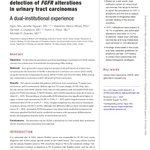
Happy to share I received the European Society of Pathology Best Uropathology Poster Presentation Prize at ECP in Stockholm 🇸🇪. Thank you @ESP_Pathology for this unique opportunity to present our work and for supporting my attendance to this conference.


Ngoc-Nhu Jennifer Nguyen retweeted
this is a great example of uncommon👀of intratesticular fat!
✔️can be seen within/below rete, or within testis
✔️can be component of tumor (typically teratoma)
🚨could mimic extratesticular fat invasion
📜PMID: 39911022 study we did led by my current fellow @patholojenMD !


Ngoc-Nhu Jennifer Nguyen retweeted

📢 New publication in European Urology
We are pleased to highlight a new study published in European Urology, titled “Optimal Management of Muscle-invasive Bladder Cancer: Recommendations from the International Bladder Cancer Group”.
👏 Congratulations to Shilpa Gupta, MD, Roger Li, and Ashish Kamat, MD on this excellent contribution, together with all co-authors.
🔗 Read the full article here:
👉 buff.ly/xpa2ayq
#EuropeanUrology #Urology #UroOncology #Research #MedicalResearch #AcademicUrology

Ngoc-Nhu Jennifer Nguyen retweeted
#publicationalert #gupath
Article out now! We characterized prostatic/periprostatic SFTs with review of the literature.
Grateful to @Andres_Matoso and the team for their collaboration, and to the late @SAMBITKMohanty1, whose foundational work made this study possible.

Ngoc-Nhu Jennifer Nguyen retweeted
How should we grade bladder cancer in 2026? Is It Time to Move Beyond the VERY OLD 1998 ISUP/WHO Grading Systems? Do you opt for hybrid 3 or hybrid 4?
I am pleased to share this comprehensive review article by Professor Michelle Downes and colleagues, published in the 20th Anniversary Annual Review, January 2026 issue of Histopathology @Histo_Journal, edited by @daniel_berney. I am also delighted to share that this article was recognized as one of the most viewed papers in the Wiley collection.
Tumor grade is a critical component of risk stratification algorithm for bladder cancer. The two systems most widely used today, WHO 1973 and ISUP/WHO 1998/2004, each have important limitations. WHO 1973 provides three grades but places many biologically diverse tumors into the intermediate G2 category. ISUP/WHO 1998/2004 simplifies grading into low- and high-grade carcinoma, but the high-grade category encompasses tumors with substantially different risks of progression. Interobserver reproducibility also remains imperfect, particularly for distinguishing low- from high-grade carcinoma and PUNLMP from low-grade papillary urothelial carcinoma.
An increasingly attractive solution is hybrid grading, which integrates the strengths of both systems. The proposed hybrid 3-tier system retains the familiar WHO low-grade category while subdividing high-grade tumors into high grade, grade 2 (HG-G2) and high grade, grade 3 (HG-G3). This distinction is clinically meaningful. In a large study of 9,712 primary Ta and T1 tumors, 5-year progression rates were approximately 7–9% for HG-G2 compared with 18-20% for HG-G3, and hybrid 3-tier grading showed better prognostic accuracy than either WHO 1973 or ISUP/WHO 1998/2004 alone.
We also revisits PUNLMP, a diagnosis that has become increasingly uncommon. Molecular and outcome data demonstrate substantial overlap between PUNLMP and very low-grade papillary urothelial carcinoma, supporting the concept that PUNLMP may be best incorporated within the broader low-grade papillary urothelial carcinoma category. This new ISUP hybrid grading system combines the simplicity of ISUP/WHO 1998/2004 system with the additional prognostic information provided by separating the high-grade spectrum into G2 and G3. Recent studies also suggest that refined morphologic criteria can achieve good reproducibility.
Take-home message: bladder cancer grade exists along a biologic and morphologic continuum. A pragmatic 3-tier hybrid system -low grade, high grade G2, and high grade G3 -may provide more clinically meaningful risk stratification while remaining practical for routine pathology practice.
Full articles is available at the following link:
onlinelibrary.wiley.com/doi/…
The full content (373-pages) of this special anniversary issue is freely available at:
onlinelibrary.wiley.com/toc/…


Ngoc-Nhu Jennifer Nguyen retweeted
busy Monday #GUpath signout🔬 today, but worth stopping and smelling the prostate bx🌹
#ABT
#alwaysbeteaching
🔬"branching" pattern Gleason 3 (mimic of pattern 4)
(I call this 3+3)


Ngoc-Nhu Jennifer Nguyen retweeted

2026 ISUP Stockholm Multidisciplinary Consensus Conference on Precision Biomarker Testing in Bladder and Prostate Cancer #ISUPStockholm2026 🇸🇪
📅 12 Sept 2026, immediately preceding @ESP_Pathology #ECPCongress
Register: 2026-isup-stockholm.eventbri…


Ngoc-Nhu Jennifer Nguyen retweeted
so 🥹to see our current #GUpath fellow Rich Pacheco, next year’s fellow @patholojenMD, & year after fellow Doug Wu as winners
@StanfordPath 💪🏽🔬


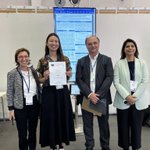
I am deeply honoured to receive the 2026 @IntSocUropath Stipend Award. Knowing that world renowned GU pathologists such as Drs. @Tretiakova_Mar and @SaleebRola, who inspire me a lot, have received this award in the past makes this recognition even more meaningful and motivating.
Congratulations to the recipients of the ISUP Stipend Award and the Excellence in Urologic Pathology Award!
You are the rising stars of urologic pathology - the future of our field is bright! @IntSocUropath


A heartfelt thank you to my mentors including Dr. Downes, Dr. Sangoi @slusagar and Dr. @SaleebRola for their guidance. I would not have received this award without your tremendous support.
5
170
Ngoc-Nhu Jennifer Nguyen retweeted

Melanosis of the bladder, a rare benign finding characterized by melanin deposition within the urothelium and macrophages in the lamina propria.
H&E and Fontana–Masson highlight the pigment beautifully. Always important to distinguish from melanoma or hemosiderin. #GUPath

