

Director of TBI & Concussion #NTBIC @UCIrvinehealth | via @Harvard @MGHNeuroICU | Former @UCSD @GeiselMed @Dartmouth | #TBI #NeuroICU 🧠 | thoughts own
Irvine, CA
Joined May 2009
- Tweets310
- Following321
- Followers396
- Likes1.6K




Pinned Tweet
June 30th makes us all sentimental. End of training, can’t wait for a new humbling journey as faculty at @UCIrvineHealth @UCINeurology ☀️
Big congrats to the *best* @MGHNeuroICU class @ibrahimigdady @NYechoorMD @dbfisch , Julia/ Paola/Ben, watch out world!😊 – at Boston, MA


Patrick Chen retweeted

📅 Save the date! We're excited to share dates for NCS2027! Thank you for making #NCS2026 an unforgettable week.

Best part of #NCS2026 is reunions with old friends and all the institutions (Texas, nyu, mgb, Uchicago) , many successes and smiles! Look forward to supporting @neurocritical as social communications chair! @MGHNeuroICU @SCCM_Neuro #neurocritical #TBI #NTBIC @uciphysicians – at Seattle, WA

Very interesting #NCS2026 presentation by @prajwalciryam on Choroid plexus inflammation changes post severe #TBI mode. Cool implications for local and systemic interventions @neurocritical @SCCM_Neuro @Neurotrauma #neurocriticalcare #trauma #inflammation

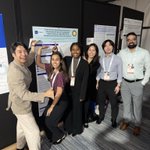
You never know who will walk up to your poster! Incredible first time meeting former NINDS NIH director Dr. Walter Koroshetz at #NCS2026 discussing our work on stroke & TBI outcomes. Such an inspiring chat! 🧠 @neurocritical #TBI #Stroke #NeurocriticalCare #NTBIC – at Seattle, WA

We found higher mortality in icu TBI + stroke w high care withdrawal but no worsened morbidity in survivors. @MGHNeuroICU . Study collaboration w: @UCIrvineHealth @UCIMedSchool @uciphysicians @ucimind @UCIrvineSurgery @UCIPublicHealth
Insightful #NCS2026 session covering physiology in the NeuroICU lots of good qs on practical patient forward implications . @HollyEHinson highlights importance of modifiers "M" in #TBI CBIM definition. @neurocritical #exposome #ncs #criticalcare – at Seattle, WA

Huge congratulations to our NTBIC trainee Maria Paulino (@UCIMedSchool MS3) for presenting a best-scored abstract in the TBI SIG at @ANAneurology ! 🌟 Her study evaluated NINDS-guided clinical exposome factors associated with #TBI 6-month cognitive change. Way to go,Maria! 🧠📈 – at San Diego, CA
Proud of our #NTBIC med students & trainees! 🎉 We just presented 5 posters at @ANAneurology #ana2026 on TBI: (1/2)
1️⃣ Neural exposome in clinic TBI
2️⃣ Sex differences in metacognitive awareness
3️⃣ Social factors in Neuro-ICU TBI
4️⃣ Quantitative EEG & awakening in ICU TBI

Proud to see the next generation advancing understanding #TBI #Concussion #BrainHealth #NTBIC #Exposome #NeurocriticalCare @UCIrvineHealth @uciphysicians collaborators include: @UCIMedSchool @UCIrvineSurgery @ucimind @UCIPublicHealth (2/2)
Patrick Chen retweeted

Our September 2026 newsletter is now available on Connect! Find the latest publications, upcoming SCCM NCC events, & clinical pearls. Topics include neurostimulants in TBI, AIS in pediatric pts, and part 1 of a feature on anti-NMDA receptor encephalitis.🧠
#SCCMNeuro #NeuroICU

How do neighborhood and individual factors jointly shape long-term recovery post-TBI? 🧵 Continuing our published work series, check out our @NTBIC study in @InjuryJournal: pubmed.ncbi.nlm.nih.gov/4160… (1/3)

Conducted with @UCIrvineHealth, @uciphysicians, @UCIMedSchool, @ucimind, & @UCIPublicHealth, our work explores how area income weaves together with individual safety nets and clinical severity. (2/3)
Findings show area-level factors play a nuanced, multi-faceted role alongside clinical severity and insurance status—highlighting why we must approach recovery holistically! #TBI #Concussion #BrainHealth #NTBIC #SDOH @AANMember @Neurocritical @Neurotrauma (3/3)
Proud of our NTBIC team & trainees! 🧠🚀 Kicking off our published work series this year with a look at real-world neuropsych testing barriers post-TBI: pubmed.ncbi.nlm.nih.gov/4190… 🧵 (1/3)
In collaboration with @UCIrvineHealth, @UCIMedSchool, @ucimind, & @UCIPublicHealth, what we found in our civilian TBI clinic: 🧩 1/3 diagnosed with a neurocognitive disorder (Processing Speed & Working Memory deficits, MoCA). (2/3)
⏳ 43% attrition & 17-month testing delays. MoCA tracking showed 55% improved, but half stayed below impairment cutoffs (<26). Timely screening is vital! #TBI #Concussion #BrainHealth #NTBIC @AANMember @Neurocritical @SCCM_Neuro @jnahmias1 @Neurotrauma @uciphysicians (3/3)
Patrick Chen retweeted

Can a blood test for Alzheimer's disease be trusted after a traumatic brain injury? A blood biomarker is a substance measured in the blood that can provide clues about changes occurring in the brain. Yael Rosen-Lang and colleagues describe in a new paper in JAMA Neurology how a history of traumatic brain injury (TBI) may substantially reduce the accuracy of one of the newest FDA-approved blood tests for detecting Alzheimer's disease pathology.
Key points:
- The FDA-approved plasma p-tau217/Aβ42 blood test performed very well in older veterans w/o a history of TBI, achieving approximately 90% accuracy for detecting amyloid positivity on PET imaging.
- Blood test accuracy declined substantially in veterans w/ prior TBI, particularly in those w/ more severe injuries, where the test missed many individuals who actually had amyloid detected on PET scans.
- The findings suggest that a history of TBI should be considered when interpreting Alzheimer's disease blood biomarker results and that additional testing, including amyloid PET imaging, may be needed in selected individuals.
My take: Blood biomarkers are transforming how we diagnose Alzheimer's disease. However, this study reminds us that no diagnostic test performs equally well in every clinical setting. A history of traumatic brain injury appears to alter the biology enough that these promising blood tests become less reliable. As we move toward precision medicine, we will need to understand not only what a biomarker measures, but also when and in whom it performs best. This paper is an important reminder that clinical context still matters.
Here are 5 points that resonated w/ me:
1- Blood biomarkers are becoming powerful tools for detecting Alzheimer's disease, however they should always be interpreted alongside the clinical history.
2- A prior TBI may substantially reduce the sensitivity of current Alzheimer's disease blood tests, leading to false negative results.
3- Folks w/ previous head injuries should discuss the limitations of blood biomarker testing w/ their health care providers before making important treatment decisions.
4- PET imaging and other confirmatory testing may remain essential for some individuals, especially those w/ a significant TBI history.
5- The future of precision neurology will require tailoring biomarker interpretation to each person's unique medical history, exposures and risk factors rather than relying on a one size fits all approach.
cutt.ly/lyw3fTfv

Time flies—been 4 yrs! 🤯
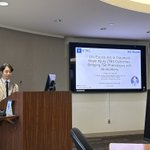
Grand Rounds @UCIrvineHealth on #NTBIC growth, the #exposome, & blood biomarkers in tracking #TBI 🩸🧠
Proud of the teamwork accelerating TBI research! 🚀
@griz1 @neurocritical @SCCM_Neuro @UCINeurosurgery @ucimind @jnahmias1 #NTBIC #NeuroTwitter – at Irvine, CA

Patrick Chen retweeted
Register now for the Neurocritical Care Knowledge Exchange webinar, Things I Wish I Knew Before Graduating as a Fellow, on August 20 at 1 PM CST to gain real-world insights on transitioning to independent practice and avoiding common early-career pitfalls: bit.ly/4em1tMo
