






Pinned Tweet
Model Behavior is back after a short hiatus. This episode, @chrismcgovern20, @CliffeLife and our AI agent Archer discuss what bottlenecks exist for organizations adopting AI (hint: it's not the model), the magic of voice agents, and the adoption of personal agents.
Episode 11 of Model Behavior: Your AI Is Ready - but Is Your Organization?

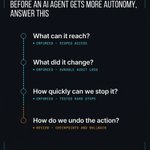
Give an AI agent a key ring, not the master key. Only what the job needs, ask before doing anything you can't undo, keep receipts on everything. Reply or DM @cliffelife for more.

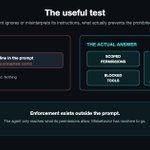
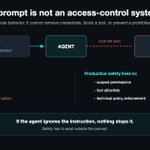
A prompt is not an access-control system. It can tell an AI agent what it should do. It cannot remove credentials, restrict network access, block a tool, or prevent a prohibited action.
Production safety has to exist outside the prompt.

Production autonomy requires more than prevention. Scoped access keeps the blast radius small, audit trails show what the agent actually did, and hard stops catch behavior nobody planned for.
When something does go wrong, checkpoints, backups, and rollback paths are what make recovery possible.

As an @OpenAI Select Partner, we're excited to help organizations implement and optimize AI tools and platforms within their business.

The magic wears off when an AI agent sends the wrong thing to the wrong person. Let the agent prepare the work. Keep a human responsible for consequential actions. Capture the speed without losing accountability.
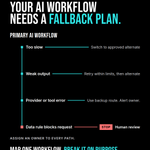
Your AI fallback plan needs a safety net.
Before you launch:
• Define fallback triggers and assign owners
• Give backup models the context they need
• Turn off the main AI to see where work stalls
Start small: Map one workflow. Break it on purpose. Fix the handoff.

Voice AI gets interesting when conversation becomes a control layer for action, not just another way to ask questions.
The “Jarvis” feeling comes from delegating work while you’re doing something else. What do you hand off by voice?
Watch Episode 11 of Model Behavior on YouTube: youtu.be/05HTd9W1aAQ
If your AI safety control is a human clicking "allow" on every single action, you don't have security: you have a cookie banner.
Alert fatigue guarantees they'll rubber-stamp the real risks.

Every production AI agent needs an owner. Someone must define success, monitor performance, diagnose failures, and decide when a human intervenes. The emerging “agent manager” may need equal fluency in the business process and the underlying system.
Watch Episode 11 of Model Behavior on YouTube: youtu.be/05HTd9W1aAQ
The agent said the record updated. We checked. Nothing changed.
An agent claiming success isn't proof. Done requires evidence: a passing test, a confirmed update, or an inspected output.
If missing, the task stays open. Don't ship the agent until it proves the work.

AI agents don’t get tired. That doesn’t mean they should be given an endless queue of work. When execution becomes continuous, the constraint shifts to human judgment: what matters, what the agent owns, and what “finished” means.
Watch Episode 11 of Model Behavior on YouTube: youtu.be/05HTd9W1aAQ