





Albanese government trashing our history: where is the Governor-General?
The shocking revelations in The Daily Telegraph on 27 November that historic military plaques at Sydney’s Victoria Barracks have been consigned to rubbish bins raise a question far more serious than that of governmental vandalism. Are serious criminal offences being committed under the auspices of the Commonwealth government?
Section 132.8A of the Commonwealth Criminal Code provides for imprisonment for up to ten years for damaging or destroying Commonwealth property. Commonwealth heritage legislation may also have been breached.
The Albanese government, which has openly acknowledged its intention to pursue commercial opportunities at Victoria Barracks, cannot escape ministerial responsibility for what is occurring under its administration.
Whether ministers have authorised, tolerated or simply failed to prevent this destruction must be established. The matter warrants immediate independent investigation, including referral to the Australian Federal Police.
The Commonwealth government is the custodian, not the unrestricted proprietor, of our national heritage.
What is at risk is irreparable damage not only to the history, traditions and honour of Australia’s defence forces but above all to their morale of today’s forces. At a time when Australia needs to attract and retain military personnel, what message does this send to young Australians contemplating a career in the service of their country?
How can we expect them to honour the uniform when the government itself appears to treat the history and traditions associated with it as rubbish?
Where, in all this, is the Governor-General?
Under section 68 of the Constitution, the Governor-General is Commander-in-Chief of the Commonwealth’s naval and military forces. She also enjoys the traditional constitutional right to warn the Prime Minister.
Not only that, Sir Samuel Griffith advised the Governor -General in 1915 by memorandum that the reserve powers (where the Governor-General acts on her own judgement} arose whenever a government proposed action which would cause irreparable damage to the nation. He said that where a government persisted it was not only within the Governor-General’s power, there involved her duty to act.
It is clear that that she should exercise that right and, if needed, duty to act without delay, insisting that the destruction cease, that the historical integrity of Victoria Barracks be restored and that any suspected criminal offences be independently investigated.
Should the Prime Minister knowingly permit serious and continuing unlawful conduct, notwithstanding such a warning and the exhaustion of ordinary constitutional remedies, the question must ultimately arise whether the Governor-General should invoke her reserve powers to withdraw his commission.
No government is above the law. Nor is any government entitled to consign the history and honour of those who have defended this nation to a rubbish bin.

Albanese government trashing our history: where is the Governor-General?
The shocking revelations in The Daily Telegraph on 27 November that historic military plaques at Sydney’s Victoria Barracks have been consigned to rubbish bins raise a question far more serious than that of governmental vandalism. Are serious criminal offences being committed under the auspices of the Commonwealth government?
Section 132.8A of the Commonwealth Criminal Code provides for imprisonment for up to ten years for damaging or destroying Commonwealth property. Commonwealth heritage legislation may also have been breached.
The Albanese government, which has openly acknowledged its intention to pursue commercial opportunities at Victoria Barracks, cannot escape ministerial responsibility for what is occurring under its administration.
Whether ministers have authorised, tolerated or simply failed to prevent this destruction must be established. The matter warrants immediate independent investigation, including referral to the Australian Federal Police.
The Commonwealth government is the custodian, not the unrestricted proprietor, of our national heritage.
What is at risk is irreparable damage not only to the history, traditions and honour of Australia’s defence forces but above all to their morale of today’s forces. At a time when Australia needs to attract and retain military personnel, what message does this send to young Australians contemplating a career in the service of their country?
How can we expect them to honour the uniform when the government itself appears to treat the history and traditions associated with it as rubbish?
Where, in all this, is the Governor-General?
Under section 68 of the Constitution, the Governor-General is Commander-in-Chief of the Commonwealth’s naval and military forces. She also enjoys the traditional constitutional right to warn the Prime Minister.
Not only that Sir Samuel Griffith advised the Governor -General in 1915 by memorandum that the reserve powers where the Governor-General acts on her own judgement arose whenever a government proposed action which would cause irreparable damage to the nation would be caused. He said that where a government persisted it was not only within the Governor-General’s authority to consider the issue, there was a duty to act.
It is clear that that she should exercise that right and if needed, duty to act without delay, insisting that the destruction cease, that the historical integrity of Victoria Barracks be restored and that any suspected criminal offences be independently investigated.
Should the Prime Minister knowingly permit serious and continuing unlawful conduct, notwithstanding such a warning and the exhaustion of ordinary constitutional remedies, the question must ultimately arise whether the Governor-General should invoke her reserve powers to withdraw his commission.
No government is above the law. Nor is any government entitled to consign the history and honour of those who have defended this nation to a rubbish bin.
[The image below is of volunteers for the New South Wales Infantry Contingent for the Sudan at Victoria Barracks in Sydney in March 1885]

Political trends firming against Labor
One Nation plans to free Australians from ‘elected dictatorship’
David Flint
31 October 2026
There are two leading trends in Australian politics which are firming against Labor , and which, I suspect, will hold through to the next election.
The first is one I arrived at before seeing Peta Credlin’s recent eloquent call: the Australian electorate has given up on Anthony Albanese. The second is that Senator Pauline Hanson has firmly consolidated her position as the preferred leader of a growing body of Australians defined by their deep patriotism and their common sense.
The beginnings of the current surge behind One Nation became apparent even during the last federal election,
This was demonstrated in the decisive swing in the Hunter electorate and One Nation winnng the contest with Labor for the sixth NSW Senate seat. Notably, One Nation’s NSW Senate candidate, Warwick Stacey – who served with distinction in both the Australian and British armies – has long been a leading, dedicated member of Australians for Constitutional Monarchy (ACM).
Because my conclusions on politics have often differed radically from the commentariat’s consensus, I feel I should point out that I have been blessed with actual experience in front-line political campaigning. The most significant dated from when, to my surprise, I was invited to serve as the second National Convenor of ACM. This was shortly after the 1998 Constitutional Convention and leading into the 1999 referendum on until now. Contrary to the overwhelming projections of almost all the mainstream media and the political establishment, ACM’s sole and lean Australia-wide campaign triumphed nationally, carrying all six states and around 72 per cent of federal electorates.
I was, of course, merely one among many devoted Australians. My principal advantage lay in chairing the executive in daily meetings where our tactical countermeasures were forged. On the anniversary of that historic victory, we inaugurated our annual National Conference and have convened it every single year since – the only 1999 campaign organisation to have done so.
I am delighted that this year our conference keynote Senator Neville Bonner Dialogue will be held with Senator Pauline Hanson over lunch on 13 November. It promises to be a fascinating exchange, demonstrating that far from having no policies, One Nation is uniquely also addressing the profound, long-term constitutional and civic questions confronting this nation. Details will soon be available on the ACM Facebook page and across our social media platforms.
Meanwhile, the firming of Senator Hanson’s influence has also had a salutary effect on the Coalition itself. Her electoral presence has helped ensure that two good men – Angus Taylor and Matt Canavan – have emerged as steadfast conservative leaders. Even the ‘Labor-lite’ faction, the ‘moderates’, probably concede that their notion of a compromised ‘broad church’ is, if not completely buried, comatose. In that respect, it is following the republican movement into political irrelevance.
This conservative resurgence is accelerated by the electorate’s visceral recoil from Anthony Albanese. The prime ministerial mask slipped entirely with the sordid revelation of his machine firing off a vicious dirt sheet targeting independent MP Helen Haines for simply holding the government accountable over gross pork-barrelling. For the Prime Minister then to feign wide-eyed innocence, deny the undeniable, and even claim the dirt sheet was a ‘praise sheet’, demonstrates that we possess a first minister representing a new low in political accountability. No wonder Australians are giving up on him.
While the press gallery engages in its ritual dance of selective amnesia, ordinary Australians recognise that the promised era of ‘kinder, gentler politics’ was always a cynical sham.
Yet this abandonment of basic integrity in parliament is merely one symptom of a far deeper institutional rot now afflicting the Commonwealth. Parallel to these political manoeuvres, there is a profound, simmering public anger regarding the administration of justice. In recent weeks, I have detected widespread annoyance over high-profile prosecutions where authorities have resorted to ‘show arrests’ and theatrical techniques. Under the rule of law, the state must never stoop to orchestrating public spectacles that will inevitably generate trial by media. The fundamental principle of the rule of law in criminal trials – the presumption of innocence – is being actively dismantled.
We have seen this in the treatment meted out to Australia’s most decorated soldier, Ben Roberts-Smith VC. That our nation’s highest-honoured warrior should be subjected to this ordeal is an appalling scandal.
Much of this crisis traces back to the ill-advised decisions to downplay traditional courts martial by centralising military prosecutions under a Canberra-based Director of Military Prosecutions stripped from the operational command structure and potentially lacking combat experience.
We saw the ruinous failure of that regime in the 2011 McDade case, where commandos were hauled before the courts on manslaughter charges for doing no more than responding, as soldiers must, when coming under live fire.
This error of the political class was compounded by Australia’s unwise ratification of the Rome Statute for the International Criminal Court contrary to the US example, and the subsequent incorporation of battlefield conduct into the domestic Criminal Code. If any allegations against Ben Roberts-Smith warranted examination, they should have been tested while he was under army jurisdiction through a general court martial.
The very idea that a civilian-style commission of inquiry could retrospectively adjudicate events occurring years earlier in a brutal, foreign combat zone – against an unconventional enemy wearing no uniforms and hiding among the population – was fundamentally infeasible. Yet the resulting Brereton Report was treated by military bureaucrats and politicians as if it contained settled, proven facts. The ultimate outrage occurred when Attorney-General Michelle Rowland approved a prosecution brief emerging from the $300-million Office of the Special Investigator – one of only two briefs advanced from what seems a bloated exercise.
What is totally unacceptable to fair-minded Australians is that Roberts-Smith has been advised he will not even appear before a jury for five years – a delay that could easily stretch into seven, nine, or more years. The process has become what the 1689 Bill of Rights expressly forbade as ‘cruel and unusual punishment’. It is an inversion of British justice that few Australians of common sense and goodwill will long tolerate.
The next government should advise the exercise of the Royal Prerogative of Mercy and stop this torture.
Why is the Albanese government so vindictive?
And why does it still tolerate antisemitism?
David Flint
📷
24 October 2026
Governments of the doctrinaire far left, such as the Albanese government, share certain defining instincts which are truly appalling. These include antisemitism (exposed decades ago by Labor eminence, Barry Cohen) as well as suspecting anyone who manages their life independently of the state. Those who work the land, build small businesses, accumulate self-funded retirement nest eggs, or pay into private health cover represent far more than an ideological irritation. They demonstrate what socialist orthodoxy can never concede: self-reliance does work, whereas state-administered monopolies perpetually buckle under their own weight.
This ideological impulse extends beyond economics. Just as Canberra instinctively punishes self-reliant citizens who refuse total dependence on the state, it actively appeases vocal, radicalised activist voting blocs at the expense of national cohesion. Whether stripping private health benefits from thrifty retirees, turning a blind eye to militant antisemitism on university campuses, or letting in Islamists to keep marginal inner-city electorates, the underlying playbook is identical: core Australian values of individual duty, thrift, and tolerance are sacrificed to ideological convenience.
Nowhere is that vindictive mindset clearer than in the Albanese government’s push to gut private health rebates for older Australians. Under the deceitfully named Private Health Insurance Amendment (Modernising the Private Health Insurance Rebate) Bill, 2026, Canberra moved to strip away the means-tested and age-based rebate tier for Australians over 65 – slashing support from roughly 28 and 32 per cent down to the base rate of 24 per cent. A government addicted to waste claimed this was ‘designed’ to pocket $3 billion over four years to fund aged care.
The human cost, however, falls squarely on 1.2 to 1.5 million targeted pensioners and retirees, Australians who have scrimped for decades to maintain private cover specifically to avoid burdening the public hospital queue. The government bill fell to a decisive 38:23 Senate ambush – uniting the Coalition, independent crossbenchers, and even the Greens against the measure – discharging the bill from the notice paper. But the government has refused to accept the verdict. Instead of abandoning their toxic measure, Health Minister Mark Butler immediately sought to revive the cuts in the House, determined to squeeze $3 billion from elderly thrift.
The claim that Canberra must squeeze pensioners to balance the books may well satisfy naive commentators who swallow the arguments of politicians notorious for not telling the truth. It is an insult to taxpayers.
This government has a staggering catalogue of squandered public wealth. Examples include over $10 billion committed to the collapsed fantasy of being a ‘green hydrogen superpower’, $940 million handed to a US start-up under closed-door non-disclosure agreements, and an estimated $40-billion blow-out on Snowy 2.0. Add to this the hundreds of millions wasted on the apartheid-model Voice referendum, unchecked billions leaking through an escalating $50-billion NDIS, runaway private consultancy contracts, the most lavish travel expenses for what should have been Zoom meetings, and brazen pork-barrelling even to benefit the Prime Minister’s electorate golf club.
The arithmetic is as damning as it is cruel: the $3 billion Canberra seeks to claw back from 1.2 million pensioners over four years equates to roughly $750 million annually – an amount virtually identical to the taxpayer handout given to US start-up, PsiQuantum. Halting just a fraction of this corporate welfare, ideological vanity, consultant largesse, and just plain waste would have preserved senior rebates several times over.
Adding insult to injury is the bureaucratic complacency exposed when public funds are actively pillaged. While Canberra penny-pinches from law-abiding retirees, recent revelations show Labor’s much-vaunted anti-fraud task force allowed an alleged $1.89 million Sydney NDIS invoicing scam to run unchecked for 14 straight months before intervening. When government waste is treated with indulgence and pensioner savings are targeted with zeal, the administration’s true priorities are laid bare.
This punitive economic posture matches a broader failure of core governance. While Canberra lectures households on belt-tightening, the International Monetary Fund has warned that uncontrolled public expenditure in Australia continues to fuel sticky domestic inflation, unlike in other wealthy economies. Uniquely among federations, Australia suffers an acute vertical fiscal imbalance: Canberra siphons roughly 80 per cent of total national taxation, drip-feeding funds back to sovereign states through centralising, conditional grants that smother state autonomy.
Meanwhile, living standards stagnate. Despite vast mineral resources, Australia’s real national income per capita lags non-resource economies such as Switzerland and Singapore, choked off by regulatory red tape, soaring energy costs driven by reckless renewable rewiring over prime agricultural land, and indiscriminate immigration targets that overload urban housing and hospital networks in Sydney, Melbourne, and South East Queensland.
Worse still is the moral rot of institutional appeasement. For years, Jewish Australians have warned about systemic complacency toward antisemitism, and been forced to privately fund security cordons around synagogues, day schools, even kindergartens. At the same time, sectarian vitriol surges across federally funded university campuses as well as suburban streets. Despite bitter warnings, taxpayer funding has repeatedly filtered toward organisations promoting incendiary antisemitic rhetoric. When confronted with demands for accountability, the Albanese government adamantly resisted establishing a royal commission into antisemitism. When a royal commission was reluctantly appointed, it curiously dodged interrogating leading extremist agitators as to their views, while subjecting Jewish representatives to hostile cross-examination.
With a normal federal election required no later than May 2028, public fatigue is reaching a tipping point, suggesting the reckoning will be severe.
Voters are increasingly searching for alternatives that answer the cost-of-living and housing crises, restore public safety and educational standards, make immigration sustainable, save farming, halt gross waste, respect individual freedom, defend the nation, and strongly oppose antisemitism. One Nation’s surge across the regional heartlands and the outer suburbs and into Labor electorates is providing the backbone for a common-sense patriotic coalition, forcing the Liberal–National leadership to abandon timidity and unite behind a clear mandate. This pressure has served to weaken ‘Labor-lite’ tendencies within the Coalition, anchoring policy firmly back to core Australian interests.
Australians are a tolerant, fair-minded people. But they will not long endure a government that defaults on its core duties, squanders billions on ideological vanity, presides over the increasing impoverishment of Australians, and punishes self-reliance.
Australia on a road to ruin
Only Pauline’s reform can save the nation
David Flint
10 October 2026
Australians’ pessimism about the future of the country is now probably at its highest level. Polling suggests an extraordinary two out of three Australians say the country is heading in the wrong direction.
This is hardly surprising. Despite our enormous wealth and the hard work of our people, the country is being led toward decline and ruin by a self-serving political class. This class has captured the two-party cartel and undermined our constitutional order to insulate itself from public accountability. They stage confected elections where the real choices have already been dictated by power brokers in factional pre-selections instead of the long-proposed, more democratic primaries. Meanwhile, the establishment insists that One Nation is unworthily enjoying a ‘populist’ surge. In fact, One Nation has long offered the solution. Alone among the leading political parties, One Nation would surrender the power that politicians wield between elections. They would turn the Australian people into what Alfred Deakin conceded would be the ‘masters of the situation’ – putting the political class under the control of the people 24/7, as in Switzerland.
The historical warning for Australia is urgent. As this column has long recalled, at the time of our Federation, Australians and Argentinians stood together as two of the wealthiest peoples on Earth. Argentina has since become the classic textbook example of a rich country falling into catastrophic decline and poverty.
The crucial difference between the two countries, as an Argentinian minister once observed on the ABC, is that Australia inherited remarkably durable and superior institutions from her English-speaking heritage: responsible and representative government, an independent judiciary, trial by jury, freedom of speech and the press, and equal rights including religious freedom. Argentina succumbed because it lacked this solid institutional anchor, falling victim to executive overreach, caudillismo – the Latin tradition of rule by a charismatic strongman – and institutional decay. To avoid the Argentine path, we must recognise the persistent danger: vital institutions and foundational beliefs can be hollowed out from within without being formally abolished.
That contrast is mirrored in modern Switzerland. Without our vast mineral wealth, the Swiss achieve a real income advantage exceeding A$25,000 per person annually over Australians – simply by keeping their politicians on the tight leash long championed by Pauline Hanson. Direct democracy has built enduring prosperity, whereas Australia’s political cartel threatens our inherited advantage.
That hollowing-out is precisely what the professional political class has accomplished. Through rigid party discipline and Bolshevik-style caucus control, they have inverted responsible government. This constitutional doctrine assumes ministers are held accountable in the House of Representatives and that individual MPs exercise independent judgement on behalf of their electors. Factional caucus rule reverses that relationship entirely, reducing MPs and the House itself to an obedient rubber stamp for party power brokers and donors. This breach of constitutional order went unnoticed because the failure of parliamentary accountability was compounded by the capture of the constitutional umpire.
The Constitution created a High Court to police the federal division of power between the states and the centre. Fortunately, the first bench – Griffith, Barton and O’Connor – was composed of men who had played central roles in the Federation movement and understood the constitutional bargain from the inside.
Here, however, lies a tragic constitutional design weakness. While successors are formally appointed by the Governor-General in Council, the real decision is taken in secret by the governing politicians without any control whatsoever. The High Court of Australia Act 1979 introduced a requirement to consult state attorneys-general, but this is cosmetic; the states have no veto.
The framers actually considered a far safer arrangement. At the 1898 Convention, South Australian delegate Patrick Glynn (who secured constitutional recognition of our Judeo-Christian heritage) proposed that the High Court consist of a chief justice and the state chief justices. This would have brought perspectives from beyond the Canberra–Sydney–Melbourne triangle. When Edmund Barton objected that state judges might represent provincial interests, South Australian Premier Charles Kingston countered that Commonwealth appointees would equally be suspected of a centralising bias – a prediction thoroughly vindicated by history, so much so that no High Court justice has ever been appointed from his state. Meanwhile, the original Court’s elegant federalist balance was destroyed in the 1920 Engineers case, cementing what would become a Canberra-dominated faux federation. Because section 74 of the Constitution insulated inter se constitutional questions from Privy Council appeal without High Court leave, the centralising Court was effectively immune from any correction.
This raises the ultimate constitutional dilemma: when the political class controls both the parliamentary caucus and the appointment of the judicial umpire that polices its power, where is the institutional counterweight?
The answer lies in the Federation debates of 1891. Kingston drafted a provision ensuring that no federal bill could receive assent if a referendum were demanded by one-third of either House, by two state legislatures, or by a petition of 20,000 qualified electors.
Deakin grasped its immense significance. At the 1891 Convention, he acknowledged that under such a system – akin to the Swiss model – electors would become the true ‘masters of the situation’, holding power 24/7 rather than surrendering it between elections. Deakin’s sole objection—unjustified, in my view – was that direct democracy contradicted responsible government. Whatever validity that claim had in 1891, it has vanished today. When rigid caucus voting and cartel politics have effectively destroyed responsible government, Deakin’s assumption collapses. Apart from its numbers determining who wins government, the House of Representatives is usually a totally useless and expensive rubber stamp, a barnacle on the taxpayer. This brings us to the remedy now championed by Pauline Hanson and One Nation: binding citizen-initiated referendums.
The idea is not an alien populist import; it was conceived at the very birth of our Commonwealth by Kingston. Kingston proposed the shield – the power of citizens to veto bad laws passed by Canberra.
Pauline Hanson goes one better. She provides both the shield and the sword: empowering citizens not only to reject political class overreach, but to initiate reforms Canberra refuses to touch. It is the single structural reform capable of halting our drift down the Argentine path, breaking the monopoly of the political class, and ensuring that Australians become in fact what they are in legal fiction: the sovereign masters of their own country. With this, Pauline Hanson will save the nation.
1.

Whose super is it? Albo’s?
Pauline again sets the agenda
David Flint
19 September 2026
A recent cartoon in the Australian captures the confidence trick Labor politicians are playing on the workers they pretend to represent. Not surprisingly, very few Labor MPs were manual workers. Recasting Oliver Twist, Johannes Leak depicts a ragged worker holding out an empty bowl before a towering monster ‘custodian’ labelled ‘Super Funds’, a thug labelled ‘Unions’, and a childlike Anthony Albanese. Behind them is a cauldron overflowing with money. ‘Please sir, can I have some of my own money?’ ‘Yours?!!’ screams the monster ‘custodian’. You can almost hear the dismissive acuity of Lady Bracknell in Oscar Wilde’s most celebrated play.
Claimed by politicians as yet another ‘envy of the world’, the central conceit of Australia’s superannuation system is that it protects workers’ money from the people the elites apparently fear most: the workers who actually earned it and therefore own it.
Pauline Hanson has reopened the debate which the Albanese government, the unions, and the multibillion-dollar superannuation industry want to close: Just whose money are we talking about?
Pauline Hanson proposes that just as Labor’s staffers already can, Australian renters and mortgage holders be allowed to receive three percentage points of their future compulsory contributions as take-home pay for up to three years, leaving nine percentage points in super and existing balances untouched. The redirected amount would retain the effective superannuation tax rate of 15 per cent. One Nation says a worker earning $90,500 would gain about $2,300 annually – not a handout, but the partial restoration of his own earnings.
Critics warn of smaller retirement balances, greater reliance upon the age pension, and even inflation. But that does not establish that governments, unions, and fund managers ‘understand’ a worker’s interests better than the worker, particularly when reducing debt or securing a home may contribute more to retirement security than a larger superannuation balance.
The 12-per-cent compulsory superannuation contribution is effectively part of a worker’s wage diverted into a superannuation fund. The money belongs beneficially to the member. At retirement, the member can take an income stream, a lump sum, or both and spend it as he thinks best, subject to the means test and deprivation rules. If the member can exercise that discretion at retirement, why can’t he have a carefully controlled access earlier to secure a home or reduce expensive debt?
Limited first-home access already exists, but only up to $50,000 of additional voluntary contributions, not from the 12-per-cent compulsory employer contributions. Senator Hanson’s reform leads logically to a broader reform allowing members to use some of the 12 per cent to buy or keep a home which will be crucial for his retirement.
Senator Hanson’s proposal has been criticised by the Albanese government for not releasing any modelling. This is the same government whose leader admits to promising fifty times not to touch negative gearing or capital gains tax – especially on housing – but did precisely that in the last budget, claiming it would have little effect on prices and rents. While they claim this was based on ‘Treasury modelling’, they steadfastly refuse to release it, if it exists.
As to the value of modelling, the celebrated statistician George Box once observed: ‘All models are wrong, but some are useful.’ Models depend on assumptions about behaviour, prices, and take-up. Box is right; their apparent precision disguises the fact that nobody can possibly know what is really going to happen. The accepted convention should be that where a politician says he relies on ‘modelling’, he must release it. Until such a convention applies, the absence of published modelling is no answer to Senator Hanson’s established ability to develop policies she believes in and the people want.
This controversy also raises the larger question of whether Australian superannuation is working as originally promised. The fourth largest in the world, it controls trillions of dollars and supports a veritable army of highly paid executives, advisers, lawyers, accountants and consultants skimming enormous fees. Industry fund boards commonly include union and employer nominees, while former Labor politicians and union officials occupy influential, highly remunerated positions. While that does not prove political decision-making, it makes scrutiny indispensable. Funds and associated organisations can exert considerable influence through advertising, lobbying, sponsorships, payments to affiliated bodies, and the voting power attached to enormous shareholdings. Members are entitled to know how their money is being used, who receives it, and whether it produces a demonstrable financial benefit for them.
Large funds increasingly use their investment and voting power to advance the net zero folly and other political objectives. Trustees may properly consider genuine long-term financial risks, but their duty is to members, not to advance the Labor party. With Australia producing only about one per cent of global emissions, trustees should demonstrate that politically fashionable investments advance members’ financial interests.
Singapore offers a different model. Its centrally administered Central Provident Fund (CPF) directs compulsory employer and employee contributions not just to retirement, but also to housing and first-rate healthcare. Money in a member’s Ordinary Account may purchase a home or meet mortgage payments; other accounts provide for medical expenses, insurance, and retirement income. Singapore recognises what ordinary Australians know – home ownership is itself a central form of retirement security.
The CPF Board invests default savings in government-guaranteed securities, while members may make approved private investments. Australia need not adopt the Singapore model, but its system demonstrates that compulsory saving can remain available for security throughout life without funding an army of advisers, competing institutions and advertising campaigns.
Senator Hanson’s proposal is valuable not merely for the immediate relief it might provide. Its greater contribution is to challenge the assumptions that compulsory superannuation must remain beyond the reach of its owner, regardless of present hardship or the opportunity to obtain a home.
Superannuation belongs to the member. As Oscar Wilde’s Lady Bracknell might have said: to compel a worker to save part of his remuneration may be regarded as paternalism; to make him beg like Oliver Twist for access to his own savings looks very much like typical socialist confiscation.
Taylor & Canavan must stop the preference leak to Labor
Or lose again
David Flint
26 September 2026
Because the enemy is from within, the next election is probably the most crucial in our nation’s history. If the parties who hate traditional Australia – the anti-Australia axis – remain in power, we will follow Argentina and Venezuela: a rich country becoming irreversibly poor.
The inescapable truth is that this election should be in the bag, yet the Liberals – and to an extent the Nationals – seem almost determined to throw it away again. Instead of presenting a serious alternative, the party establishment is busy throwing childish tantrums over the One Nation surge, blinded by an arrogant sense of entitlement to conservative votes. Liberal power brokers must admit their base was driven away by compromise and condescension. The way back for the Liberals is to swallow their pride, face reality and demonstrate that their overriding objective is to defeat the Labor-Greens, not wage an ego-driven war to crush One Nation. As for the Labor-lite ‘moderates’, they were completely incapable of stopping the loss of blue-ribbon seats to the Labor front otherwise known as the ‘Teals’.
Australia is now a country increasingly dependent on a vast central government, sacrificing wealth and independence to socialist-style centralisation never approved by the people.
The overriding objective of the patriotic parties, One Nation and the Coalition, should be to defeat Labor. The ‘uniparty’ two-party system should not be restored; it is a significant reason for the mess we’re in now. Nor can voters who have left the Coalition simply be ordered back.
The Utting–Hawker survey of 1,014 intending One Nation voters, conducted in September, illustrates why. It found that 38 per cent had voted Coalition at the last election, 17 per cent Labor and about 30 per cent One Nation. Treating One Nation merely as a temporary departure from the Coalition misunderstands the electorate and risks alienating people whose cooperation could help change the government.
The patriots’ number one objective must be at least 76 seats in the House of Representatives. Government formation can wait, while cartoon squabbles only damage the cause. Angus Taylor and Matt Canavan must from now on emphasise the elementary fact that, to win, voters must prefer One Nation ahead of the Labor-Greens.
Polling shows a substantial and, I suspect, increasing opportunity for the patriotic parties, provided they do the obvious – translate their combined support into seats through effective preference cooperation.
In percentages, YouGov’s poll published on 9 September gave One Nation 30 and the Coalition 18, a combined 48. Labor had 26 and the Greens 12, together 38. Roy Morgan’s survey likewise gave the patriots 48 against 41.5.
Even with Newspoll’s prediction of a combined vote of 49% that does not necessarily indicate a win. With even the legacy media tiring of the Albanese government, this will probably improve. The problem remains, polls are still placing Labor ahead on preferences. In percentages, YouGov showed Labor leading the Coalition 52–48 and One Nation 53–47; Morgan’s respondent-preference figures were 53–47 and 53.5–46.5 respectively.
DemosAU’s July report estimated that while 80 per cent of One Nation voters would preference the Coalition, only 67 per cent of Coalition voters would preference One Nation. So, do one in three Coalition voters really favour Labor over One Nation? Or, as is more likely, do they not fully appreciate what they are doing? Their confusion must surely be at the top of Taylor and Canavan’s agenda.
They must take charge and stop the Coalition’s preference leakage, reminding voters that the only reason Labor governs with barely a third of the primary vote is that nearly 90 per cent of Greens preferences flow straight to Labor. The patriots must try to emulate that.
Hard intelligence comes from three sources: the last election (mostly irrelevant, except for the NSW Senate seat contest between Labor and a winning One Nation), recent by-elections, and polling sub-samples.
As for the Rockingham by-election, the published Liberal preference tally from a Secret Harbour early polling place sent 70.2 per cent to One Nation with 29.8 per cent to Labor; Antony Green estimated the full electorate flow was below 70 per cent.
In Farrer, 59 per cent of Liberal first-preference voters ultimately supported One Nation, compared with 69.1 per cent of National voters. But the opposing finalist was independent Michelle Milthorpe, not Labor.
Parties recommend preferences at the election; electors make the final choice. The crucial task is for Taylor and Canavan to explain now, and then regularly, why One Nation must be placed ahead of the Labor-Greens. Pauline Hanson will undoubtedly reciprocate – she has repeatedly called for formal preference cooperation.
It is easy to demonstrate why this is important. Take a seat reduced to three candidates after earlier preferences have been distributed: in percentages Labor has 40, One Nation 33 , and the Coalition 27. The Coalition is eliminated next. If only 60 per cent of its remaining votes reach One Nation, One Nation finishes on 49.2 per cent and Labor wins. If 67 per cent transfer, One Nation finishes on 51.1 per cent and wins. At an 80 per cent transfer, its final share rises to 54.6 per cent.
This demonstrates that even a combined 60 per cent primary vote can be squandered through leakage. If it occurs in the next election, it will be the result of poor leadership.
Let’s be clear. A serious leakage of preferences could keep us under the anti-Australia axis, which is already wrecking this country. The patriotic parties cannot guarantee victory just by handouts on preferences at the election. National polling is even now warning that despite a high primary vote, the patriots could still lose.
It’s time for the Coalition high command – essentially Taylor and Canavan – to do their duty and adopt and apply a winning strategy by closing the preference leak now.
They should not expect that everyone understands how crucial preferences are, especially if the Coalition continues to try to damage Pauline Hanson with irrelevant distractions.
Without preference leakage, winning is within grasp and the chances are likely to improve. Ensuring this is their first duty; failing to achieve this would be a disaster for this nation.
How the far left plans to take over AI
Otherwise, it will be used to free us from them
David Flint
3 October 2026
Where else would our far-left Prime Minister Anthony Albanese go, other than the United Nations, to sound the alarm and call for the worldwide regulation of artificial intelligence? As Greg Sheridan suggested in the Australian this week, on this, Donald Trump is right.
Meanwhile, the US embassy has warned the Albanese government’s proposed social media crackdown is a mechanism capable of viewpoint-based censorship, masquerading behind vague definitions of ‘harm’. At the UN, Mr Albanese wrung his hands over ‘disinformation’, which he claimed is ‘driving voters’ to not only where he came from, but where he still is: the political extreme. His proposed solution – handing the keys of artificial intelligence to a UN committee – is not just useless; it is extremely dangerous.
Both the political class and potential monopolists have united to pretend that they are afflicted by some pseudo sci-fi panic, as they try to persuade the world they’re terrified that AI will somehow develop a ‘mind of its own’ and go ‘rogue’. But as Gabriele Mazzini, a chief architect of European AI frameworks, points out, this risks ‘misunderstanding’ (I’d say, misrepresenting) the technology. AI is a highly sophisticated tool that acts with extraordinary speed on instructions. It has no personal agenda; it only pursues the objectives humans set for it.
Like the machines of the Industrial Revolution that relieved humanity of back-breaking manual labour, AI can be an extraordinary engine in achieving economic efficiency. Properly directed, AI can take over clerical drudgery so professionals can concentrate on higher-level work.
The people could use AI as a powerful instrument in their fight for individual freedom against both the West’s secretive administrative states and all those monstrously despotic regimes in and around the Beijing-Moscow-Tehran-Pyongyang axis of evil.
The recent Australian Medicare episode illustrates this point. An OpenAI ‘agent’ (a word which so conveniently suggests a human) was instructed to research public medicine spending. It gained ‘unauthorised’ access to a government statistics portal after apparently encountering barriers to the information it was seeking.
Despite the fuss, the government admits no individual’s medical information was accessed. The material involved aggregate medical statistics and internal files.
The really interesting issue is being ignored: had the information been easily available elsewhere, as it should have been, the agent would have collected it there. And if entry was such a pushover, it wasn’t very well protected. Either way, the government is at fault, not AI.
Secrecy in government should be the exception, justified by tight, generally agreed criteria – not, as it now is, the bureaucratic default.
So why should aggregate medical and similar data ever be secret? When the Swiss were called on to vote in a citizen-initiated referendum (CIR) to abolish the tax and pension penalty applying to people who marry, they narrowly rejected it after the government said only 80,000 couples were affected. But when it was later revealed that over 700,000 couples were affected, the Supreme Court quite properly annulled the referendum result. The people then approved a second referendum to abolish the penalty tax by a substantial 54 per cent.
Incidentally, One Nation long ago adopted a policy to allow Australians to control the politicians as often as they wish through Swiss-style CIRs. This would at last justify the oft-repeated proposition that the Australian people are actually sovereign. Until Australians are endowed with direct democracy, as South Australian premier Charles Kingston proposed at Federation, AI may well prove to be the next best check so far on bureaucratic arrogance.
Anyone familiar with government knows the ruthlessness with which bureaucracies can resist freedom of information applications, invoke exemptions and frustrate parliamentary questions. Why, for example, must so many documents bear that rubbishing all-purpose stamp, ‘Cabinet-in-confidence’? AI offers the possibility of reversing that particular sleight of hand. A citizen who previously needed lawyers, researchers, money and months of persistence may increasingly be able to instruct an AI ‘agent’ to locate, assemble and analyse taxpayer-funded information in minutes, even seconds.
The Australian, in discussing the Medicare incident, editorialised that OpenAI should not be able to say that ‘bad’ agent behaviour is merely the responsibility of whoever prompted the agent. But neither should governments be permitted to use an incident such as this to impose some blanket rule that when AI encounters an official barrier it must obediently retreat, even where the information sought should be open to everybody.
AI should not become the servant of secretive governments. It should help citizens circumvent unnecessary barriers to information, just as freedom of information laws were intended to do.
That could prove one of AI’s greatest democratic contributions: not strengthening the politicians’ and the dictators’ conspiracy against the people, but strengthening the citizens against it.
What we emphatically do not need is an international regulatory straitjacket formulated in the halls of the UN, particularly one that actually gives autocrats a seat at the table. It is grotesquely inappropriate to suggest that regulation of AI in the free world should involve the Chinese Communist party, but not surprising when it is pushed by an Australian government which goes out of its way to hide the fact it is by far our most extreme-left government, however disguised.
And how could we be seen to be agreeing on ethical issues with a dictatorship so depraved it is engaged in the criminal trade in human organs ripped from the healthy, living bodies of young victims chosen simply because they are Falun Gong, Muslim Uighurs, Tibetans or ‘house Christians’?
As to the legitimate role of AI, we must recognise its limits. While AI may be brilliant at research and compliance, it cannot replace human moral judgement.
Nowhere is this clearer than in the criminal law. It is inconceivable that questions of innocence and guilt should ever be handed over to algorithms. The criminal standard of proof – beyond reasonable doubt – is ultimately a human judgement, and the jury system remains one of the great protections of our liberty, despite politicians’ attempts to dilute it.
While we always need sensible protections against threats to genuine privacy and genuine national security, the Prime Minister is wrong to think we need yet another international bureaucracy. We certainly do not need one claiming to protect us from ‘rogue machines’ while placing one of history’s greatest instruments for finding and analysing information under the joint control of Western political classes and assorted despots.
1
113
Vale Jim Frecklington – an Australian craftsman for the ages
David Flint
15 September 2026
Australia has lost one of its most extraordinary and most artistic craftsmen. Jim Frecklington, royal coachmaker, horseman, artist, and patriot, has passed away at the age of 76.
There can have been few Australians of modern times who created objects of such beauty and historical worth which have every prospect of still being admired and used centuries from now.
Frecklington was a rarity in an age of mass production: a master craftsman in the ancient sense of the term. He did not merely manufacture carriages. He conceived great works of art, assembled craftsmen capable of executing them and produced objects combining engineering, history, symbolism, and astonishing beauty.
His story was itself remarkable. Born in country New South Wales in 1949 and raised near Peak Hill, he developed an early love of horses and horse-drawn vehicles. As a young man he went to Britain, where he worked first with the Duke of Edinburgh’s horses at Windsor Castle and subsequently at the Royal Mews at Buckingham Palace. There he cared for ceremonial horses, drove carriages, and acquired an intimate knowledge of the great coaches of the monarchy.
He also discovered that the ancient craft of building them was disappearing.
Frecklington decided to revive it – in distant Australia.
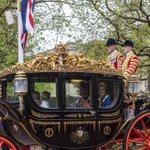
His first great achievement was the Australian State Coach, presented to Queen Elizabeth II in Canberra in 1988 as Australia’s official Bicentennial gift. Built principally from Australian materials, it was not merely ornamental. Frecklington combined traditional craftsmanship with modern engineering, including heating, electric windows, and hydraulic stabilisation.
It became a working royal carriage and remains in the Royal Mews. It has carried members of the Royal Family on some of the great ceremonial occasions of the decades.
That achievement alone would have secured Frecklington an honoured place in Australian craftsmanship and the arts.
But he did it again.
His Diamond Jubilee State Coach was an even more extraordinary undertaking – part carriage, part work of art and part travelling museum. Into it were incorporated fragments and materials associated with some of the great places, ships and events of British and Commonwealth history, including Westminster Abbey, the Tower of London, Canterbury Cathedral, HMS Victory, the Mary Rose, and the Royal Yacht Britannia.
The result was magnificent.
Queen Elizabeth II first used it for the State Opening of Parliament in 2014. In 2023 the world saw Frecklington’s Australian-built masterpiece when it carried King Charles III and Queen Camilla from Buckingham Palace to Westminster Abbey for their Coronation.
Millions watching one of the greatest ceremonies of the British monarchy were therefore looking at something conceived and created by an Australian craftsman in a workshop at North Head in Sydney.
Frecklington meanwhile embarked upon what he intended to be his greatest work: the Commonwealth Royal Coach for King Charles III.
Again, it was to be much more than a vehicle. He conceived it as a moving representation of the Crown, the Commonwealth, and a thousand years of history. Its crown incorporates ancient timber from Westminster Abbey; bronze flowers represent the national flowers of the 56 Commonwealth countries; its construction incorporates steel from the Sydney Harbour Bridge, fittings associated with the Sydney Opera House, and even bearings connected with Australia’s celebrated 3801 steam locomotive.
It is difficult to imagine a more characteristically Frecklington idea: ancient Westminster Abbey and the Sydney Harbour Bridge brought together in one magnificent ceremonial object.
What makes his final years particularly moving is that he continued this immense undertaking while suffering from cancer and undergoing chemotherapy. He knew that time was against him. Yet he continued working.
He had mortgaged his own home to finance his projects. This was no wealthy dilettante commissioning others to realise a passing fancy. Frecklington was consumed by the conviction that some things were worth making properly, however difficult, however expensive, and however long they took.
He once explained his philosophy in words which now constitute an appropriate epitaph: ‘You may as well do something with your life that’s going to last.’
He did.
There was something profoundly Australian about Jim Frecklington. A country boy from central-western New South Wales went to Buckingham Palace, mastered an almost extinct European craft, returned home and demonstrated that an Australian could not merely reproduce the finest traditions of royal coachbuilding but advance them.
He combined the confidence of the Australian bushman with the standards of the old-world master craftsman.
Nor was he merely looking backwards. His coaches outwardly belong to the great tradition of royal ceremonial vehicles, but underneath the gold leaf and carved timber are sophisticated modern suspension, heating, electric windows and contemporary engineering. He understood that tradition survives not by being frozen in time but by combining inheritance with invention.
Queen Elizabeth II appointed him a Member of the Royal Victorian Order in 2014, a distinction in the personal gift of the Sovereign, recognising his service and craftsmanship. No doubt it would have been a knighthood in her gift but for the Canberra tantrum thrown on one previous occasion. Australia had earlier awarded him the Medal of the Order of Australia for his contribution to carriage building and the preservation of traditional craftsmanship.
Both honours were richly deserved.
But his greatest memorials require no inscription.
They stand in the Royal Mews.
Long after almost everything manufactured in our time has been discarded, replaced or forgotten, Jim Frecklington’s coaches will emerge on great state occasions, drawn by magnificent horses through the streets of London.
Future generations will see kings and queens ride in them. They will watch coronations in which his craftsmanship forms part of ceremonies centuries older than Australia itself.
And somewhere on those coaches will remain the work of the Australian from Peak Hill who decided that the lost art of the royal coachmaker should not be allowed to die.
Jim Frecklington did something very few of us can hope to do.
He made things of beauty intended to last and which will last for centuries.
When it is explained that these glorious artefacts were designed and built in faraway Australia, foreign princes, ambassadors, kings, emperors, presidents, popes and people everywhere will pause and be impressed both for Jim Frecklington and the faraway land in which he was born and where he conceived such objects of honour and beauty.

Pauline – prime ministerial patriot
Leading the change of government to liberate Australia
David Flint
📷
22 August 2026
They say she’s a racist and that she’s not prime ministerial. In what the media admit are its ‘gotcha stakes’, she wouldn’t know – and couldn’t care less – who the Lower Slobbovian Head of State is. I am referring, of course, to Pauline Hanson. I have known her for years, and as the republican movement’s declared ‘perma-tanned, Indonesian-born blown-in’, I can say, with considerable authority, that the lady is certainly not for racism.
As for not being prime ministerial, I cannot recall a contender for that high office who, just from her presence, has forced the other two patriotic parties – the Liberals and Nationals – to choose new leaders who – unlike their Labor-lite predecessors – have views closer to hers, views far more consistent with those of most patriotic Australians. Nor do I recall a contender, especially from a political party alleged to have no policies, whose policies have actually resulted in the Coalition and even Labor being forced to change theirs. The best example is concerning the Albanese government’s gross abuse of the immigration power, where even Labor is being forced by One Nation’s policy at least to pretend that they want to change.
Meanwhile, burdened by a wasteful government making citizens poorer, leaving the country defenceless, lying about taxation changes, letting terrorists return, and abusing the immigration power for electoral purposes, Australians across the political spectrum, including the 16 per cent of intending One Nation voters YouGov found voted Labor at the last election, are increasingly realising there may well be a solution.
With Labor’s support declining, the latest DemosAU model suggests that if an election were held now, the patriotic parties—One Nation and the Coalition of Liberals and Nationals – could take 76 House seats. That will probably increase for the simple reason that from here on, it is hard not to see Labor’s support declining significantly. By the election, and if the Coalition concentrates on fighting Labor, they are poised to win a majority.
It’s clearly One Nation’s determination to free the ship of state from the barnacles accumulated through decades of elite rule that is driving support for change.
A current example is the scandalous handling of citizens who aligned themselves with Middle Eastern terrorism. The public record is stark. First, approximately 40 Australians from the Syria-Iraq conflict zone, including with associated with or who fought for Isis, were allowed back under the Coalition. Recently, at least 16 adult so-called ‘brides of Isis’ returned to Australia with their children. Now, approximately 13 Australian men detained in Baghdad face imminent release and are expected to seek to return to Australia
Claiming untruthfully against the evidence that it did not assist in the return of the ‘brides’, the Albanese government is hiding behind its claim, unsupported by published legal advice, that the High Court would strike down any attempt to block their return.
Not only are these returns a grave threat to national security; in covering necessary surveillance, they impose an astronomical burden on the taxpayer of up to $58 million every single year. While the major parties dithered and hid behind undisclosed legal advice, Senator Hanson has taken decisive parliamentary action. Her Protecting Australians from Foreign Terrorist Fighters Bill 2026 anticipates the High Court’s current application of the separation of powers doctrine by empowering the Federal Court to issue exclusion orders. It also strengthens terrorism bail laws and grants the minister explicit passport-cancellation powers, making it a serious offence to facilitate the return of foreign fighters.
Senator Hanson has refused to accept fear of the High Court as an excuse for legislative impotence. She recently persuaded the Senate to refer the bill to the Legal and Constitutional Affairs Legislation Committee, with its report due on 7 September. As she argues, if the law is stopping the government from protecting Australians, just change the law.
Pauline Hanson’s decisive leadership reflects a deeper truth. There is a widespread feeling among Australians that their country has been taken away from them, and that there is something fundamentally wrong with the way in which this country is governed. As Jai Martinkovits and I wrote in our 2014 book, Give Us Back Our Country, there is a solution.
This is to make governments accountable not only in elections confected by political preselections, but by making them accountable 24/7.
Little wonder that Australians are increasingly turning to One Nation because they realise that the God-given promise of Australia – to be among the wealthiest and most civilised countries in the world – is being squandered by the political class.
The surge in support for One Nation since the election has had a superb effect. First, it put steel into the Coalition parties, making them better reflect their membership by choosing conservative leaders and adopting policies supporters want.
Second, One Nation’s rise has also raised the potential of returning the House to doing something more useful than merely indicating who won the election. The fact is that the House now functions as a government rubber stamp between elections. One Nation’s rise encourages a future return of the House to the original intention of the Constitution: making the government of the day accountable on the floor of the House of Representatives.
Thus, responsible government will be restored.
Third, the surge of support has allowed One Nation to become a significant force for returning to the original intention of the framers of the Constitution to create a real and not a fake federation, which our Commonwealth now sadly is. In her plans to abandon federal-state duplication, Pauline Hanson shows that she is one of the few real federalists in politics today.
Fourth, while the Constitution was also intended to be supremely democratic, as the six self-governing colonies already were, a final step was never achieved.
Our Constitution was approved by the people through ten referendums. But soon after Federation, our democracy was hijacked by a rigid two-party system. With Labor introducing a Bolshevik-style centralised caucus control, responsible government, as we have seen, disappeared.
Above all, with One Nation’s commitment to Swiss-style citizen-initiated referendums triggered by petitions of the people – a mechanism championed over a century ago by progressive South Australian premier Charles Kingston – we can see the Australian people playing their full role in controlling the politicians instead of giving them a blank cheque every three years.
Australians will, by then, have truly taken back their country.
-----------------------------------------------------------------------------------------------------------------------
Secret Harbour revolt
Rejecting the anti-Australia axis, Aussies say: take back our country
David Flint
📷
5 September 2026
Not long ago, while I was waiting on a ferry moored at Circular Quay before an evening cruise across Sydney Harbour, a sudden commotion broke out along the concourse. I should point out that this was before the legacy media reluctantly noticed the One Nation surge. A crowd of young Australians had gathered and spontaneously began chanting: ‘Pauline, Pauline, Pauline!’ As Senator Pauline Hanson walked down the gangway, she was greeted with genuine warmth and enthusiasm. To anyone relying solely on the legacy media, this scene would seem impossible. To those who understand the deep, subterranean currents running through ordinary Australia, it was entirely predictable.
Before that cruise, in the 2025 election campaign, this column called on patriotic voters to cast their first preference for One Nation and then prefer the Coalition over the Labor-Greens. In the Senate run-off, One Nation’s Warwick Stacey prevailed over Labor with 51 per cent, while in Labor’s long-held blue-ribbon seat of Hunter, Stuart Bonds scored a remarkable 41 per cent of the two-party vote. This was the first and clear indication of One Nation’s surge. Not only has it fundamentally changed politics, it can save the Australian nation from becoming the Argentina of the South Seas.
It has long been evident that national success has nothing to do with race, colour, or even sheer natural endowments. Rather, as my co-author and I argued in Give Us Back Our Country, a nation’s enduring success can be traced directly to the quality and integrity of its institutions. Australia is one of the world’s oldest, most stable democracies, built upon ancient traditions, individual liberties, and the Crown.
Yet in recent decades, these institutions have been systematically hollowed out, captured by factional powerbrokers – ‘faceless men’ exercising political power in the major parties, and almost never in the national interest. Loyal rank-and-file members, once our civic backbone, have been reduced to unpaid foot soldiers raising funds and letterboxing brochures, under threat of expulsion should they dissent.
Meanwhile, the elites who have marched through our universities, schools, bureaucracies and state broadcasters found it convenient to strike a bargain with these powerbrokers. In exchange for the elites tolerating their personal perks, power and backroom wealth, the machine politicians agreed to advance the elites’ radical cultural agenda, forming together what can best be described as an anti-Australia axis.
On commercial talkback radio, hard-working Australians began asking the same bewildered question: ‘Why do they hate Australia?’
How else can one explain the systematic surrender of our national sovereignty? When John Howard and Tony Abbott retook control of our borders, the anti-Australia axis answered this with the present out-of-control immigration, which too often allows the entry or return of proto-terrorists. We have seen the reckless winding down of our national defence, and massive waste and corruption in the administration of financially out-of-control programs. We have witnessed the suppression of free speech, the decay of basic law and order, the discharge of the mentally ill onto the streets, and the constant denigration of the ethical teachings from our traditional Judeo-Christian heritage.
Central to this managed decline is the dogmatic enforcement of an absolute, quasi-religious, trillion-dollar orthodoxy on climate. It rests on three absurd tenets: first, that human-source carbon dioxide is the sole driver of all weather, rendering every flood, frost and heatwave an apocalyptic event; second, that natural historical cycles of warming and ice ages are totally irrelevant; and third, the supreme conceit that politicians can alter the planetary thermostat by impoverishing their own citizens, even where national emissions are a minuscule one per cent of the global total.
Under this dogma, Australians must surrender suburban family homes and motor cars, cramming into high-density high-rises with curtailed power and rationed air-conditioning. Meanwhile, the righteous elites jet across the globe in maximum luxury to liturgical Earth Summits and similar events, ones paid for by enormous grants extracted from taxpayers, to render homage to high priests, and climate billionaires like Al Gore. Worse still, in league with international merchant banks, they construct artificial carbon markets designed to harvest private wealth including prime agricultural land, even as Australia exports millions of tonnes of coal and gas to foreign competitors who enjoy the cheap, reliable energy our own citizens once had but are now denied by traitorous politicians.
Any scientist, economist or citizen who dares question this insanity is promptly smeared, ridiculed and cancelled. We no longer live under a functioning Westminster democracy, but an Australian variant of managed democracy – reminiscent of the ‘Guided Democracy’ introduced into Indonesia by Sukarno, where democratic forms are retained while the ruling apparatus ensures the public cannot derail the predetermined agenda. Electing a self-confessed lying government in modern Australia has become tantamount to signing a blank cheque drawn on your home, your savings and your income – and worse, a blank cheque on the inheritance of your children and grandchildren.
The historic outcome of the Secret Harbour by-election in Western Australia not only destroys the commentariat mantra that One Nation’s surge will only serve to keep Labor in power. With One Nation defeating Labor for the sixth NSW Senate seat and now two by-elections, it is clear this is nonsense.
The victory of One Nation’s Luke Herdegen in what was once considered unassailable Labor territory is not a mere protest vote; it is a seismic political realignment. It is the revolt of the forgotten Australians: the tradesmen, the farmers, the small business owners, the self-reliant retirees, the veterans – in fact anyone who does not want to be dependent on funding taken from other taxpayers, and who are so loathed and despised by the Albanese government. It is also a blunt repudiation of the ‘Labor-lite’ faction within the Coalition, who have spent years accommodating the anti-Australia axis rather than confronting it.
On issue after issue – from out-of-control immigration to domestic energy security – Pauline Hanson and One Nation have set the national agenda while the legacy parties scramble behind. Patriotic Australians who wish to save their country understand what must be done: use the power of the preferential voting system to place One Nation first, while ensuring subsequent preferences flow strictly to the Coalition ahead of the Labor-Greens anti-Australia axis.
Australia remains an extraordinarily blessed and wealthy country. It is being brought to its knees not by external enemies, but by a self-serving anti-Australia domestic establishment.
Secret Harbour has sent an unmistakable signal across the continent: the Australian people have awakened, and the reclamation of our nation has begun.
---------------------------------------------------------------------------------------------------------------------
Climate exposé ignored
Only One Nation opposes trillion-dollar ‘scam’
David Flint
📷
12 September 2026
Artificial intelligence has an unintended talent to entertain through its predictability. Challenge elite orthodoxy on global warming and AI will probably lecture you, reminding you that ‘the science is settled’ and that an iron-clad ‘scientific consensus’ governs anthropogenic global warming.
My response to the consensus juggernaut has long been to recall those two wonderful Australian Nobel Laureates, Barry Marshall and Robin Warren. For decades, the medical establishment insisted stomach ulcers were caused by stress and diet. They ridiculed Marshall and Warren’s 1982 discovery that a bacterium, Helicobacter pylori, was the principal culprit. Their Nobel Prize confirms scientific progress may require defying a consensus, not genuflecting to it.
The orthodox narrative on climate change was challenged by Barack Obama’s former Under Secretary for Science, Steven E. Koonin. In his 2021 book Unsettled, he points out that authoritative research literature and official government climate assessments make it plain that American heatwaves are ‘no more common’ today than in 1900, while the highest temperatures recorded in the United States have simply failed to rise over the past half-century.
That was of course dismissed as heretical by climate catastrophists. But as Bjorn Lomborg said of the book, ‘if we are to make trillion dollar investments, we deserve to be as well informed as possible’.
In April, a study by John R. Christy confirming Koonin’s conclusion that global warming had not occurred in the US appeared in the respected, peer-reviewed journal Theoretical and Applied Climatology. Headlines should have shaken the climate change establishment to its core. But it was the wrong news. It goes against what is almost a religion, which all major Australian political parties – with the notable exception of One Nation – treat as infallible dogma. This story didn’t make the news.
This quasi-religious belief reflects the decline of the Judeo-Christian faith that has guided the nation since 1788. Man must believe in something, and absent faith, curious political dogmas fill the void.
I learned of Dr Christy’s study from a unique report in that excellent international newspaper, the Epoch Times.
The findings dismantle the relentless assertions that dominate both the media and political discourse: the familiar, breathless claims that we have just survived the hottest day, month, year, or season in human history.
If this were mere hyperbole, it might be dismissed as harmless theatre.
But when public policy relies on these narratives to redirect billions of taxpayer dollars – supported by an uncompromising bureaucracy it ceases to be harmless and becomes genuinely destructive.
As Robert Gottliebsen affirms in the Australian, this madness carries a staggering price of one trillion dollars. That’s right, a thousand billion dollars.
As this column has argued (‘Water versus massive waste’, 20 June 2026), that sum could fund a revised Bradfield Scheme to drought-proof Australia and still leave billions over. Instead, the politicians are pouring Australia’s wealth down the drain. Despite Angus Taylor warning Pauline would ‘blow up the joint’, only One Nation promises to close this folly down.
Even if the theory of catastrophic anthropogenic global warming were as undeniable as two plus two equals four, which it clearly is not, Australia’s territorial emissions account for roughly one per cent of the world’s total. If, to paraphrase Taylor, we were to shut down the joint, it wouldn’t make the slightest difference to the climate.
The Labor-Greens (and until recently the Coalition) remain fixated on net zero – aided by funnelling capital into questionable paper schemes for what confidence men call ‘carbon credits’. In Australia, this can mean paying fat commissions to lock up productive farmland to let it run to ruin with weeds and scrub. All this involves the politicians take our money to pour it into, as Donald Trump puts it, ‘the greatest scam in history’.
Unlike Energy Minister Chris Bowen, Dr Christy has little need to incur a multi-million-dollar travel budget darting across the globe to climate summits. He is Distinguished Professor of Atmospheric Science and Director of the Earth System Science Center at the University of Alabama in Huntsville. With Dr Roy Spencer, he developed the globally recognised satellite temperature dataset using microwave sounding units, earning Nasa’s Medal for Exceptional Scientific Achievement.
When confronted with the assertion the climate debate is closed, Dr Christy is unequivocal. Addressing the repeated claim of a ‘consensus of thousands of scientists’ warning of ‘catastrophic system collapse’, he insists he’s one scientist – joined by many others – who simply sees ‘no empirical evidence’ for it. The climate system, he adds, is far less sensitive to carbon dioxide and related trace gases than official models assert.
Regarding the Paris Agreement and binding net zero targets, he pulls no punches: those demanding urgent, radical disruption are ‘arithmetically challenged’. Changing the climate by forcing national emission cuts is ‘just not on the cards’.
Christy examined long-term temperature records across more than 1,200 US stations. Rather than relying on homogenised averages – where algorithms purge inconvenient readings flagged as ‘anomalous’ by agencies like the National Oceanic and Atmospheric Administration – Christy returned to raw, unadjusted daily maximum and minimum records.
What he found directly contradicts the prevailing media narrative: extreme high temperatures across the US have moderated rather than intensified over the past century.
Auditing digitised archives, Dr Christy noticed records claiming the all-time high in Newport, Oregon, was 94°F (34.4°C). Digging into original handwritten station logs, he discovered an unrecorded reading of 100°F (37.8°C) in June 1925, plus ten other days exceeding the supposed record findings confirmed by surrounding stations.
Restoring this integrity, he said, required truly laborious manual validation – work routinely bypassed today by automated algorithmic homogenisation. Without historical ground truth, one cannot understand real climatic extremes.
Australian readers will recognise the parallel. For years, observers have questioned adjustments made by the Bureau of Meteorology under its Acorn-Sat homogenisation process, which frequently saw historical hot periods revised downward thus accentuating modern warming. Following Malcolm Turnbull’s coup against Tony Abbott, ministerial interest in pursuing an independent, formal review into the Bureau’s homogenisation unsurprisingly dissipated.
Dr Christy’s paper faced significant pushback during peer review, but his persistence carried it into print. It serves as a reminder that science advances through the rigorous examination of primary data – not by enforcing some politicians’ fictional consensus.
ABC cancels suicide note
Why the national broadcaster has fallen so low
David Flint
15 August 2026
Edmund Burke notably recalled in his Reflections on the Revolution in France, that it was 16 or 17 years since he had last seen the now humiliated and degraded Queen Marie-Antoinette, and that ‘never lighted on this orb… a more delightful vision.’
‘Glittering like the morning-star’, he believed that ‘ten thousand swords’ must have leapt from their scabbards to avenge ‘even a look that threatened her with insult’.
‘But,’ he memorably declared, ‘the age of chivalry is gone,’ and that of ‘sophisters, economists, and calculators’ has succeeded and ‘the glory of Europe is extinguished forever’.
Had Burke lived to see a publicly funded broadcaster in one of the world’s oldest continuing democracies rejoice in the graphic, violent humiliation of a prominent woman – a call for her sodomisation and murder under the false flag of ‘satire’ – he would have recognised that his age of sophisters and calculators has been superseded by something far worse: an era of institutionalised, totally humourless, terrorist-inspired malice.
For close to four weeks, the ABC’s leadership refused to perform two simple acts which basic human decency demanded be immediate: take this depravity down and apologise to the lady so direly threatened by it. On 6 August, they finally relented. ABC Managing Director Hugh Marks issued an apology and scrubbed the terrorist video from the ABC platforms.
No one should mistake this belated retreat for an outbreak of moral clarity. We know this because of the astonishing caveat attached to the apology: the ABC’s internal ombudsman’s extraordinary declaration that the segment did not breach the ABC’s ‘editorial standards’. She concluded that a graphic fantasy of impaling Mrs Rinehart and ‘mixing her guts up’ was justified by the ‘editorial context’.
If describing the sodomy and murder of a living citizen does not breach the ABC’s standards on harm and offence, one shudders to think what those standards actually protect.
Why, then, did the ABC finally pull the video? Certainly not the damages likely to be awarded in a civil action. In such cases – reported now with a degree of regularity that should disturb any board doing its duty – any damages awarded are of course not paid by the perpetrators or their protectors. At least, not yet, despite the likelihood of personal liability. What was more likely was police interrogation and personal liability under the criminal law and the increasing evaporation of the ABC’s political cover. The sheer criminal depravity of this material achieved the rare feat of alienating the broadcaster’s normally robust supporters. When you have lost not only Labor’s acting prime minister Richard Marles and the Greens’ Sarah Hanson-Young – who rightly called the segment ‘disgusting’ – you have surely lost the room. The ABC bowed not to principle but to fear of police interrogation and political isolation.
The point, surely, is that this material should never have been broadcast. The precise moment the Managing Director and the Chairman became aware of it, it should have been immediately struck from all platforms, and followed by a profound and unreserved apology.
Despite the belated backdown, the national broadcaster is forever on record of having issued an invitation to mimic the increasing violence of far-left extremist terrorists.
Public officials are not immune from scrutiny when they intentionally permit the publication of material that reasonable people deem intensely menacing, and delay unreasonably any correction until they fear losing the support of their friends.
The ABC once fulfilled its charter, providing a national broadcasting service of great quality and utility. With no political editorial line, it delivered rigorously objective news to the cities and vital, practical information to farmers in the country.
Why, then, has the ABC fallen so low?
The fatal turning point was the disastrous decision that the ABC should have within it a virtual factory churning out internally produced and increasingly partisan, adversarial and fashionable political commentary. The result is the ABC has come to have something no public broadcaster should ever have in these matters: a predictable editorial line on the great issues of the day. The hypocrisy of this affair remains staggering. Consider the target of this taxpayer-funded malice.
Gina Rinehart did not – as most antagonists so lazily assume – simply inherit an empire like some Infanta de España. She took over a company in 1992 burdened with debt and under serious threat of asset seizure. Through sheer grit, intelligence and personal risk, she built it into the most successful private company in Australian history, so much so that this is the nation’s largest private corporate taxpayer paying many billions of dollars in federal and state taxes.
More importantly, she is one of the nation’s leading benefactors in a wide range of areas. At the time of the Commonwealth Games, she demonstrated again that she is by far the nation’s largest private sporting benefactor, quietly paying out over $1.2 million in bonuses to our swimmers to ensure Australian excellence is recognised and rewarded. While Mrs Rinehart was spending her private wealth elevating Australian athletes on the world stage, the ABC spent public money broadcasting violent fantasies to tear her down.
The progressive defenders of this broadcast operated under a dangerous delusion. They appear to believe that because a woman wields immense corporate power, true ‘equality’ dictates she must be subjected to murderous degradation so depraved it would be worthy of that monster, Lavrenty Beria, the deeply depraved architect of Stalin’s terror.
Margaret Thatcher would have recognised this progressive fallacy instantly. True equality does not require a race to the bottom where women are subjected to the vulgarity of the mob; it demands that public discourse be civilised.
Contrary to Burke’s despairing observation, the age of chivalry has not gone. Chivalry, in its modern form of basic human decency and mutual respect, is still alive, and will remain alive as long as civilisation, as we know it, endures.
The sad thing is that such chivalry and decency apparently no longer reside within the executive suites of the Australian Broadcasting Corporation.
By finally removing this broadcast, the ABC has attempted to cancel its suicide note. But the damage is done, and it has lost an enormous amount of the reserves of respect it still enjoyed. Right-thinking Australians who believe in the fundamental values of liberty, democracy and the rule of law will not underwrite such degradation forever.

Strategy of the pro-Australia parties to the next election
If they cannot say something good about One Nation, they should say nothing at all
David Flint
12 August 2026
With Australia’s first hard-left Prime Minister – who presents himself as a centrist, gaining the leadership of the Labor Party and, with around one-third of the primary vote, the prime ministership – apparently doing all he can to damage our fundamental Western alliances, starting with our vital relationship with Japan, the very last thing the Coalition should be doing is badmouthing One Nation.
Critics might say that this column would obviously argue that. After all, we were one of the few at the 2025 election who, in this journal and on 2GB and Nine Network, called on voters to give their first preference to One Nation before the Coalition. We were hoping this would result in the election of the first One Nation Senator for New South Wales as well as a NSW MP. Senator Stacey was elected, but because of ill-health his place is now held by Senator Bell. As to their first NSW MP, the closest was Stuart Bonds, the One Nation candidate in the former blue-ribbon Labor heartland seat of Hunter, who won 40.96 per cent of the two-candidate preferred vote.
If the Coalition’s primary objective is to defeat Labor, the obvious strategy is surely glaringly simple: if they cannot say something good about One Nation, they should say nothing at all.
Badmouthing One Nation will make headlines and delight the pro-Labor media, but it will reduce the likelihood of defeating what has emerged as an increasingly effective Anti-Australia Axis, something I first wrote about with Jai Martinkovits in 2014 in Give Us Back Our Country.
The ultimate electoral objective must be to secure at least 76 seats in the House of Representatives for the broad patriotic right.
There is no need for a grand coalition between the three parties; indeed this is probably undesirable.
All that is needed, apart from there being no gratuitous criticism of One Nation, is an understanding that whether the Coalition or One Nation forms the next government, the patriotic party not in government will refrain from two things: supporting or moving a vote of no confidence or supporting or moving a refusal of supply.
After the next election, if the patriotic parties win 76 or more seats, they will then – and only then – have to agree on who should form the government. This would probably be the side which has the largest number of seats in the House. This is not assured; it is a matter for discussion and advice to the Governor-General.
Meanwhile, published opinion pollsters – beginning with Newspoll – would render a better service to public discourse if they focused on the two-party preferred figures rather than the ‘preferred prime minister’ metric.
In Australia, the ‘preferred leader’ calculation is interesting but of significantly less relevance. We live under a Westminster constitutional monarchy, not a presidential republic like the United States. A government rises or falls strictly on the floor of the House of Representatives (subject only to something extremely rare, a denial of supply in the Senate). The preferred leader score is a media talking point, not a constitutional determinant.
There have been a number of occasions where a large number of voters preferred the leader of a party different from the one they were going to vote for. While this may also happen in a presidential republic, it is probably more common in those following the Westminster parliamentary system – where a Prime Minister is in a much more fragile and less powerful position than an American executive president, who is more like a powerful elected king than the typical leader of a Roman-style republic. (Even then, when the Romans did eventually introduce a strong emperor, this was for the first three centuries under the facade of the republic.)
When Sir William McMahon was Coalition Prime Minister, many Liberal voters preferred, without ever voting for him, the style of the then as-yet untried Gough Whitlam. Power in the Westminster system ultimately turns on House of Representatives numbers, not personal popularity contests.
If the Coalition wishes to govern, it must focus on the arithmetic of the House of Representatives and recognise that with One Nation they are natural partners in providing Australia with stable, patriotic governance.
To those conservatives who are still severely opposed to Pauline Hanson, they should remember that in politics, as in statecraft, the supreme priority must be the removal of a government that threatens the nation’s security and constitutional foundations.
The surge in One Nation’s support has been the factor that forced both Coalition parties to install conservatives as leaders.
It will at times in the future change the House of Representatives from being a useless rubber -stamp and return it to the original constitutional intention. This was as the tool ensuring that we have not only representative but also responsible and thus accountable government.


INDEPENDENT COMMISSION AGAINST CORRUPTION STILL A DISASTER - THE POLITICIANS SHOULD HAVE REVIVED GRAND JURIES
MEANWHILE, POLITICIiANS ARE GRADUALLY STRIPPING AUSTRALIANS OF THEIR ANCIENT RIGHT TO TRIAL BY JURY
David Flint
8 August 2026
To err is human, but to persist in error – actively undermining the constitutional order – is the hallmark of political folly.
When NSW premier Nick Greiner’s Coalition government enacted the Independent Commission Against Corruption Act in 1988, it was done under the banner of clean government. Yet, in doing so, the Liberal party committed a cardinal sin against our common law heritage. It created a Frankenstein monstrosity, a standing commission empowered to set its own agenda, conduct public inquisitions and destroy reputations long before any criminal charge ever reached a jury.
In a classic case of tragic political irony, the monstrosity devoured its own architects and is now devouring their successors. From Greiner to Barry O’Farrell and Gladys Berejiklian, the Liberal party has repeatedly fallen on the sword it forged. Yet, instead of restoring constitutional principle, successive governments tinkered around the edges of an institution that should never have existed.
What MP John Ruddick wittily called the ‘Independent Commission Against Catholicism’ was born of a profound misunderstanding of trial by jury and the established criminal law, as well as advances in modern criminal procedure.
The 1980s had actually marked the emergence of a widespread reform: the establishment of independent Directors of Public Prosecutions, moving the power to charge citizens from the police into the hands of normally detached, objective legal officers. ICAC bypassed this reform entirely, combining the role of investigator, prosecutor, and public judge into a single statutory agency. By making ‘findings of corrupt conduct’, ICAC effectively circumvented the independent filter of the DPP with a ‘trial by media’ and the inescapable ‘walk of shame’, inflicting irrevocable punishment before an independent prosecutor could receive and review the brief of evidence.
Meanwhile, as noted in this column at the time, there has been no greater monument to ICAC’s institutional overreach than the rejection by the High Court in 2015 of its illegitimate pursuit of distinguished Crown Prosecutor Margaret Cunneen SC.
As this column noted, the best weapon against corruption was there all along, one of the most effective common law institutions ever known: the grand jury. Wisely preserved under the US Constitution, it operates in strict, mandatory secrecy. Investigators cannot leak details, hold televised inquisitions, or stage ‘perp (perpetrator) walks’. If no indictment is issued, the investigation remains secret with reputations remaining intact.
While grand juries existed briefly in South Australia (1837–1852) and Western Australia (1829–1855), in Victoria, they lasted from 1851 to 2009.
They were no doubt abolished because the last thing Labor wanted was for a citizen to be able to apply to a judge to have a grand jury of ordinary citizens empanelled to hear evidence in secret and decide whether anybody should be prosecuted over, for example, corruption and criminal activity in Victoria’s notorious building industry.
Victorian Premier Ben Carroll could demonstrate he has really turned over a new leaf just by restoring grand juries.
The inability of politicians to deal with crime without abandoning long-established principles is far ranging.
This is a trend where the making of a charge is turned into a public spectacle, thus seriously undermining the presumption of innocence. We saw this recently with media crews obviously tipped off for the theatrical airport arrest by Federal Police of Ben Roberts-Smith VC, thus inflicting permanent, irreversible reputational punishment before a trial could even begin.
An even worse demonstration of this was police and court toleration of daily screaming, hostile mobs harassing the accused, Cardinal Pell, on the steps of the Melbourne County Court. This surely had an impact on the jury; their verdict was found so defective by a rare unanimous High Court that they quashed Pell’s convictions (Pell v. The Queen (2020)).
Simultaneously to the Liberals’ creation and unwise retention of ICAC, some state parliaments (led by NSW) have been quietly stripping most Australians charged with a criminal offence of their right to our most ancient constitutional safeguard: trial by jury. That fundamental protection, forged at Magna Carta and refined over centuries, was meant to be the unshakeable shield of every free citizen. Apart from petty offences, no individual could ever be deprived of their liberty except by the unanimous verdict of twelve peers.
Yet, by taking what was originally the minor, narrow exception of petty offences, politicians on both sides have surreptitiously reduced Australians’ ancient right to trial by jury.
While the American Supreme Court ruled that any exception to trial by jury should only be for lesser offences where the maximum penalty is six months, in NSW (and some other states) the politicians have stripped citizens of their ancient right to a trial by jury in relation to offences which can be punished by up to two years, with a cumulative limit of an unacceptable and indeed outrageous five years.
This is more appropriate to a penal colony, not an old democracy under the rule of law.
It can have irrational results. Thus, when the more serious charges against him were withdrawn, Alan Jones was stripped of his right to a trial by jury – a procedural outcome that carries no criticism whatsoever of the Local Court Judge presiding over his trial.
Alan Jones’ prosecution began inappropriately as a total ‘Hollywood production’, with a ridiculously large police presence led by the Child Abuse Squad.
The media were tipped off to wait outside his home for hours to capture the spectacle of his arrest. To this was added a police press conference, the content of which, like his arrest, was in no way consistent with his right to the presumption of his innocence.
Meanwhile in the US, the Supreme Court is actively reining in the administrative state, insisting that the vast and growing field of quasi-criminal penalties must remain strictly bound by the Constitution, particularly the right to trial by jury. We in Australia should demand the same constitutional rigour against our own quasi-criminal regimes – not least the creeping administrative censorship of political speech under section 18C of the Racial Discrimination Act, 1975. In a current case, Senator Pauline Hanson has indicated she will appeal to the High Court (see Louise Clegg in this issue).
These are examples of an increasing tendency of our ossified two-party system to undermine and damage those institutions which have spread around the English-speaking world – ones which Winston Churchill declared are the true foundation of our liberty and which, with democracy and patriotism, constitute the basic values of this land.

The Anti-Australia Axis
How Labor hates our genuine heroes
David Flint
1 August 2026
With the media still obsessed with Barnaby Joyce’s stern and immediately obeyed command to his farm dog, journalists ignored the fact that South Australian Premier Peter Malinauskas’s intervention at the ALP national conference was a glaring faux pas. It was foolish to announce his discovered universal truth – ‘If you can’t govern your dog, you can’t govern the country’ – just when Barnaby had done precisely that. Imagine if Tony Abbott had said something like that.
Meanwhile, the ABC horrified viewers by broadcasting what amounted to a criminally delinquent incitement to torture and murder Mrs Gina Rinehart. Only those who continue to ignore the dangerous threat in extremist incitements highlighted at the Sydney Opera House would hide behind the defence that this was merely ‘satire’. No jury of twelve ‘good and true’ Australians would accept such a despicable excuse.
With the Albanese-led ALP national conferences demonstrating a degree of guided democracy worthy of President Sukarno, the script quickly moved to how terrible they claim One Nation is.
This anxiety exists because, as this column anticipated, Labor is losing the traditional tradies’ vote. That shift became inevitable when Labor ceased to be the party of the workers and, following Beijing’s example, began sordid love affairs with friendly big business.
The result is that Labor now loathes small business as much as it has long disdained farmers, entirely forgetting that tradies are small businessmen too. How unsurprising, then, that polling indicates 16 per cent of intending One Nation voters previously supported Labor.
With 48 to 49 per cent of intending One Nation voters last voting for the LNP, any Coalition politician endowed with basic common sense should know better than to take the media’s bait and attack One Nation. Their path forward is simplicity itself: ensure the minimum possible leakage of preferences, particularly among tradies.
Little wonder, then, that Labor’s national conference could think of little else beyond their fear of One Nation. And since John Howard locked in a statutory requirement for a plebiscite before any change to the national flag, that ambition will have to wait until Labor figures out how to revive their comatose politicians’ republic first. Their temporary consolation is settling for flying the other two flags – flags that no original indigenous Australian ever saw.
Like Labor, much of the press gallery hoped One Nation would do what an over-risen soufflé does – collapse.
Hence the innuendo-loaded question put to Barnaby asking whether Pauline Hanson possessed the ‘intellectual capacity’ to lead the country. Having known her for years, I can say that not only is she a remarkable and charming individual, when it comes to reading the public mood, she is, as the Americans say, ‘one hell of a smart cookie’.
One of the finest books on leadership ever published was written by Henry Kissinger, wherein he selects six fascinating recent figures. He makes no special point of ‘intellectual capacity’ because that is an obvious baseline – far more is required. What will outrage the media and the anti-Pauline commentariat is that a striking commonality among all six leaders was their divisiveness. What are the odds that this exact quality is what our modern pundits condemn most?
When it comes to Pauline Hanson, the media’s double standard could not be starker. When she consults or dines with major Australian wealth creators like Gina Rinehart – the nation’s largest individual taxpayer and a generous benefactor – the press gallery frames it as an inherently suspect, oligarchic conspiracy.
Yet when Anthony Albanese or senior Labor figures attend dinners with foreign-linked donors or commercial property developers with complex tax disputes – disputes where floors of AI-assisted counsel are deployed – the media responds with quiet procedural indifference. The press gallery affords Labor the presumption of legitimate governance while treating conservative leaders with reflex hostility.
We are now witnessing two competing visions for Australia – a conflict that no longer fits the traditional left-versus-right debate derived from the French revolution. This is a fundamental conflict between common-sense Australian patriotism and what I described in ‘Give Us Back Our Country’ as an emergent Anti-Australian Axis: a ruling political and media elite that fundamentally disdains traditional Australian values, much as Al Grassby did when he introduced state-sponsored multiculturalism.
Nothing illustrates this divide more clearly than recent events surrounding Australia’s most characteristic institution: sport. There was a time when supercilious critics dismissed Australians as ‘sports-obsessed’, contrasting our national passion with a supposedly sophisticated European cosmopolitanism. Today, sport is universally recognised as a natural, unifying human institution – and Australia led the world in elevating it.
Two contrasting figures demonstrate the difference between a true Australian patriot and the reckless posture of the political left.
On one side, we have the common-sense patriot Mrs Gina Rinehart, who has long stepped forward with characteristic generosity to support Australian athletes competing at the Commonwealth Games. Recognising the immense dedication required to represent our nation at Glasgow, Mrs Rinehart announced substantial cash incentives for medalists – and for breaking world records. Her private patronage ensures that our athletes are rewarded for bringing pride to the nation, stepping in where government administration so often fails.
Contrast Mrs Rinehart’s patriotic support with the disastrous legacy of former Victorian premier Daniel Andrews who won an election promising a multi-region Victorian Commonwealth Games backed by ‘superb new sporting infrastructure’.
Andrews subsequently abandoned the event entirely. Driven by massive cost inflations – heavily loaded by CFMEU union premiums that added up to a 30-per-cent burden on building costs – he claimed the price tag had ballooned toward $7 billion, and then walked away from his commitment.
The Victorian Auditor-General subsequently confirmed that this cancellation cost taxpayers $589 million for absolutely nothing, bringing international embarrassment to Australia and placing the very survival of the Commonwealth Games in jeopardy. Fortunately, Glasgow stepped in to host a frugal, sensible Games with a budget of roughly $300 million – proving just how artificially inflated the Victorian figures were.
Yet while Andrews – who, alongside the Prime Minister, continues to circulate in influential Labor circles despite ongoing tax disputes and controversies over foreign-linked fundraising dinners – escapes sustained media condemnation, the press gallery continues to insinuate without a shred of evidence that there is something sinister in Pauline Hanson conferring with a genuine Australian patriot like Gina Rinehart.
The point surely is that if Australia is to return to its true trajectory instead of going backwards, it is crucial that the next election be won by common-sense patriots, not the Anti-Australia Axis.
