

نقدم العديد من البرامج التدريبية التي تنتهي بشهادات دولية مهنية و احترافية في تخصصات مختلفة لعلوم البيانات و الذكاء الاصطناعي
Joined September 2022
- Tweets3.1K
- Following45
- Followers762
- Likes393
المهندس محمد فهد يعيد تنفيذ أبحاث Geoffrey Hinton التي شكّلت أساس التعلم العميق الحديث باستخدام PyTorch.
رحلة امتدت لأكثر من 27 ساعة من Boltzmann Machines إلى Forward-Forward Algorithm
#الذكاء_الاصطناعي #البيانات #البرمجة
youtube.com/watch?v=BMYvfVk8…

528
يوميا ننشر تعريفات قصيرة و مفيدة في عالم التكنولوجيا و البرمجة و علوم البيانات و الذكاء الاصطناعي
#الذكاء_الاصطناعي #علوم_البيانات #البرمجة #تكنولوجيا
على قناتكم العربية
youtube.com/@freecodecampara…
تعريف الرؤية الحاسوبية
youtube.com/shorts/wxQ2Phqw-…
🚀 freeCodeCamp بالعربية… البداية تقترب!
نستعد لإطلاق محتوى تقني عربي بمعايير عالمية على منصة freeCodeCamp، ليصل إلى ملايين المتعلمين حول العالم 🌍
نبحث عن صناع معرفة حقيقيين…
مدربين محترفين…
خبراء لديهم دورات عملية عميقة ومبنية على المشاريع.
إذا كنت تملك:
✔ دورة احترافية في البرمجة
✔ محتوى قوي في الذكاء الاصطناعي أو علوم البيانات
✔ خبرة عملية
✔ رؤية تعليمية
فهذه فرصتك لتكون جزءًا من انطلاقة تاريخية للتعليم التقني باللغة العربية.
🎯 هدفنا: تقديم محتوى عربي ينافس عالميًا
🎯 رؤيتنا: تمكين ملايين المتعلمين العرب
🎯 استراتيجيتنا: جودة أولًا… دائمًا
لإرسال مقترحات الدورات أو طلب التعاون:
📩 [email protected]
لنصنع معًا منصة عربية تقنية تُحدث فرقًا حقيقيًا.
#freeCodeCamp
#تعلم_البرمجة
#الذكاء_الاصطناعي
#علوم_البيانات
#المحتوى_العربي
@freeCodeCamp @ossia @beaucarnes @EstefaniaCassN

🤗 دورة احتراف Hugging Face
بوابتك الحقيقية لعالم الذكاء الاصطناعي التطبيقي
هل تريد:
✔️ استخدام نماذج ذكاء اصطناعي عالمية؟
✔️ بناء تطبيقات AI بدون تعقيد؟
✔️ العمل على نصوص، صور، صوت، فيديو، وبيانات؟
✔️ دخول سوق الذكاء الاصطناعي بثقة ومهارة؟
🚀 هذه الدورة لك
🔹 ستتعلم عمليًا:
كيفية استخدام منصة Hugging Face باحتراف
التعامل مع أكثر من 2 مليون نموذج ذكاء اصطناعي
نماذج اللغة الكبيرة (LLMs)
توليد الصور، الصوت، والفيديو
العمل مع Datasets و Spaces
دمج نماذج شركات عالمية في مشاريعك
👨🏫 مع مهندس الذكاء الاصطناعي
محمد فهد العبره
صانع محتوى في قناة freeCodeCamp العالمية
📅 18 – 19 – 20 يناير 2026
⏰ 8:30 مساءً – أونلاين
💰 السعر: 199 ريال فقط
📲 للتسجيل:
programming-ocean.com/course…
✨ نماذج الشركات العالمية بين يديك… والذكاء الاصطناعي أصبح مهارة لا رفاهية
#الذكاء_الاصطناعي #تحليل_البيانات #علوم_البيانات #نماذج_اللغة_الكبيرة #ArtificialInteligence #تطوير_الذات #مهارات

Diffusion models have quietly reshaped the landscape of generative modeling. This survey offers the most complete map so far—connecting theory, algorithms, efficiency, likelihoods, structures, and applications into one unified framework
for more: arxiv.org/abs/2209.00796
#DiffusionModels #GenerativeAI #MachineLearning #DeepLearning #ScoreBasedModels #StochasticProcesses #SDE #ODE #ProbabilisticModeling #BayesianInference #StatisticalMechanics #NonEquilibriumThermodynamics #AIResearch #FoundationModels #AIGeneration

What if reasoning quality wasn’t the bottleneck—tokenization was?
This paper flips a quiet assumption in LLM research.
T-pro 2.0 shows that for Russian (and Cyrillic languages), thinking better starts with counting better.
Instead of scaling parameters, the authors asked a sharper question:
What if the model is already smart—but forced to think in broken words?
What makes this work stand out:
A Cyrillic-dense tokenizer that finally treats Russian as a first-class language, not an afterthought.
Hybrid reasoning modes: instant answers when you need speed, full reasoning traces when you need trust.
Speculative decoding (EAGLE) that makes reasoning faster, not slower.
Open everything: model weights, datasets, benchmarks, inference pipeline.
A live demo where you can literally see latency, reasoning depth, and speedups unfold token by token.
The surprising result:
Without adding parameters, T-pro 2.0:
Competes with GPT-4o-level systems on Russian reasoning
Beats most proprietary Russian models
Runs ~2× faster during inference
Keeps English performance intact
The deeper message:
This isn’t just a Russian LLM paper.
It’s a reminder that:
Reasoning ≠ model size
Reasoning = data + tokenizer + decoding + alignment
If we want truly global AI—not English-centric intelligence—we need to rethink the plumbing, not just the neurons.
This is what “efficient reasoning” really looks like.
#LLM #ReasoningAI #EfficientInference #OpenSourceAI #HybridReasoning #TokenizationMatters #SpeculativeDecoding #MultilingualAI #RussianLLM #AIResearch

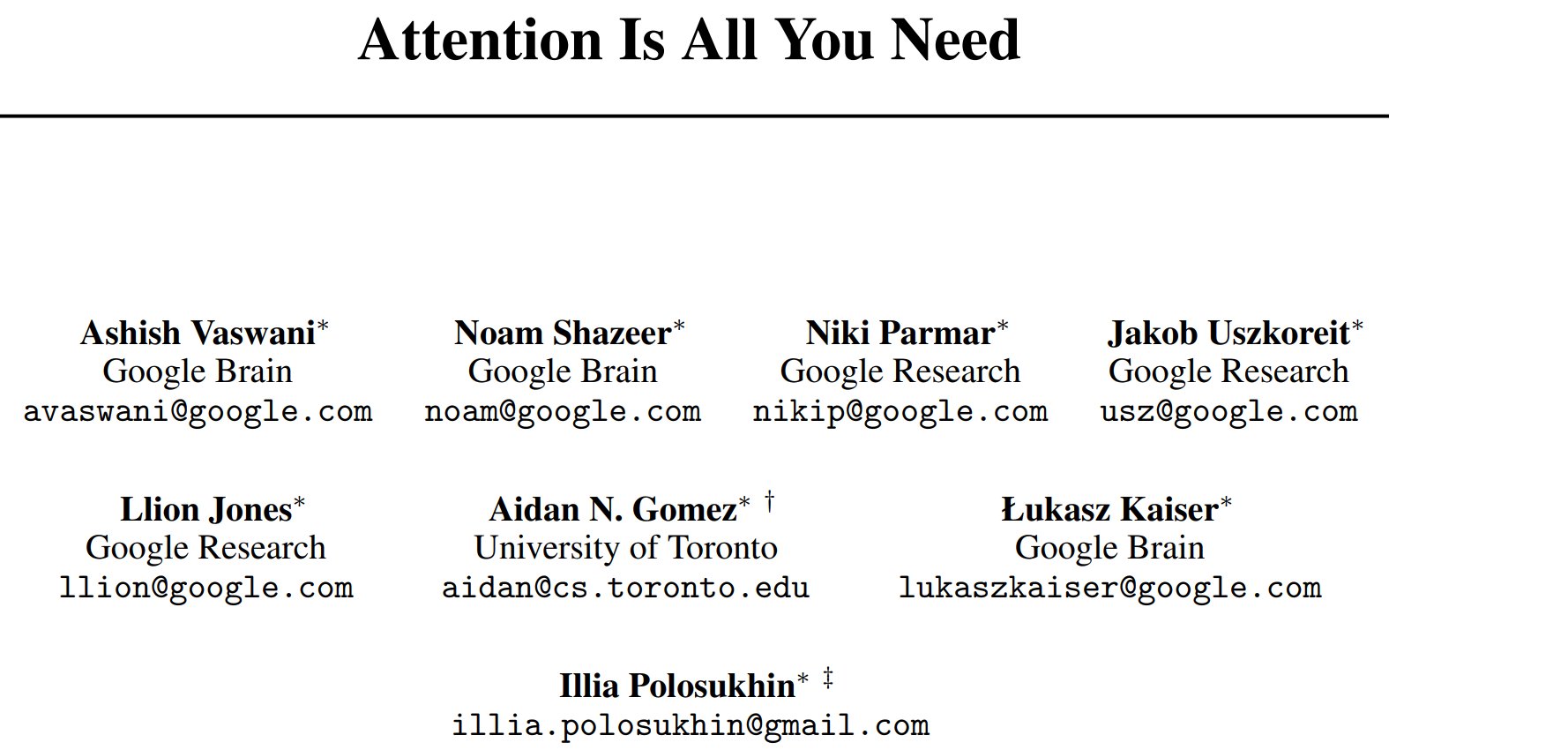
🚀 “Attention Is All You Need” — The Paper That Rewired the Entire AI Universe
Few research papers in the history of computer science have reshaped an entire field overnight. Attention Is All You Need (Vaswani et al., 2017) is one of those rare inflection points — a conceptual breakthrough that redefined how machines process language, vision, and multimodal information.
Before 2017, sequence modeling was dominated by RNNs, LSTMs, and CNN hybrids. These architectures struggled with long-range dependencies, slow training, and limited parallelism. The Transformer erased all of that in one stroke.
What the Paper Did
The authors introduced a radical idea:
👉 You don’t need recurrence. You don’t need convolutions. You only need attention — scaled, self-referential, and parallel.
This was not just an architectural tweak. It was a paradigm shift.
Why It Mattered
Self-Attention allowed models to understand relationships across an entire sequence at once.
Multi-Head Attention enabled multiple representational subspaces simultaneously—capturing syntax, semantics, context, sentiment, and structure in parallel.
Positional Encoding solved the “sequence without sequence” problem elegantly.
Massive Parallelization unlocked GPUs and TPUs in a way RNNs could never match.
The result:
➡️ Training times collapsed.
➡️ Model capacity exploded.
➡️ The door opened for BERT, GPT, T5, ViT, Stable Diffusion, Qwen, Llama, and every foundation model powering today’s AI revolution.
Why It Still Matters Today
Every modern large language model, vision transformer, diffusion model, reinforcement-learning agent, and multimodal system inherits this architecture. The Transformer is no longer just a paper — it is the operating system of modern AI.
Seventy years after perceptrons and fifty years after backprop, this single paper ignited the deepest acceleration the field has ever seen.
If you want to understand today’s AI, you must start with this paper.
If you want to build the future of AI, you must master it.
for more: arxiv.org/pdf/1706.03762
#Transformer #AttentionIsAllYouNeed #DeepLearning #AIResearch #NLP #MachineLearning #LLMs #ArtificialIntelligence #NeuralNetworks #GenerativeAI
The Interview with Yang Song
1. Motivation for Working on Diffusion Instead of GANs (2018–2019)
Yang Song turned toward diffusion and score-based generative modeling because:
GANs were powerful but unstable, required many training heuristics, and were difficult to scale.
VAEs were stable but produced blurrier samples.
Energy-based models (EBMs) were expressive and flexible but historically hard to train due to costly MCMC sampling.
Song believed score matching—an old but underutilized method—could revive EBMs by eliminating the need for sampling.
His early work began not from diffusion models directly but from trying to fix EBMs. Only later did the deep connection between score matching and diffusion become clear.
2. The Revival of Score Matching
Classic score matching (Hyvärinen) avoided MCMC but was assumed to be impractical for high-dimensional neural networks.
Song initially faced strong skepticism (including from Y. S. Bengio collaborators) because:
Score matching focuses on local structure, not global normalizing constants.
Computing the Jacobian/Hessian of scores is computationally prohibitive.
However, injecting Gaussian noise into data (denoising score matching) removes many failure modes and makes training practical.
Song pursued it partly because he was a “fearless graduate student”—optimistic enough to push despite prior failures.
3. Unifying Diffusion and Score-Based Models: The SDE/ODE Breakthrough
Motivation:
DDPM (Ho et al.) and score-based generative models looked similar but were expressed differently.
Song & Sohl-Dickstein wanted a single continuous-time framework to unify them.
Key surprises:
Reverse-Time SDE Has a Closed Form.
Contrary to expectation, the reverse SDE can be written explicitly.
Its drift term involves exactly the score function, the same object learned in score matching.
This theoretical discovery unified EBMs, diffusion models, and DDPMs.
Deterministic ODE Samplers Exist and Match Marginals of the SDE.
The reverse process can be written as a probability-flow ODE.
This reveals deep connections between diffusion models, normalizing flows, and likelihood computation.
ODE solvers are far more efficient → faster sampling.
These discoveries created the mathematical foundation for all modern diffusion systems.
4. Guidance, Inverse Problems, and Geometry of Diffusion
Score-based formulations make guidance intuitive: add gradients of log-probabilities corresponding to the desired condition (class, text, constraints).
This connects diffusion with classical inverse problems.
A week before the paper deadline, Yasha suggested:
“We can invert a text→image model to perform text-conditioned image generation.”
This anticipated modern guided diffusion (e.g., classifier-free guidance).
5. Architectural Agnosticism of Diffusion Models
Song intentionally designed diffusion methods to be architecture-agnostic.
U-Nets worked best initially due to EBM gradient structure and strong empirical performance.
Transformers later scaled better, enabling powerful cross-attention models (e.g., Stable Diffusion, DiT).
Diffusion acts on representations, not architectures; therefore the method generalizes easily across model families.
6. Birth of Consistency Models
Consistency Models (CMs) emerged by treating the reverse-time ODE as something that can be solved in one step.
Two core innovations:
Consistency Distillation
Convert any pretrained diffusion model into a one-step or few-step generator.
Dramatically accelerates inference.
Training CMs from Scratch
A new family of generative models separate from diffusion.
Produce high-quality samples in 1–2 steps without adversarial training.
An alternative to GANs but easier to train and more stable.
The newest work provides the “recipe” needed to scale consistency models, similar to how later work unlocked the true power of GANs and diffusion.
7. The Future: Unifying Diffusion and Autoregressive Models
Though seemingly different, Song argues they are fundamentally the same:
Autoregression is a special case of diffusion.
Diffusion can be seen as autoregression in a continuous latent space.
The field will converge toward unified multimodal generative models combining discrete and continuous paradigms.
But both paradigms face speed limitations:
Language models → slow token-by-token sampling.
Diffusion models → slow iterative denoising.
Thus new formulations (e.g., consistency models) are needed for orders-of-magnitude faster generation.
8. Philosophical & Practical Advice for Researchers
Always work on the most important problems, regardless of affiliation.
If constraints (compute, resources) block progress in academia, change environments—do not limit ambition.
Publishing is secondary to impactful research and rigorous completion of valuable projects.
Participate in large-scale open-source efforts to maximize influence.
So,
Yang Song revived score matching and unified it with diffusion by discovering that the reverse-time SDE has a closed-form involving the score function, bridging EBMs and DDPMs. His SDE/ODE formalism revealed deterministic probability-flow ODEs that match the diffusion marginals and enable far faster sampling. This foundation later made conditional guidance, inversion, cross-attention architectures, and efficient solvers natural extensions. Consistency models emerged as one-step learned ODE solvers capable of GAN-level sample quality without adversarial training, providing a path toward real-time generation. Song predicts a future where diffusion and autoregressive models unify into a single generative paradigm, and urges researchers to focus on the most important problems—even if it means changing institutions.
#DiffusionModels #ScoreMatching #ConsistencyModels #GenerativeAI #YangSong #SDE_ODE #AIResearch #FastSampling #EnergyBasedModels #ModernAI
for more: youtu.be/ud6z5SkjoZI?si=1beL…

132
Qwen3-VL Explained in One Picture:
How Modern Multimodal Intelligence Actually Works?
What you’re looking at is the core blueprint of Qwen3-VL — the architecture that allows the model to understand text, images, and videos together within the same gigantic 256K-token context window.
This diagram breaks down how raw visual inputs from the world—blog screenshots, UI pages, photos, and full video clips—are transformed into the reasoning tokens consumed by the Qwen3 language model.
Here’s the picture, decoded:
1. Everything starts with native-resolution visual input
At the bottom, you see different examples of real-world visual data:
Picture 1: a tall webpage screenshot
Picture 2: a smaller image with text and icons
Picture 3: a high-resolution photograph
Video 1: a temporal sequence of 8+ frames
Qwen3-VL does not force images into a fixed size. Instead, the Vision Encoder accepts them at native resolution, preserving details needed for OCR, spatial reasoning, and fine-grained understanding.
2. The Vision Encoder converts each input into visual tokens
Each picture or video frame is mapped into a variable-length sequence of visual tokens, depending on resolution.
That’s why Picture 1 produces 11,427 tokens, Picture 2 just 8 tokens, and Picture 3 around 1,125 tokens.
This token efficiency is key: Qwen3-VL can pack massive documents, dense layouts, and long videos into one context window without losing detail.
3. Videos get special treatment: text-based timestamps
Notice the tiny “<0.3 seconds>” markers.
Qwen3-VL introduces text-based timestamp tokens to represent time explicitly.
This simple idea dramatically improves:
temporal grounding
event ordering
long-video comprehension
It allows the model to align visual changes with natural-language reasoning.
4. DeepStack: multi-level visual features injected directly into the LLM
On the right, the dotted box shows DeepStack, a mechanism where:
Early, mid, and late Vision Encoder features
are injected into multiple layers of the language model.
This solves a core bottleneck of older VLMs: they only used final-layer vision features, which threw away spatial and semantic richness.
DeepStack preserves:
low-level textures
mid-level structures
high-level semantic cues
This is one of the key reasons why Qwen3-VL excels at grounding, OCR, and STEM diagram interpretation.
5. All modalities meet in the Qwen3 LM decoder
At the top, everything — text, images, frames, timestamps — becomes a single interleaved token sequence processed by the Qwen3 Dense/MoE decoder.
This multimodal sequence enables holistic reasoning such as:
describing what happened in a long video
extracting data from multi-page PDFs
solving math problems that reference diagrams
navigating UI screenshots step-by-step
answering questions grounded in multiple images
Qwen3-VL treats all inputs as equal citizens in the same reasoning chain.
Why this diagram matters
This visual summarizes what makes Qwen3-VL a major leap in multimodal AI:
Native resolution, not compressed inputs
Variable-length visual tokenization
Explicit temporal modeling
DeepStack multi-layer fusion
Unified 256K-token context window
It is a blueprint for how future multimodal LLMs will see, think, and act in the real world.
Figure Source:
Qwen Team. Qwen3-VL Technical Report. arXiv:2511.21631v2 [cs.CV], 27 Nov 2025.
Image reproduced from Figure 1 in the official Qwen3-VL paper. © Qwen Team. Used under fair academic and informational use.
#Qwen3VL #MultimodalAI #VisionLanguageModels #AIResearch #DeepLearning #LLM #ComputerVision #VideoUnderstanding #AIInnovation #Qwen

114
عرض خاص: سجّل في دورة وكلاء الذكاء الاصطناعي… واحصل على أقوى باقة دوراتSEO وتحليل المواقع "مجاناً"
هل تتخيل أن تبني وكلاء ذكاء اصطناعي يعملون بدلاً منك؟
يجمعون البيانات… يحللون… يتخذون قرارات… وينفّذون المهام تلقائياً داخل عملك؟
هذا بالضبط ما ستتعلّمه في دورة وكلاء الذكاء الاصطناعي.
ولأننا نؤمن بأن المتدرب يجب أن يحصل على ميزة تنافسية حقيقية،
فإنك ستحصل كهدية مجانية بالكامل على مجموعة – خمس دورات من أقوى دورات Udemy الاحترافية في SEO وتحليل المواقع — كوبونات مجانية 100% وتفعيل فوري.
ما الذي ستتعلّمه في دورة وكلاء الذكاء الاصطناعي؟
على مدار 3 أيام تدريبية عملية ستتعلم:
تصميم وبناء وكلاء ذكاء اصطناعي بدون برمجة No-Code / Low-Code
دمج البيانات، وبناء واجهات تفاعلية، وإضافة ذاكرة للوكيل
تشغيل الوكلاء داخل الأنظمة لتنفيذ المهام بذكاء
رفع كفاءة العمل:
التحليل، التفاعل، جمع البيانات
أتمتة المهام التقليدية وتحويلها إلى عمليات ذكية ذاتية التنفيذ
بناء وكلاء قادرين على اتخاذ القرار وإدارة العمليات آلياً
المدرّبة: د. انتصار سليمان الكيال — خبيرة الذكاء الاصطناعي والحلول الذكية.
الوقت: 7–10 مساءً
الأيام: الأحد – الثلاثاء 14 – 16 ديسمبر 2025
الرسوم: 349 ريال فقط
الاعتماد: شهادة معتمدة من نظام فارس رسوم إضافية 100 ريال
الهدية الكبرى — 5 دورات Udemy مجانية بالكامل
ستحصل فور تسجيلك على اشتراك مجاني في أهم الدورات العملية التي يحتاجها روّاد الأعمال، وصنّاع القرار، وأصحاب المواقع، والمسوقون:
1 الدورة الشاملة في علم وفن السيو SEO
محتوى متكامل من الصفر حتى الاحتراف.
ستتعلم:
فهم محركات البحث الكلمات المفتاحية السيو الداخلي والخارجي أدوات التحليل بناء استراتيجية محتوى قوية هذه الدورة وحدها كفيلة برفع مستوى ظهور أي موقع وتحسين ترتيبه بشكل جذري.
2 دورة SEMrush للتحليل الاحترافي للسيو
أعمق دورة عربية لشرح SEMrush خطوة بخطوة.
ستتعلم:
كشف نقاط القوة والضعف للمواقع تحليل المنافسين بالتفصيل اكتشاف فرص الترتيب في الصفحة الأولى بناء خطة SEO عملية قابلة للتنفيذ فوراً
3 دورة Google Analytics لتحليل البيانات والأداء ستعرف من أين تأتي زيارات موقعك، وما الذي يهتم به الزوار، وكيف تحسّن الأداء اعتماداً على الأرقام.
4 دورة Google Search Console الشاملة
ستتعلم:
فحص الروابط، الفهرسة، الزحف تحليل الكلمات المفتاحية
اكتشاف مشاكل الموقع تحسين ظهور صفحاتك على Google
5 دورة "كيف تحصل على الترتيب رقم 1 في Google"
ستتعرف على الركائز الستة التي تمنح موقعك فرصة الوصول للنتيجة الأولى… حيث توجد 32% من إجمالي نقرات المستخدمين.
ستتعلم:
الكلمات المفتاحية المناسبة
معالجة السيو الفني
بناء الروابط صنع محتوى قادر على الوصول للمرتبة الأولى
لماذا هذا العرض الأقوى من نوعه؟
لأنك في دورة واحدة تحصل على:
مهارة المستقبل: بناء وكلاء ذكاء اصطناعي
أدوات عالمية لرفع الإنتاجية
خمس دورات احترافية تساعدك في تطوير أعمالك أو موقعك
كوبونات مجانية بالكامل — قيمة إضافية حقيقية بدون أي تكاليف
للتسجيل في دورة الوكلاء الأذكياء
programming-ocean.com/course…
للتواصل للحصول على كوبونات هدية الدورات الخمس
0578005975
0578396659
#وكلاء_الذكاء_الاصطناعي #ذكاء_اصطناعي #أتمتة_المهام #رفع_الإنتاجية #دورة_تدريبية #NoCode #LowCode #تحليل_البيانات #السيو #SEO #تسويق_رقمي #GoogleAnalytics #SearchConsole #SEMRUSH #تصدر_نتائج_البحث #برمجة_المهام #تحسين_الأعمال #أكاديمية_محيط_البرمجة #تطوير_الذات #مهارات_المستقبل

Geoffrey Hinton, born in London (1947), earned a BA in Experimental Psychology from Cambridge (1970) and a PhD in AI from Edinburgh (1978).
After postdoctoral work, he joined Carnegie Mellon University for 5 years, then became Professor of Computer Science at the University of Toronto (1987–present, now Emeritus).
From 2013 to 2023 he split his time between academia and Google Brain.
He was invited to explain the technical developments that led to his 2024 Nobel Prize in Physics.
Hopfield Networks: Foundations
A Hopfield net has binary neurons (0/1) with symmetric weights.
A “configuration” is a global state of all neurons.
Goodness = sum of weights for all pairs of ON neurons; energy = –goodness.
Networks evolve to energy minima; each neuron updates to reduce energy locally.
These minima can store memories or “clean up” partial inputs.
Interpretations Instead of Memories
Hinton & Sejnowski proposed using these networks for interpreting sensory input, not storing memories.
Visible units represent the input (e.g., lines in an image).
Hidden units represent possible 3D causes (e.g., edges in the world).
Ambiguous images (like the Necker Cube) correspond to multiple low-energy interpretations.
The network must learn which 3D edges correspond to the observed 2D lines.
The Two Core Problems
Search Problem:
Deterministic networks get stuck in poor local minima and cannot escape.
Learning Problem:
The network must learn all the weight connections itself—not hand-coder by humans.
Solution 1: Noisy/Stochastic Neurons
Replace deterministic neurons with probabilistic binary neurons.
If input is strong, they behave deterministically; if weak, they flip stochastically.
This allows the system to climb up energy hills and escape poor minima.
Through random updates, the system reaches thermal equilibrium, meaning the probability distribution over configurations stabilizes (Boltzmann distribution).
Thermal Equilibrium Intuition
Think of an enormous ensemble of identical networks, each evolving independently.
Over time, the fraction of networks in each configuration stabilizes.
Low-energy (good) states appear more often; high-energy (bad) states appear rarely.
Generating Images
Start with random visible + hidden states.
Perform stochastic updates until thermal equilibrium.
The visible unit configuration is an image the system “believes in.”
Learning in a Boltzmann Machine
Aim: make generated (“dreamed”) images resemble real (“awake”) images.
Wake phase: clamp real data → settle hidden units → strengthen weights where connected units are simultaneously ON.
Sleep phase: let the network dream → weaken weights where connected units fire together in dreams.
Wake strengthens reality; Sleep removes fantasies.
Mathematically: this is stochastic gradient ascent on data likelihood.
Why It’s Beautiful (but slow)
The difference between “awake correlations” and “dream correlations” gives each weight all the information it needs about the entire network—no backward pass required.
But reaching thermal equilibrium is extremely slow → impractical for large networks.
Breakthrough: Restricted Boltzmann Machines (RBMs)
Remove all hidden–hidden connections → much faster.
Wake phase: update hidden units in one step (parallel).
Sleep phase: still slow—so use Contrastive Divergence (CD) as a shortcut:
Data → hidden → reconstruction → hidden → update weights.
Very approximate, but works extremely well in practice.
Deep Belief Networks (DBNs): Stacking RBMs
Train RBMs layer by layer: each layer learns features of the layer below.
Stack these learned layers into a deep network.
Then fine-tune with backpropagation.
Benefits
Learns much faster than random initialization.
Generalizes much better, using far fewer labeled examples.
Enabled early successes in speech and vision.
Industrial Impact
2009: RBM-based deep networks outperform classical methods in speech recognition.
2012: Google deploys this tech → major improvement in Android speech recognition.
RBMs + other methods also powered Netflix’s recommendation system.
Why RBMs Are No Longer Used
Once deep nets were shown to work, better pretraining and initialization techniques appeared.
RBMs acted like enzymes—essential for enabling the transition, no longer needed afterward.
Biological Inspiration & Future Outlook
Hinton still believes the brain uses something like:
Wake learning (strengthening) + Sleep unlearning (weakening)
A biologically plausible alternative to backpropagation.
Thinks sleep-based unlearning may ultimately explain human learning.
Ultra-Concise Final Summary Sentence
Hinton’s talk traced the path from Hopfield networks to Boltzmann machines, to restricted Boltzmann machines, to deep belief networks—showing how stochastic energy-based models, wake–sleep learning, and layer-wise pretraining paved the foundations of modern deep learning and ultimately enabled the breakthroughs that led to his Nobel Prize.
for more:
youtu.be/XDE9DjpcSdIsi=jpGTr…
#DataScience #DataScientist #ArtificialInteligence

184
PhD researcher in Robotics at Carnegie Mellon University specializing in computer vision and robot learning.
Published influential work on 2D, 3D, and video understanding, advancing how robots perceive and reason about the world.
Co-developer of BUTD-DETR (ECCV 2022), demonstrating new transformer-based methods for language grounding in images and point clouds.
Pioneered diffusion-based planning for autonomous systems through Diffusion-ES (2024), showing how generative models can guide robot decision-making.
Contributed key advances in energy-based models, compositional scene rearrangement, and embodied perception for next-generation intelligent agents.
Recognized with multiple outstanding reviewer awards (ICCV 2023, CVPR 2024, ICCV 2025) and fellowships from CMU Robotics and Meta AI.
His work is shaping modern embodied AI, bridging visual modalities and enabling robots that see, act, infer, and interact more intelligently.
thank you @ayushjain1144
#ComputerVision #RoboticsAI #EmbodiedAI #DeepLearningResearch #DiffusionModels #DetectionTransformers #CMURobotics #MetaAI #AIResearchPioneer #Vision3D #RobotPerception #MachineLearning
