
Postdoc at STRUBI. Using cryo-EM to see viruses better.
Oxford, England
Joined April 2012
- Tweets3K
- Following498
- Followers817
- Likes7.3K




Pranav NM Shah retweeted

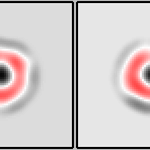
1/5 Cryo-EM gives high-resolution RNA structures, but only when high Mg²⁺ freezes out their motion.
At physiological conditions, RNAs are dynamic and 3D reconstruction fails. Can we still learn their folding equilibria?
New preprint: yes, straight from the raw particle images👇
Pranav NM Shah retweeted

How much do PhD students earn?
The first comprehensive overview of PhD income shows vast imbalances across much of Europe
Read the full story: nature.com/articles/d41586-0…

Pranav NM Shah retweeted

wow, unsupervised modality alignment is possible, this is so sick!
i was a doubter of unsupervised alignment being possible, but i have now been convinced
of course, i still think *learning* to align modalities with paired data will continue to win out empirically, but this is great

DINOv2 has never seen a caption, and Qwen3 has never seen an image. We still aligned their embedding spaces without a single image-caption pair.
It even works when the images and the captions come from different datasets.
Project page: dominik-schnaus.github.io/un…
⬇️
Pranav NM Shah retweeted

Excited to share that our norovirus NS3 study is online in Nature Communications! 🎉
These enzymes, found across an order of RNA viruses, have been molecular motors in search of a function. We think we’ve uncovered their role. (🧵)
nature.com/articles/s41467-0…
#virology #cryoEM
Pranav NM Shah retweeted

Terence Tao makes a terribly important point:
"One notable feature of the current AI era is the absence of any definitive such boundaries. While AI tools have flattened the difficulty landscape now in many areas of the subject, thus destroying the ability to locate promising new problems in that area, there are no clear frontiers that are separating the "AI-feasible" problems from the "AI-hard" problems (which certainly still exist, given that the difficulty level of problems are unbounded, and can even be undecidable). This is in part due to the rapidly changing nature of the technology, but also compounded by the refusal of AI companies to disclose their negative results, or reveal the process towards obtaining their solutions.
In fact, it is now the identification of a promising problem which is the scarce and precious resource. We have now seen that even the rumor of someone working on a problem can trigger a massive amount of AI-powered effort to flatten it before the original research project has time to reach its full potential. The incentives may now be pointing in the direction of no longer sharing any promising research directions with the broader community, which would reverse centuries of traditions of open science and do serious long-term damage to the future of the field.
In short, the indiscriminate use of powerful solution-extraction tools can achieve the immediate short-term goal of solving problems at hand, but at the cost of sustaining the ecosystem for the next wave of progress, or in understanding the progress already obtained."
mathstodon.xyz/@tao/11723732…
Pranav NM Shah retweeted

Getting close to recreating Jane Richardson's style 😎
Now just need to fix DSSP to match... 😅

Pranav NM Shah retweeted
Why does HKU1 target ciliated airway cells, and do its two serotypes activate their spikes in the same way?
Building on our 2023 work, we combined #cryoEM, BLI, molecular dynamics and human nasal epithelial cultures to compare serotypes A and B 🧵
tinyurl.com/3u7m8zav – at Houten, Nederland

ALT Scientific image showing how human coronavirus HKU1 may attach to cells in the nose. On the left, a microscope image shows the virus-binding part of the spike protein attaching to the hair-like surface of ciliated airway cells. On the right, a computer model shows the spike protein leaning toward the cell membrane to reach a sugar-containing molecule called GT3. This supports a possible link between sugar recognition and the virus’s preference for ciliated airway cells.
Pranav NM Shah retweeted

I know I sound like a broken record, but I'm so tired of this bullshit. The cell is nothing like this. The dimensions are all wrong -- a typical protein molecule is 3-5 nm, so ~5000 times smaller linearly than a typical 20 um eukaryotic cell, and one part in 100 billionth the volume. There's far too much empty space, the cytosol is packed with molecules. The collective wavelike motion is pure fantasy -- stochasticity dominates at the molecular level.
I suspect scientists put together these animations to show to the layman how much we know, but to me it just points out how much we DON'T know, and doesn't even begin to convey the true complexity.

Scientists have created one of the most detailed 3D reconstructions of a human cell (eukaryotic cell) ever produced.
This groundbreaking model, often termed a "Cellular Landscape Cross-Section Through a Eukaryotic Cell," combines data from X-ray tomography, nuclear magnetic resonance (NMR), and cryo-electron microscopy to map molecular structures in extreme detail.
Pranav NM Shah retweeted

Prepare for takeoff. ✈️ Flight simulator is now available globally on web to all users. goo.gle/4fBYnWO
We've recently added many our most powerful professional desktop features to web. Elevation profiles, new import types, but there's always been one other feature you've been asking us to add to the web version of Google Earth, just for fun...
Where will you fly? Share your best maneuvers, views, and flyovers with us!


Pranav NM Shah retweeted

I think one of the conclusions we should draw from the tremendous success of LLMs is how much of human knowledge and society exists at very low levels of Kolmogorov complexity.
We are entering an era where the minimal representation of a human cultural artifact... (1/12)
Pranav NM Shah retweeted

🚨 Today in @Nature, we report GEMINI—a genetically encoded intracellular memory device that writes cellular dynamics into tree-ring-like fluorescent patterns within cytoplasmic protein assemblies.[1/n]
nature.com/articles/s41586-0…

Pranav NM Shah retweeted

I spent time in Shenzhen last year and when I saw Merz come back from China saying Germans need to work more I immediately knew what broke his brain because I lived the exact same cognitive shock
my first week in Huaqiangbei I burned through 4 prototype iterations of a motor controller board for less than a thousand bucks total, back home a friend was working on something similar and spent over 12 thousand for a single revision that took almost two months to arrive
when you live that contrast in your own hands with your own project something permanently shifts in how you see the world and it goes way deeper than speed & cost
what Shenzhen actually built is a collective learning organism, imagine 20 PCB fabs 15 injection mold shops 30 component distributors and a hundred firmware freelancers all within a 2km radius, looks insanely redundant from the outside until you realize redundancy is actually information density in disguise
I watched this firsthand with an injection mold supplier I was working with, this guy had seen a hundred founders iterate similar thermal designs over 6 months so he proactively modified his tooling before I even opened my mouth, he knew what I needed before I knew what I needed, the intelligence lives in the relationships between the nodes and it compounds daily
the west thinks about manufacturing as a cost center you optimize by centralizing…
China accidentally built a distributed neural network of manufacturing intelligence where knowledge diffuses horizontally across thousands of agents faster than any single western company can process internally
so when Merz comes back and says we need to work a bit more I think he saw the problem but COMPLETELY misdiagnosed the solution, telling Germans to work harder is like telling a horse to gallop faster when the other side built a combustion engine
the gap is ARCHITECTURAL
it’s ecosystem density, you need a custom connector in Shenzhen you walk 200 meters, in Munich you send an email and wait 3 weeks
it’s iteration speed, parallel search vs sequential optimization at the system level, it’s risk tolerance, Chinese founders ship something broken on Monday fix it Tuesday ship again Wednesday while European companies are still in the approval phase for the pilot program of the feasibility study…
and Merz only saw the surface, what he missed is the tier 2 cities like Hefei Chengdu Wuhan replicating the Shenzhen model at scale right now
BYD going from irrelevant to outselling every european automaker combined in roughly 5 years, Huawei building its own 7nm chip under maximum sanctions when every analyst said it was physically impossible & behind all of that a government that treats advanced manufacturing as an existential national priority while europe debates whether AI needs another ethics committee
I think what we’re watching is the most asymmetric economic competition in modern history and most western leaders are still framing it as a productivity problem when it’s actually an ontological one
Europe & America are optimizing variables that China stopped tracking years ago meanwhile China is compounding on dimensions the west has no framework to even measure
Merz at least had the courage to name
it out loud and I respect that genuinely but working a bit more inside a broken architecture just means you arrive at the wrong destination slightly faster

NEW:
🇩🇪🇨🇳 German Chancellor Merz says Germans need to work more in order to match China:
“We are simply no longer productive enough. Each individual may say, “I already do quite a lot.” And that may be true.
But when you return from China, ladies and gentlemen, you see things more clearly.
With work-life balance and a four-day week, long-term prosperity in our country cannot be maintained. We will simply have to do a bit more.”
Pranav NM Shah retweeted

Submit your abstract for #IMC21 and share your work on the global #microscopy stage (pun intended, obviously🔬😀)
Submit your abstract by 6 March: imc21.org.uk/

ALT Attendees engaging with scientific posters in a flyer promoting the 21st International Microscopy Congress in Liverpool, 2026.
Pranav NM Shah retweeted

I am Open-Sourcing PyMolAI!
Meet PyMolAI, an AI agent that can talk to your protein structures.
Built on top of PyMOL, PyMolAI lets you interact with your structures in plain language. Whether you're:
- Analyzing protein structures
- Aligning complexes
- Creating publication-ready figures
- Or running design workflows
PyMolAI interprets your request, executes the necessary PyMOL commands, and manages the workflow for you.
It integrates with @OpenBioAI APIs, giving you access to tools like Boltz, ProteinMPNN, and BoltzGen — directly from your PyMOL session.
It has local chat history with session syncing, so you can pick up exactly where you left off.
The balloon will implode only when the external pressure overcomes internal pressure (i.e. the propping up of the publication houses by the academic community)

Our massive conferences are increasingly unable to reliably verify findings at scale. This creates a perverse incentive structure that, instead of rewarding truth and accuracy, prioritizes novelty, citation impact, and speed. The body of literature has become like a floating hot air balloon that must collapse in due time.
10 days and 4 Uni’s later, happy to be back in Oxford with a head full of ideas! Thanks once again @DanielHurdiss @3Dstructure, Florian Schur and Pradyumna Paranjape for hosting me! Enjoyed discussing science with you and your colleagues and lab members!


Pranav NM Shah retweeted
Nature used to be the world’s most prestigious science journal. Now it’s one of many accused of favouring authors because of their identity group rather than the excellence and importance of their science.
hxstem.substack.com/p/why-i-…

