

Associate professor at Universidad Europea. Founder and editor of Raciocínio Aberto.
Spain
Joined July 2013
- Tweets5.7K
- Following416
- Followers1.9K
- Likes2.9K




Pinned Tweet
Novo episódio do RA podcast!
open.spotify.com/episode/2B6…

It's ironic to see Europe implement the same stupid policy that Brazil has always had. Is Brazil a retailer powerhouse as a result? Of course not. And neither will Europe be. This only forces people to pay more when they could pay less.

From today, customs duties apply to e-commerce parcels worth up to €150 entering the EU.
30 million Europeans work in retail; it's our our largest private-sector employer.
And the surge in low-value online imports has put our retailers at an unfair disadvantage.
Too many of these products also fail to meet EU safety standards, putting consumers at risk.
Today's change is about restoring fairness for European businesses and better protecting our consumers.
Readers added context they thought people might want to know
In March 2025, Ursula von der Leyen stated:
“Tariffs are taxes. They are bad for business, and even worse for consumers.”
Today she announced new customs duties on e-commerce parcels valued up to €150, arguing this will protect European retailers and consumers.
bbc.com/news/articles/…
Many people dumping on euros for not having AC. They are right. But even those who do cannot use it because of stupid laws. In Spain the government decided that public buildings cannot be colder than 27C in summer! Try going to the mall or exercising in the gym at 27C.
1
2
100
André Luzardo retweeted

"The series also shows that Spain did not benefit from its empire. That is a problem for every theory tying colonies to modern growth." This is important and surprising: with all the gold and new territory, GDP per capita in Spain did not increase. The figure below shows the same message with a different dataset. GDP per capita in Spain is almost flat between 1500 and 1800. It is not gold that explains the wealth of nations


How has the Spanish economy performed over the very long run?
To answer, I use Leandro Prados de la Escosura’s (@LdelaEscosura) data on real GDP per capita from 1277 to 2024. I express Spain’s figure as a ratio to Britain’s, since Britain was the first economy to achieve modern economic growth, from around 1660, and has been the leader, or close to it, ever since.
Spain, within its present borders, was prosperous in the Late Middle Ages, well ahead of Britain, then a peripheral corner of Europe. The Black Death and its aftermath hit Spain harder, and by 1360, the two economies had converged.
That parity held until 1600, when Spain began a long decline, in absolute terms (on the eve of the French Revolution, it was barely above its 1600 level, after a deep slump in between) and in relative terms (Britain pulled steadily away). The standard explanations, the Habsburg wars, and the serial bankruptcies run into one problem. They can account for the poor performance between 1550 and 1650, but not for the stagnation between 1650 and 1789. 140 years of stagnation is far more than wars and debt under the Habsburgs can explain.
The series also shows that Spain did not benefit from its empire. That is a problem for every theory tying colonies to modern growth. At most, one can argue that colonies were a necessary condition for takeoff (I do not believe even that, but leave it for another day). One cannot argue that they were sufficient.
The period from 1789 to 1936 was no kinder. The economy grew a little, and Spain built a modern but unfinished liberal state. Yet it never closed the distance to Britain. It is hard not to read the period from 1789 to 1936 as a national failure and the Civil War as its final consequence.
The recent efforts of some historians to paint those years in brighter colors strike me as unfounded. Spain did not fail at modernization as badly as China, but it did not succeed. A deeply corrupt dynasty, closed and incompetent elites in Madrid, Barcelona, and Bilbao, and an economic policy built on intervention and protection (by 1920, Spain was the most protectionist economy in the Western world, so much for the friends of protection) together made the country a basket case.
A cruel civil war left Spain at its historical low, with just 31% of the British GDP per capita. The foreign visitors who arrived in the early 1950s found a poor, backward country.
Policy in the first twenty years of the dictatorship was awful. Autarky was not so much imposed by the Allies as chosen. Spain’s rulers, using their quasi-fascist Weltanschauung, believed growth would come from state intervention, closed markets, and unorthodox fiscal and monetary policy.
Then, in 1959, policy changed. Spain adopted a more orthodox fiscal and monetary policy and opened to foreign investment and trade. The results were spectacular. For forty years, Spain grew briskly and became the modern country it is today. By 2001, it had reached 77% of British GDP per head.
But the internal contradictions of two things eventually became binding: the growth model launched in 1959, and the political regime created by the 1978 constitution. By 2024, Spain had slipped back to 74% of British GDP per head. This is worse than it looks. Britain itself has done poorly over the past twenty years, and losing ground to a weak performer is a bad sign.
Spain stands at a crossroads, economic and political. The country’s foundations no longer work, but its political and business elites have failed to understand this fundamental reality. A good grasp of its economic history helps make sense of its present predicament.

We need a church-state separation for religious-like ideologies.

As my co-author Jonathan Haidt has pointed out, morality on the left became increasingly unipolar, with care for victim groups treated as perhaps the only important moral end. But once people on the left had defended other perceived victim groups, there seemed to be only one place left to go. The result was that the issue was pursued as a quasi-religious social movement rather than as a scientific or public policy question that needed to be carefully thought through and rigorously examined. Once people’s identities revolved around the idea that compassion and care were the highest moral ends, and therefore essentially sacred, hysteria was bound to follow. The Founders tried to guard against this kind of dynamic through things like the pairing of the Free Exercise and Establishment Clauses, but those protections do not work as well when the ideology in question does not call itself a religion.
This is a real problem. I have been thinking a great deal about how to address the problem of religious-like certainty attaching itself to beliefs that are not formally religious, and I still cannot see a solution that would not risk becoming a disaster itself. But I am still pondering it.
6
147
Nada te prepara para a quantidade de estudantes universitários trapaceiros. Cada avaliação é uma oportunidade pra trapaça que vários aproveitam. Chutando por baixo, eu diria que pelo menos uns 20% dos estudantes tentam trapacear.
Por que tantos estudantes tentam evitar estudar o tópico que eles mesmo escolheram? A resposta é óbvia: eles não têm o menor interesse pelo curso. São estudantes que só entraram na universidade por pressão social e que, portanto, não deveriam estar ali.
1
11
291
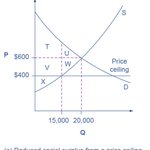
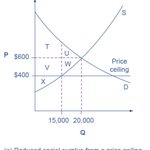
Esse semestre estou ministrando a disciplina de Microeconomia pela primeira vez, e é incrível o quanto governos do mundo inteiro — não apenas os do terceiro mundo — ignoram ou negam a teoria.
Esses exemplos aparecem em praticamente todos os livros introdutórios de Microeconomia. Ainda assim, governos no mundo inteiro continuam destruindo parte da riqueza nacional ao impor controles de preço.
Quanto mais ricos poderíamos ser sem essas intervenções estatais?
1
4
87