

Science from the Rafi Ahmed lab at Emory University. Maintained by lab members
Joined August 2022
- Tweets71
- Following945
- Followers2K
- Likes82


RafiAhmedLab retweeted

Check out our latest paper in @ImmunityCP, “Identification of indirect CD4+ T cell epitopes associated with transplant rejection provides a target for donor-specific tolerance induction”, led by an amazing PhD student @Zhuldyz_Zhanzak.
RafiAhmedLab retweeted

The inaugural meeting of the program on Human Immunology of Cervical Cancers was held today at @ICGEBNewDelhi . The event featured insightful addresses from Dr. Lawrence Banks, DG @ICGEB , and Dr. Rafi Ahmad from Emory Vaccine Center, Atlanta, USA. This collaborative research initiative, which is supported by the Gates Foundation, brings together leading institutions including @ICGEBNewDelhi New Delhi, #ICGEBTrieste, @EmoryUniversity , @WinshipAtEmory, @OhioState & @aiims_newdelhi . A big step forward in advancing Cervical Cancer research!
#CervicalCancer #HumanImmunology #GlobalCollaboration #GatesFoundation #CancerResearch #ICGEBNewDelhi #EmoryUniversity #AIIMSnewdelhi


RafiAhmedLab retweeted

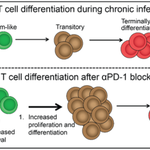
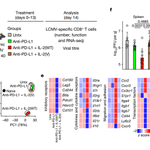
McManus and Valanparambil et al. showed that nearly identical stem-like (PD-1+TCF-1+TOX+) CD8+ T cells emerged as early as day 5 during chronic and acute LCMV infections. bit.ly/3C90ksx @rafiahmed_lab @dmcmanus123

RafiAhmedLab retweeted

Drs. Daniel McManus (@dmcmanus123), Rajesh Valanparambil, and a team in the @rafiahmed_lab studied how precursors of exhausted #Tcells respond to chronic viral infections.
🔖 Read the @Nature article: go.nature.com/3Crw0tf
💬 Listen to the discussion: bit.ly/4jz3rKW

RafiAhmedLab retweeted
Thanks to @Immunity for publishing our work looking at the CD4 T cell response against transplanted organs. Will have a tweet summary with the first author of the work soon!

Online now: Identification of indirect CD4+ T cell epitopes associated with transplant rejection provides a target for donor-specific tolerance induction dlvr.it/THgz4p
RafiAhmedLab retweeted

Online now: Identification of indirect CD4+ T cell epitopes associated with transplant rejection provides a target for donor-specific tolerance induction dlvr.it/THgz4p
RafiAhmedLab retweeted

Nature research paper: Differentiation fate of a stem-like CD4 T cell controls immunity to cancer go.nature.com/48gf5p3
Check out the new work by the excellent PhD student @Maria_Carden1 who has worked with our lab for many years. Even managed to get some LCMV into her nice paper on cancer!

Check out our latest paper “Differentiation fate of a stem-like CD4 T cell control immunity to cancer”, led by @Maria_Carden1 now live @Nature tinyurl.com/33d24k89 . This work examines how CD4 T cell differentiation dictates the outcome of the cancer response. Thread below
RafiAhmedLab retweeted

We’ve known about tolerant CD8+ T cells for >25 yrs – but what are these cells?! Prematurely exhausted, stalled effectors, or something else?
Our latest @ImmunityCP paper takes a deep dive into this question with some unexpected results, including a link to cancer… (1/)
Online now: The CD8+ T cell tolerance checkpoint triggers a distinct differentiation state defined by protein translation defects dlvr.it/T7BsSt

RafiAhmedLab retweeted
Thanks for having me ICGEB !- It was wonderful to meet all your faculty and amazing students. I hope I'm back again very soon!

A meeting was held today between the officials of @ICGEBNewDelhi & @EmoryVaccineCtr, Emory University at ICGEB New Delhi premises. The meeting saw the presentations by the scientists of both the research centres. The participants discussed ongoing research collaborations and also plans to take these collaboration to the next level.


RafiAhmedLab retweeted
A meeting was held today between the officials of @ICGEBNewDelhi & @EmoryVaccineCtr, Emory University at ICGEB New Delhi premises. The meeting saw the presentations by the scientists of both the research centres. The participants discussed ongoing research collaborations and also plans to take these collaboration to the next level.
RafiAhmedLab retweeted

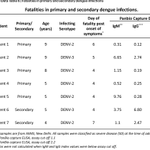
This week @NatureMedicine Dr. Anmol Chandele @ICGEBNewDelhi published an analysis of severe #dengue cases in a cohort of children in #India - showing that more than half could be attributed to primary rather than secondary infection.
👉icgeb.org/study-from-icgeb-n…

RafiAhmedLab retweeted

It’s a big day for us today as we share the @Kueh_Lab’s latest work, just out in @ImmunityCP . We set out to understand how memory T cells form, and we found remarkable flexibility in their lineage pathways from naive progenitors: authors.elsevier.com/c/1iWf0…

Do you ever question prior decisions as you gain new information? Do you wonder if immune cells do too? Check out our @Kueh_Lab preprint about a flexible T cell decision-making strategy that enables robust and scalable control of immunological memory tinyurl.com/58mha28t (1/n)
RafiAhmedLab retweeted

So proud to share our work on memory T cell generation, now out in @ImmunityCP! This huge paper is the heroic work of @kathleenabadie, @elisacclark and Raj Valanparambil from @rafiahmed_lab.
It’s a big day for us today as we share the @Kueh_Lab’s latest work, just out in @ImmunityCP . We set out to understand how memory T cells form, and we found remarkable flexibility in their lineage pathways from naive progenitors: authors.elsevier.com/c/1iWf0…
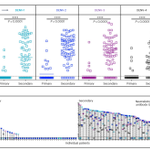
Consistent with the classification based on binding antibody data, dengue neutralizing antibody titers were also significantly lower in primary infections compared to secondary infections (P ≤ 0.0001).

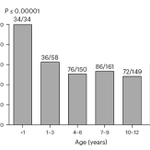
46.7% of severe disease cases were primary dengue infections in children aged between 1 and 3 years; 50.3% of severe dengue cases were primary dengue infections among children aged 4–16. Thus, severe dengue was seen during primary dengue infections irrespective of age


Figure 1a: We classified primary and secondary infections based on IgM:IgG ratios using a dengue-specific ELISA according to the World Health Organization guidelines. These data show disease severity was not preferentially associated with secondary dengue infections
