

A random guy on +234
Joined December 2023
- Tweets18.4K
- Following108
- Followers97
- Likes16.6K


Random Guy retweeted

Vote Peter Obi like your life depends on it.
Government Institutions are spitting on you & lying brazenly even in a social media age where everything is out in the open. God of heaven! 🤯

JOINT TASK FORCE OPERATION SAVANNAH SHIELD CLARIFIES CIRCULATING VIDEO OF TROOPS' ENGAGEMENT WITH BANDITS IN KWARA STATE
The Headquarters of the Joint Task Force OPERATION SAVANNAH SHIELD (JTF OPSS) has observed the circulation of a video on social media platforms purportedly depicting an interaction between troops of the Armed Forces of Nigeria, personnel of the Department of the State Services and armed bandits in Kwara State. The video has generated misleading narratives and interpretations suggesting an inappropriate relationship between the troops and the armed elements.
The Headquarters JTF OPSS wishes to clarify that the engagement captured in the video was a deliberate security initiative involving troops and armed bandits who had indicated their willingness to surrender their weapons and facilitate the release of kidnapped victims. It was an outcome of successful military strangulation operations that left no room for the terrorists aside surrender or neutralisation. The video in circulation captures part of an engagement undertaken in this light.
During the engagement, a total of 12 AK-47 rifles were recovered, while 10 kidnapped victims were released. The development represents a significant outcome of the non-kinetic approach being employed alongside sustained military operations to address security challenges and encourage the voluntary surrender of armed elements. This outcome was earlier reported for the awareness of Nigerians via thedefencecorrespondentnewsn…
Contrary to the misleading interpretations accompanying the video, the interaction was neither an act of fraternisation nor an abandonment of the military's constitutional responsibilities. Rather, it was a calculated engagement aimed at achieving tangible security outcomes, particularly the recovery of weapons and the safe release of innocent citizens held hostage.
JTF OPSS remains committed to employing a comprehensive approach that combines robust kinetic operations with intelligence-led engagements and other non-kinetic measures to address terrorism, banditry and other security threats. Such initiatives are intended to provide opportunities for those willing to surrender to do so. Any individual or group that chooses to surrender will be subjected to the necessary security screening and applicable legal procedures. It should be noted that surrendered combatants are not to be harmed at the point of surrender in line with law of armed conflict, international best practices and operational rules of engagement. In the same vein, acceptance of surrender is an acceptable outcome of conflict resolution.
The Headquarters JTF OPSS wishes to reassure Nigerians that the Armed Forces remain resolute, professional and focused on their constitutional mandate of protecting the territorial integrity of the country and safeguarding lives and property. Members of the public are urged to disregard misleading interpretations of the circulating video and avoid sharing unverified narratives capable of undermining ongoing security efforts. Operation SAVANNAH SHIELD remains committed to keeping Nigerians informed of developments relating to military operations through its official communication channels.
IBRAHIM SHITTU
Lieutenant Colonel
Acting Deputy Director Army Public Relations
9 Division/Operation SAVANNAH SHIELD
17 November 2026

Random Guy retweeted

It’s a lie. This myth must die. Right now Nigerians pay a fee to transfer money, pay a fee to withdraw money (in a cash heavy society), pay for electricity when it’s metered and they can use their eyes to see their usage etc, pay for water infrastructure by building boreholes and then paying for the light to pump periodically or literally buying it by the drum load in some areas.
Up until the protests at the toll gate, Nigerians paid. When I was a child and we travelled across the country, people paid at the toll gates then too
Most of these payments already exist directly, even more exist indirectly. This idea that Nigerians just won’t pay for shit is a myth that MUST die. There’s nothing that has an established use and bill structure and that works that Nigerians will not broadly pay for.


Random Guy retweeted
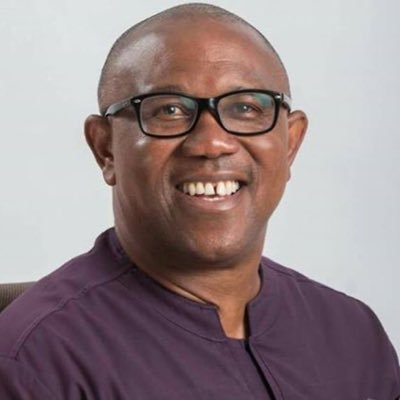
Beyond the Chukwuemeka Odumegwu Ojukwu University Teaching Hospital, we, therefore, invested in medical training institutions and professional development.
By the time we left office in 2014, more than 12 health institutions, including two hospitals, had secured accreditation for their courses and programmes. This represented significant progress from the situation in 2006 when Anambra had no duly accredited health institution, according to records of the period.
We supported the development of schools of nursing, midwifery, and health technology, providing infrastructure, equipment, learning facilities, and other requirements for accreditation.
We also supported the training and specialised capacity development of healthcare workers, recognising that the quality of medical services ultimately depends on the competence and dedication of the people delivering them.
The Results of a Deliberate Policy
These interventions were not isolated projects. They were part of a deliberate effort to create a healthcare system in which primary healthcare centres, general hospitals, teaching hospitals, and mission institutions complemented one another.
We invested in rural healthcare, maternal and child services, immunisation, emergency response, specialist treatment, mental healthcare, disease prevention and control, medical education, and institutional accreditation.
Our success in the Bill & Melinda Gates Foundation immunisation competition was one external recognition of the work being done. More importantly, the development of accredited institutions, the establishment of a teaching hospital, the construction of maternal and child care centres, and the rehabilitation of hospitals provided a foundation for sustained improvements in healthcare delivery.
We also restored the annual Grant-in-Aid to government-owned and mission hospitals across Anambra State. This grant became a regular annual intervention, sustained every year until we left office in 2014. We recognised the historic contribution of missionary hospitals to healthcare delivery in Anambra and believed that government should support institutions that serve the public, irrespective of their ownership.
We did not achieve everything that needed to be done, but we demonstrated what could be accomplished through planning, partnerships, accountability, and the purposeful deployment of public resources.
Taking the Anambra Experience to Nigeria
My commitment to healthcare did not end when I left office as Governor. I have continued to support hospitals, medical institutions, and various other healthcare initiatives across the country as a private citizen.
As President, I will bring the same energy, commitment, and political will to the national healthcare system. We must move away from a situation where Nigerians are compelled to travel abroad for medical treatment that should be available in their own country.
Our primary healthcare centres must function, general hospitals must be properly equipped, and teaching hospitals must have the facilities and personnel required to provide specialist care and train medical professionals.
All agencies responsible for healthcare must perform their statutory duties effectively and be held accountable. Public funds allocated to healthcare must be transparently managed, and Nigerians must be able to see what those resources have achieved.
We must also recognise that government cannot provide all healthcare services alone. Mission hospitals, private hospitals, and other credible institutions must be encouraged and supported because they all contribute to the health of our people.
Our approach will therefore be based on accessible primary healthcare, functional hospitals, adequate medical personnel, preventive medicine, effective emergency services, medical research, and strong partnerships with institutions already serving our communities.
Random Guy retweeted
NIGERIANS, GO AND VERIFY (4)
Building a Healthy Nation: Our Health Sector Record in Anambra
Peter Obi
In the previous instalment of this series, I discussed our investments in education and explained why we considered human capital development central to the progress of Anambra State. Another sector that received considerable attention under our administration was healthcare. We understood that education gives people the tools to build their future, while good healthcare enables them to live healthy and productive lives.
When we assumed office in 2006, the healthcare system in Anambra faced serious challenges. Our health institutions required rehabilitation, medical equipment was inadequate, many communities lacked accessible primary healthcare facilities, and several medical training institutions had not secured accreditation. We therefore decided to approach healthcare as a comprehensive development priority, rather than concentrate resources on a few prominent hospitals.
Under our Anambra Integrated Development Strategy (ANIDS), we invested simultaneously in primary, secondary, and tertiary healthcare, medical training, maternal and child health, medical equipment, and partnerships with religious and private institutions.
Our approach was simple: healthcare should be accessible to people wherever they live, and the quality of treatment they receive should not depend on their status or whether they live in a city or a rural community.
Building a Teaching Hospital and College of Medicine
One of our most significant achievements was the establishment of the Chukwuemeka Odumegwu Ojukwu University Teaching Hospital at Awka.
We initiated, constructed, equipped, and secured accreditation for the institution, building it virtually from scratch. When I discovered that the state university was admitting medical students without having a teaching hospital through which they could complete their training, possibly with the intention of assigning them elsewhere, I considered the situation unacceptable. We therefore embarked on the construction of a modern teaching hospital to address this deficiency.
We constructed more than 25 buildings and provided facilities for the College of Medicine, laboratories, pathology, accident and emergency services, pediatrics, male and female wards, special wards, consultant clinics, and other essential departments.
We also provided vehicles, including ambulances and staff buses, to support the hospital and the College of Medicine as part of the accreditation requirements.
The objective was not merely to build another hospital but to establish an institution capable of providing specialist healthcare while training the next generation of Nigerian medical doctors.
Rehabilitating General Hospitals
We also recognized that a teaching hospital alone could not meet the healthcare needs of the population. General hospitals had to function effectively because they provide the essential link between primary healthcare and specialist treatment.
We rehabilitated and resuscitated 15 general hospitals across the three senatorial zones of Anambra State. We undertook substantial improvements in their buildings, wards, equipment, and general facilities.
In 2013, we provided ₦400 million for the ongoing renovation of 11 selected general hospitals, alongside other healthcare interventions.
Our intention was to ensure that people did not have to travel unnecessarily long distances to obtain basic secondary medical care.
Taking Primary Healthcare to the Communities
We believed that the best healthcare system is one that prevents illnesses and treats people early, rather than one that waits until minor health problems become emergencies.
That informed our extensive investment in primary healthcare. We built over 120 primary healthcare centers across communities in the 177 autonomous communities of Anambra State and rehabilitated existing facilities.
Random Guy retweeted

🙏 Ce soir, @notredameparis s’illumine en rouge pour alerter sur les persécutions de chrétiens de par le monde.
1 chrétien sur 6 vit dans un pays où la liberté religieuse est bafouée : 413 millions de chrétiens sont persécutés, menacés, et discriminés.
🙏 Avec la #RedWeek, initiative internationale de @AEDenFrance, des monuments du monde entier se parent de rouge, couleur du sang des martyrs, pour porter la voix des victimes silencieuses. Une action pour alerter, sensibiliser, rompre le silence, soutenir et prier.
Notre-Dame de Paris prie pour ces millions de chrétiens persécutés et leur exprime sa profonde fraternité.
#RedWeek #ChrétiensPersécutés #AED #LibertéReligieuse

Random Guy retweeted

Yesterday, @inecnigeria said ward collation results can’t go on IReV because the feature hasn’t been built or tested, and that it would take a while.
We disagree.
It’s not rocket science, so we built it. In one evening. On IReV’s own data.
Left: IReV today.
Right: IReV with Form EC8B. 🧵👇


Random Guy retweeted
The only coalition Nigeria’s opposition needs is a coalition against INEC impunity and electoral irregularities.
Whatever their differences, opposition parties should unite now to pressure @inecnigeria. Demand an independent audit of the voters’ register, timely publication of polling-unit results on IReV, and public access to signed collation sheets.
Random Guy retweeted
International Engagements to Strengthen Nigeria’s Democracy Continue.
Yesterday, November 17, the second day of our engagements on Capitol Hill in Washington, D.C., we visited the United States Senate and met with some senators, including Senator James Lankford, who kindly invited me over to his office.
I am deeply grateful to Senator Lankford for his warm reception, generous time, and meaningful exchange of views on strengthening democratic institutions, fostering peace, and promoting our shared values.
Our conversations underscored the importance of international collaboration, effective governance, credible democratic processes, and the security and well-being of all Nigerians.
These engagements offer a further opportunity to deepen relationships and advance our shared vision of a peaceful, united, and prosperous Nigeria.
Our commitment to building a nation that serves every Nigerian remains steadfast.
A New Nigeria Is POssible! -PO


Random Guy retweeted

NDC-NCC PRESS STATEMENT:
DELE ALAKE’S ALLEGATIONS: A COVER UP - APC EXPORTING PRESIDENT TINUBU’S LAGOS PATTERN OF POLITICAL VIOLENCE/AGBERO STYLE TO THE ENTIRE COUNTRY
The Nigeria Democratic Congress (NDC) National Campaign Council rejects the false press statement by the All Progressives Congress (APC) Presidential Campaign Council Spokesperson, Mr. Dele Alake, accusing the NDC and other opposition parties of recruiting thugs ahead of the 2027 elections. Rather, the APC supporters are the ones perpetrating a yearlong campaign of terror against the NDC across Nigeria. And Nigerians are not surprised, as this ongoing violence is simply a chapter from President Bola Tinubu’s Lagos State pattern of political violence and agbero style of governance, introduced since 1999 and now being exported across the entire country.
Alake’s baseless accusation is a textbook case of the perpetrator crying victim. For the past year, the NDC and our peaceful supporters have endured relentless intimidation and targeted attacks orchestrated by thugs loyal to the ruling party. To set the record straight, the NDC states as follows a documented trail of violence against the party because Mr. Alake’s claims insult Nigerians.
Where were Mr Alake and the APC on 18 July 2025, when Edo State Governor Monday Okpebholo publicly threatened and warned our presidential candidate, Mr Peter Obi, not to enter Edo State without prior clearance during a political rally in Uromi?
Senator Francis Adenigba Fadahunsi, representing Osun East Senatorial District, was caught on a viral video in Ilesa instructing APC supporters in Yoruba to "seek out and kill" members of the rival Accord Party before the election. To date, he has faced no real accountability, proving that violence is tolerated and rewarded within the APC.
On October 10, 2026, armed thugs invaded NDC Enugu campaign office, fatally shooting our member, Ifeanyi Christopher Nwolie. On November 12, 2026, hoodlums attacked a peaceful NDC town hall in Oregun, Lagos, injuring supporters.
It was an APC governor, Governor Hyacinth Alia of Benue State, who deployed thugs to violently block, harass, and disrupt Mr Peter Obi when he sought to pay a solemn condolence visit to Yelewata for the tragic massacre of 273 innocent souls in Benue
Across Calabar, Delta, and Edo States, Mr Peter Obi and his campaign entourage have been repeatedly targeted and attacked by thugs linked to the ruling party. NDC running mate, Alhaji Rabiu Musa Kwankwaso’s team was also attacked in Kano while on campaign
Mr Alake should direct his lectures on peaceful conduct to his principal, President Bola Tinubu, who famously declared that power is not served à la carte and instructed his followers to "grab it, snatch it, and run away with it." The President is also on public record stating his desire to win by any means necessary and boasting that he enjoys seeing the opposition in disarray.
The truth is undeniable: the surging popularity of the NDC, and the Peter Obi–Rabiu Kwankwaso ticket is entirely organic. It has grown by leaps and bounds because the APC administration has failed Nigerians woefully, inflicting untold hardship through harsh, ill-conceived, and unworkable economic policies.
NDC does not need to instigate citizens who are already pushed to the wall by daily hunger, multidimensional poverty, and rampant insecurity. What the APC is witnessing at its rallies is not sponsored disruption—it is the genuine, spontaneous rejection of a failed government by a traumatised populace. NDC must not be dragged into the self-inflicted chaos of a ruling party facing the wrath of the electorate.
Unlike the APC, whose playbook relies on voter suppression and exploiting vulnerable youths, the NDC’s movement is built on ideas and competence. We view youths as nation-builders deserving jobs and education, not foot soldiers for violence.

Random Guy retweeted
CLARIFICATION: MY MEETING WITH US CONGRESSIONAL LEADERS WAS NOT AN ENDORSEMENT-SEEKING MISSION
I wish to address the inaccurate interpretation presented in certain media reports concerning my recent engagements with members of the United States Congress in Washington, DC.
As I expressly noted in my remarks, my visit to the United States was not intended to secure an endorsement, and I did not characterise my meetings as endorsements of my political aspirations by the US Congress or any of its members.
The primary purpose of the visit was to engage with congressional leaders and other influential American stakeholders, exchange perspectives, and discuss matters related to Nigeria’s development, the welfare of our citizens and, most importantly, the consolidation of our democracy.
I am especially concerned with strengthening democratic institutions, advancing accountability, and ensuring that Nigeria’s electoral process produces elections that are free, fair, transparent and credible. These matters should concern every Nigerian who is committed to our country’s future.
I consider engagements of this kind valuable, and I encourage other Nigerian political leaders, especially those seeking public office, to pursue similar discussions with international stakeholders. Our democracy can be strengthened through constructive dialogue, the exchange of experiences and a shared commitment to credible elections.
Nigeria’s democratic future is far too consequential to be distorted by sensational headlines or inaccurate interpretations. My mission centred on Nigeria, its people and the future of our democracy—not on endorsing any individual. -PO
Random Guy retweeted
Endless Human Bloodletting and Failure of Intelligence
I am deeply saddened and troubled by reports that at least nine people were killed in the Zuwagal community, Mangu Local Government Area of Plateau State, in yet another assault on innocent Nigerians. These deaths have occurred amid a deeply concerning pattern of recurring attacks, displacement and the destruction of communities throughout the country.
Data from the past two weeks are alarming. OpenWatch's security incident records show 261 reported deaths across Nigeria between 2 and 15 November 2026, including 24 in Plateau during the first week and 15 during the second. Plateau also reported additional attacks on 16 November.
These victims are not merely numbers. They were fathers, mothers, children and breadwinners whose lives were abruptly ended, leaving families and entire communities to mourn.
Why are communities being threatened without receiving adequate protection? Why are intelligence reports failing to result in preventive action? How many more innocent Nigerians must lose their lives before decisive measures are implemented?
I call on the Government and security agencies to immediately reinforce security operations in vulnerable communities; thoroughly investigate these attacks and ensure that both the perpetrators and those who support them face justice; establish reliable early-warning and rapid-response systems; deliver humanitarian aid and rehabilitation services to displaced families; and release transparent, accurate casualty figures for all affected communities.
We must also confront the root causes of insecurity by strengthening accountable institutions, intelligence gathering, justice, education, economic opportunity and meaningful engagement with communities.
Every Nigerian life is valuable, regardless of ethnicity, religion or political affiliation. The right to life must never be subject to negotiation.
My deepest condolences go to the bereaved families and the people of Plateau State. May God comfort them and bless our country with peace.
Nigeria must do more than mourn those who have died. We must protect those who are still living. -PO
Random Guy retweeted
NIGERIANS, GO AND VERIFY (3)
Building the Future Through Education
Peter Obi
In the first two instalments of this series, I explained how we approached the task of building strong institutions and laying a solid foundation for the development of Anambra State. One of the most important institutions we invested in was education.
For me, education was not a political game or a convenient political promise. Even before I ventured into politics, I had always regarded it as the foundation of meaningful development and the most enduring investment any government can make in its people. I believe that the future of any society depends largely on the quality of its educational institutions, teachers, learning environment, and opportunities available to its young people.
This conviction informed our decision to invest across the entire educational spectrum, from primary schools to universities, technical institutions, and adult education.
Basic and Secondary Education
One of our first major decisions was to return mission and privately owned primary and secondary schools to their original proprietors while retaining government support. We also provided billions of naira to assist in rehabilitating the returned schools, restoring the partnership between government and religious institutions that had historically contributed to educational excellence.
This policy attracted international attention. Professor Paul Collier, the Oxford economist and World Bank consultant, led a World Bank-commissioned study of Anambra’s educational transformation. His team examined our decision to return schools to their original missionary owners while retaining government responsibility for funding teachers’ salaries and supporting infrastructure. The team described the partnership model as a revolution in public service delivery and recommended it as a model that could be replicated by other Nigerian states and developing countries. We believed then, as we do now, that government does not necessarily have to own every institution to discharge its responsibility effectively. What matters is ensuring that every child has access to quality education.
For those who claim that we built no schools, I invite them to verify our records. We constructed five-classroom blocks in virtually all of the 177 communities in Anambra State, one of the most extensive community-based school infrastructure programmes undertaken by any state government. The town union chairmen and community leaders of that period can attest to this.
We also renovated hundreds of dilapidated schools, including some where trees had literally grown through abandoned buildings. Comprehensive Secondary School, Onitsha, and Oraukwu Grammar School are examples.
Beyond infrastructure, we distributed approximately 40,000 computers to schools, including more than 22,500 HP laptops. We equipped secondary schools with Microsoft Academies and connected schools across the state to the internet. We supplied generators, established and stocked libraries, revived school sporting activities, and installed boreholes in over 300 schools, including all girls’ schools. We also provided funding to support sporting activities in all our secondary schools.
These technology investments attracted remarkable international recognition. Mr Fabrice Campoy, Managing Director of the Personal Systems Group at HP Inc., described our procurement and distribution of over 22,500 HP laptops as the biggest project of its kind in the Middle East and Africa. Similarly, Mr Ken Spann, then Country Manager and Head of Microsoft Nigeria, described the establishment of Microsoft Academies in more than 500 Anambra secondary schools as the most extensive deployment of its kind in Africa at the time.
Random Guy retweeted

Diana London, American right-wing lobbyist who interviewed Tinubu at Aso Rock, was paid $4.5 million by Nuhu Ribadu: Documents
gazettengr.com/diana-london-…

