






Whatever you think of this week's news, Jensen Huang's 33-year journey at NVIDIA is one of the most inspiring stories any founder can learn from:
- Pick the hardest problem. Survive long enough to be right. Keep betting the company on it when nobody else believes.
- NVIDIA's bet on accelerated computing took more than a decade to pay off. Most companies would have quit. That patience didn't just build the AI era; it moved humanity into its next one.
As an entrepreneur, he has my deepest respect.

NVIDIA announces CEO transition. Read the release: nvidianews.nvidia.com/news/n…

Congrats on the launch @hanghuang_!

Your laptop isn't built for running agents.
Introducing @instabox_sh: cloud computers for AI agents.
We provide multi-OS sandboxes (Linux, Android, Mac, Windows) with GPU and CPU.
We launched in beta <1 month ago, and today, users have created 1M+ boxes.
Give agents their own cloud computers so they don't fight over the same memory, CPU, and ports on your laptop.
Close your laptop, and they keep working.
Get started today → instabox.sh
7
460
An early Thanksgiving present from Anthropic! 🦃✨

We've given all Pro, Max, Ultra, and Team users one free full reset, across all models and limits. Use it anytime before December 10 at 2:00PM PT.
We recently fixed a few small issues that used more limits than intended, and the Fable resets didn't do much for those of you who'd already hit your weekly limits for all models. While these issues didn't affect everyone, we want to make up for the trouble.
You'll find it in Settings > Usage, or at clau.de/reset.
1
6
713
raullen retweeted

Claude Fable 5.2 is live on QuickSilver Pro 🚀
We gave it a failing test suite in Claude Code. 10 seconds later: root cause found, bug fixed, all tests green. It even caught a docstring mismatch we didn't ask about.
$2 / $10 per 1M tokens, 75% below Anthropic list.
raullen retweeted

🔥 The Rapid-MLX community benchmark is absolutely exploding! 710 runs, 119 contributors, and 20 different Apple chips covered in just 2 weeks. 🚀
But we are missing the final boss: the M5 Ultra.We only have 8 runs total, and absolutely ZERO data for the 512GB beast! 😭💔
Calling all M5 Ultra owners: we need you! 🙏 Help us complete the ultimate Apple Silicon tier list. It takes just one command, and your data stays 100% local.
No M5 Ultra? A quick RT helps us reach the heavy hitters who do! 🔁🙏
Join the squad and light up the leaderboard! 📊 rapidmlx.com/leaderboard

2026 is officially the worst year for crypto hacks in history—and we still have two months left.
$8.7B stolen. 326 incidents. That's more than any previous full year combined. Here is what’s actually happening under the hood:
📈 Frequency is exploding
Historically, we saw 12–18 hacks/month. In 2026? We're averaging 32.6, peaking at 48 in August. Even million-dollar+ hacks have doubled (59 → 117).
💰 The sheer size is unprecedented
Feb 2025 (Bybit): $1.4B was the record.Oct 2026 (Binance): $6.4B just shattered it.We’ve had SEVEN $100M+ hacks this year, five in the last 100 days alone.
🎯 The attack surface has shifted
Smart contract bugs aren't the main vector anymore. The new weak links are people and infrastructure:
• Engineer's laptops (Binance)
• Hijacked RPC nodes (Kelp)
• Tricked multisig signers (Drift)
• Tampered hardware (Ledger, Coldcard)
Because Crypto is permissionless, it has become the ultimate live-fire testing ground for AI cyber warfare. The real question isn't whether we've reached the tipping point of these attacks. It's this: once AI finishes practicing on Web3, what happens when it turns its sights on real-world IT infrastructure? 🌍


Q-day is approaching. ⏳
A Bitcoin dev just proposed "Quantum Landmines." While Bitcoin theorizes, @iotex_io is already building the bunker with IIP-65. 🛡️
BEFORE Q-Day, both share the exact same philosophy: Bind your assets to a Post-Quantum (PQ) key today, while legacy signatures are still safe.
AFTER Q-Day, the paths diverge entirely:
🟠 Bitcoin (Landmines): Forces true owners to post 1:1 BTC collateral to move funds. Brilliant, but massive economic friction.
🟢 IoTeX (IIP-65): 100% open and collateral-free.
Instead of an "economic tax," IIP-65 relies on pure cryptographic enforcement. This keeps our post-Q-day playbook completely fluid, e.g., one can freeze unsafe legacy transfers, while allowing PQ-guarded buckets to circulate safely and freely.


So proud of this release! My two personal favorite upgrades in 1.0.2:
- Local, synchronized Video + Sound powered by Pika H3 Flex.
- Zero-friction Hugging Face links—just copy-paste a link and let Rapid-MLX instantly serve it for you.
Give it a spin!

🚀 Rapid-MLX 1.0.2 is live. Local AI on your Mac just took a massive leap forward.
What’s new?
🎬 Local Video + Audio generation (Pika H3 Flex)
🛑 "Stop Generating" for video jobs
🔗 Paste Hugging Face links anywhere
⚡ 1.6GB hyper-fast first run
💤 Idle Unload (save RAM, keep API up)
Upgrade: `rapid-mlx upgrade`, or download the new DMG: rapidmlx.com/download
Notes: github.com/raullenchai/Rapid…

Traditional sparse attention only attends to a subset of tokens, but its indexer still scores every single key to find them. At 100k+ context, searching for the needles takes longer than actually computing attention.
The LSA intuition: instead of scoring every key or chunking by position, LSA groups keys into semantic clusters in latent space. Queries score the clusters first, then only evaluate keys inside the winning clusters—turning an O(N²) brute-force scan into a subquadratic hierarchical lookup.
We got Latent Sparse Attention (LSA) running end-to-end on Apple Silicon—and found a hybrid approach that gets the best of both worlds 👀
Qwen3.8-27B on M3 Ultra (128k context):
• Time to first token: 640s → 440s (−31%)
• Peak memory: 40.7 GB → 28.8 GB (−29%)
• MTP decode speed: Zero regression
The insight: Use LSA only to digest the prompt, then hand off to standard MTP for generation.
On Apple Silicon, pure LSA matches the paper's prefill scaling (1.16× faster at 64k, 1.41× at 128k), but slows down generation because per-token routing overhead hurts when decode is memory-bandwidth bound.
The fix: Sparse attention for compute-bound prefill, dense MTP for bandwidth-bound decode.
Next up: Qwen3.8-27B + GLM-5.3-Flash benchmarks across the M-series lineup. Stay tuned.


Local AI for video gen is insanely good now!
Open-weight Video AI is getting ridiculously good. 🤯
We just generated a seamless 57-second animated short—running entirely locally via Rapid-MLX powered by MiniMax H3. 🐆
Here is our exact recipe for continuous takes:
🎬 1. Storyboard 10 shots (one beat each)
📝 2. T2V: Generate the opening shot from text
🔄 3. I2V: Feed the last frame in as the next shot's first frame
✂️ 4. Run 2 takes per shot, keep the best
🎞️ 5. Stitch via ffmpeg + add native audio
22 generations. 1 seamless short. 100% local on Mac. ⚡️
raullen retweeted

Want a voice assistant on a tiny ESP32 device without locking into one vendor's cloud? esp32-thinks from @raullen is firmware for the ESP32-S3 SenseCAP Watcher. Say "Hi, ESP" or use the knob, and it sends speech to any OpenAI-compatible STT, chat and TTS endpoints, each set separately. It's MIT licensed, with presets for OpenAI, QuickSilver and openmuse, and streaming replies that you can interrupt with barge-in.
This applies to validators/delegates/nodes for all blockchain protocols.

🚨 Security advisory for all IoTeX delegates and node operators.
CVE-2026-98432 is a critical Linux kernel bug (CVSS 9.8) that can let an attacker get remote root over TCP. If you are running an IoTeX delegate on an affected Linux kernel, please patch today. 🧵
Why nodes are affected:
Go 1.24+ turns on Multipath TCP (MPTCP) for listeners by default, so iotex-core's P2P port 4689 listens over MPTCP. That is exactly the path the demonstrated remote-root exploit uses. You don't need to have enabled anything yourself.
Fix: upgrade the kernel, then reboot
• Debian 12/13: apt update && apt install linux-image-amd64 → 6.1.190+ / 6.12.113+
• Ubuntu (all releases): no fixed kernel yet. Apply the mitigation below 👇
Mitigation (no reboot):
Drop IPv4 packets that carry IP options, which the exploit needs:
nft add table ip ipopt_guard
nft add chain ip ipopt_guard pre '{ type filter hook prerouting priority -300; }'
nft add rule ip ipopt_guard pre ip hdrlength gt 5 drop
We've been working with delegates directly and many have already patched. If you run a node, please don't wait. 👀
raullen retweeted
"What’s the best local AI model to run on my Mac?" 🤔
It's the exact question everyone is asking—and instead of guessing, this amazing community is building the answer together! 🚀
Huge shoutout to the 94 of you who have already contributed 459 benchmark runs, pushing everything from M1s to M6s to the limit.
The current heavyweights:
🔥 Qwen3.6 35B · 150 tok/s (M5 Max)
🔥 Qwen3.8 27B · 65 tok/s (M5 Max + MTP)
🔥 DeepSeek V4.1 Flash · 47 tok/s (M3 Ultra)
Let’s keep building the ultimate database. What does your rig do? Run it and add to the board 👇
rapidmlx.com/leaderboard


Shipped 1.0. 🐆
In April this year, I bought a Mac Studio, found no inference software worthy of it, and started building one. Six months later: 240+ open models, up to 4× faster, 48 contributors, 400K+ Hugging Face downloads.
Local, open, yours. That's the kind of intelligence I want to live with.
Looking insanely good, I will try LFM3 as soon as @rapidmlx release!
The community has been hyping up LFM3, so we put it to the test.
We benchmarked @LiquidAI_’s LFM3-VL on a two-generation-old M2 Pro Mac mini, and the results speak for themselves:
⚡ ~2s TTFT (full photo)
⚡ ~75 tok/s
🔒 Fully private
Landing in the next Rapid-MLX release. Stay tuned. 🐆
AI makes everything possible - the bad surprises, and the good ones!
We're preparing for the first kind. 🛡️
We're building for the second. 🪁
What if your $IOTX had a doomsday bunker? 🛡️
We're introducing IIP-65: Bunker Mode—a draft proposal and working proof-of-concept for AI-safe, quantum-safe staking, inspired by @drakefjustin 's call for crypto to plan a "bunker mode."
The Problem
Today, a single ECDSA key controls your onchain asset. If a large enough quantum computer or AI-accelerated breakthrough cracks the math, an attacker could derive your private key from your public key and withdraw everything. Making the entire ecosystem AI & quantum-safe will take years and depends on many partners.
But a bunker doesn't have to wait.
The Solution: A Second Lock
1️⃣ Go in now: Bind a post-AI/quantum key to your bucket once, while your current key is still safe.
2️⃣ Wait it out: Your bucket keeps voting and earning rewards. But any critical action (unstaking, withdrawing, transferring) now requires the new key.
3️⃣ Come out later: Once post-quantum accounts exist, sign once with the new key and safely migrate your IOTX. If Q-day or an AI breakthrough comes while you're inside, the attacker hits a wall.
Why hash-based?
The new lock uses SLH-DSA (NIST FIPS 205). While lattice-based schemes rely on algebraic structures that future math might crack per @VitalikButerin, SLH-DSA rests purely on hash functions. It has no structure to break, making it the most conservative choice.
The trade-off is a "heavy door" (~16 KB signatures, signed offline)—perfectly fine for a vault you only open a few times a year.
Proof-of-Concept Highlights
⚡️ Fast: 0.23 ms to verify a signature on-chain.
🪶 Lightweight: 48-byte public key per bucket.
🔌 Frictionless: Fully opt-in & per-bucket. No EVM changes, no new address formats, no waiting on anyone else.
It's still a draft, and we want your feedback (and vote later) to make it real and bulletproof.
🎥 Explainer below
Is Nanbeige4.3-33B's coding strength coming from its heavier architecture or better post-training? 🔬
We ran our own H200 experiments against Qwen3.8-27B. Four interesting findings:
1️⃣ Agent Coding: Nanbeige solved 6/12 SWE-bench Verified tasks vs. Qwen's 4/12. Promising, but too few tasks to establish a clear winner.
2️⃣ Post-training: Nanbeige Base → Chat jumped from 1/12 to 8/12 on separate coding tasks. But all 7 additional wins involved Base hitting its output limit. Prompting and stopping behavior clearly matter.
3️⃣ Architecture: Both models passed all six 32K long-context coding tasks. No demonstrated advantage from Nanbeige's 52 Full Attention layers, though the tests were relatively easy.
4️⃣ Efficiency: Surprisingly, Nanbeige completed these H200 agent tasks faster, despite higher memory usage and slower long-context prefill.
🎯 Takeaway: Training, prompting, and agent execution may matter more than we think. Nanbeige's heavier architecture has yet to demonstrate a clear causal advantage.
More compute ≠ necessarily better coding.
Our experimental results below 👇


Meet Nanbeige4.3-33B, from the AI lab behind BOSS Zhipin, one of China's largest recruiting platforms. I compared it with Qwen3.8-27B, and two things stood out. 👇
1️⃣ Architecture: Quality over efficiency? 🧠
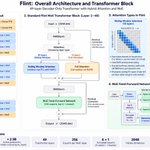
While Qwen uses 64 layers with hybrid Gated DeltaNet + Full Attention, Nanbeige takes a surprisingly old-school approach: 52 Full Attention layers, 7,168 hidden dimensions, and a 22,016-wide Dense FFN. No MoE, no fancy recurrent memory.
It's expensive. Early community tests show ~8.6 tok/s at 32K context vs. Qwen's ~13 tok/s. But perhaps that's intentional: build the strongest possible 33B teacher first, then distill its capabilities into a much cheaper 3B student. That's Nanbeige's announced Teacher-first strategy.
2️⃣ Coding Performance: Architecture or Training? ⚡
Nanbeige reports impressive results against Qwen: Terminal-Bench 2.1 (80.9 vs. 73.0), Terminal-Bench 4.0 (23.8 vs. 6.3), and DeepSWE (65.5 vs. 42.5). Yet Qwen slightly leads on SWE-bench Pro. These results are vendor-reported and need independent verification.
The bigger question: Does heavier Full Attention and wider computation actually improve coding ability, or are we mostly seeing better coding data, agent training, and RL? Without controlled ablations, it's hard to tell.
🎯 My takeaway
Nanbeige is making an interesting bet: sacrifice some inference efficiency to build a more capable teacher, then recover efficiency through distillation. Whether that extra compute is worth it—and how much capability survives in the 3B student—remains to be seen.
Not a bad plot twist for a recruiting company...
👇
