

Chief Communications and Marketing Officer @CHRobinson. Former @FannieMae @ICANN @HKStrategies. Opinions mine, so sorry. RTs do not = endorsements.
Minneapolis, MN
Joined April 2009
- Tweets5.2K
- Following2.9K
- Followers937
- Likes2.3K





Duncan Burns retweeted

At the 2026 Fortune #BrainstormTech, C.H. Robinson CEO Dave Bozeman shared a piece of advice he once received from former U.S. Secretary of State Colin Powell.
We're excited to welcome Bozeman back to the Fortune stage for the #F500Innovation Forum, convening November 16-17 in Detroit. bit.ly/4aQlVUH
Duncan Burns retweeted

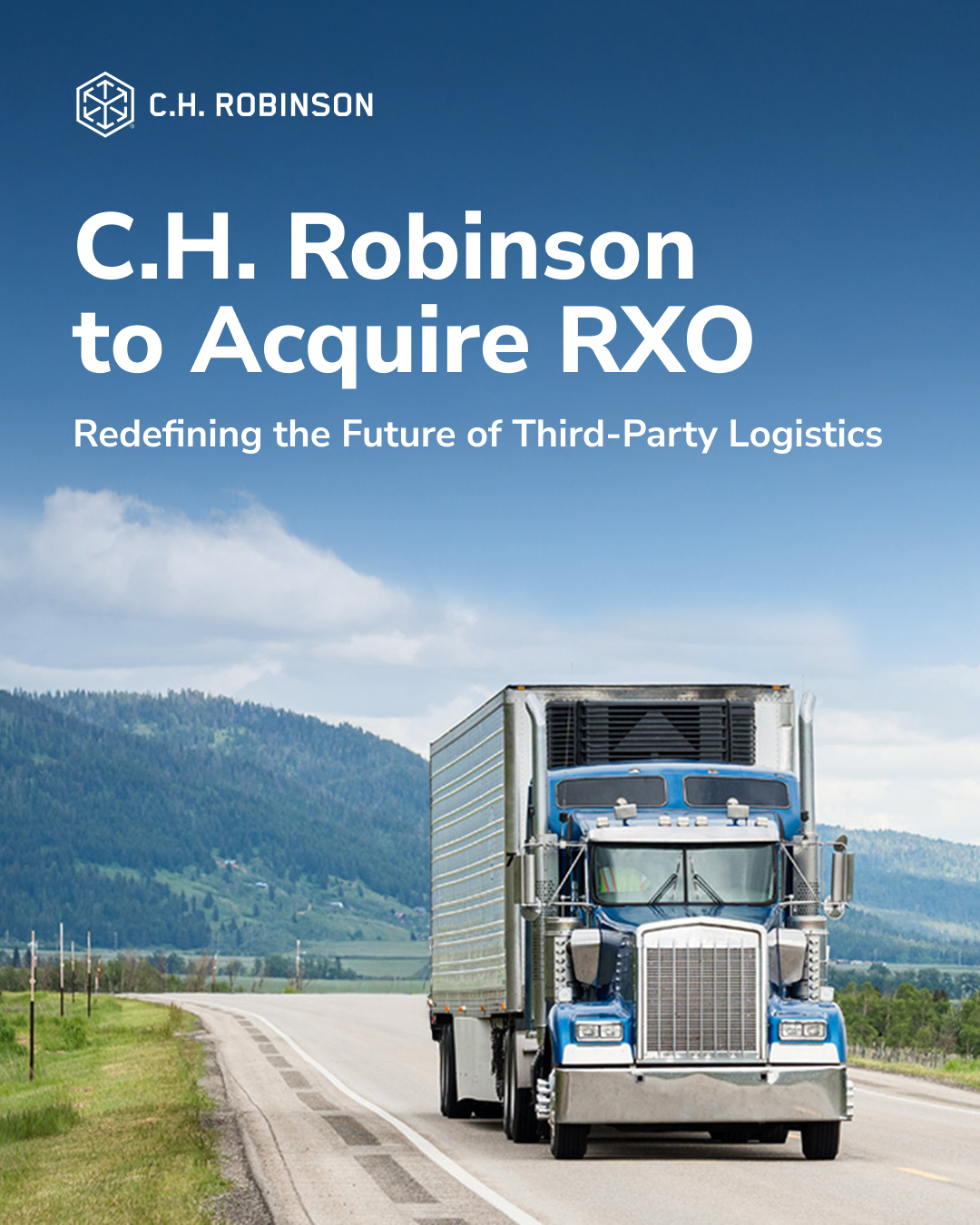
Today, C.H. Robinson has entered into a definitive agreement to acquire RXO, Inc. We expect to create a more efficient supply chain platform that delivers greater value for employees, customers, carriers, and shareholders. ➡️ ms.spr.ly/6011aWB7B
Didn't know this about the NYT reporter on the ground that tragic day. A Shot Rang Out. M.L.K. Went Down. And a Reporter’s Instincts Kicked In. nytimes.com/2026/10/02/us/ml…

1
41
Superb read. Sylvester Stallone Hid His Struggles for Decades. Now He’s Coming Clean. nytimes.com/2026/09/26/magaz… via @NYTimes

75
Duncan Burns retweeted
AI doesn't create value on its own. People do.
In @FortuneMagazine, President and CEO Dave Bozeman writes how Lean AI is helping our teams solve customer challenges faster, anticipate disruption, and create better outcomes across complex supply chains. ➡️ ms.spr.ly/6016abzGr

Worked with Antoinette at H&K for several years. Wonderful colleague and very much hope that she's found safe and well very soon. Have you seen her?

Sharing to amplify. I’ve gotten to know Antoinette over the years because of her work at @EliLillyandCo. She’s a wonderful, funny and kind-hearted human. Praying she’s found safely. 🙏💔
Safer roads, clear standards and avoiding what could be dramatic consequences for the US economy, movement of freight (eg everything) and consumer prices. High stakes. Freight brokers need federal safety standards to survive legal threats, @tomwblack says bloomberg.com/opinion/articl…

35
Duncan Burns retweeted
We're honored that C.H. Robinson has been named by @Forbes as one of America's Best Employers for Tech Workers 2026.
This is the latest example of how our technology, talent, culture, and innovation continue to earn recognition beyond our industry.
➡️ ms.spr.ly/6015apzGS

ALT AWARD: Forbes America's Best Employers for Tech Workers 2026
Duncan Burns retweeted
This September, Team Robinson is coming together across more than 40 office and warehouse locations in 14 countries to support the communities where we live and work.
Learn more about our largest global month of giving yet. ➡️ ms.spr.ly/6010apstA

ALT Robinson Cares Month


Worth reading from @bloomberg Not sure people quite absorbed how much this is going to affect the cost and movement of goods in the US - that affects us all - in the absence of Federal action. This is much bigger than Robinson. bloomberg.com/news/features/…

58
Duncan Burns retweeted

If you haven't read CH's full statement in the Lipe v Lupus Superior case, I suggest you do. If CH is to be believed, CH used Lupus, the carrier, over 270 times all while the carrier held a satisfactory safety rating with the FMCSA. Even after the crash, Lupus maintained that same rating.
The driver told his dispatcher that he felt sick. The dispatcher told CH, & CH arranged for the load to move several days later. Importantly, the driver never spoke to CH directly. Nonetheless the load continued to move until the driver inexplicably crashed into stopped cars at an intersection.
We now have a jury award that exceeds $604 million. We have a finding that the driver, an employee of Lupus, was actually an employee of CH. And we are still unclear as to what is a "safe motor carrier" and what is a "reasonable carrier vetting process."
Make no mistake, a case like this, if upheld, utterly breaks the brokerage model. Brokers only exist because of small motor carriers. Buckle up.
chrobinson.com/en-us/about-u…

Duncan Burns retweeted

Key piece of this information is that the driver never spoke to CH directly. I’ve seen a lot of statements stating that he did which creates a different perspective. This is why it’s important to understand the full scope of facts

If you haven't read CH's full statement in the Lipe v Lupus Superior case, I suggest you do. If CH is to be believed, CH used Lupus, the carrier, over 270 times all while the carrier held a satisfactory safety rating with the FMCSA. Even after the crash, Lupus maintained that same rating.
The driver told his dispatcher that he felt sick. The dispatcher told CH, & CH arranged for the load to move several days later. Importantly, the driver never spoke to CH directly. Nonetheless the load continued to move until the driver inexplicably crashed into stopped cars at an intersection.
We now have a jury award that exceeds $604 million. We have a finding that the driver, an employee of Lupus, was actually an employee of CH. And we are still unclear as to what is a "safe motor carrier" and what is a "reasonable carrier vetting process."
Make no mistake, a case like this, if upheld, utterly breaks the brokerage model. Brokers only exist because of small motor carriers. Buckle up.
chrobinson.com/en-us/about-u…
His doctor’s prescription for his unbearable pain seemed absurd. It worked. - The Washington Post washingtonpost.com/lifestyle…

89
Duncan Burns retweeted

The nuclear verdict in Lipe v. Lupus Superior illustrates why Congress must act now to establish clear federal liability standards across the transportation industry. Imposing liability on freight brokers for truck driver negligence threatens to damage safe and efficient supply chains, disrupt the free flow of goods and greatly increase transportation costs, ultimately hurting manufacturers and consumers. freightwaves.com/news/c-h-ro…

Duncan Burns retweeted

My biggest takeaways from @Netflix's Chief Product and Technology Officer Elizabeth Stone:
1. Elizabeth believes that “systems thinking” is becoming the most important skill in the AI era. In engineering and product, this means people who can see across business domains and build the common capabilities that let many teams move quickly. In design, it means experience designers who create templates and design systems so that non-designers can ship work that stays coherent and on-brand. The underlying driver is velocity: when more people are doing more types of work at higher speed, you need to be good at building common scaffolding.
2. Systems thinking is learnable: zoom out one level from your specific problem. Given a task, step back one click—what bigger problem does this serve the business, will it scale across the product surface areas, should it become a platform capability? The companion habit: do your job in a way that helps your manager do theirs. This will force you to think about how all the pieces fit together.
3. Expect a storming phase before a forming phase. The role confusion people feel right now (“What is my job anymore?”) is the predictable middle of any transformative technology. Elizabeth’s advice: focus on high-quality source-of-truth data, guardrails on what ships, and constant internal reinforcement that humans own what they create.
4. The top AI labs converged on Netflix’s culture. High agency, high talent density, top-of-market pay, bottom-up thinking, fast experiments—the traits Lenny hears constantly from AI labs were in Netflix’s early culture deck. Elizabeth’s explanation: excellence comes from hiring exceptional people, trusting them to do great work, and holding them accountable.
5. Netflix’s culture is centered around building “excellence as an operating system.” High talent density, radical transparency, context not control, and the keeper’s test. These work together to create an environment of trust and accountability, without bureaucracy. But it’s also uncomfortable. It requires tolerating people making decisions you’d make differently, resisting the reflex to add process when things go wrong, and letting people carry the weight of their own choices. Elizabeth describes the hardest part as “being comfortable in that discomfort.”
6. The keeper’s test is as much about recognizing great people as it is about removing the wrong ones. The test—“If this person told me they were leaving, would I fight to keep them?”—is often cited in its difficult form: the moment you realize someone isn’t the right fit. But Elizabeth uses it predominantly as an entry point for honest performance conversations that are deeply positive. Most of the time the answer is “I would fight so hard to keep you,” which creates the opening to articulate strengths, discuss impact, and name what’s working. Good feedback hygiene needs a forcing function; the keeper’s test provides one.
7. Specialization is trending down—adaptable generalists are trending up. We’re shifting away from narrow stack-layer specialists (pure frontend, pure backend) toward people who can navigate fluidly across layers. The same logic applies to business domain knowledge: the mindset of “I’m a payments expert, full stop” is less valuable than “I know payments well enough and I’m willing to imagine what the future version of this looks like.” The meta-skill is learning to learn, not locking into a single lane.
8. Netflix’s approach to AI fluency is a universal principle, not a level-specific expectation. Rather than rewriting career ladders to specify what AI competence looks like at each level, Netflix added a single aspiration across all roles and levels: AI fluency. What fluency means varies by function and seniority, but the non-negotiable minimum is the same everywhere—an open-minded, experimental mindset, genuine curiosity, and comfort with ambiguity.
Duncan Burns retweeted

The secrets of an unheralded AI success story: @CHRobinson. Spoiler alert: it's one part tech, one part operations, and one part culture. Plus, all the rest of the week's AI news in my latest @FortuneMagazine Eye on AI newsletter. fortune.com/2026/07/14/c-h-r…

Duncan Burns retweeted
Dave Bozeman, CEO of C.H. Robinson is rethinking productivity, talent and growth for the AI era with his "Lean AI" transformation.
bit.ly/4flWwER


Duncan Burns retweeted

Heartbreaking news. Om was a brilliant, kind, generous man. He wrote marvelously. He loved tech but saw through nonsense. He had a great eye and a beautiful soul. RIP. om.co/2026/06/24/1966-2026/
