

Study energy metabolism and related diseases. Associate professor of molecular metabolism @HarvardChanSPH Via @HKBU_Alumni @UCSDnews @Princeton
Boston, MA
Joined July 2018
- Tweets957
- Following759
- Followers1.3K
- Likes2.3K




Tony Hui retweeted

China has selected its first group of young researchers to receive funding for up to 15 years, in one of the longest research grants on offer to scientists globally
go.nature.com/4z4Q3pw

A valuable resource for risk factors of cancer cachexia, identified in a very large cohort of patients.

After many years of effort, deliberation, excitement, angst, joy, and Wednesday afternoon lab lunches, our group's first manuscript on cachexia, led by Venise Jan Castillon, Amy Xie, and really our whole lab nature.com/articles/s41591-0… @NatureMedicine

Tony Hui retweeted

Please spread the word on hiring in our department. We are searching broadly but particularly interested in Systems and Synthetic Biology. I am chairing this faculty search, please feel free to reach out if you have any questions.

Deadline Oct. 15: We are hiring for a professor at any level to join our creative and dynamic community. Candidates in all areas of #biochemistry will be considered, and we are particularly interested in candidates in systems and synthetic biology. jobs.wisc.edu/jobs/assistant…

ALT Poster for job ad. Read further details at jobs.wisc.edu. Job number JR10012489.
Tony Hui retweeted

🔥 We’re hiring! 🔥
My lab is seeking a postdoctoral fellow for studying the role of metabolic imbalance in aging, cancer and neurodegeneration @jobRxiv @mitojobs @ScienceCareers #hiring #metabolism #massspectrometry Join us!

Tony Hui retweeted

🔥Does academia stifle creativity? This new perspective argues that academia is currently structured to select against creativity, intellectual risk-taking and bold ideas. Young scientists – who may be best positioned for new ideas – are particularly incentivized to play it safe.

Tony Hui retweeted

🥳Happy to share our latest manuscript - out today in @NatureCellBio.
💜 Congrats and thanks to @Wenlong_Li1 and @Munta04, the whole lab, our collaborators and the funders that supported this important and beautiful 🤩 work!
Hope you enjoy the read!
nature.com/articles/s41556-0…

Tony Hui retweeted

Very excited to report on our lab’s unexpected adventure into subtyping cancer cachexia by way of anatomy, where we study the evolution of the bodies (not the genomes!) of patients with cancer during profound weight loss. Led by Sonia Boscenco. medrxiv.org/content/10.64898…

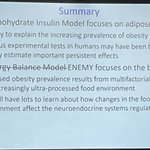
We propose a two-branched structure of causal pathway of cancer cachexia, with one energy balance branch and the other independent of energy balance.
Separating food intake-dependent and -independent effects in cancer cachexia: iScience cell.com/iscience/fulltext/S…

The two-branched structure suggests that effective therapeutic strategies will likely require a combination approach, separately targeting reduced food intake and the tumor-driven mechanisms responsible for weakness.
Tony Hui retweeted

Jane Ying Wu, who took her own life, was cleared of wrongdoing by the US National Institutes of Health. Her family alleges that her employer destroyed her career. go.nature.com/3OZDs51

ALT Neuroscientist Jane Ying Wu was the subject of an investigation by the US National Institutes of Health as part of US President Donald Trump\u2019s China Initiative. Credit: Courtesy of Elizabeth Rao
Looking forward to interactions at this exciting meeting.

Registration is open!
Join us on May 6, 2026, for Adipocyte Futile Cycling & Metabolism, a one-day symposium exploring adipose biology, metabolic memory, & next-gen weight-management therapies.
Register by Jan. 31 for early-bird pricing: events.nyas.org/adipocytes?u…

Tony Hui retweeted
I am excited to share our newest paper, "A genetically encoded bifunctional enzyme mitigates redox imbalance and lipotoxicity," which is now live in @NatMetabolism! This study was led by outstanding members of my lab @XingxiuPan and @smunan1995, in close collaboration with the @hardikshah42 lab at @UCCancerCenter and the @russpgoodman lab at @MassGenBrigham. In this study we present a genetically encoded tool based on a bifunctional enzyme that can regenerate NAD⁺ while simultaneously executing an engineered glycerol shunt. We used this tool, which we call CrGPDH, to restore redox imbalance and modulate lipid metabolism in vitro and in a mouse hepatic steatosis model. 🧵
Tony Hui retweeted

1/ Wild mammals now comprise roughly 5% of mammal biomass globally. How did this come to be? In our new study in @NatureComms, we estimate that in 1850, wild mammals comprised ≈50% of mammal biomass globally nature.com/articles/s41467-0…

Tony Hui retweeted

BIG ANNOUNCEMENT📣: I haven’t been this excited to be part of something new in 15 years… Thrilled to reveal the passion project I’ve been working on for the past year and a half!🙀🥳 It started from my frustration with the depressing effect that the current publishing system has on the well-being of myself, my team, and pretty much every scientist I know (maybe you’ve noticed from my stupid jokes… :) I was exhausted of dealing with the huge delays, reviewers that can be abusive, and how arbitrary it all is. Unfortunately, the most important factors are often WHO your reviewers are and who YOU are... It’s clear we need alternatives or at least ways to improve the situation. So, together with a really special and talented team we worked to develop this idea into “qed” a platform where you can get CONSTRUCTIVE feedback on your own work or CRITICALLY assess other people’s papers. It can be a real difference maker if many of you join us (thousands have tried it already, but today we release a NEW and much stronger version ;) Let’s harness qed to put the power back in the scientists’ hands, to do, to read & to publish science on our own terms. I’m dying for you to TRY IT, and it’s very simple - just drop a paper (the link to the website is in the replies👇) - it’s completely secure, private, and free, and you get results fast. Please show your support, SHARE, tell your friends, and let’s be the revolution 🫵!

Tony Hui retweeted

Eli Lilly halts trial testing experimental muscle-preserving drug with Zepbound reuters.com/business/healthc… #GLP1 #DIABETES #obesity #health
Tony Hui retweeted

These are fabulous suggestions for the current system.
And this is no critique of Pradeep or his advice here, but this is yet another great example of the gate keeping one needs to get through just to even get a paper out for review. 1/
