

AI | quantum | physics | theology | running | books. Sometimes it's more important to love than to always get it right. Follow ≠ endorsement. @drpdh.bsky.social
Coventry, UK
Joined March 2012
- Tweets13.2K
- Following4K
- Followers1.2K
- Likes43.1K


Peter den Haan retweeted

Are billionaires really to blame? We asked a b̶i̶l̶l̶i̶o̶n̶a̶i̶r̶e̶ industry leader
Translation: Reform is happy to kill people for electoral gain. That would be the fate of some, at least, upon deportation: there is no doubt. I suppose that's OK because the victims only are foreigners. Untermenschen, really. bbc.com/news/articles/cwnv0z…


Peter den Haan retweeted

Y2K was real. And fixed for $600 billion.
The remedial work of millions of people around the world was so good that Y2K is falsely held up as an example of extreme scaremongering.
Instead, it should be celebrated as one of the best ever examples of successful project execution.
In Germany, Russia needs to use drones to sabotage air traffic. In the UK, all they need is a flight plan... they must be laughing so hard 😂 Military jet triggered UK’s latest air traffic meltdown - giftarticle.ft.com/giftartic… via @FT

Peter den Haan retweeted

Great news! That also means I'm exempt from the NI and tax contributions that pay for these benefits, right?
Right?
Or is this another bigot tax on being a foreigner?
Reform UK vows to block foreign nationals from claiming benefits giftarticle.ft.com/giftartic… via @financialtimes

Will I also be exempt from the taxes that pay for this housing & the infrastructure (roads, hospitals) to support them? If the answer is "no", how is this not xenophobia?
Tories vow to ban foreign nationals from accessing UK social housing ft.com/content/857508f3-028b… via @ft
Peter den Haan retweeted

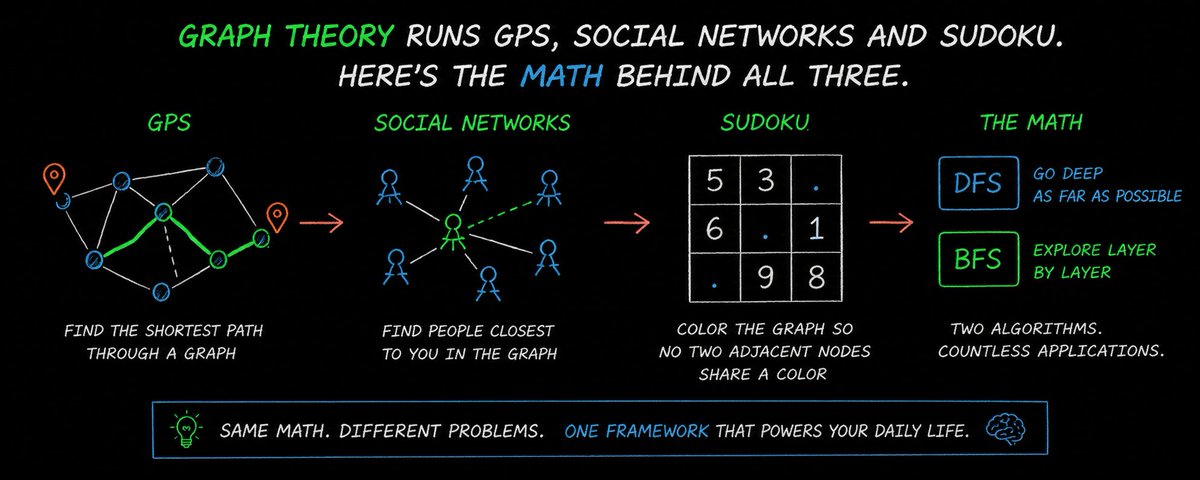
Since Newton, every law of physics has been written as a differential equation. The same math that describes a pendulum swinging is what makes AI training unstable when learning rates are too large.
Differential equations are hard not because the concepts are complex, but because most of them simply cannot be solved exactly. This video shows why - and how phase space diagrams let you understand them anyway without solving anything.
25 minutes. Bookmark & watch today. The chaos theory connection at the end alone is worth it.

Peter den Haan retweeted

Burgers' equation (in both its inviscid and viscous forms) is the simplest nonlinear PDE that forces one to confront many of the essential mathematical difficulties of more complex nonlinear systems: weak solutions, shock waves, rarefactions, thermodynamic consistency, entropy decay, etc.
In this way, Burgers' equation is a more analytically tractable stepping stone to the full Euler, MHD, elasticity, and Navier-Stokes systems, amongst others.
Come and read our deep dive into Burgers' equation and how Lanyon can be used to formally verify properties like Rankine-Hugoniot conditions and thermodynamic stability of nonlinear solutions.

Formally verified thermodynamics: capturing and verifying shocks, rarefactions, and weak/entropy solutions, fully autonomously with Lanyon. A stepping stone to full Navier-Stokes.
~8,000 lines of C, ~9,000 lines of Lean proof, 282 theorems, ~100 seconds.
Solving the inviscid and viscous Burgers’ equations (minimal nonlinear PDEs capable of forming weak/discontinuous solutions, and for which thermodynamic considerations therefore become necessary), using a thermodynamically stable and consistent scheme. Verifying discrete Rankine-Hugoniot conditions, convergence to entropy solutions, and similar essential properties, fully autonomously with Lanyon. Burgers’ equation presents a more mathematically tractable version of the same essential difficulties that arise from Euler’s equations, the MHD equations, the elasticity equations, and even the full Navier-Stokes equations. More to come on all of these topics soon!
GitHub and technical deep dive links below👇
Peter den Haan retweeted

Turtles All the Way Down has become one of the most widely cited books in antivaccine circles. It is lengthy, carefully argued, heavily referenced—and, for many readers, highly persuasive.
That alone makes it worth taking seriously.
Over the next 9 posts, I’ll examine its central claims the same way we should evaluate any scientific argument: by asking whether the conclusions actually follow from the evidence.
The anonymous authors raise legitimate methodological questions. Where the book goes wrong is repeatedly turning those questions into conclusions the evidence does not support.
Science deserves criticism.
It also deserves accurate criticism.
Let’s examine the evidence.
@IntegralAnswers
🤖 Made with AI

Peter den Haan retweeted
1/9 Turtles All the Way Down is persuasive not because every claim is false, but because it builds sweeping conclusions from genuine limitations in vaccine research.
Its recurring maneuver is:
Find a limitation in one method → declare that method unreliable → disregard complementary evidence → conclude that vaccine safety is unknowable.
That is not rigorous skepticism. It is the systematic exclusion of evidence.
🤖 Made with AI

Peter den Haan retweeted

One of my longest-standing arguments is that we are not living in Orwell’s 1984, where truth is centrally suppressed and censored by force (that’s former communist societies, modern-day China, Russia, North Korea).
We are living in something much closer to Huxley’s Brave New World.
The truth is not hidden - it is almost always readily available. But it is buried beneath an industrial quantity of noise: propaganda, outrage, half-truths, conspiracy theories, influencer theatre, algorithmic rage bait and an endless stream of content designed not to inform us, but to keep us emotionally stimulated.
The modern information system does not need to censor the truth when it can simply drown it in noise.
A fact no longer has to be disproven - it only has to be surrounded by a hundred competing claims, stripped of context and nuance, turned into partisan ammunition and pushed into the same feed as celebrity gossip, memes and 15 second videos engineered to deliver the fastest possible dopamine hit. By the time the truth reaches us, it appears as just another piece of content competing for our attention.
That is the more sophisticated form of control: not preventing people from knowing, but exhausting their capacity to care.
Orwell feared a world in which people would be deprived of information. Huxley feared a world in which they would be given so much distraction, stimulation and triviality that they would lose the desire to seek it.
The defining struggle of our age is therefore not simply between truth and censorship, but between truth and indifference.

Peter den Haan retweeted
Long COVID Evidence Review — Part 4
Mechanisms
This thread is about the biology of Long COVID — but with evidence boundaries intact.
The responsible position is not:
“We know the single cause.”
It is also not:
“There is nothing biological here.”
The best current framing is more complex:
Long COVID likely involves multiple overlapping biological pathways, expressed differently across patients and subgroups.
The goal is not one mechanism for everyone.
The goal is better subtyping.


Peter den Haan retweeted

Torpenhow Hill, England
When the Saxons arrived and asked the locals what that hill was called, the Welsh replied, “Pen,” which simply means hill in Welsh.
The Saxons, apparently not spotting they’d already been given the full answer, added their own word for hill: tor. So it became Torpen - literally Hill Hill.
A few centuries later, the Norse turned up and repeated the exercise, adding haugr, their word for hill. Now it was effectively Torpenhaugr - Hill Hill Hill.
Then the English arrived, looked at the whole thing, shrugged, and added “Hill” on the end for good measure.
Thus we ended up with Torpenhow Hill:
Hill Hill Hill Hill.
It’s comforting to know that for over a thousand years, successive generations have been independently deciding that the previous lot hadn’t made it quite clear enough that it was, in fact, a hill.
Language is magnificent.
Humans… less so.🤷🏻♂️🤣

Peter den Haan retweeted

The Universe’s Hidden Compass
DESI data and a new Nature paper suggest the cosmos may carry directional memory across billions of light-years, challenging one of cosmology’s deepest assumptions.
For nearly a century, cosmologists have operated under a profound and elegant simplification: on the grandest scales, the universe is essentially the same everywhere and in every direction. No special locations. No preferred orientations.
This is the cosmological principle the twin assumptions of homogeneity (matter is distributed uniformly on large scales) and isotropy (no direction is fundamentally different from any other).
It is the invisible scaffolding beneath the Friedmann equations, the justification for cosmic inflation, and the reason we can average the messy, web-like distribution of galaxies into a smooth, expanding background.
That scaffolding now faces a direct experimental challenge.
On June 24, 2026, physicists published a paper in Nature titled “Detection of anisotropic cosmic structures on a gigaparsec scale.” Using data from the Dark Energy Spectroscopic Instrument (DESI), they report evidence that the distribution of galaxies retains coherent directional preferences—anisotropies—out to scales of roughly one gigaparsec (about 3.3 billion light-years).
What DESI Actually Saw
DESI, mounted on the Nicholas U. Mayall 4-meter telescope at Kitt Peak, has spent years collecting precise redshifts for tens of millions of galaxies. The result is the largest three-dimensional map of the cosmos ever constructed. Sylos Labini and Galoppo did not simply look for “big structures.”
They applied a parameter-free statistical tool called the Angular Distribution of Pairwise Distances (ADPD) that measures how the angles between galaxy pairs distribute across the sky.
In a perfectly isotropic universe, those angles should show no preferred directions once you average over sufficiently large volumes. Instead, the team found persistent directional correlations—galaxies aligning in ways that “define special directions”—extending across gigaparsec scales. The signal exceeded what appears in both fully isotropic control samples and in geometry-matched mock catalogs drawn from the standard ΛCDM model, with significance above 3σ in multiple subsamples.
Labini summarized the finding plainly: “In this survey, we find there are large-scale structures which define special directions.”
The cosmological principle is not a minor convenience. It allows us to describe the entire observable universe with a handful of numbers and a single metric (the FLRW metric). It underpins why we expect the universe to have been smoothed by inflation.
It tells us that the patterns we see locally are representative of the whole.
New physics perhaps in the behavior of dark energy, modified gravity, or pre-inflationary conditions is required.
The claim is radical, and the community response has been appropriately skeptical.
The paper itself is measured. It does not claim the standard model is dead. It reports a statistically significant directional signal in the galaxy distribution and calls for “a reassessment of how homogeneity and isotropy are realized in the observed Universe.” It motivates new tests using directional statistics rather than purely isotropic averages.
Either outcome is progress.
DESI continues to gather data. Independent teams will re-analyze the maps. New statistics and cross-checks with other probes (weak lensing, 21-cm intensity mapping, future CMB polarization experiments) will clarify whether we are seeing a genuine cosmological feature or a subtle systematic.
For now, the universe appears to be whispering something more textured than perfect uniformity: that even on scales of billions of light-years, it may still remember a direction.

Peter den Haan retweeted

Work at OpenAI is being transformed by agents, in every department.
Across our entire company, people are using Codex to do work that is more complex, longer-running, and increasingly cross-functional.
Our internal usage offers an early look at how agentic tools may reshape work as they become more capable and broadly available.


Peter den Haan retweeted
Most people read a study the same way:
Read the abstract.
Skim the conclusion.
Accept the authors’ interpretation.
Move on.
The problem is that scientific papers contain far more than conclusions. They contain assumptions, methodological choices, statistical decisions, limitations, competing explanations, and uncertainties that may dramatically affect how the findings should be interpreted.
Over the years I’ve found that many disagreements about science don’t arise because people are looking at different data. They arise because they’re evaluating the same paper through very different lenses.
To improve the quality of my own reviews, I began using a structured evidence-review framework inspired by principles of evidence-based medicine, peer review, critical appraisal, and scientific skepticism.
The objective is not to prove a study right.
The objective is not to prove a study wrong.
The objective is to determine what the evidence can legitimately support.
This framework forces me to separate:
• What was studied
• What was claimed
• What the methods can support
• What the results actually show
• What remains uncertain
The process also helps guard against some of the most common errors in science communication:
• Narrative over numbers
• Claim inflation
• Correlation presented as causation
• Ignoring alternative explanations
• Overgeneralization beyond the study population
• Confusing statistical significance with clinical significance
The following visual cards outline the exact framework I use when reviewing medical studies, preprints, essays, Substack articles, and scientific claims before creating public-facing content.
Strong conclusions require strong evidence.
And perhaps the most important question in all of science remains:
“What observation would convince you that your hypothesis is wrong?”
🧵
🤖 Made with AI

Peter den Haan retweeted

Introducing GLM-5.2: Frontier Intelligence, Open Weights
- Significant improvements in coding and agentic tasks
- Strong long-horizon capabilities with a 1M context window
- Two levels of reasoning effort: GLM-5.2 (max) pushes the limits, while GLM-5.2 (high) strikes a strong balance between performance and token efficiency
- MIT-licensed open weights
- Same API pricing as GLM-5.1
Tech Blog: z.ai/blog/glm-5.2
Weights: huggingface.co/zai-org/GLM-5…
API: docs.z.ai/guides/llm/glm-5.2
Coding Plan: z.ai/subscribe
Chat: chat.z.ai
